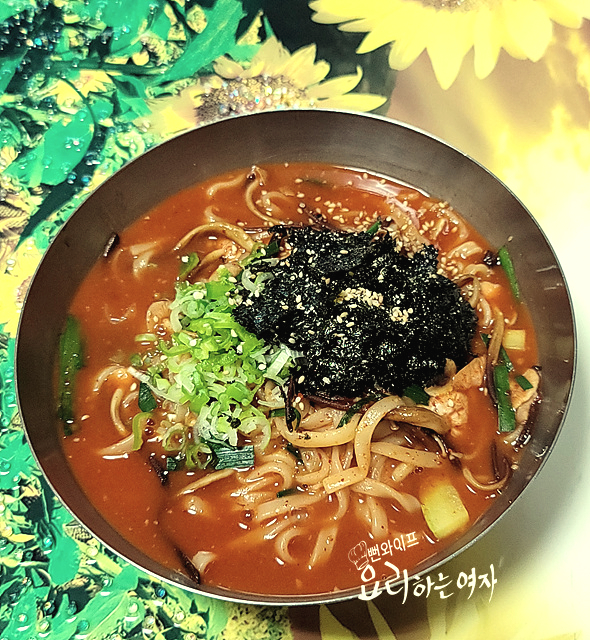
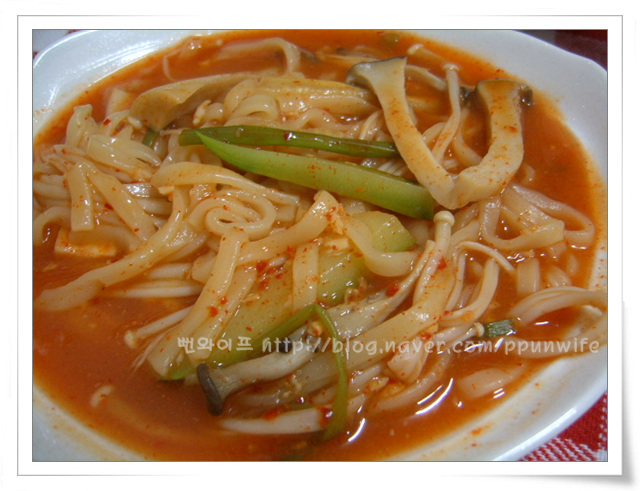
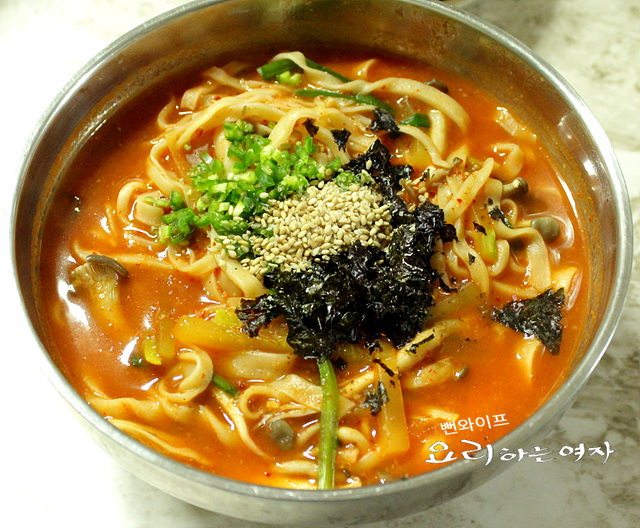
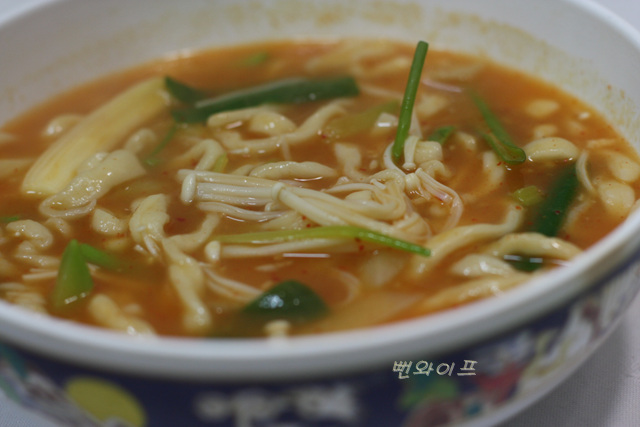
Spicy Beoseot Kalguksu (Mushroom Noodle Soup)
A special noodle soup dish packed with a variety of mushrooms and simmered in a spicy, comforting broth.
Translated from Korean by AI and not yet checked by a native speaker. Amounts and numbers are taken directly from the original recipe. Read the Korean original →
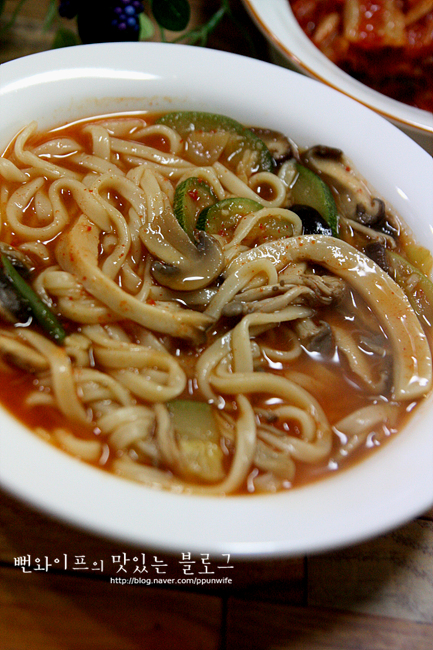
Loaded with assorted mushrooms, this dish offers a rich broth aroma and chewy texture even without meat. Parboiling the kalguksu noodles beforehand keeps the soup clean, spicy, and never overly thick. You can also fry rice in the leftover seasoned broth for a hearty finish.
- Servings
- 2 servings
- Difficulty
- Medium
- Spiciness
- Spicy
Ingredients
Ingredients
- King oyster mushrooms1
- Baby oyster mushrooms1 handful
- Shiitake mushrooms2
- Button mushrooms2
- Squash1/4
- Large green onion (daepa)1/3
- Knife-cut wheat noodles (kalguksu)2 servings, 300 g
- Anchovy broth5–6 cups
Other Ingredients
- Other ingredients (seaweed flakes, ground toasted sesame seeds, etc.)
Seasoning
- Gochujang (Korean red chili paste)1 tbsp
- Commercial doenjang (Korean soybean paste)1/2 tbsp
- Gochugaru (Korean chili flakes)2 tbsp
- Minced garlic1 tbsp
- Mirin (cooking rice wine)1 tbsp
- Soup soy sauce (guk-ganjang)1/2 tbsp
- Ground black peppera little
- You can prepare a little bit of whatever mushrooms you have at home. Fragrant crown daisy or water dropwort (minari) is also wonderful in spicy broth dishes, and if you want it spicier, you can prepare about 1 Cheongyang chili pepper.
Steps
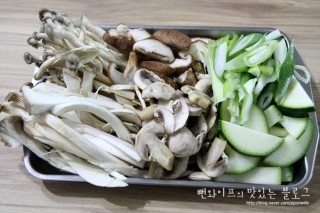
1. As the title is mushroom noodle soup, I cut whatever mushrooms I had at home into bite-sized pieces.
I also prepared squash and thinly sliced large green onion.
Crown daisy or water dropwort, which have great fragrance when added to spicy soup dishes, are also great.
If you want it spicier, you can prepare about 1 Cheongyang chili pepper, slice it, and add it.
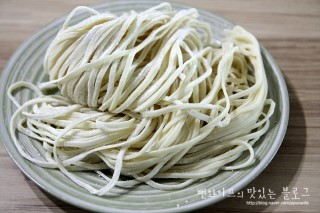
2. I prepared 300 g of kalguksu noodles for 2 servings.
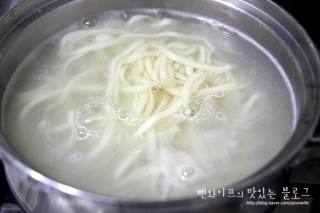
3. Add the knife-cut noodles to rolling boiling water and boil them for a first round.
Do not cook them completely; for example, if the noodles take about 7 minutes to cook, boil them for only about 5 minutes.
These noodles take longer to cook than regular thin wheat noodles, and if you dislike the broth becoming thick from the flour coated on the surface, parboiling them once in advance like this is great.
It also helps match the cooking speed of the mushrooms and vegetables, which cook quickly.
If you want to make kalguksu noodles from scratch, check here ⇒ http://blog.naver.com/ppunwife/140074458741
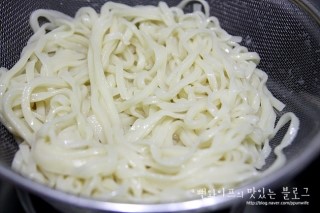
4. Place the cooked noodles in a strainer to drain the water.
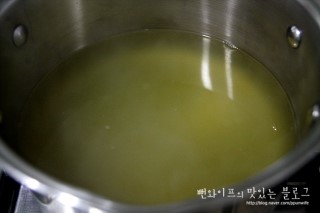
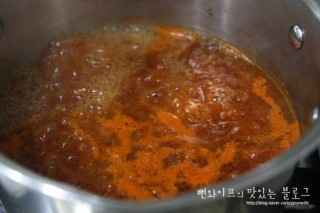
5. Add 6 cups of anchovy broth and bring to a boil.
To make anchovy broth, check here ⇒ http://blog.naver.com/ppunwife/140090439314
6. Add all the seasoning ingredients, and once it boils...
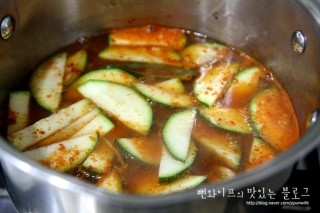
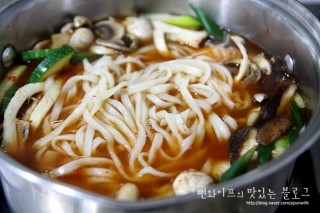
7. Add the squash first and cook it halfway.
8. Add the mushrooms, vegetables, and pre-cooked kalguksu noodles all together and boil.
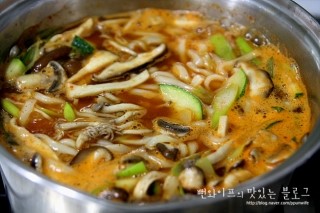
10
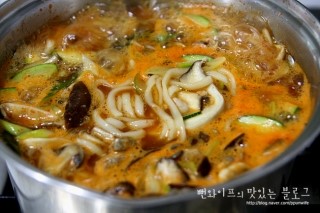
9. Mushrooms and vegetables cook quickly, so take care not to boil them too long.
10. Taste the broth by the spoonful, and if it is bland, adjust the seasoning with salt.
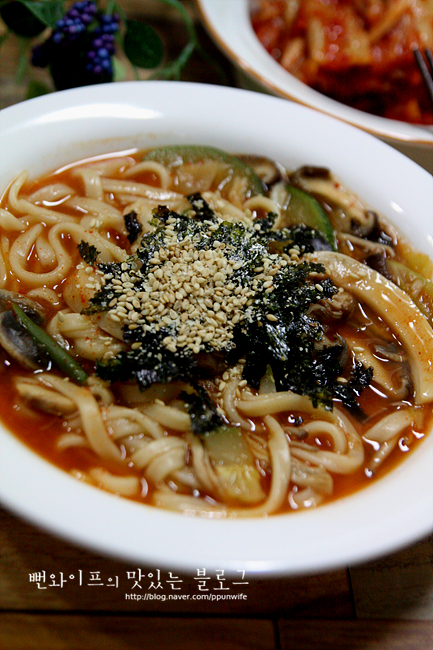
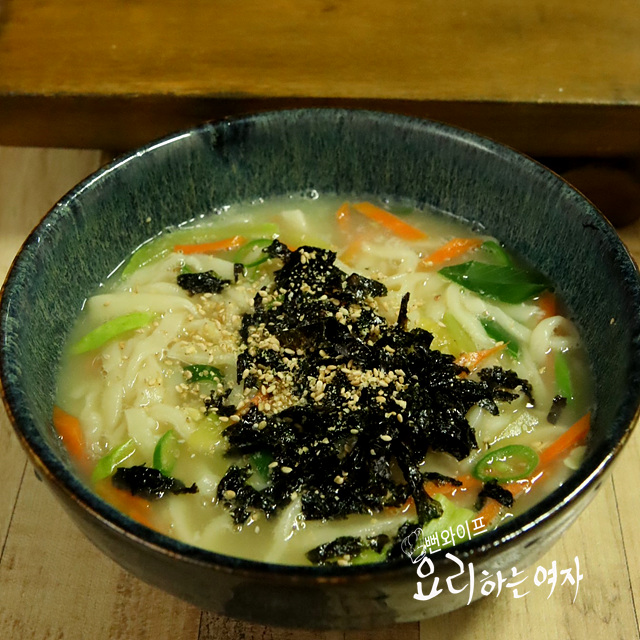
After transferring to a bowl, sprinkle with seaweed flakes and ground toasted sesame seeds and mix before eating to make it even more delicious.
 Ppunwife's tips
- Parboil the noodles lightly in boiling water first to prevent the flour coating on the surface from thickening the broth and to match the cooking speed of the vegetables.
- After ladling into a bowl, sprinkle with seaweed flakes and ground toasted sesame seeds and mix well for an even tastier bowl.
- If there is broth left over after eating the noodles, add cooked rice and stir-fry until the broth evaporates, then finish with seaweed flakes, sesame seeds, chopped scallions, and toasted sesame oil for a delicious treat.
FAQ
Why boil the kalguksu noodles separately instead of adding them directly into the broth?
It prevents the soup from becoming thick and starchy from the flour coating on the noodles, and matches the cooking time of the vegetables that soften easily.
What ingredients can I add to make the broth more pungent and spicy?
Depending on your preference, you can slice and add about 1 Cheongyang chili pepper, or add aromatic crown daisy or water dropwort (minari).
How can I use the leftover broth after eating the noodles?
Add cooked rice to the remaining broth, stir-fry until reduced, and finish with seaweed flakes, sesame seeds, scallions, and toasted sesame oil to enjoy as fried rice.