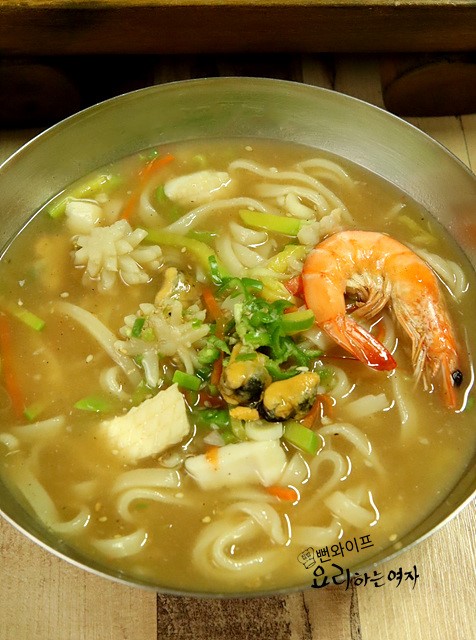
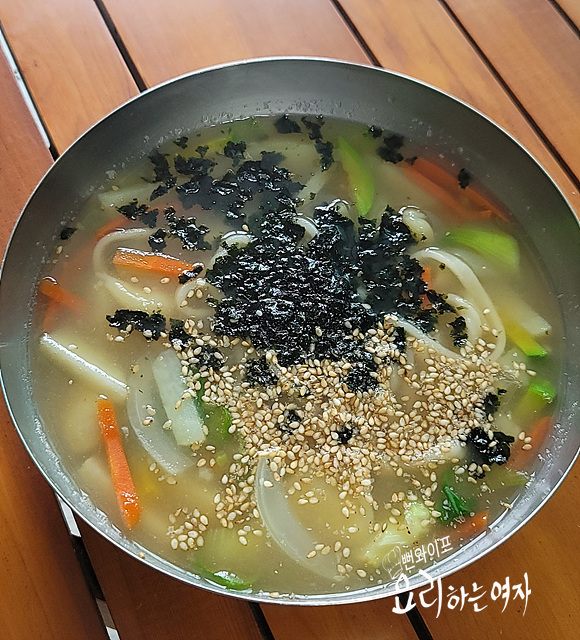
Hearty Myeolchi Kalguksu (Anchovy Noodle Soup)
A handmade noodle soup featuring chewy hot-water-kneaded noodles served in a rich, savory dried anchovy broth.
Translated from Korean by AI and not yet checked by a native speaker. Amounts and numbers are taken directly from the original recipe. Read the Korean original →
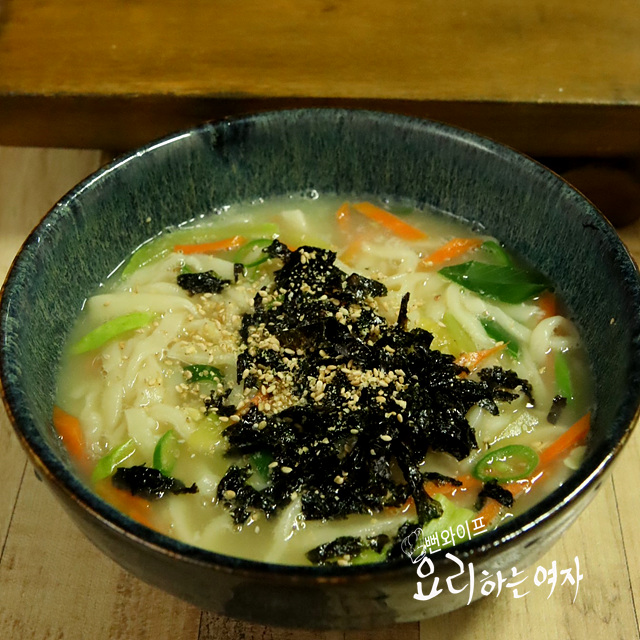
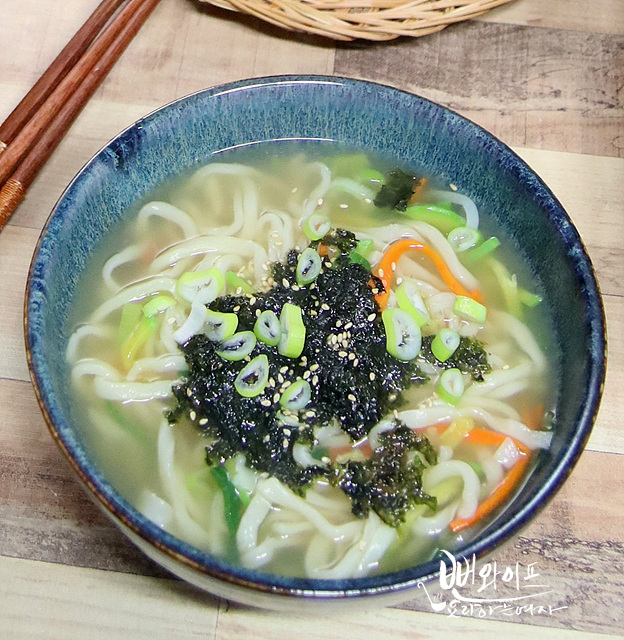
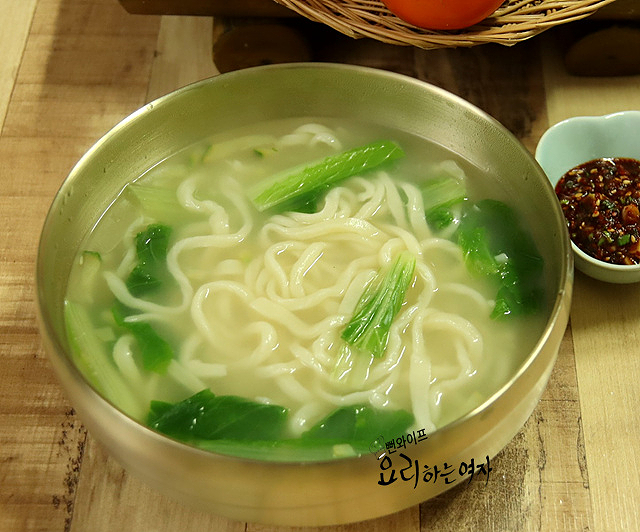
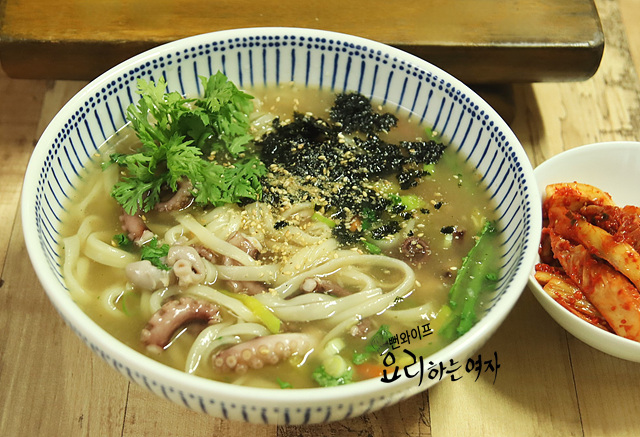
These handmade noodles are made by hot-water kneading and aged to keep their wonderfully chewy texture even after sitting. Paired with vegetables in a deep broth made from toasted dried anchovies and dried shrimp, it makes a wonderfully hearty one-bowl meal.
- Servings
- 2–3 servings
- Difficulty
- Medium
- Spiciness
- Mildly spicy
Ingredients
Ingredients
- Round Korean zucchini1/4
- Carrot1/5
- Large green onion (daepa)1
- Cheongyang chili pepper (hot green chili)1
Noodle Dough
- Flour3 cups
- Hot water1 cup
- Salt1 tsp
- Cooking oil2 tbsp
Broth ingredients
- Dried soup anchovies20
- Dried shrimp1/2 cup
- Dried kelp (dasima)3 pieces (5 cm square)
- Water10 cups
Seasoning
- Soup soy sauce (guk-ganjang)1 tbsp
- Minced garlic1 tbsp
- Salt1/2 tsp
- Ground black peppera little
- Ground toasted sesame seeds
- Seaweed flakes
- Feel free to use whatever vegetables you have in your fridge; along with the squash, carrot, large green onion, and hot green chili, potatoes or mushrooms also work great.
- If you add potato, reduce the flour for the dough to 2 cups.
- Keep the dough in a ziplock bag and let it rest in the refrigerator for at least 1 hour (overnight is recommended).
Steps
Prepare the ingredients
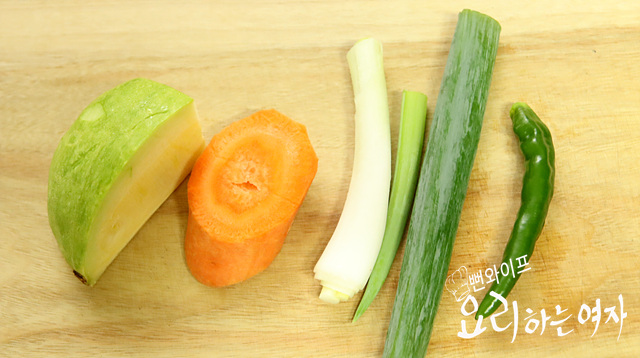
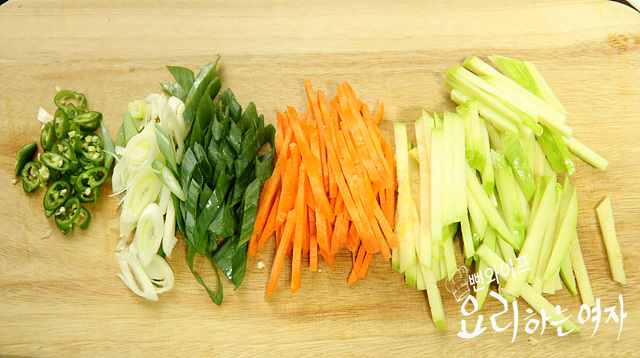
I prepared vegetables based on what was in my fridge.
Round Korean zucchini, carrot, large green onion (daepa), and Cheongyang chili pepper. You can also use potatoes or mushrooms.
Thinly julienne the round Korean zucchini and carrot, and slice the green onion and hot green chili diagonally into bite-sized rounds.
Instead of adding the potatoes I used for sujebi, I increased the amount of dough; if you want to add potatoes, just adjust the flour in the dough to 2 cups.
Make the anchovy broth
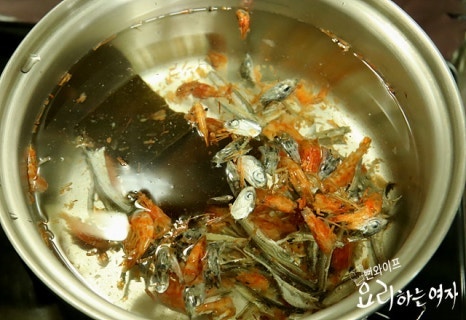
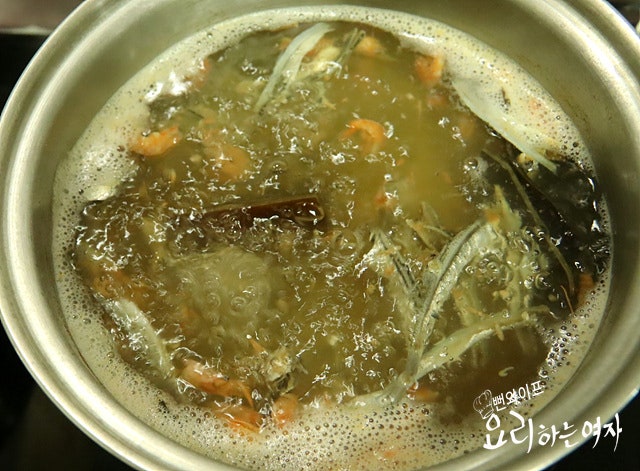
Toast the dried anchovies and dried shrimp in an unoiled dry pan to remove any off-odors, which makes the broth taste much deeper and richer.
Pour in 10 cups of water, add the dried anchovies, dried shrimp, and dried kelp (dasima), and once it begins to boil, skim off any foam and simmer gently for about 15 minutes.
Brewed this way, the broth turns out incredibly rich and savory.
Neatly scoop out and discard all the spent solids...
You need about 7 to 8 cups of broth for 2 servings of kalguksu; if it looks low after boiling, just add a bit more water.
Knead the noodle dough
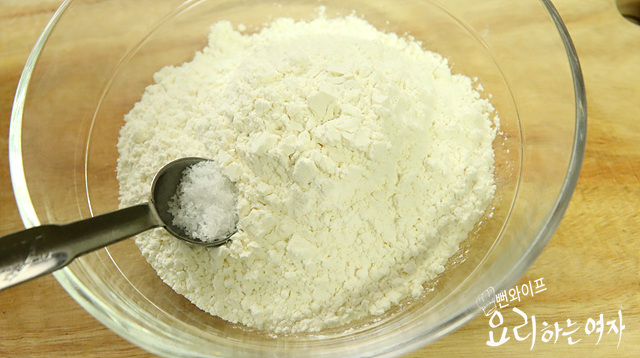
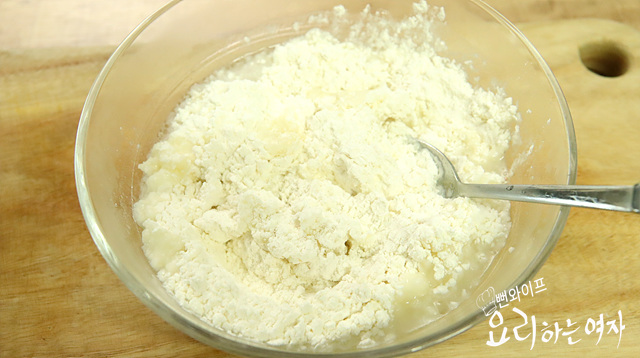
This dough process is made exactly the same way as the sujebi dough posted earlier.
Add 3 cups of flour, 1 tsp of salt, and 2 tbsp of cooking oil all together, and mix so the salt is evenly distributed.
Evenly sprinkle in 1 cup of boiling hot water, then roughly mix it with a spoon since it will be hot.
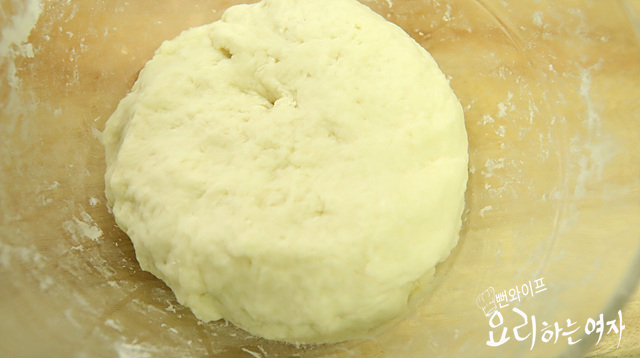
Once it comes together into a rough mass by hand, you can start kneading in earnest.
You might wonder why we pour hot water; just like making hot-water dough with glutinous rice flour for rice cake balls, we are making hot-water dough with wheat flour here.
The heat helps the flour bind much better, and this is the secret to keeping the noodles chewy for a long time even after they are cooked.
At first, you might feel like there is not enough water, but as you keep kneading, it barely sticks to your hands and comes together neatly.
You need to knead it for over 10 minutes for the dough to become dense and chewy; if you put it into a ziplock bag, cover it with a towel, and stomp on it with your feet, you can get the full kneading effect without tiring your arms.
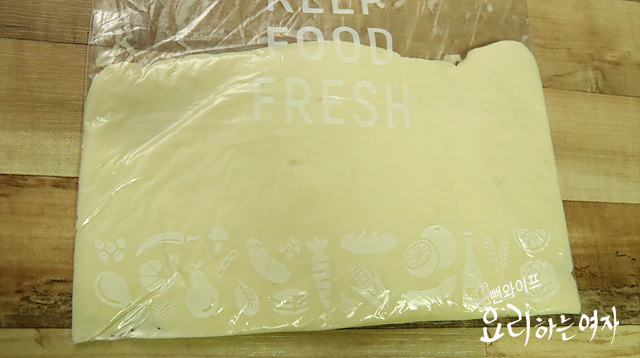
Leaving it in the ziplock bag to rest in the refrigerator for at least 1 hour will result in tender, supple noodles.
Resting it overnight makes the elasticity of the noodles so much better, so definitely give it a try.
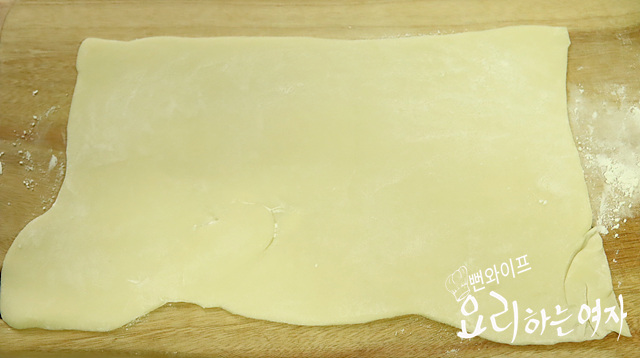
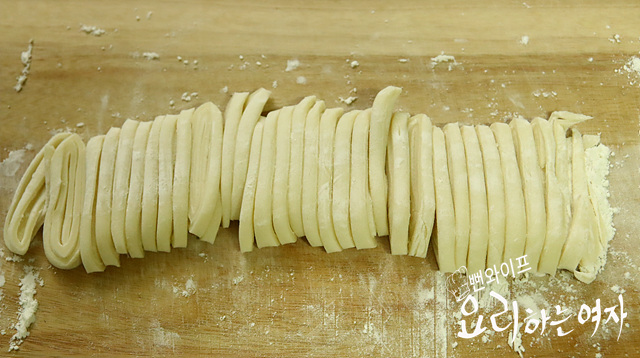
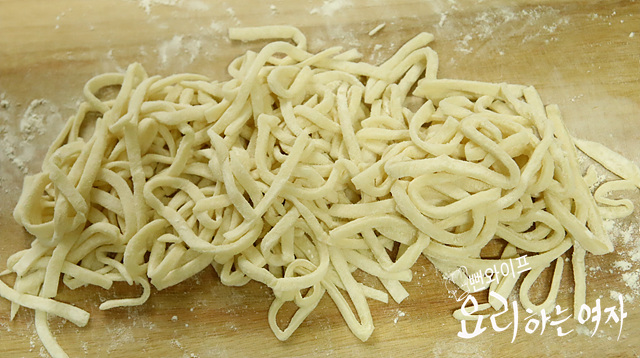
Roll out the rested dough to a moderate thickness.
Handmade kalguksu tastes great with a bit of bite, so it is better not to roll it too thin.
Lightly dust flour over the folds before slicing. The well-made dough is neither too wet nor floppy.
Season the broth
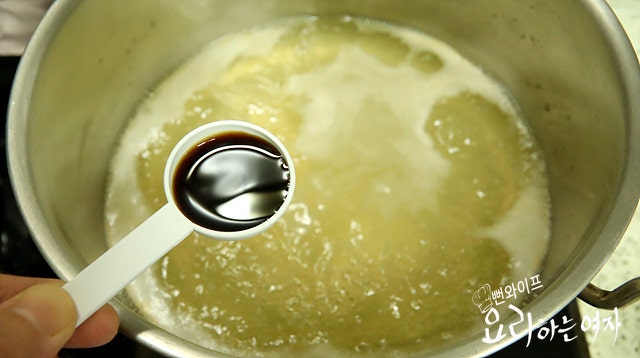
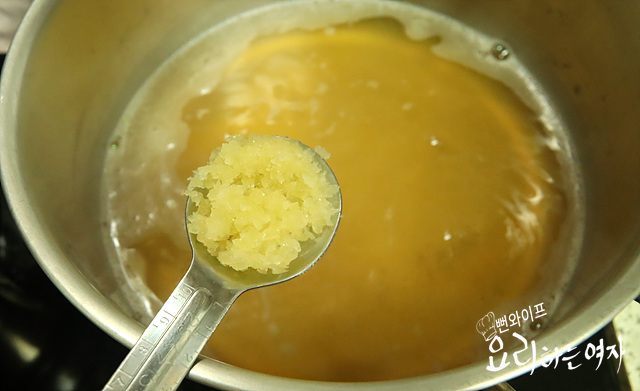
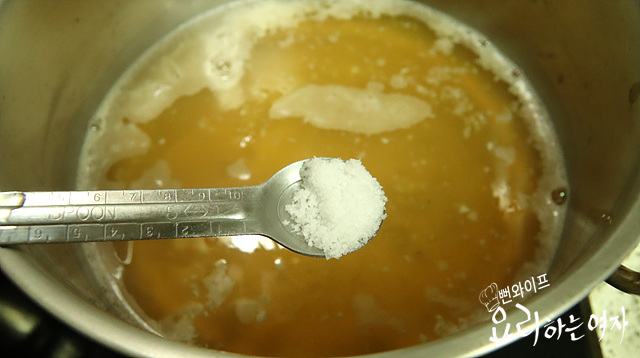
Add 1 tbsp soup soy sauce (guk-ganjang), 1 tbsp minced garlic, and 1/2 tsp salt to the prepared broth, and once it starts to boil...
Cook the noodles
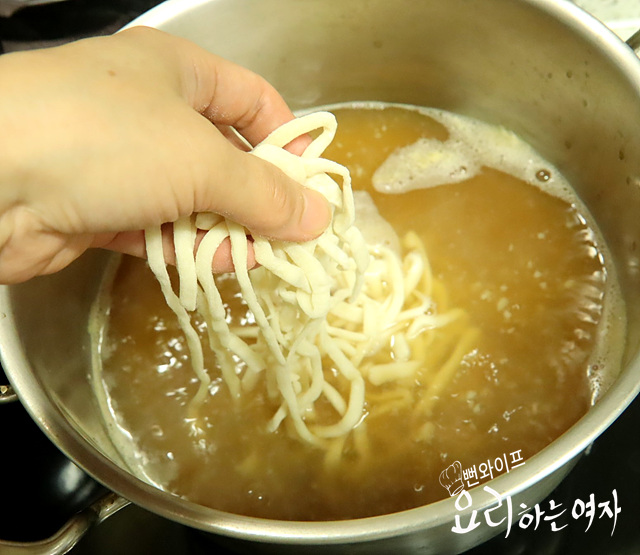
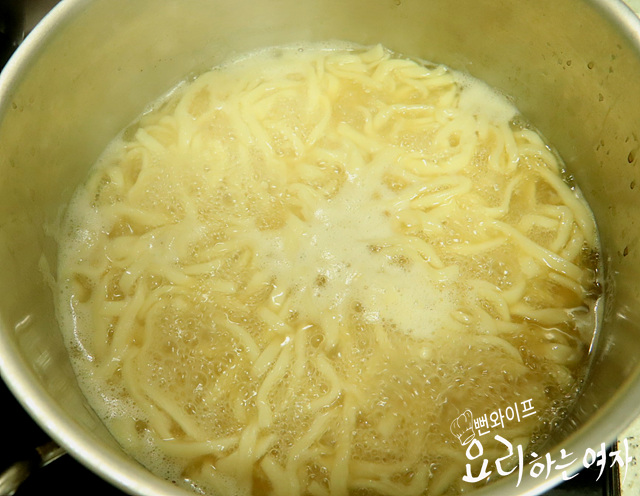
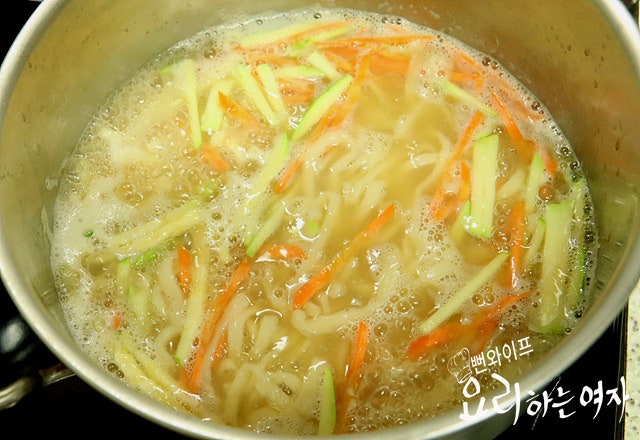
Add the noodles, and as soon as the soup comes back to a boil, immediately add the carrot and round Korean zucchini.
If you rolled the noodles thin like sujebi, you can add them along with the vegetables and boil them quickly.
Once the noodles turn translucent and fully cook through along with the carrot and squash, taste the broth and adjust the seasoning with salt.
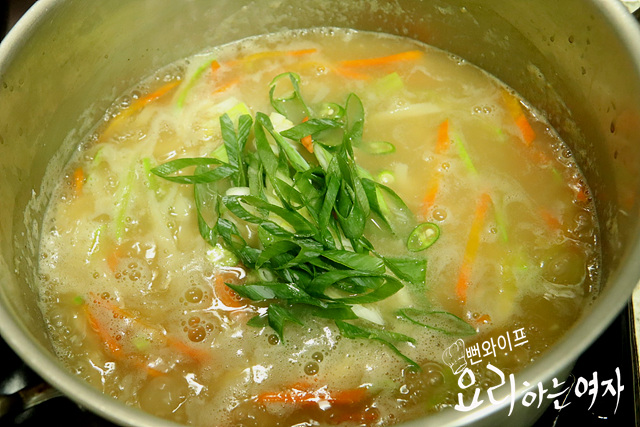
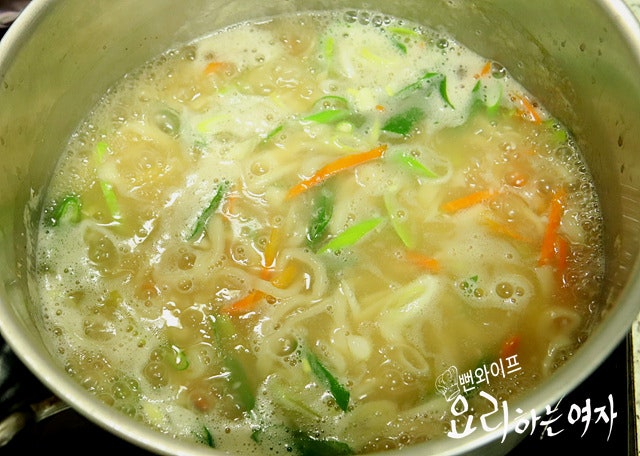
Finish by adding the large green onion, Cheongyang chili pepper, and a bit of ground black pepper, then let it simmer briefly.
Serve
Even after several minutes passed while taking photos, the chewiness stayed intact until the very last bite.
It truly shows the real charm of hand-kneaded kalguksu.
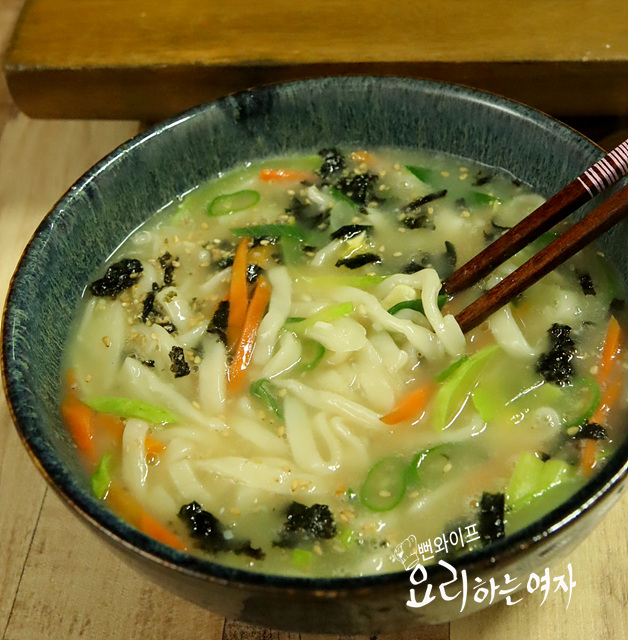
Between the rich broth and the chewy noodles, you simply cannot put your chopsticks down.
The soup is so deep and savory that you will find yourself lifting the whole bowl to drink it.
Even on a warm day, finishing a bowl leaves you feeling completely refreshed.
 Ppunwife's tips
- Toasting the dried anchovies and dried shrimp in an unoiled dry pan removes unpleasant odors and makes the broth taste much deeper and richer.
- Just like hot-water kneading glutinous rice flour for rice cake balls, kneading wheat flour with hot water helps it bind easily and keeps the cooked noodles chewy for a long time.
- Kneading for over 10 minutes makes the dough dense and chewy; placing it in a ziplock bag, covering it with a towel, and stomping on it with your feet kneads it effectively without effort.
- When slicing the dough, dust a thin layer of flour over the folded layers so they do not stick together.
FAQ
Why use boiling water in the kalguksu dough?
Hot-water kneading helps the flour come together much faster and ensures the noodles retain a wonderfully chewy texture long after cooking.
Is there an easy way to knead handmade noodle dough?
Placing the dough in a ziplock bag, wrapping it in a towel, and stepping on it with your feet allows you to knead it into a dense, chewy dough without tiring your arms.
How do you eliminate fishy odors when making dried anchovy and shrimp broth?
Toast the dried anchovies and dried shrimp in a dry, unoiled pan to cook off unwanted odors before adding water to achieve a deep, clean, and savory flavor.
What should I adjust if I want to add potato to the soup?
If you are cooking potatoes along with the soup, reduce the flour for the dough to about 2 cups to keep the overall portion balanced.