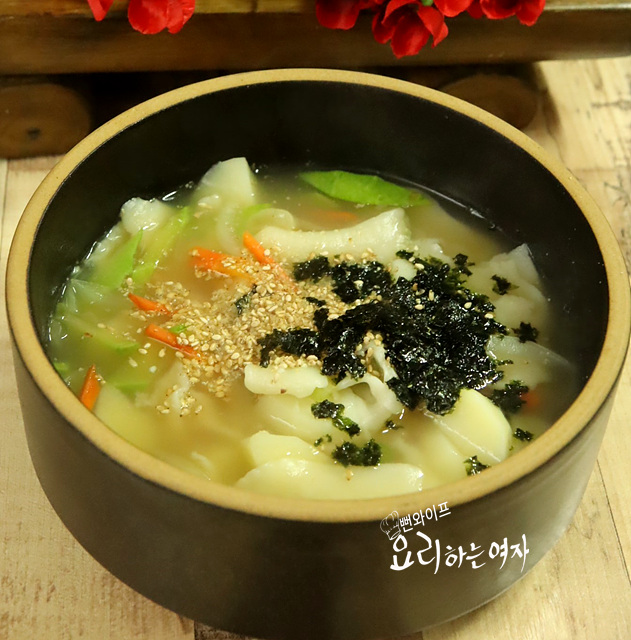
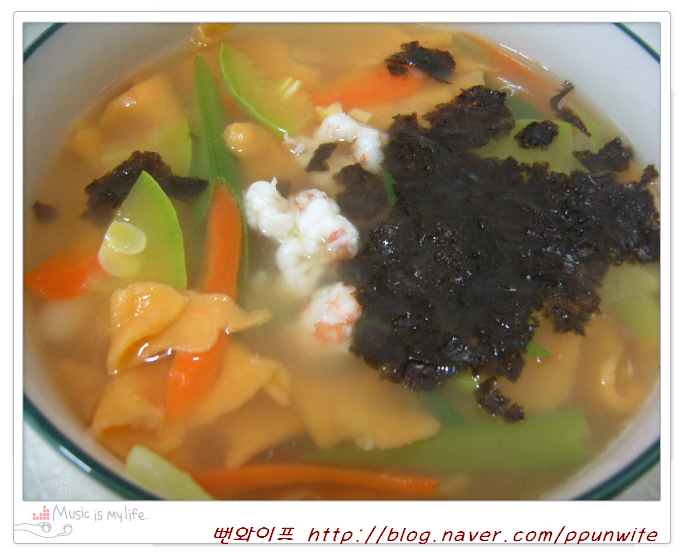
Chewy Kaljebi (Noodle and Hand Pulled Dough Soup)
A hearty noodle soup featuring kalguksu noodles and torn hand-pulled dough cooked together in rich anchovy broth.
Translated from Korean by AI and not yet checked by a native speaker. Amounts and numbers are taken directly from the original recipe. Read the Korean original →
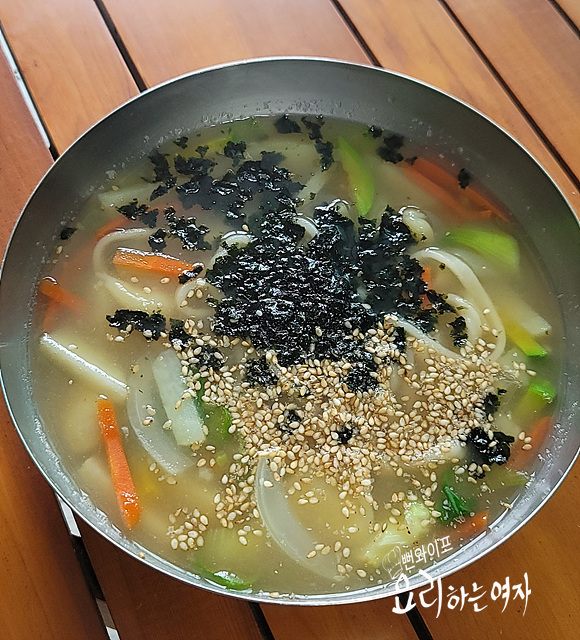
Enjoy a delightful mix of textures with knife-cut noodles and torn dough simmered in a rich broth made from soup anchovies and dried kelp. Rinsing excess surface starch off the noodles in cold water keeps the broth clean and clear rather than thick and murky. Even without elaborate seasonings, fresh vegetables and a dash of tuna extract sauce add deep umami, making it a comforting one-bowl meal.
- Servings
- 2 servings
- Difficulty
- Medium
- Spiciness
- Mildly spicy
Ingredients
Ingredients
- Kalguksu noodles (knife-cut wheat noodles)150 g
- Sujebi (hand-pulled pasta dough)100 g
- Anchovy broth6 cups
- Potato1 (small)
- Carrota little of each
- Korean zucchini (aehobak)a little of each
- Oniona little of each
- Bok choya little of each
- Large green onion (daepa)1/3 stalk
- Cheongyang chili pepper (hot green chili)2
- Seaweed flakes
- Ground toasted sesame seeds
Seasoning
- Soup soy sauce (guk-ganjang)1 tbsp
- Minced garlic1/2 tbsp
- Tuna extract sauce (chamchi-aek) (or salt 1/2 tsp)1 tbsp
- For vegetables, just potato, large green onion, and zucchini are more than enough.
Steps
Prepare the ingredients
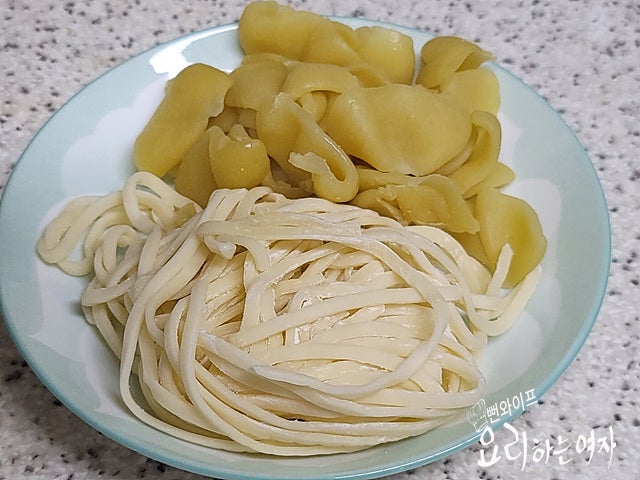
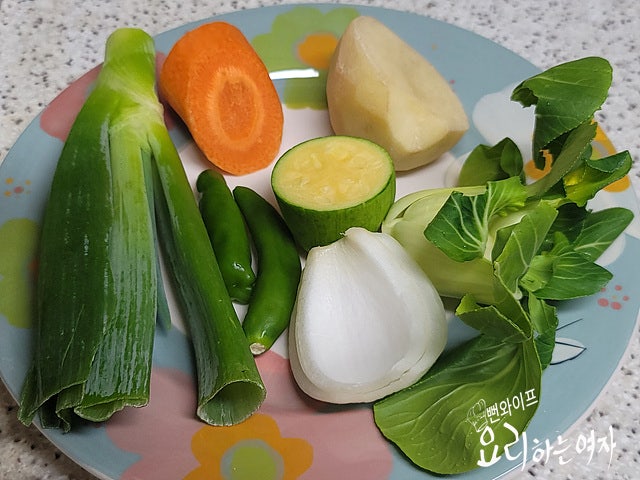
I prepared 150g of store-bought kalguksu noodles and 100g of store-bought sujebi dough.
I cleaned out leftover vegetable scraps from the fridge, so there is quite a variety. Just having potato, large green onion, and zucchini is more than enough.
Make the anchovy broth
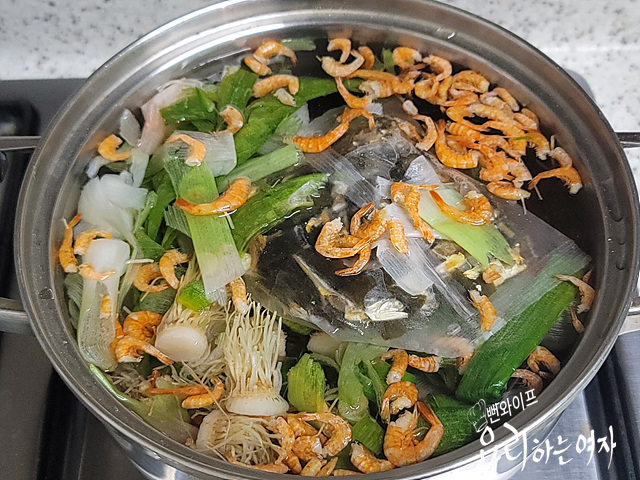
When making noodle dishes like janchi guksu, kalguksu, or sujebi, brewing a rich anchovy broth ensures the soup does not taste bland once the noodles go in, giving you much better flavor.
For the basic broth ingredients, add 20 soup anchovies, 1/2 cup dried shrimp, 3 sheets of dried kelp (5cm square), and 10 cups of water, then simmer gently for about 20 minutes.
I also threw in green onion roots, large green onion, and onion that were in the freezer.
Simmering like this will yield about 7 to 8 cups of broth.
Cut the vegetables
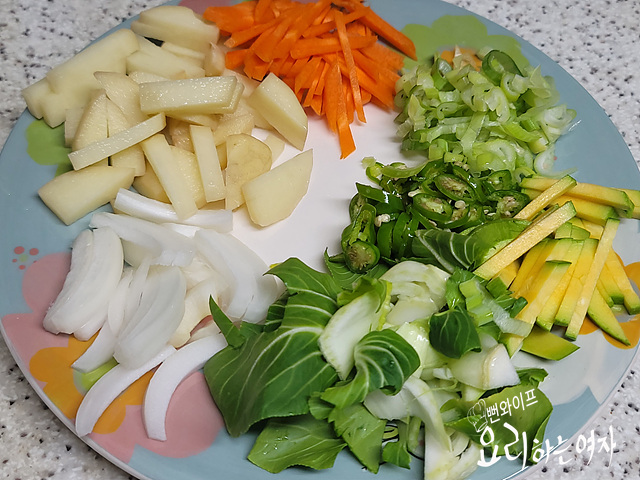
Cut the vegetables into bite-sized pieces.
Rinse starch off the noodles
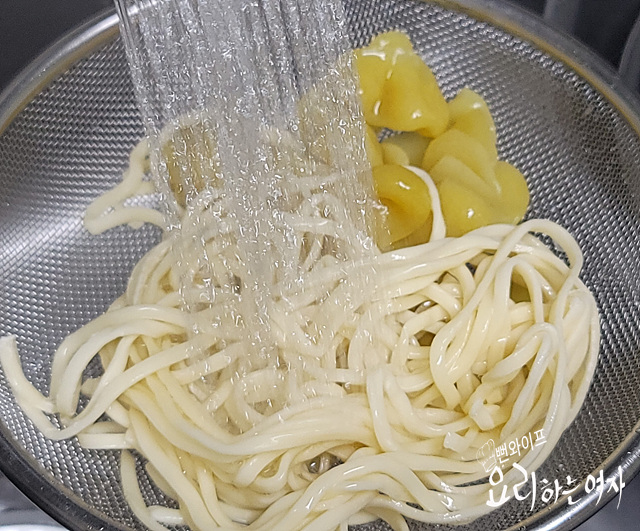
If you dislike thick and murky soup, rinsing the noodles once in cold water before adding them will keep the broth clean.
If you let them sit too long after rinsing, they will stick together, so do this right as the broth starts boiling.
Boil
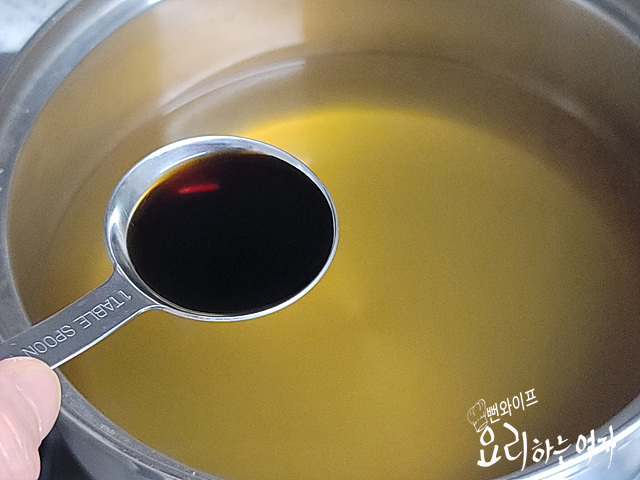
Add 1 tbsp of soup soy sauce to 6 cups of anchovy broth to season it, and bring it to a rolling boil.
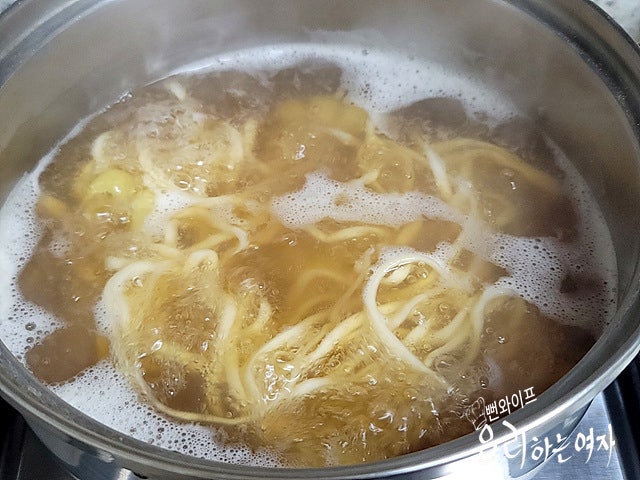
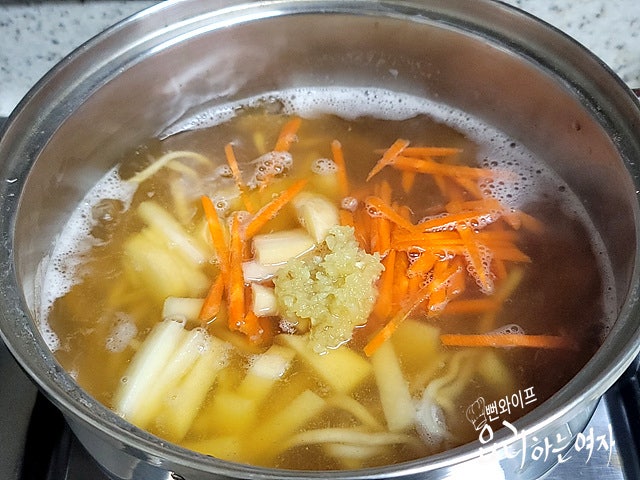
Add the kalguksu noodles and sujebi dough, and once it comes back to a boil, add the potato, carrot, and 1/2 tbsp of minced garlic, then cook until all the ingredients are tender.
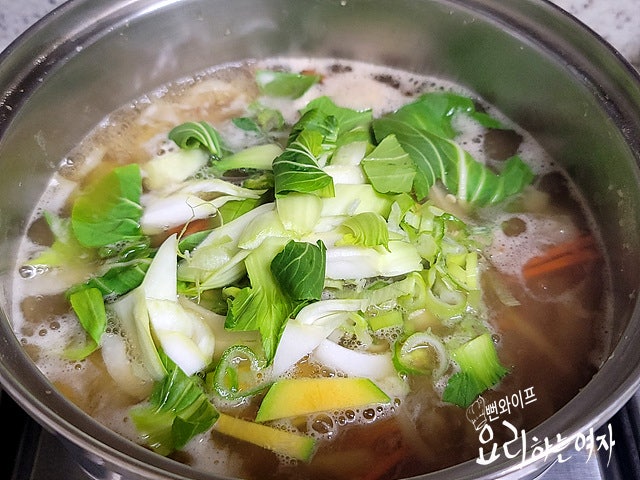
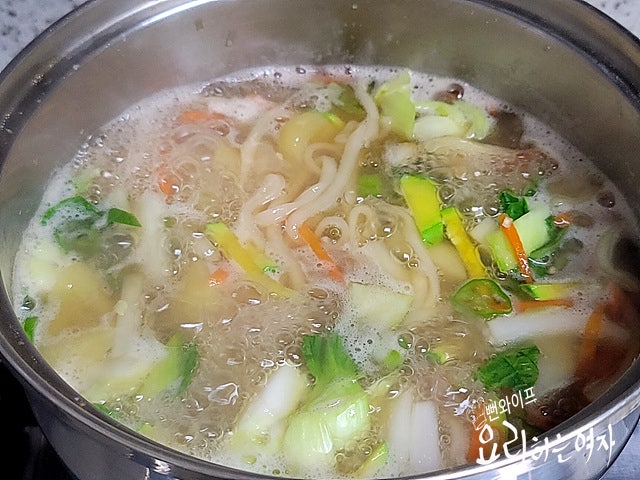
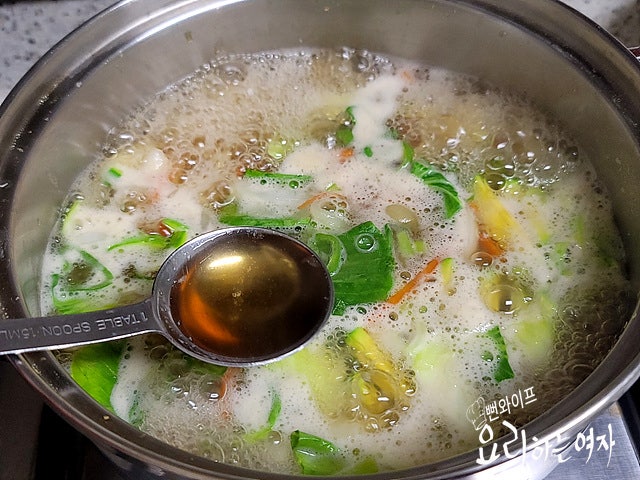
Add the remaining vegetables—onion, bok choy, zucchini, large green onion, and chili peppers—simmer briefly, taste, and season with 1 tbsp of tuna extract sauce or 1/2 tsp of salt.
Finish
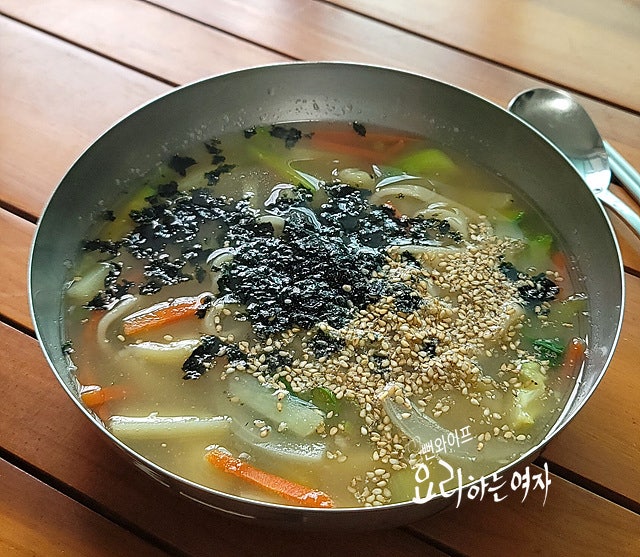
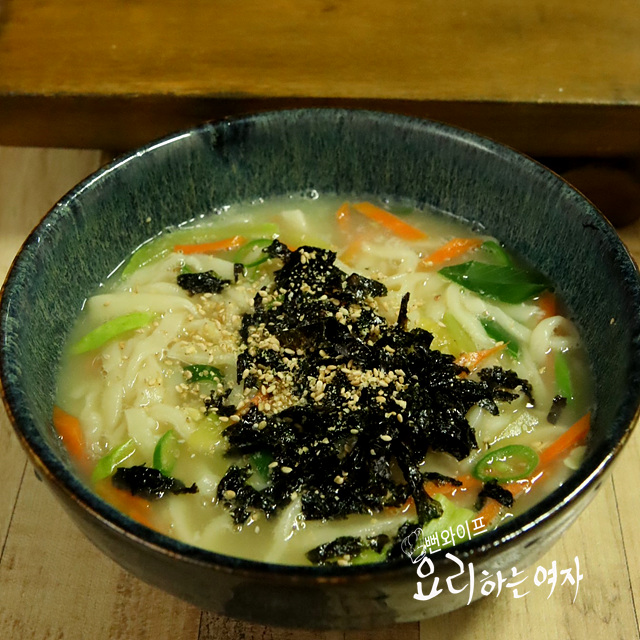
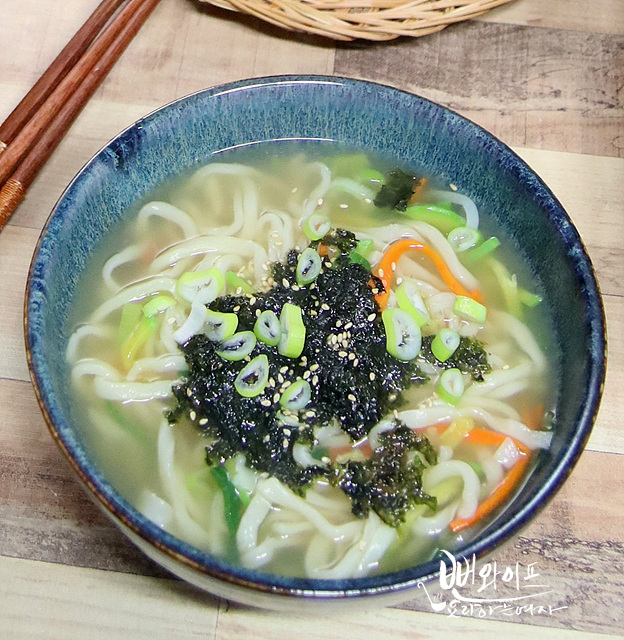
Ladle into a bowl and top with seaweed flakes and ground toasted sesame seeds, and your rich anchovy noodle soup is complete. Or rather, kaljebi.
 Ppunwife's tips
- When making noodle dishes like janchi guksu, kalguksu, or sujebi, brewing a rich anchovy broth ensures the soup does not taste bland once the noodles go in, giving you much better flavor.
- If you dislike thick and murky soup, rinsing the noodles once in cold water before adding them will keep the broth clean.
- If you let them sit too long after rinsing, they will stick together, so do this right as the broth starts boiling.
FAQ
How can I keep the broth clean instead of thick and murky?
Lightly rinsing excess surface starch off the kalguksu noodles in cold water keeps the broth clear rather than thick. However, if rinsed too far in advance the noodles will clump together, so rinse them just as the broth begins to boil.
What should I do if I don't have all the vegetables?
If you do not have many vegetable scraps on hand, using just potato, large green onion, and zucchini is plenty to create great flavor.
Can I use something else instead of tuna extract sauce for the final seasoning?
If you do not have tuna extract sauce, simply adjust the seasoning to your taste with 1/2 tsp of salt.