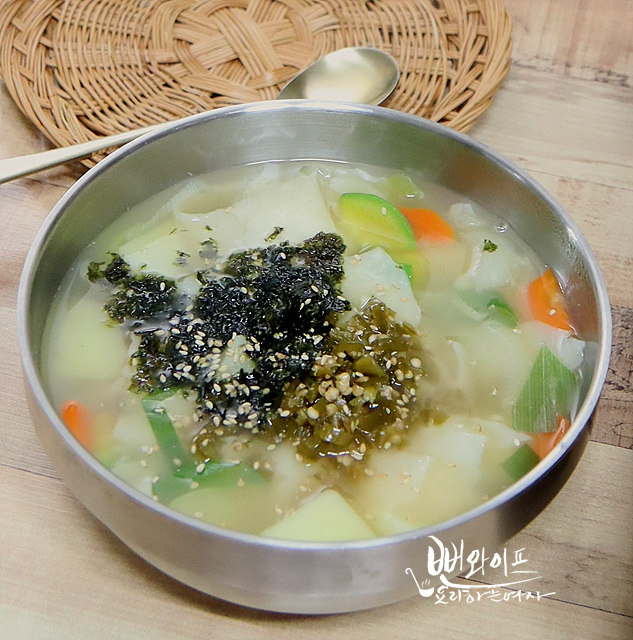
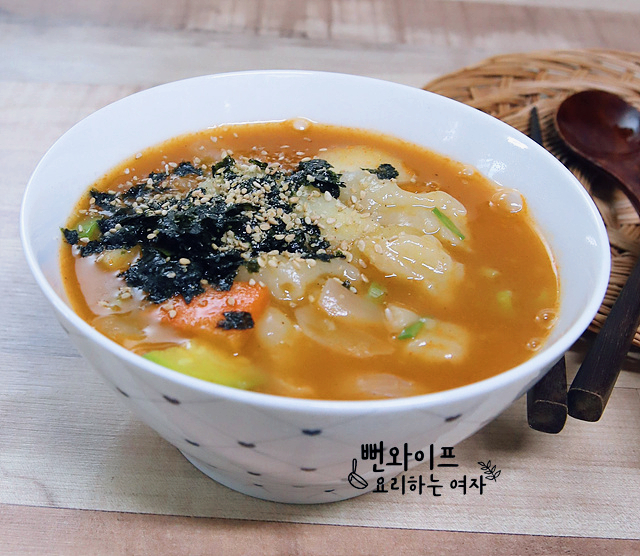
Chewy Gamja Sujebi (Hand-Torn Potato Noodle Soup)
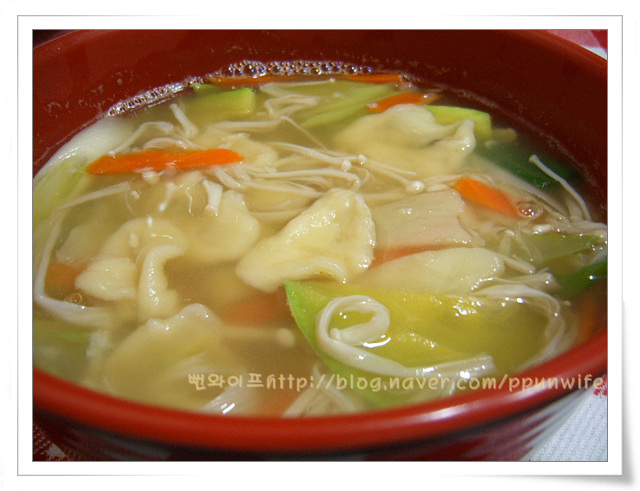
A 2-serving gamja sujebi featuring chewy dough kneaded with hot water and a rich seafood broth.
Translated from Korean by AI and not yet checked by a native speaker. Amounts and numbers are taken directly from the original recipe. Read the Korean original →
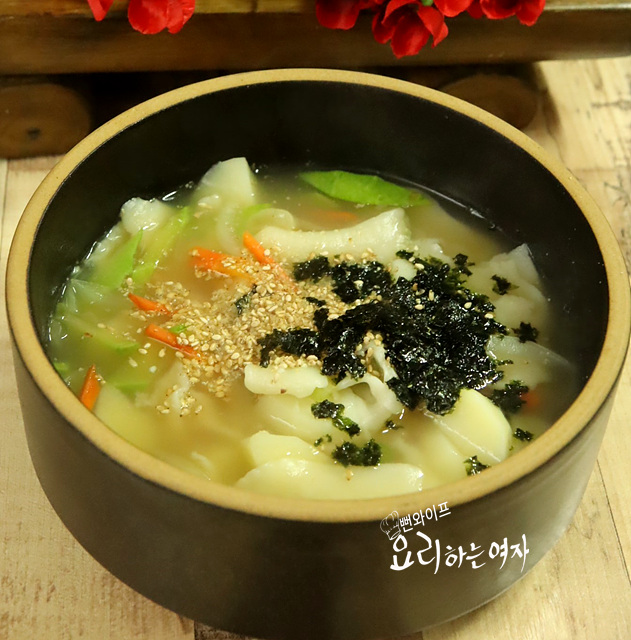
Using dough kneaded with hot water and aged in the refrigerator, the noodles stay springy and do not easily get soggy. Soft potatoes and vegetables are added to a broth simmered from toasted anchovies and dried shrimp for deep flavor. It is a hearty one-bowl dish made with simple, approachable ingredients.
- Servings
- 2 servings
- Difficulty
- Medium
- Spiciness
- Mildly spicy
Ingredients
Ingredients
- Potato2, 200 g
- Squash1/4
- Onion1/4
- Carrot1/5
- Large green onion (daepa)a little
- Cheongyang chili pepper (hot green chili)1
Broth ingredients
- Dried soup anchovies20
- Dried shrimp1/2 cup
- Dried kelp (dasima)3 pieces (5 cm square)
- Water10 cups
Sujebi dough ingredients
- Flour2 cups
- Hot water8 tbsp
- Salt1/2 tsp
- Cooking oil1 tbsp
Seasoning
- Soup soy sauce (guk-ganjang)1 tbsp
- Salt1/2 tsp
- Minced garlic1 tbsp
- Ground black peppera little
- Ground toasted sesame seeds
- Seaweed flakes
- Aside from the potatoes, you only need small amounts of the other vegetables.
- Kneading for about 10 minutes makes the dough chewy, and resting it in the refrigerator for at least 1 hour makes it tender.
Steps
Prepare the ingredients
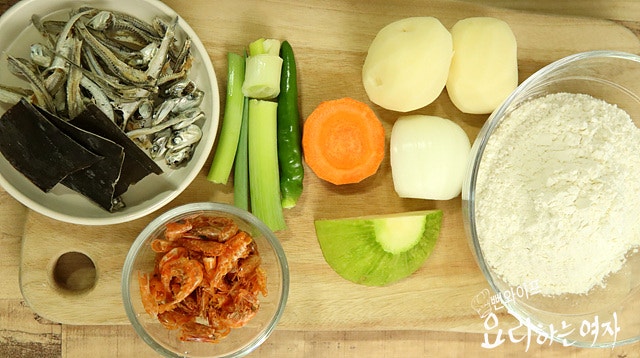
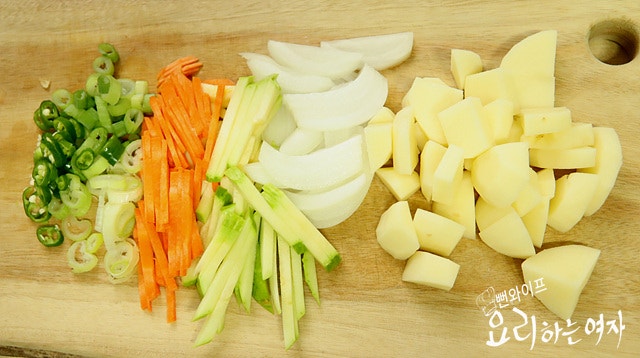
Aside from the potatoes, you only need small amounts of the other vegetables.
Here are the dried soup anchovies, dried kelp (dasima), and dried shrimp for the broth. Simmering anchovies and dried shrimp together creates much better umami flavor.
For the sujebi dough, use 2 cups of all-purpose flour.
Cut the potatoes into thick flat bite-sized pieces, and julienne the onion, squash, and carrot. Thinly slice the large green onion (daepa) and Cheongyang chili pepper (hot green chili).
Make the broth
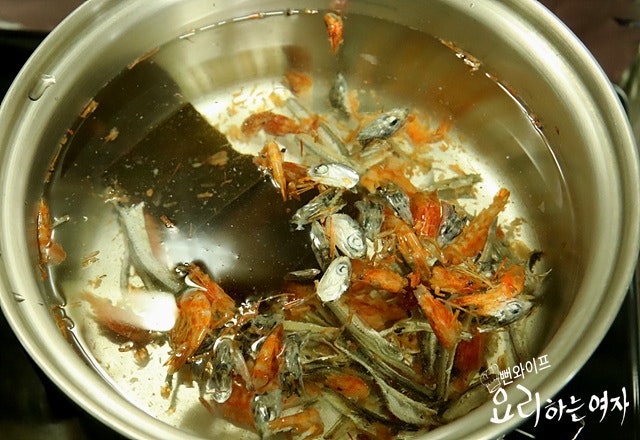
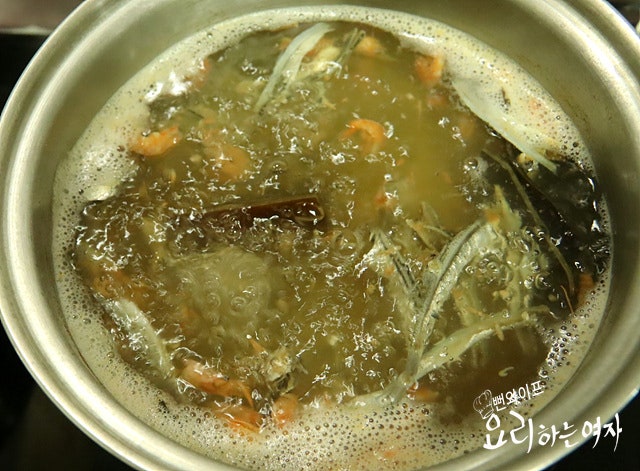
Toast the dried anchovies and dried shrimp in a dry pan until crisp to remove any unpleasant odor.
Pour in 10 cups of water, add the anchovies, shrimp, and dried kelp, and once it comes to a rolling boil, simmer gently for about 15 minutes.
Simmering this way will yield about 6 to 7 cups of broth.
Strain out the solid ingredients and save only the broth.
Knead the sujebi dough
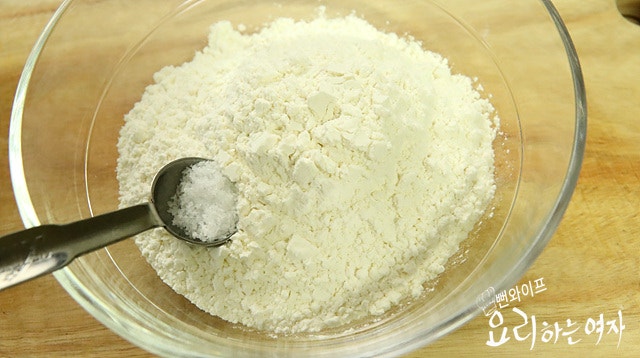
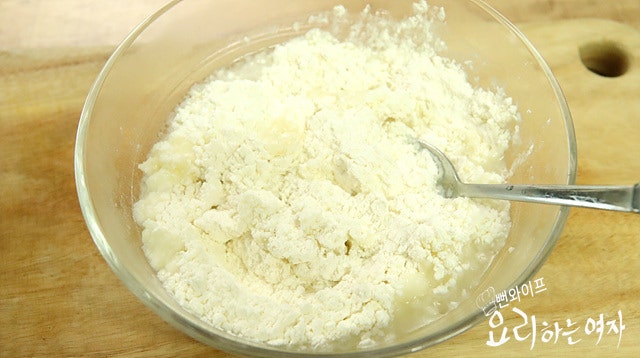
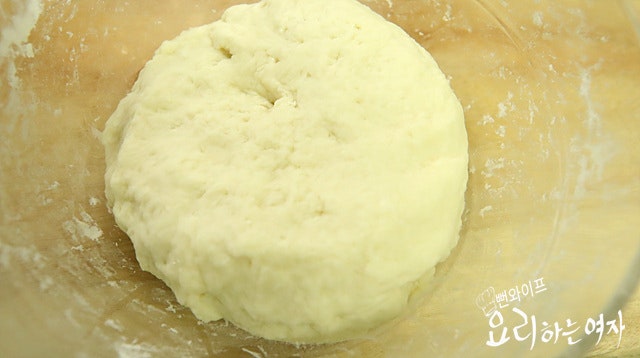
In 2 cups of flour, add 1/2 tsp of salt and 1 tbsp of cooking oil, then bring water to a rolling boil, add 8 tbsp of the hot water, and mix carefully.
Just like making hot-water dough (ikbanjuk) for rice dumplings, kneading flour dough with hot water helps it come together much faster and makes it pleasantly chewy.
It may feel like there is not enough water at first, but as you keep working it, it will reach the right dough consistency without sticking to your hands.
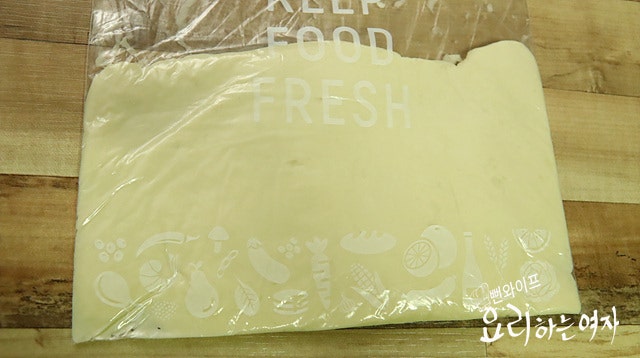
Since it was tiring to knead by hand, I put the dough in a zip-top bag, spread it out, covered it with a towel, and kneaded it by stepping on it with my feet.
Kneading for about 10 minutes makes the dough chewy, and resting it in the refrigerator for at least 1 hour makes it tender.
Resting it overnight makes the dough truly incredible, so keep that in mind and consider making the dough ahead of time.
If you roll it thin and slice it, you get kalguksu; if you roll it thick and cut it, it turns out like udon.
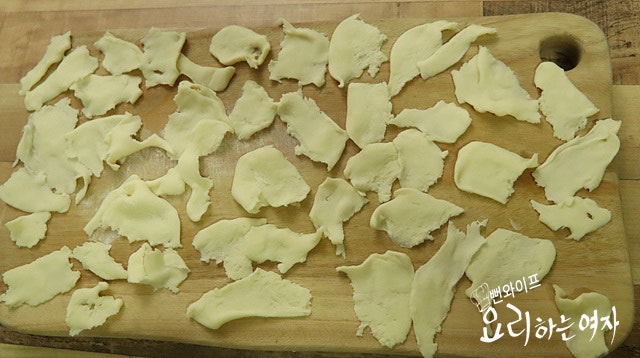
Here is my method for tearing sujebi.
It is difficult to tear and drop dough while standing over the heat, and the difference in timing means the pieces cook unevenly, so tearing them in advance is much more convenient.
Once torn ahead of time like this, all you have to do is quickly tip them into the boiling pot.
Season the broth
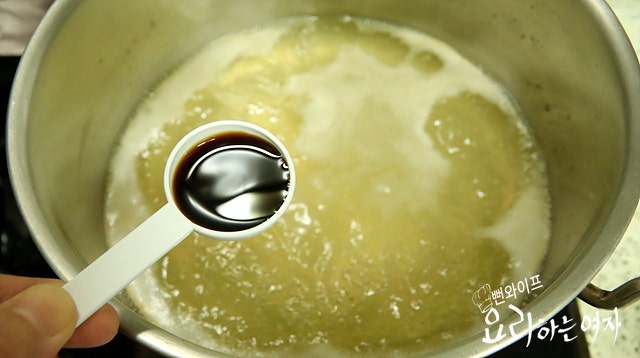
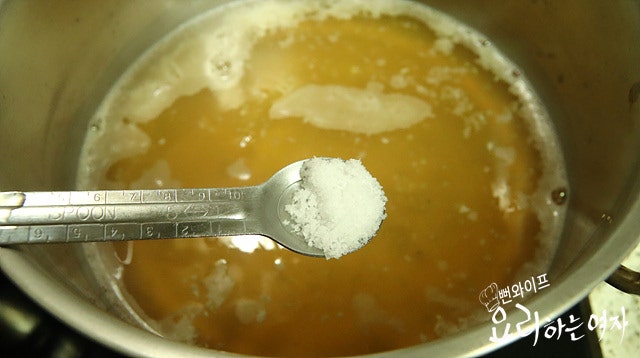
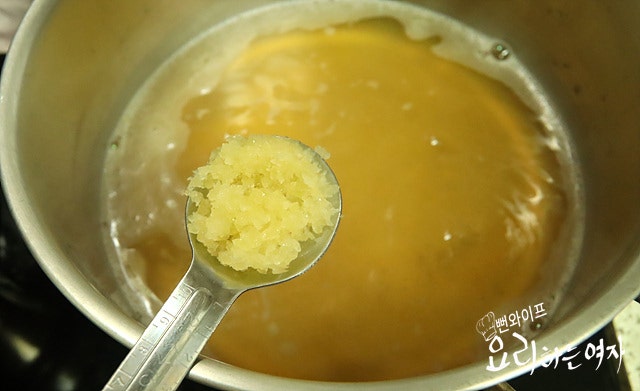
Add 1 tbsp of soup soy sauce (guk-ganjang), 1/2 tsp of salt, and 1 tbsp of minced garlic to the broth.
Add ingredients and boil
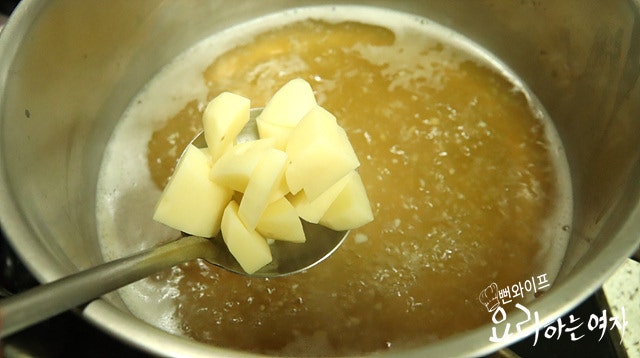
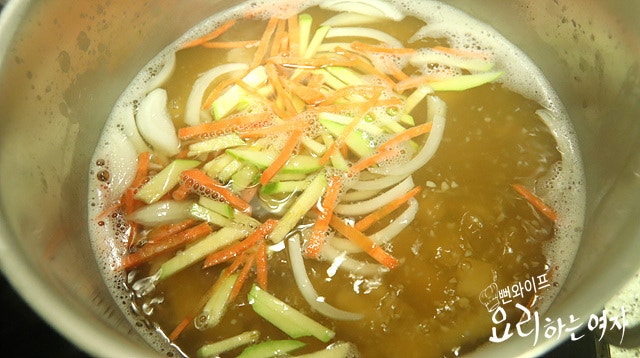
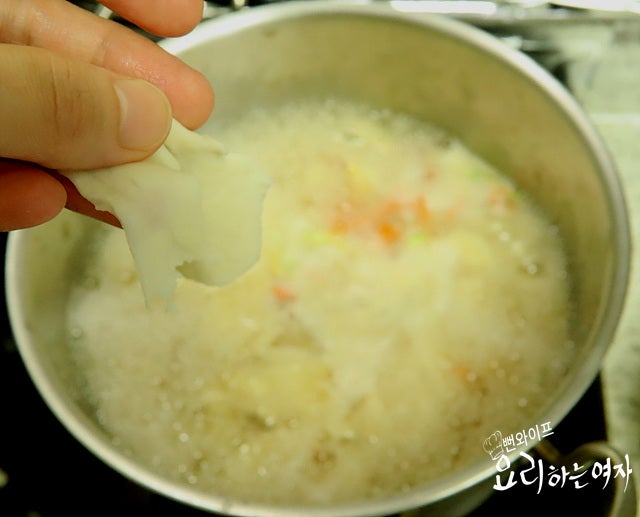
Add the potatoes, and once the broth comes to a boil, add the onion, squash, and carrot, then add all of the sujebi pieces as well.
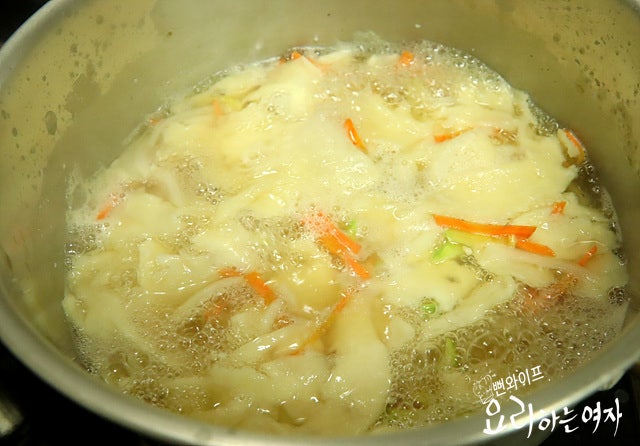
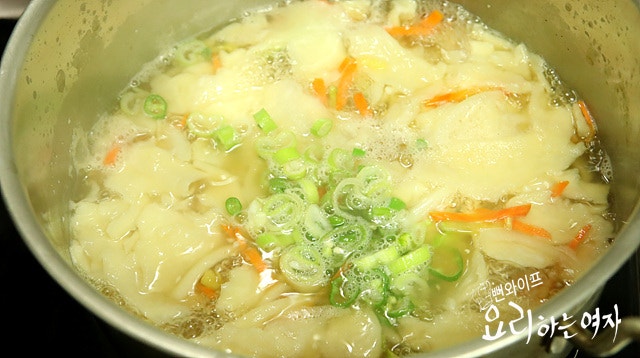
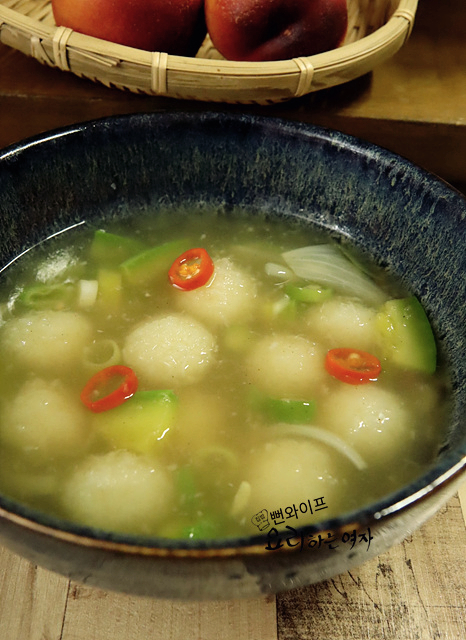
Once cooked, the sujebi will float up to the surface.
Taste the soup, adjust with salt if it tastes flat, then add the large green onion, Cheongyang chili pepper, and ground black pepper, boil briefly, and finish.
Finish
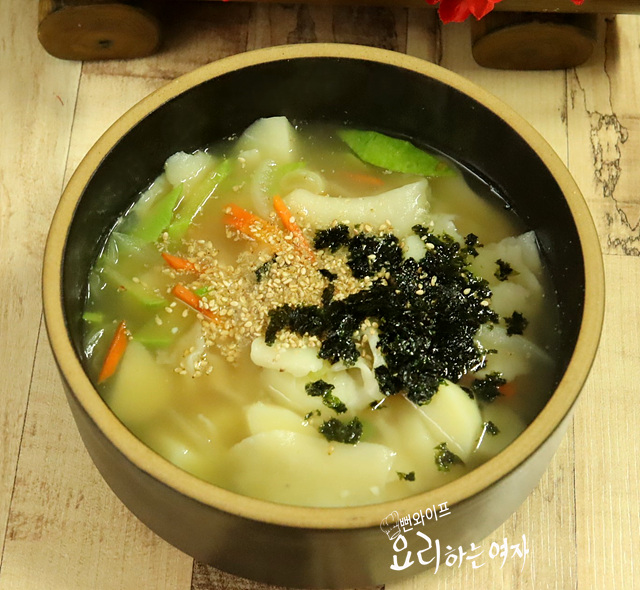
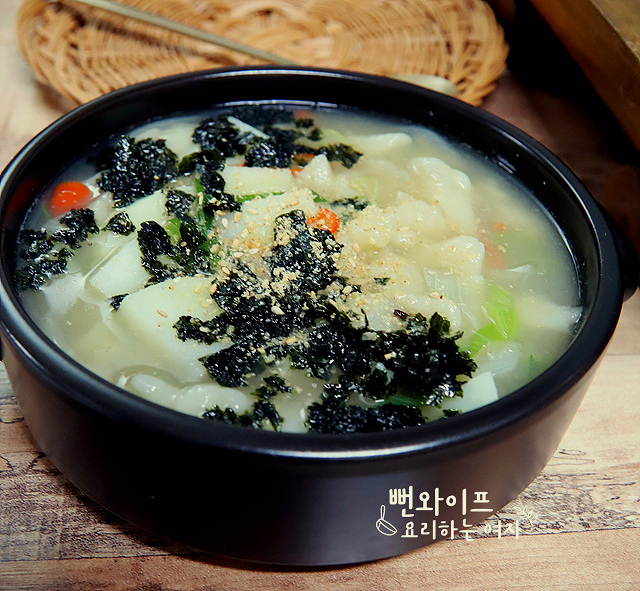
Ladle into a bowl, add ground toasted sesame seeds, and top with seaweed flakes to enjoy it even more.
Because the dough was made using the hot-water kneading method, it is much softer yet nicely springy.
Even though the sujebi was torn thin, it stays wonderfully chewy without getting soggy until you finish the whole bowl.
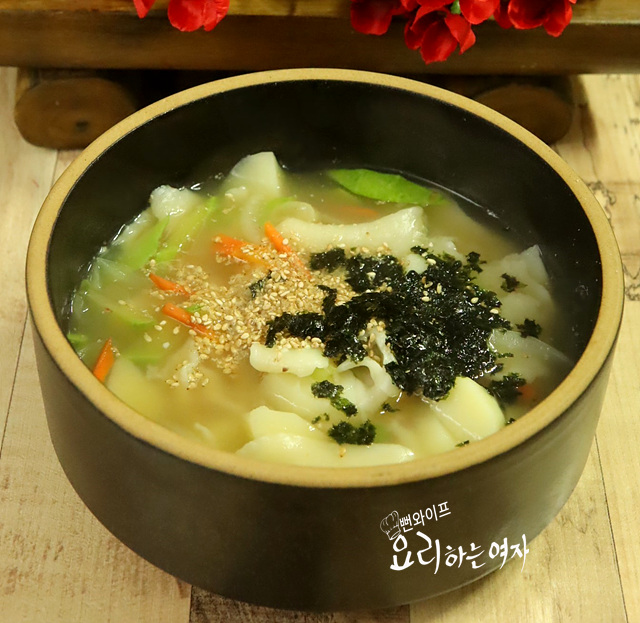
With a variety of vegetables added, the broth flavor is truly deep and rich.
It has been a while since I made gamja sujebi, and it is really delicious.
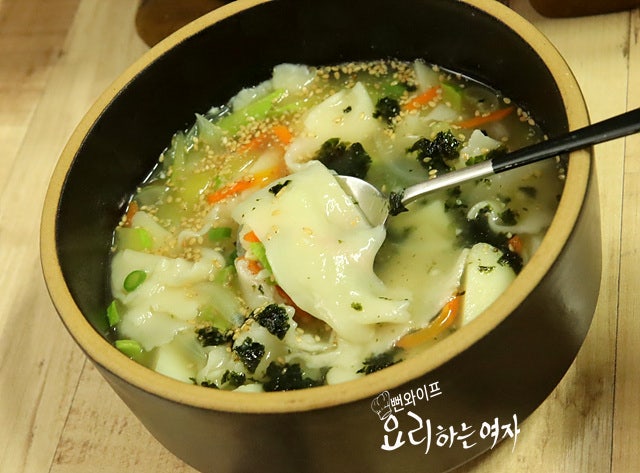
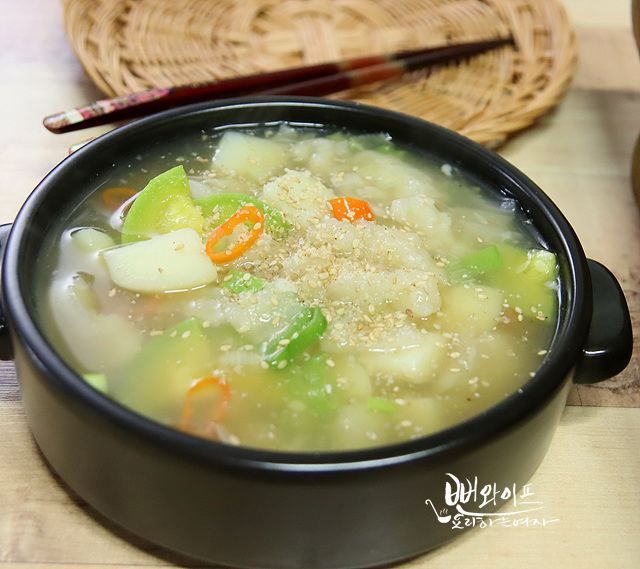
You can see just how springy the sujebi is, right?
Once you take a bite, the flavor of the broth and the texture of the sujebi will make it hard to stop.
Scooping up and eating the soft potatoes is wonderful too.
The secret to my sujebi is hot-water dough and resting. Be sure to make it and experience this delicious sujebi.
 Ppunwife's tips
- Simmering dried anchovies and dried shrimp together creates much better umami flavor.
- Toast the dried anchovies and dried shrimp in a dry pan until crisp to remove any unpleasant odor.
- Just like making hot-water dough for rice dumplings, kneading flour dough with hot water helps it come together much faster and makes it pleasantly chewy.
- Resting it overnight makes the dough truly incredible, so keep that in mind and consider making the dough ahead of time.
- It is difficult to tear and drop dough while standing over the heat, and the difference in timing means the pieces cook unevenly, so tearing them in advance is much more convenient.
FAQ
Is there a trick to making the sujebi dough chewy?
Kneading the flour with boiling-hot water, placing it in a zip-top bag to knead thoroughly, and resting it in the refrigerator for at least 1 hour makes it much softer and chewier.
What should I do if the sujebi pieces cook at different rates when dropped into the pot?
Instead of tearing and dropping them directly over the heat, tear the dough into thin pieces onto a tray in advance, then dump them all at once when the broth boils so they cook evenly.
Is there a way to reduce fishiness from the dried anchovies and dried shrimp?
Before boiling the broth, toasting the dried anchovies and dried shrimp in a dry pan without oil until crisp will eliminate unpleasant odors.