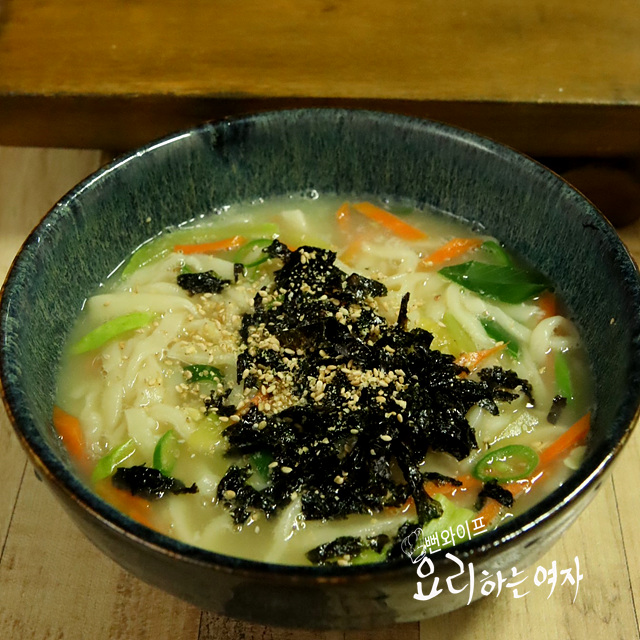
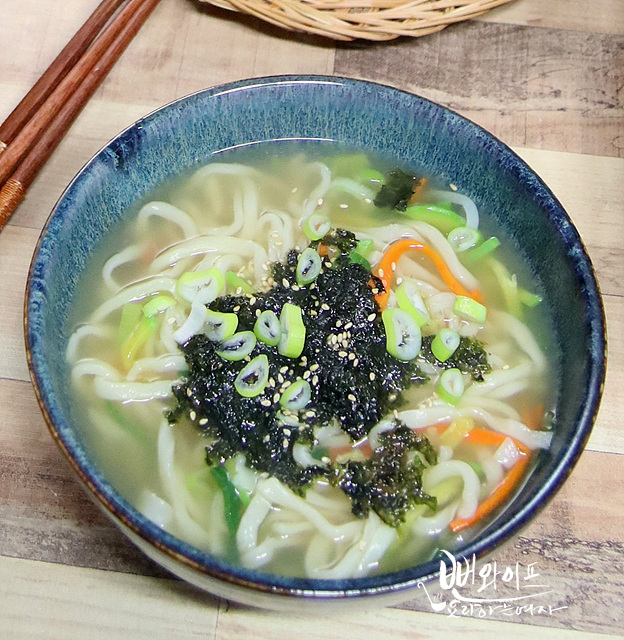
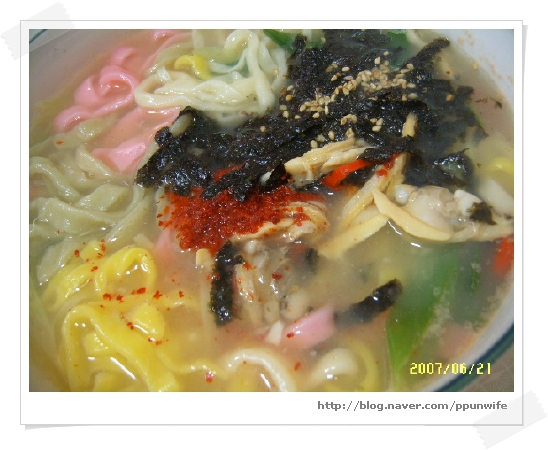
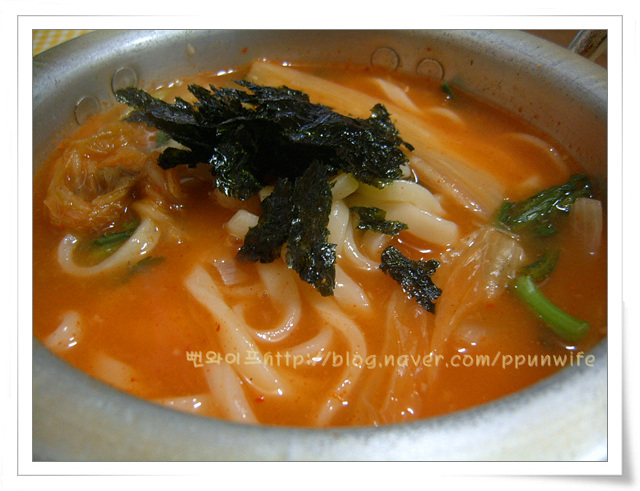
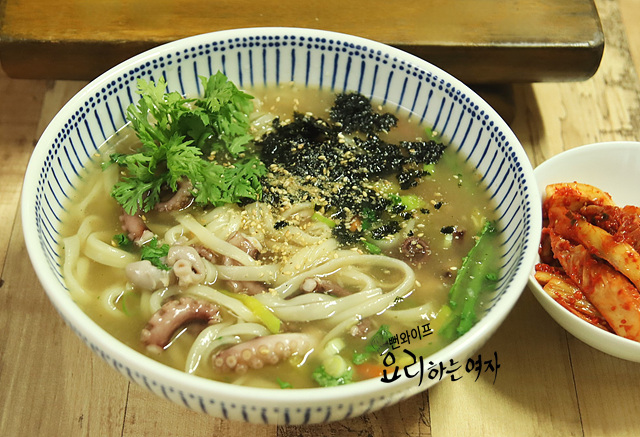
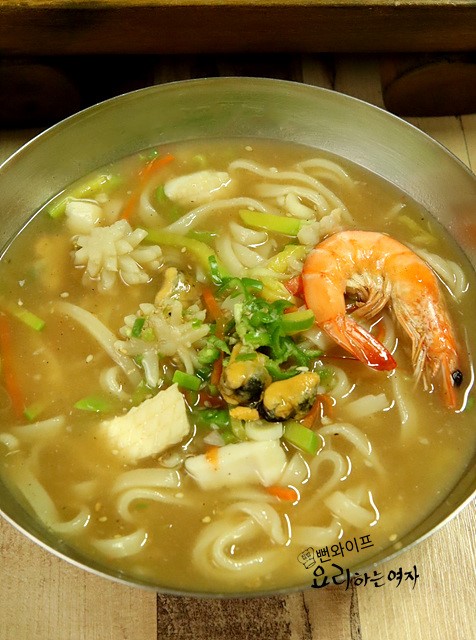
Hearty Son Kalguksu (Handmade Knife-Cut Noodle Soup)
A noodle soup featuring chewy noodles hot-water-kneaded and served in savory anchovy broth with cabbage.
Translated from Korean by AI and not yet checked by a native speaker. Amounts and numbers are taken directly from the original recipe. Read the Korean original →
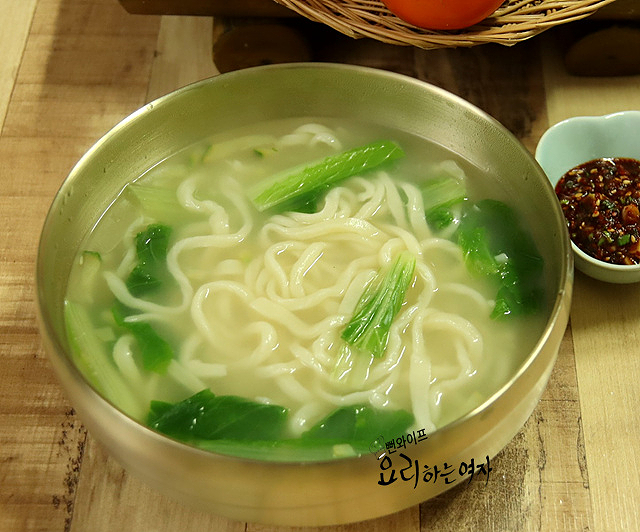
This noodle soup pairs springy noodles made with boiling-water dough with refreshing anchovy broth and eolgari cabbage. Placing the dough in a zip-top bag and kneading it with your feet easily gives it a wonderfully chewy texture. Top with a spoonful of spicy sauce to taste for a thoroughly satisfying one-bowl meal.
- Servings
- 2 servings
- Difficulty
- Medium
- Spiciness
- Mildly spicy
Ingredients
Ingredients
- Knife-cut wheat noodles (kalguksu)2 servings, 200 g
- Eolgari cabbage5 stalks
- Scallions (jjokpa) (or large green onion (daepa))2 stalks
- Anchovy broth (or 3 broth tablets + 6 cups water)6 cups
Noodle dough ingredients
- Flour2 cups
- Hot water8 tbsp
- Salt1/2 tsp
- Cooking oil1 tbsp
Sauce (serves 3–4)
- Gochugaru (Korean chili flakes)1 tbsp
- Soup soy sauce (guk-ganjang)1 tbsp
- Regular soy sauce (jin-ganjang) (or brewed soy sauce (yangjo-ganjang))2 tbsp
- Scallions (jjokpa)minced
- Sugar (or 1/2 tbsp green plum syrup (maesil-cheong))1/2 tsp
- Minced garlic1 tsp
- Toasted sesame seeds1/2 tbsp
- It is best to let it rest overnight in the refrigerator, or for at least 2 hours.
Steps
Knead the noodle dough
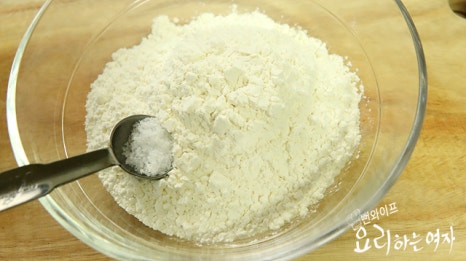
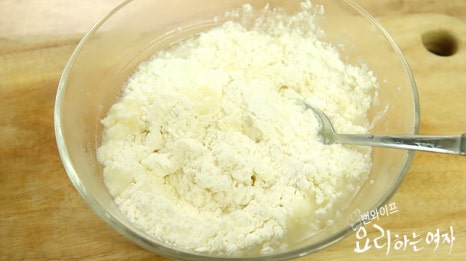
Add 2 cups flour, 1/2 tsp salt, and 1 tbsp cooking oil to a bowl and mix roughly.
Add 8 tbsp boiling water and mix with a spoon since it is hot.
Making a hot-water dough like when making rice dumplings brings the dough together quickly, makes it far chewier like Chinese-style hand-pulled noodles, and keeps the cooked noodles from getting soggy quickly.
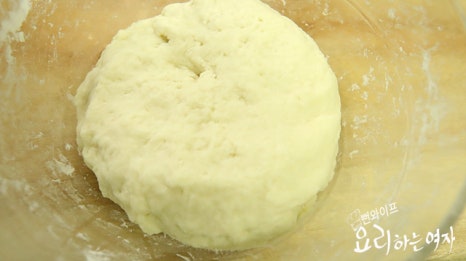
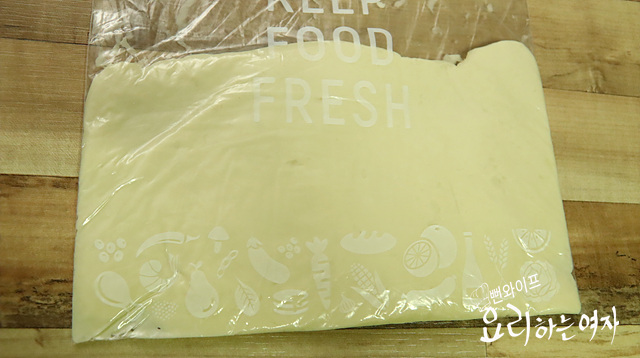
Bring it together roughly with your hands, place the dough flat in a zip-top bag, cover with a towel, and knead it by stepping on it with your feet to make a very springy dough. Knead for about 10 minutes; since kneading by hand is tough, stepping on it while standing like this is much easier.
It is best to let it rest overnight in the refrigerator, or for at least 2 hours.
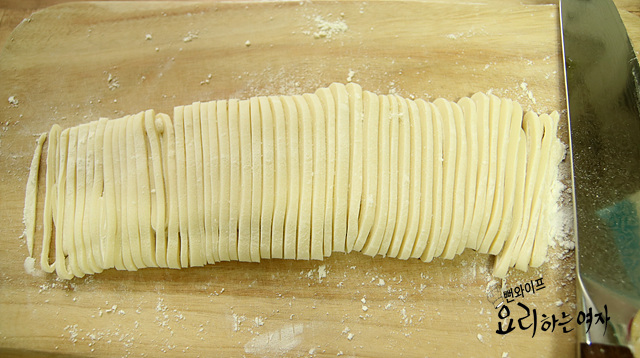
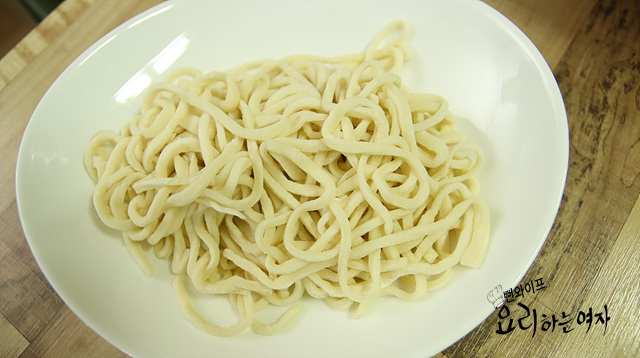
Roll out the dough to a suitable thickness and cut into noodles, then toss lightly with a little flour so they do not clump together.
If you roll the dough very thin and tear it by hand, you get sujjebi; if you roll it thicker and slice it, you get udon noodles.
You can make hand-pulled noodles at home that rival any store-bought kind.
Prepare the vegetables
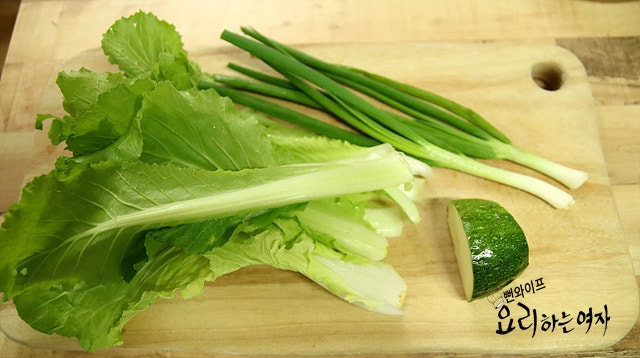
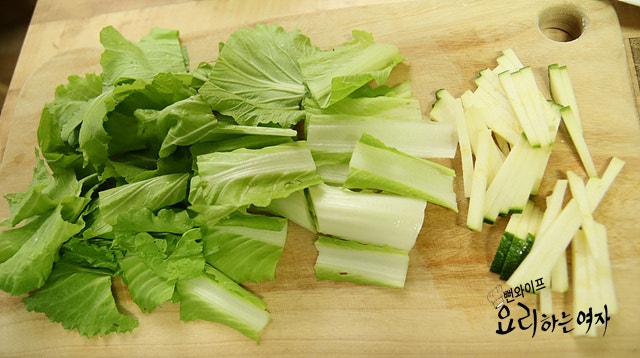
Prepare about 5 stalks eolgari cabbage, a little zucchini, and a bit of scallions or large green onion for the sauce.
Cut the cabbage into 3 to 4 pieces and julienne the zucchini.
Make the sauce
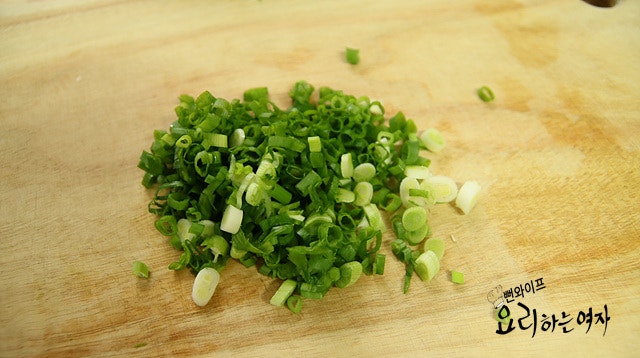
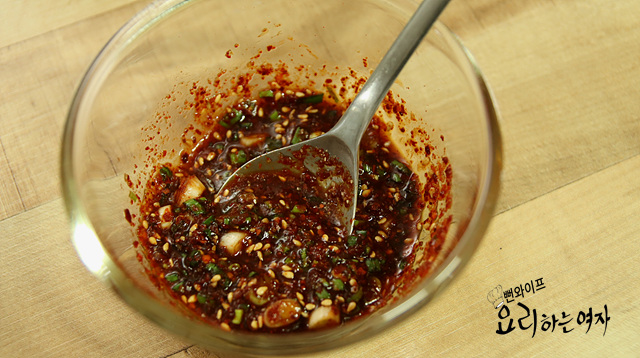
Finely chop the scallions and mix them together with the sauce ingredients.
This sauce is enough for 3 to 4 servings, so if you are making just 2 servings, cut the quantities in half.
Cook the noodles
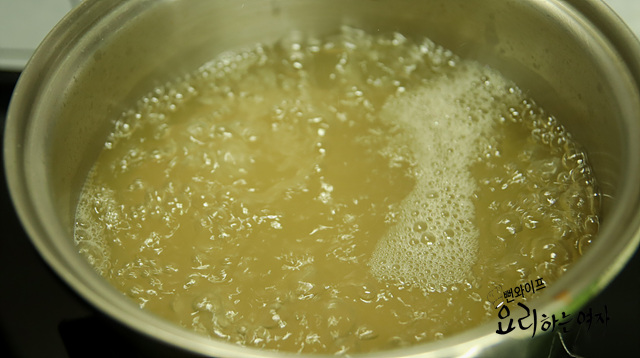
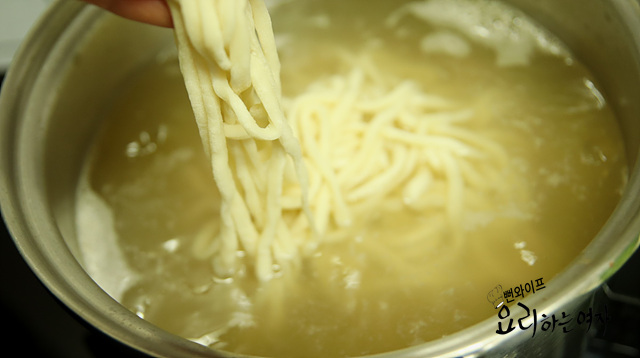
Shake off excess flour from the knife-cut wheat noodles (kalguksu) and drop them into rolling boiling anchovy broth, stirring immediately so they do not stick together.
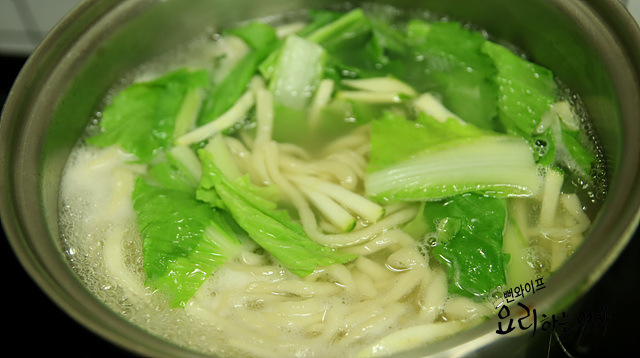
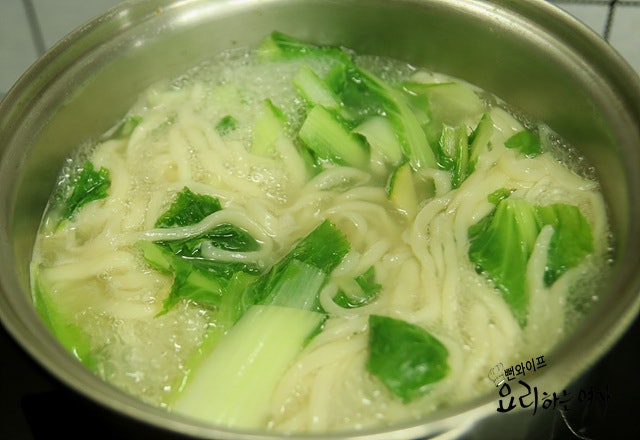
Add the cabbage and zucchini as well.
As it boils vigorously and cooks, the noodles are done once they float to the surface.
Serve
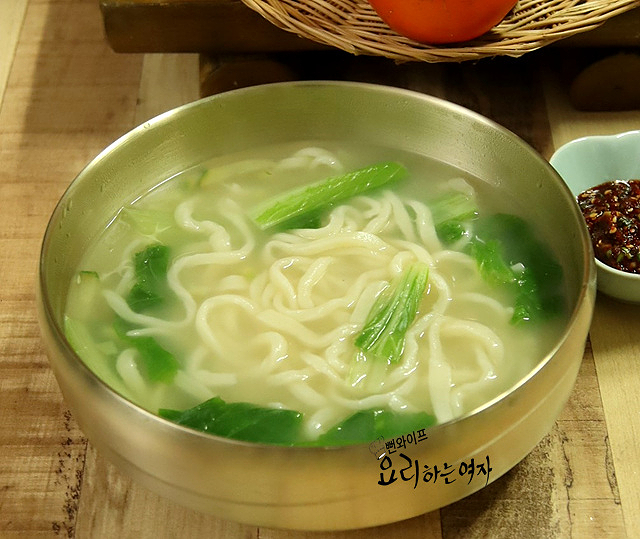
Once the handmade knife-cut noodles are kneaded and ready, finishing the dish is quick and easy.
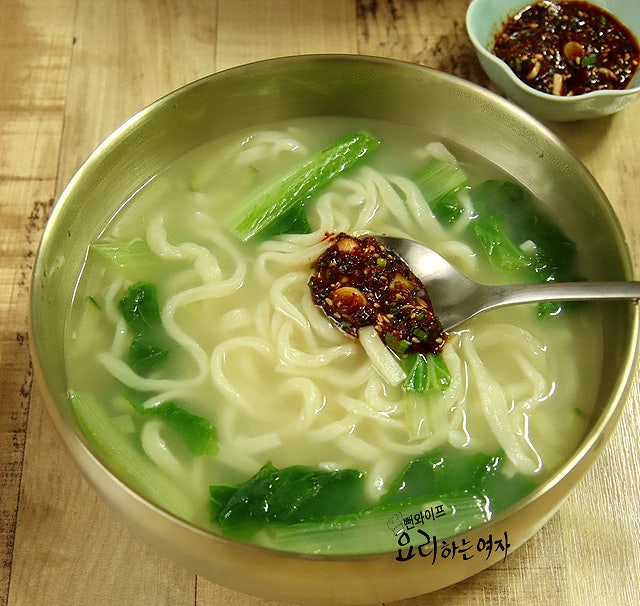
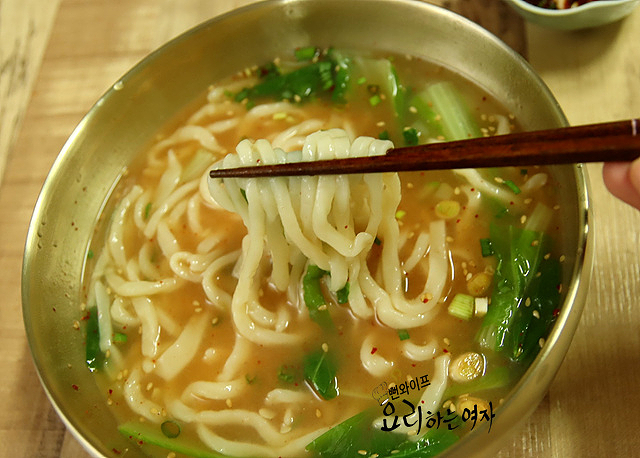
Stir in a little sauce, slurp up the chewy, springy noodles, and drink the savory, deeply flavorful anchovy broth for an utterly delicious meal.
It feels like rediscovering a taste from my childhood after such a long time.
I hope you all enjoy it too.
 Ppunwife's tips
- Making a hot-water dough brings the dough together quickly, makes it far chewier like Chinese hand-pulled noodles, and prevents the cooked noodles from turning soggy quickly.
- Place the dough flat in a zip-top bag, cover with a towel, and step on it with your feet to make a remarkably springy dough. Kneading by hand is hard work, so doing it standing up is much easier.
- Roll the dough to a suitable thickness, cut it, and gently shake it with a dusting of flour so the noodles do not clump.
- As it boils vigorously, the noodles are fully cooked when they float to the surface.
FAQ
Why use hot water when kneading the dough?
Kneading with boiling water helps the dough come together quickly, makes the noodles far chewier, and keeps them from getting soggy easily after cooking.
How do you know when the handmade knife-cut noodles are done?
When the broth boils vigorously and the submerged noodles float to the surface, they are properly cooked all the way through.
How long should the noodle dough rest?
It is best to let it rest in the refrigerator overnight, but if you are short on time, resting for at least 2 hours is recommended.