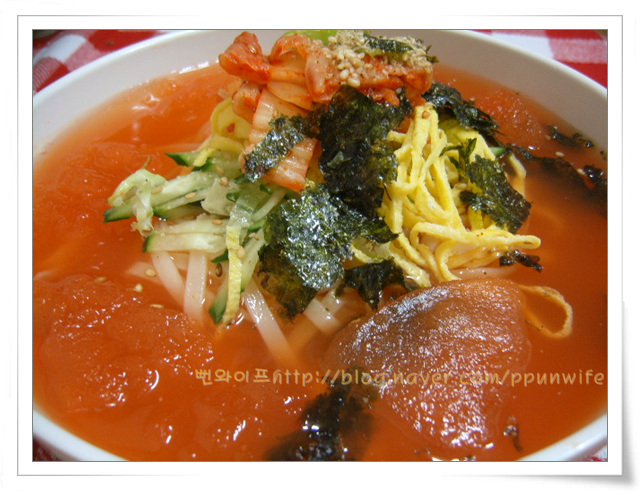
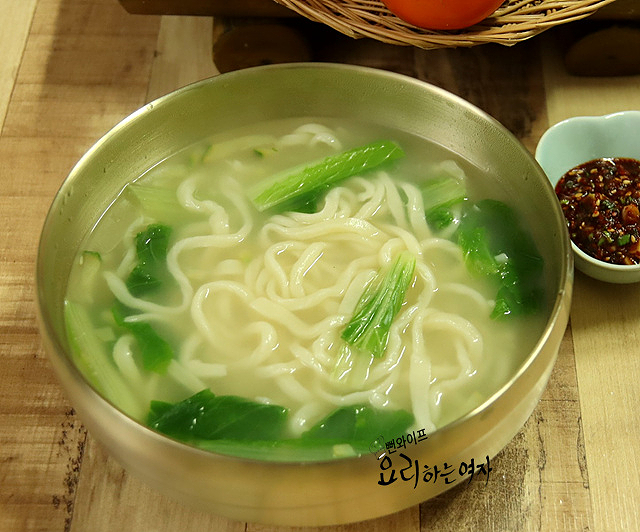
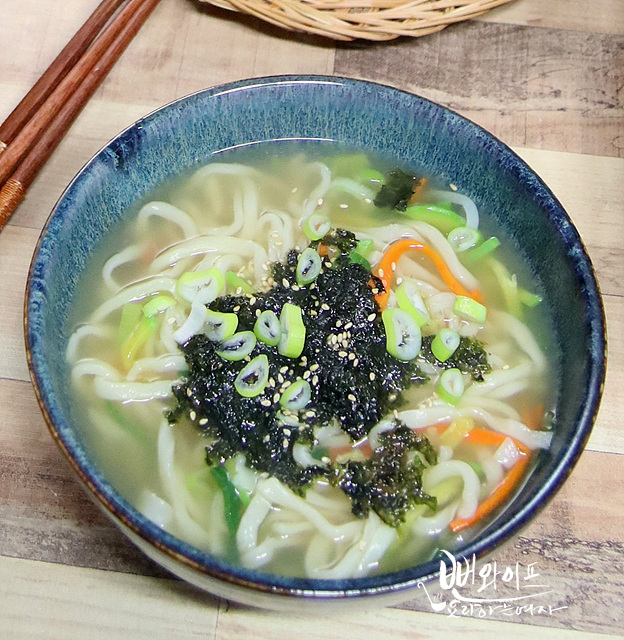
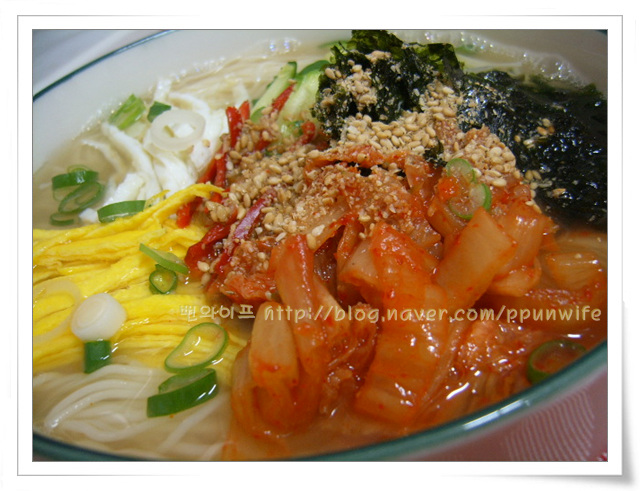
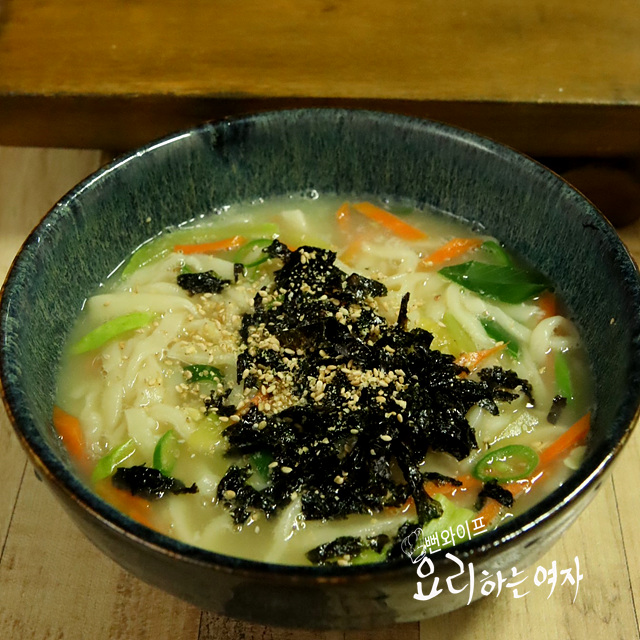
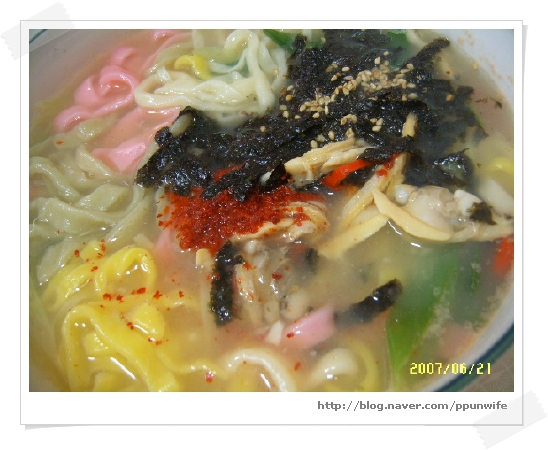
Refreshing Kimchi Kalguksu (Kimchi Noodle Soup)
A spicy and refreshing noodle dish flavored with ripe kimchi and its brine in an anchovy broth.
Translated from Korean by AI and not yet checked by a native speaker. Amounts and numbers are taken directly from the original recipe. Read the Korean original →
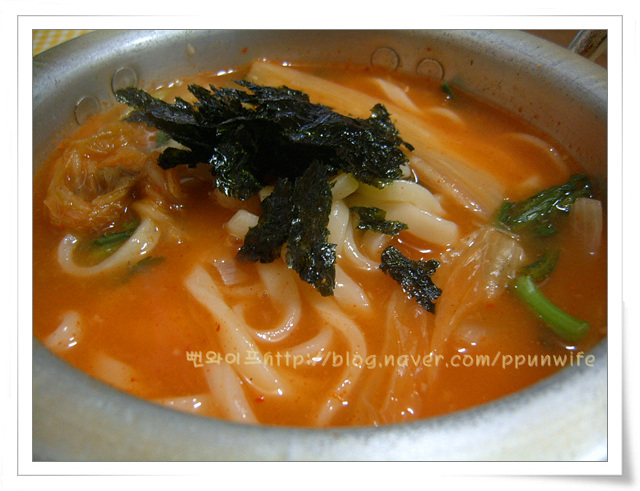
This 2-serving noodle dish features a refreshing savoriness, made by adding well-fermented kimchi and kimchi brine to a broth simmered from dried anchovies and dried kelp. It is perfect for preparing an easy meal with basic vegetables you have at home on cold days. It is also great enjoyed with Cheongyang chili peppers or seasoned seaweed flakes added to taste.
- Servings
- 2 servings
- Difficulty
- Easy
- Spiciness
- Mildly spicy
Ingredients
Ingredients
- Knife-cut wheat noodles (kalguksu)2 servings
- Kimchi3-4 leaves
- Onion1/4
- Squash1/4
- Large green onion (daepa)1/2 stalks
- Ssukgat (crown daisy)a little
- Anchovy broth5-6 cups
Seasoning
- Kimchi brine1/3 cup (4 tbsp)
- Minced garlic1 tbsp
- Ground black peppera little
- Pour 7 cups of cold water over 2 pieces of dried kelp (dasima, 5 cm square) and let them steep for 30 minutes.
- Prepare small amounts of vegetables based on what is in your refrigerator; mushrooms or spicy Cheongyang chili peppers are also good.
- Prepare nicely fermented, tart kimchi.
Steps
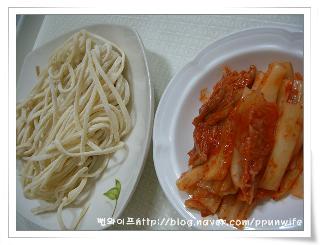
1. Here are 2 servings of knife-cut wheat noodles (kalguksu) and 3-4 leaves of kimchi.
Prepare nicely fermented, tart kimchi and cut it into bite-sized pieces.
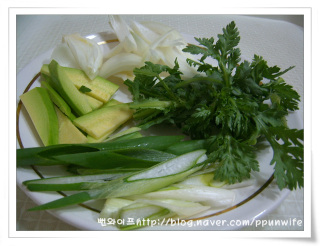
2. You can prepare small amounts of vegetables based on what is in your refrigerator.
Mushrooms or spicy Cheongyang chili peppers are also good.
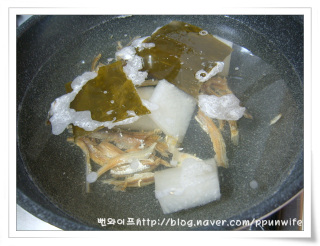
3. Pour 7 cups of cold water over 2 pieces of dried kelp (dasima, 5 cm square) and let them steep for 30 minutes; to this water, add a handful of dried anchovies and
2 thick slices of Korean radish (mu, 4-5 cm thick) and bring to a boil. Once it begins to boil, remove the dried kelp,
let it simmer gently for over 10 minutes, and then remove all solid ingredients. The broth brewed this way yields 5-6 cups.
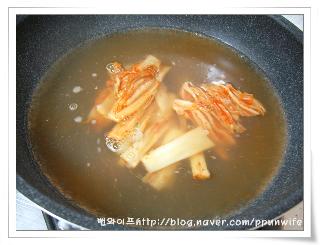
4. Add the kimchi to the anchovy broth and bring it to a rolling boil. Once the kimchi turns tender...
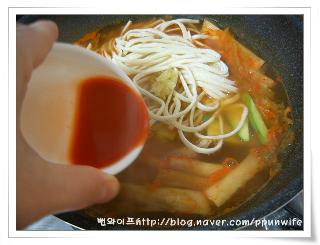
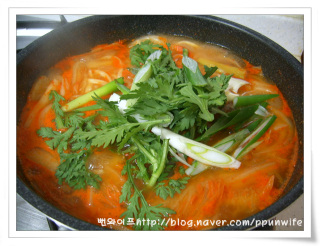
5. Add the knife-cut wheat noodles, squash, onion, minced garlic, and kimchi brine, then bring to a boil.
Seasoning with tart kimchi brine brings out a savory depth, making the broth much more delicious.
The kimchi brine alone provides enough seasoning, but if it is bland, adjust with salt.
If you want a clearer broth, you can boil the knife-cut wheat noodles in a separate pot and add them at the very end.
6. When the noodles are almost cooked through, add the ssukgat (crown daisy), large green onion (daepa), and ground black pepper, then boil briefly.
For extra heat, you can slice and add Cheongyang chili pepper or add gochugaru (Korean chili flakes) at the end.
 Ppunwife's tips
- Seasoning with tart kimchi brine brings out a savory depth, making the broth much more delicious.
- The kimchi brine alone provides enough seasoning, but if it is bland, adjust with salt.
- If you want a clearer broth, you can boil the knife-cut wheat noodles in a separate pot and add them at the very end.
- For extra heat, you can slice and add Cheongyang chili pepper or add gochugaru (Korean chili flakes) at the end.
- It is also delicious served with crushed seaweed flakes on top.
FAQ
Is there a way to make the broth clear rather than thick and cloudy?
If you boil the noodles separately in another pot and then add them to the broth right before finishing, the broth will be much cleaner.
What should I do if seasoning with kimchi brine alone is not enough?
Kimchi brine provides the basic seasoning, but taste it first; if it is too bland, simply adjust the taste by adding salt.
What should I add to make it more pungent and spicy?
Depending on your preference, you can add heat by slicing in Cheongyang chili peppers or adding gochugaru (Korean chili flakes) at the final stage of cooking.