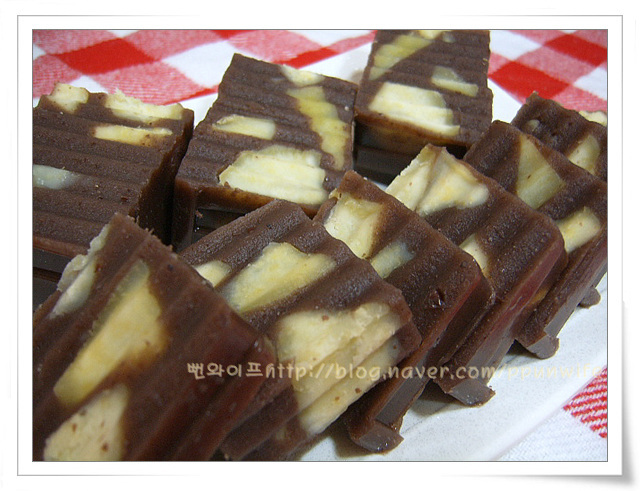
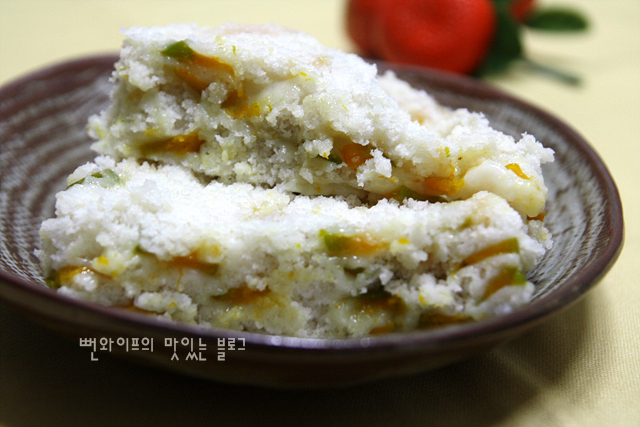
Sweet and Chewy Danhobak Yanggaeng (Sweet Kabocha Squash Jelly)
A sweet, chewy treat made by simmering steamed kabocha squash with agar-agar powder and chilling it until set.
Translated from Korean by AI and not yet checked by a native speaker. Amounts and numbers are taken directly from the original recipe. Read the Korean original →
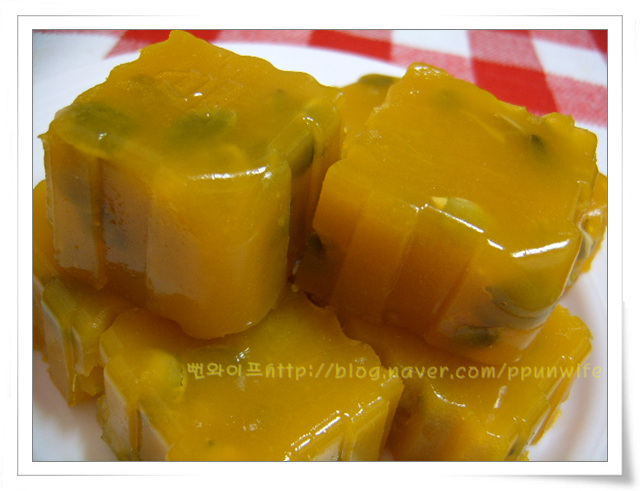
This yanggaeng is made by simmering steamed kabocha squash with minimal sugar and corn syrup to highlight its natural sweetness. Anyone can easily make it by boiling the agar-agar mixture, stirring in the mashed kabocha squash, and letting it set over low heat. Made with simple, accessible ingredients, it is perfect as a holiday gift or a wholesome snack.
- Servings
- about 3–4 servings
- Difficulty
- Easy
- Spiciness
- Not spicy
Ingredients
- Steamed kabocha squash200 g
- Water1 cup
- Agar-agar powder2/3 tbsp (7 g)
- Sugar2 tbsp
- Corn syrup (mulyeot)2 tbsp
- Salta little (the amount pinched between thumb and forefinger)
- You can also make this with diced canned chestnuts or steamed sweet potatoes.
- It is even better if you steam the kabocha squash with the skin on.
Steps
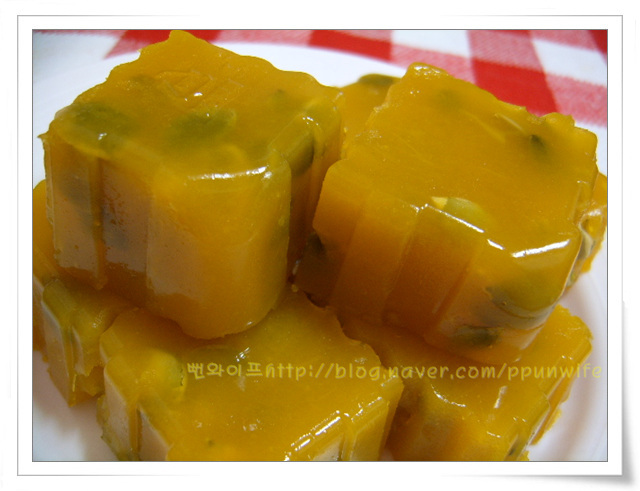
Danhobak yanggaeng (sweet kabocha squash jelly)
Ingredients: 200 g steamed kabocha squash, 1 cup water, 2/3 tbsp (7 g) agar-agar powder, 2 tbsp sugar, 2 tbsp corn syrup (mulyeot), a pinch of salt (the amount pinched between thumb and forefinger)
7 g of agar-agar powder is 2/3 tbsp. Correcting 2/3 tsp ⇒ 2/3 tbsp. (I apologize deeply for the mistake.)
(You can also make this with diced canned chestnuts or steamed sweet potatoes.)
Refer to the measurement conversion table when baking. ⇒ http://blog.naver.com/ppunwife/140051634263
■ 1 tbsp (Ts) - 15 ml (use an adult soup spoon instead)
■ 1 tsp (ts) - 5 ml (use a teaspoon instead)
■ 1 cup (cup) - 200 ml (a standard paper cup)
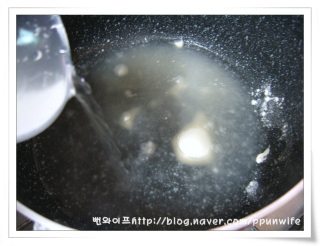
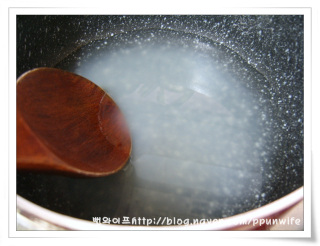
1. In a deep pan, pour the agar-agar powder and 1 cup of cold water, then let it sit for about 10 minutes to bloom.
2. Simmer over low heat, stirring with a spatula until gently bubbling.
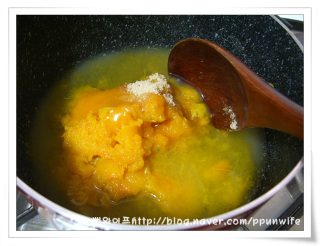
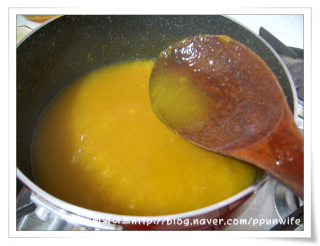
3. Add the steamed kabocha squash, sugar, and a pinch of salt, then simmer gently while stirring. About 5 minutes...
(It is even better if you steam the kabocha squash with the skin on.)
4. Add the corn syrup (mulyeot) and simmer for 1-2 minutes more.
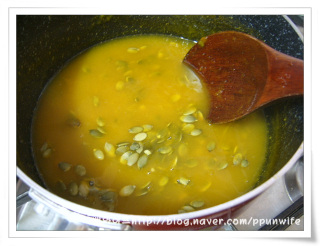
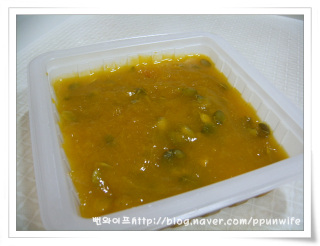
5. At the end, I added pumpkin seeds and mixed them in, but canned chestnuts or boiled sweet potatoes are also great.
Let it cool down at room temperature to some extent, then pour it into a mold.
6. This is an empty tofu container, and since I did not have a yanggaeng mold, using this worked out really well.
(If setting it in an airtight container, you can lightly coat it with oil before pouring the mixture.)
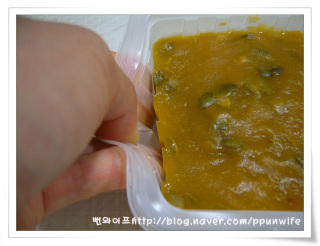
After chilling in the refrigerator for 1-2 hours to set, pulling gently on the sides by hand made it come right off.
Loosen it slightly like that all around, then turn it upside down onto a plate and it will pop right out.
 Ppunwife's tips
- If setting it in an airtight container, you can lightly coat it with oil before pouring the mixture.
- If you have a sweet tooth, it might taste a bit bland, so increase the amount of sugar when making it.
FAQ
If I do not have a yanggaeng mold, what kind of container should I use to set it?
You can use an empty tofu container as a mold, or lightly coat an airtight container with oil before pouring in the mixture so it releases cleanly.
Can I add ingredients other than pumpkin seeds as mix-ins?
Canned chestnuts or diced boiled sweet potatoes work wonderfully, and you can also adapt it by adding red bean paste according to your preference.
How can I adjust it to make it sweeter?
This recipe keeps the base sweetness low to match the natural sweetness of kabocha squash, so if you prefer a sweeter taste, simply increase the amount of sugar to your liking.