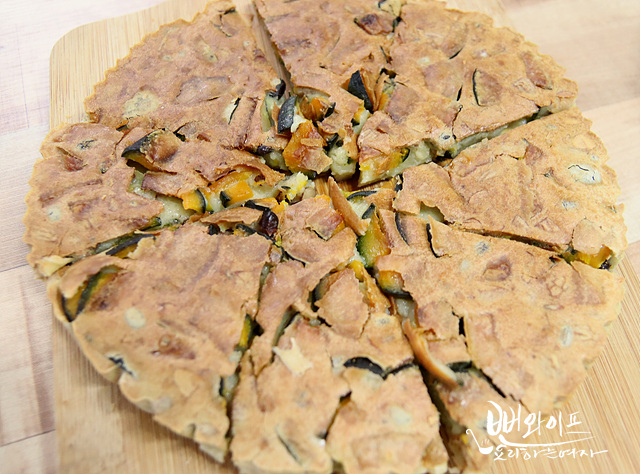
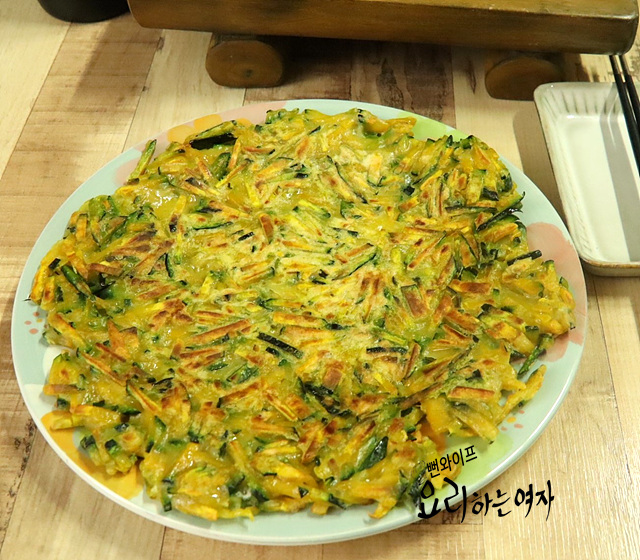
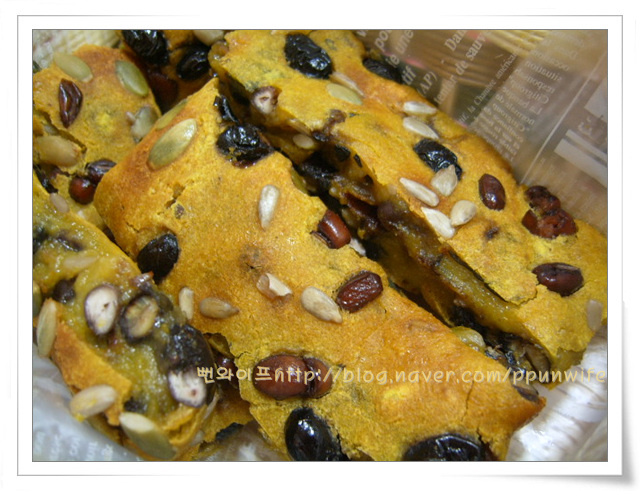
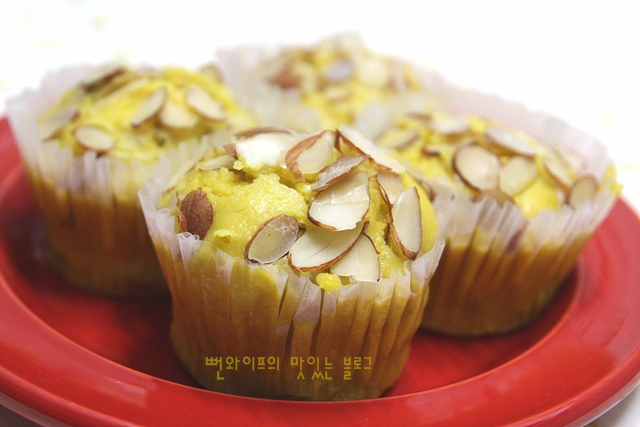
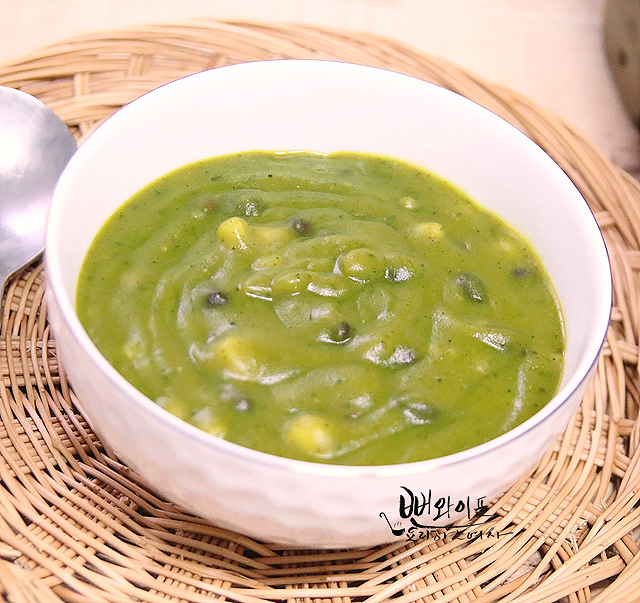
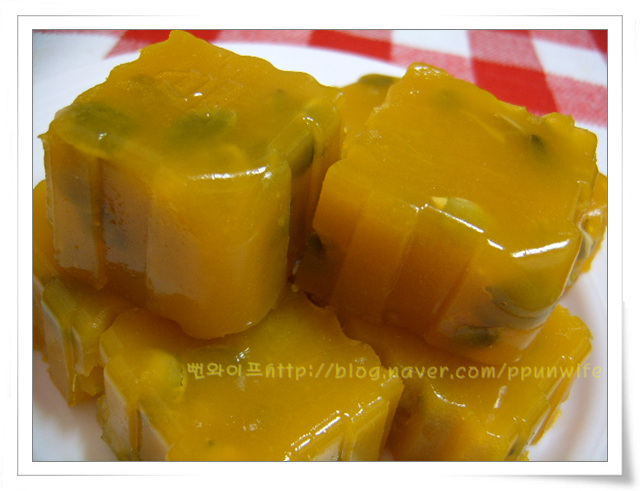
Danhobak Seolgi (Steamed Kabocha Rice Cake)
A soft, fluffy rice cake snack made by mixing sifted rice flour with sliced kabocha squash and steaming it.
Translated from Korean by AI and not yet checked by a native speaker. Amounts and numbers are taken directly from the original recipe. Read the Korean original →
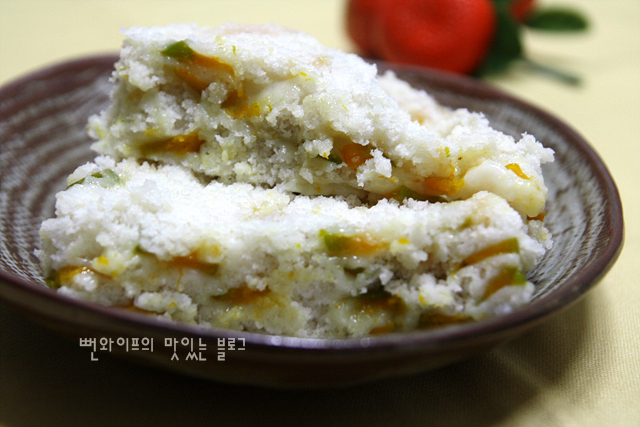
This is a seolgi rice cake made by tossing thinly sliced kabocha squash with finely sifted rice flour and steaming it in a steamer. By adjusting the water amount to account for the moisture in the squash and covering it with a cotton cloth while steaming, it turns out fluffy yet moist. Made with simple ingredients, it is wonderful to enjoy at home as a hearty snack or a light meal substitute.
- Servings
- about 4–5 servings
- Cook time
- 30 minprep not included
- Difficulty
- Medium
- Spiciness
- Not spicy
Ingredients
- Rice flour4 cups (400 g)
- Kabocha squash1/2, 400 g
- Sugar4 tbsp
- Salt1/2 tsp
- This is wet rice flour freshly milled at the mill after soaking the rice in water for over 4 hours and draining the moisture in a sieve.
- Kabocha squash is hard, so it can be difficult to prep. Microwaving it for 1–2 minutes makes peeling and slicing much easier. Don't microwave it for too long, or the squash will turn to mush.
- If using dry rice flour, add 1 tbsp of water per 100 g and rub it evenly with your hands. When making baekseolgi, the moisture level is right when you squeeze the rice flour lightly in your hand and it holds together without crumbling when shaken gently. Since we are adding moisture-rich kabocha squash today, it is best to cut the moisture added to the rice flour by half.
- Those who like things sweet might find it a bit bland, so if you want it sweeter, add 2 tbsp more sugar. Also, when adding very sweet raisins, it is best to slightly reduce the amount of sugar.
- You can also add various other ingredients such as dried persimmon, raisins, or boiled beans.
Steps
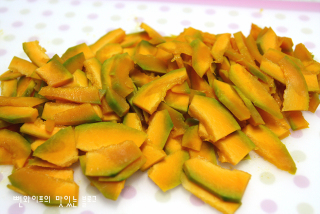
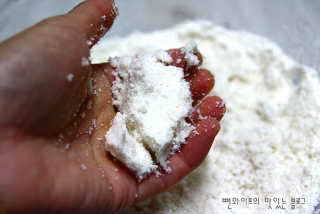
1. Kabocha squash is hard, so it can be difficult to prep.
Microwaving it for 1–2 minutes makes peeling and slicing much easier.
Don't microwave it for too long, or the squash will turn to mush.
Scoop out the seeds, peel the skin, and slice thinly.
2. This is wet rice flour freshly milled at the mill after soaking the rice in water for over 4 hours and draining the moisture in a sieve.
Because not much moisture was removed, I didn't add any extra water.
These days, blenders that can grind grains are available. If you have a blender with a grinding function, you can drain the moisture thoroughly and grind it at home.
If using dry rice flour, add 1 tbsp of water per 100 g and rub it evenly with your hands.
When making baekseolgi, the moisture level is right when you squeeze the rice flour lightly in your hand and it holds together without crumbling when shaken gently.
Since we are adding moisture-rich kabocha squash today, it is best to cut the moisture added to the rice flour by half.
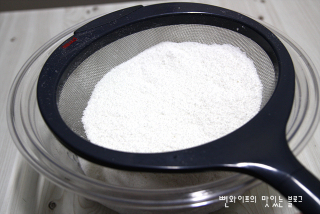
3. Sift it through a sieve.
Because the density of unsifted rice flour and sifted rice flour differs, their weights will not be the same for a given volume.
Even with the same 400 g, 5 cups of rice flour before sifting becomes 4 cups after sifting.
Please keep this in mind.
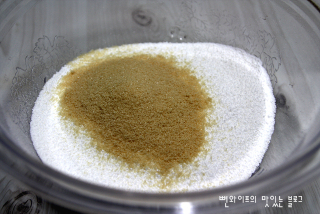
4. Add sugar and salt to the rice flour, mix evenly, and sift through the sieve once more.
Those who like things sweet might find it a bit bland, so if you want it sweeter, add 2 tbsp more sugar.
Also, when adding very sweet raisins, it is best to slightly reduce the amount of sugar.
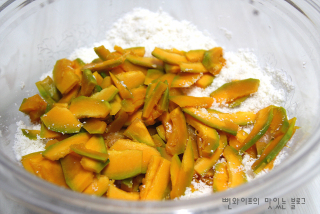
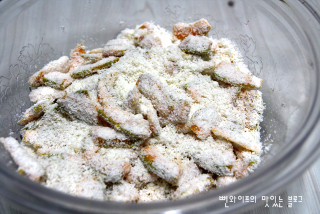
5. Add the sliced kabocha squash...
You can also add various other ingredients such as dried persimmon, raisins, or boiled beans.
6. Mix evenly.
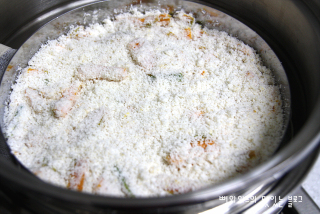
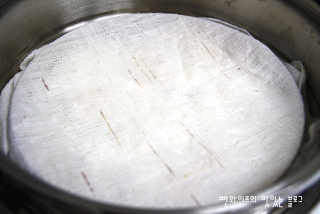
7. Once steam rises from the steamer, line the bottom with a damp cotton cloth,
set the mold in place, pour in the flour mixture, and level the surface.
8. Cover the top with a cotton cloth as well so condensation doesn't drip down.
Cover with the lid, reduce the heat to medium once the water starts boiling, steam for 25 minutes,
then turn off the heat and let it rest undisturbed to steam through for 5 minutes.
 Ppunwife's tips
- Because the density of unsifted rice flour and sifted rice flour differs, their weights will not be the same for a given volume.
- Cover the top with a cotton cloth as well so condensation doesn't drip down.
FAQ
What should I do if the hard kabocha squash is difficult to cut and prep?
Microwaving it for about 1–2 minutes makes peeling the skin or slicing it with a knife much easier.
How much water should I add when using dry rice flour?
Based on dry rice flour, add about 1 tbsp of water per 100 g and rub it in evenly to adjust the moisture.
Can I add ingredients other than kabocha squash?
Depending on your preference, you can add a variety of ingredients such as raisins, dried persimmon, boiled beans, or dried pumpkin strips.
How do I prevent water drops from dripping onto the top of the rice cake while steaming?
Covering the mold with a cotton cloth after placing the flour in it before closing the steamer lid prevents condensation from dripping directly onto the rice cake.