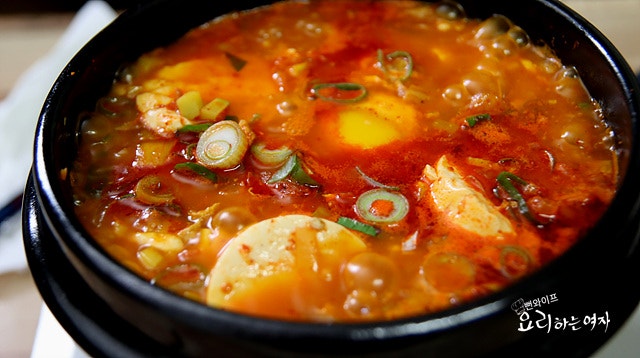
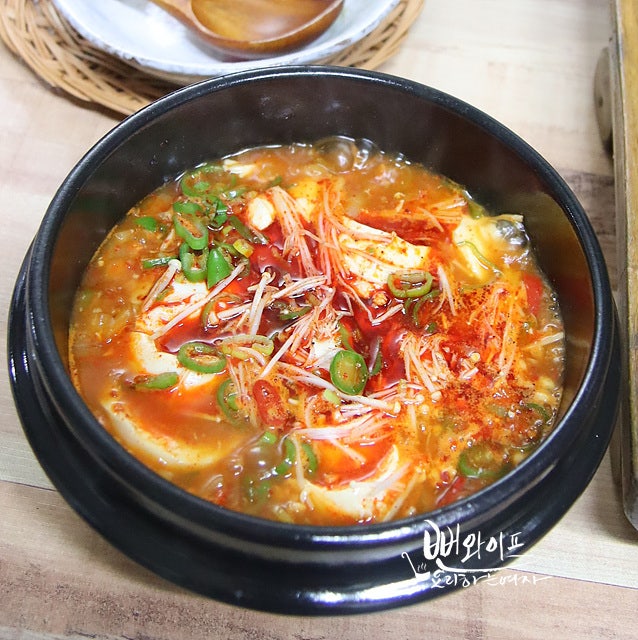
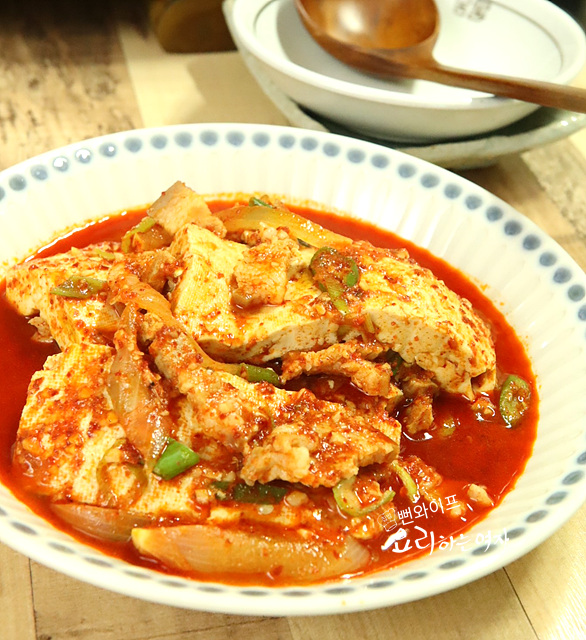
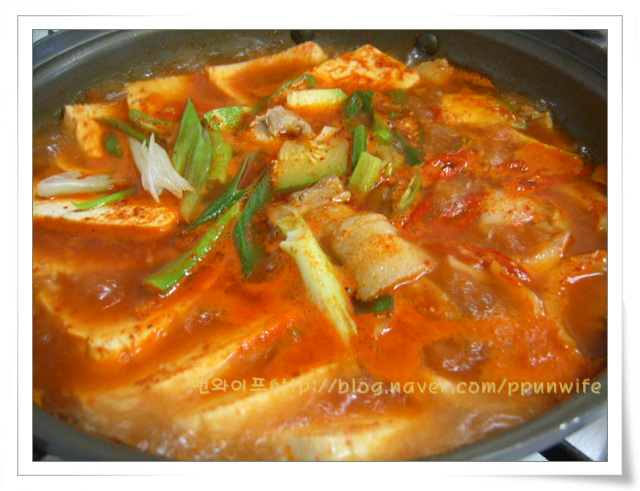
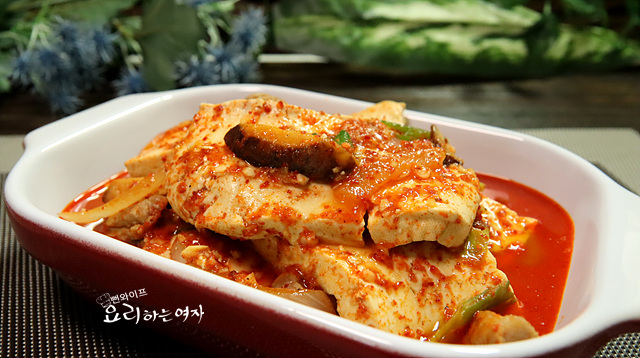
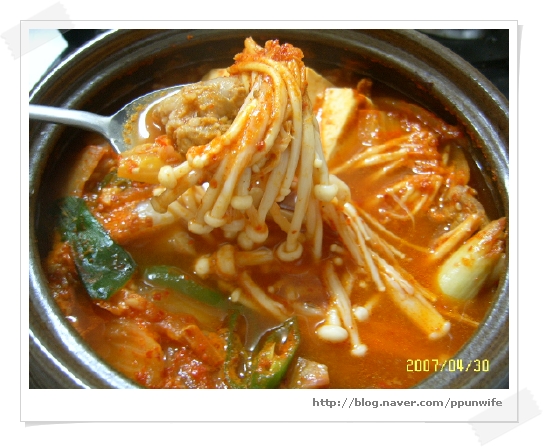
Spicy and Warm Kimchi Sundubu Jjigae (Soft Tofu Stew with Kimchi)
A spicy soft tofu stew made by stir-frying ripe kimchi and pork, then simmering them in savory anchovy broth.
Translated from Korean by AI and not yet checked by a native speaker. Amounts and numbers are taken directly from the original recipe. Read the Korean original →
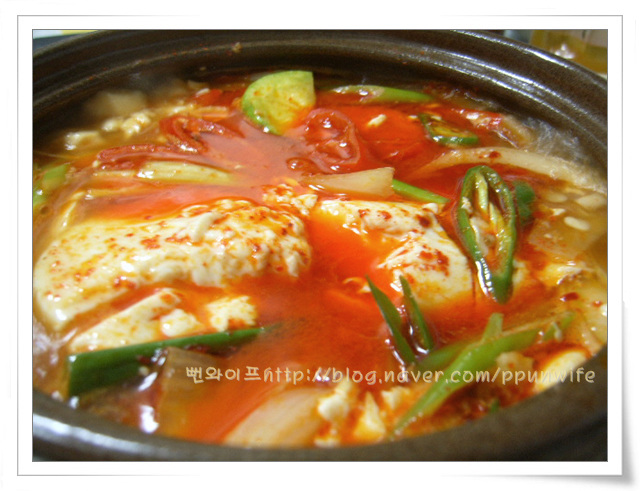
This stew brings out deep, savory flavor by stir-frying pork and aged sour kimchi before adding anchovy broth. Cheongyang chili pepper and gochugaru give it a spicy kick, and cooking it in an earthenware pot keeps it warm for a long time.
- Servings
- 2–3 servings
- Difficulty
- Medium
- Spiciness
- Spicy
Ingredients
Ingredients
- Soft tofu (sundubu)1 pack (400 g)
- Pork2 strips, 70 g
- Kimchi3-4 leaves, 100 g
- Onion1/4
- Squash1/4
- Red chili pepper1
- Cheongyang chili pepper (hot green chili)1
- Large green onion (daepa)1/3 stalks
- Anchovy broth2 cups
- Oila little
Pork marinade
- Regular soy sauce (jin-ganjang)0.5 tbsp
- Minced garlic1 tsp
- Mirin (cooking rice wine)1 tbsp
Seasoning
- Gochugaru (Korean chili flakes)1 tbsp
- Minced garlic1 tsp
- Salted fermented shrimp (saeujeot) (or salt)0.5 tsp
- Ground black peppera little
- Use well-ripened, sour kimchi; shake off any stuffing and slice it to the same size as the pork.
- I used pork belly with a moderate amount of fat, but any cut of pork works well.
Steps
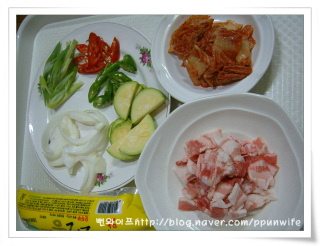
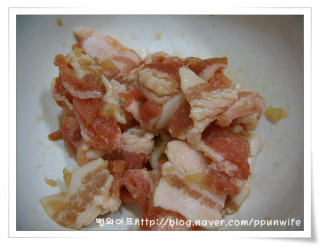
1. Cut the pork into bite-sized pieces. Shake off the stuffing from sour, well-ripened kimchi and slice it to the same size as the pork.
Cut the squash and onion into large chunks, and diagonally slice the chili peppers and large green onion.
2. Add 0.5 tbsp regular soy sauce, 1 tsp minced garlic, and 1 tbsp mirin to the pork and mix gently with your hands.
I used pork belly with a moderate amount of fat, but any cut of pork works well.
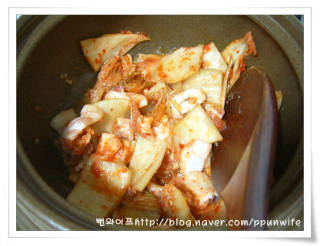
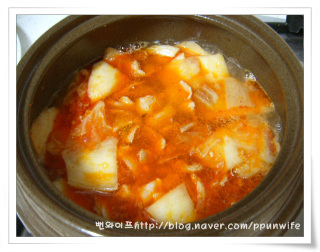
3. Coat an earthenware pot with a little oil, then add the kimchi and pork together and stir-fry.
Once the kimchi softens and the pork is almost fully cooked...
4. Pour in 2 cups anchovy broth and bring to a boil over high heat.
Using anchovy broth instead of plain water gives the soup a much richer, more savory flavor.
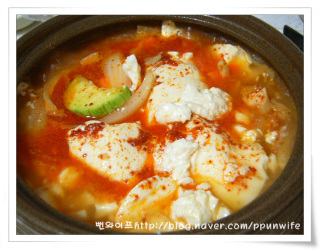
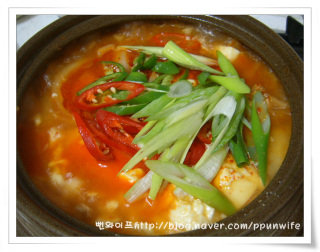
5. When the broth comes to a rolling boil, add the soft tofu, squash, and onion, along with the seasoning (1 tbsp gochugaru, 1 tsp minced garlic, 0.5 tsp salted fermented shrimp or salt, and a little ground black pepper), and boil briefly.
Since you spoon up a lot of broth, I kept the seasoning slightly mild; adjust the amount of salted fermented shrimp or salt to suit your taste.
6. Finally, add the chili peppers and large green onion, simmer for 1-2 minutes, and serve.
 Ppunwife's tips
- Using anchovy broth instead of plain water gives the soup a much richer, more savory flavor.
- Since you spoon up a lot of broth, I kept the seasoning slightly mild; adjust the amount of salted fermented shrimp or salt to suit your taste.
- Because this stew already features pork and kimchi, I omitted the egg.
FAQ
What cut of pork should I use?
Aside from pork belly with a moderate amount of fat, feel free to use any cut of pork you like.
Why use anchovy broth instead of plain water?
Cooking with anchovy broth makes the soup much richer and more savory compared to plain water.
Is there a specific reason an egg is not included?
Because the stew is centered on pork and kimchi, I prepared it without adding an egg.
How do I adjust the seasoning if it tastes too mild?
You can easily adjust the seasoning by adding more salted fermented shrimp or salt to your taste.