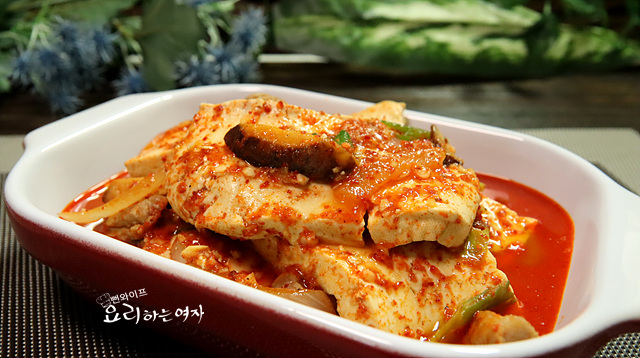
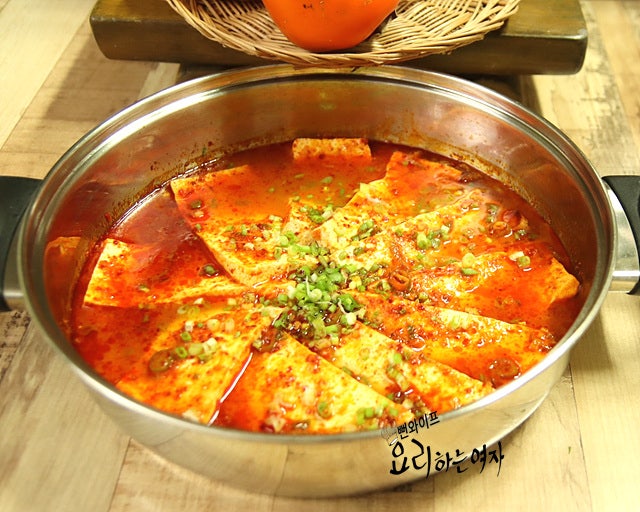
Spicy Sundubu Jjigae (Soft Tofu Stew)
A spicy stew made by simmering ground pork and soft tofu in freshly made chili oil.
Translated from Korean by AI and not yet checked by a native speaker. Amounts and numbers are taken directly from the original recipe. Read the Korean original →
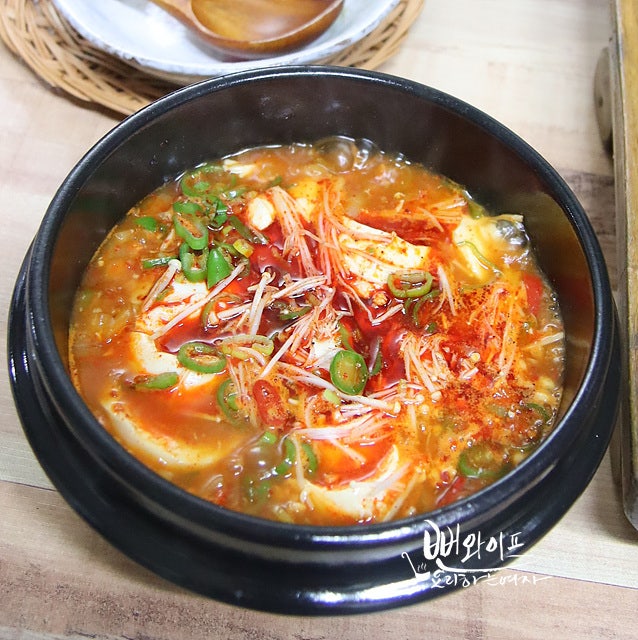
Deep flavor is drawn out by stir-frying large green onion, onion, and gochugaru to create aromatic chili oil. With ground pork and tender soft tofu, you can enjoy a broth that is both spicy and rich. Simmering and serving it in an earthenware pot keeps it warm for a long time, making it great for a regular meal or alongside drinks.
- Servings
- 2 servings
- Difficulty
- Medium
- Spiciness
- Spicy
Ingredients
Ingredients
- Soft tofu (sundubu)1 pack
- Ground pork100 g
- Onion1/4
- Large green onion (daepa)1/2 stalk
- Cheongyang chili pepper (hot green chili)1
- Red chili pepper1
- Enoki mushrooms1/2 pack
- Anchovy broth1 cup
Seasoning
- Gochugaru (Korean chili flakes)2 tbsp
- Soup soy sauce (guk-ganjang)1/2 tbsp
- Mirin (cooking rice wine)1 tbsp
- Minced garlic1/2 tbsp
- Sand lance fish sauce (or dried anchovies)1 tbsp
- Ground black peppera little
- Seafood also pairs wonderfully with sundubu jjigae, so you can prepare that instead of meat. Aged sour kimchi or zucchini is also nice, and you can float 1 egg on top at the end.
Steps
Prepare the ingredients
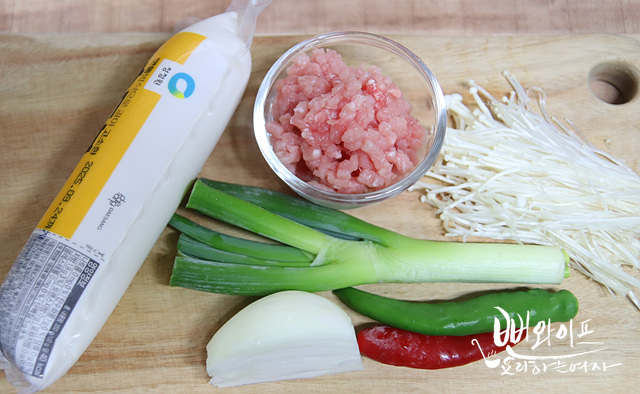
1 pack of soft tofu, minced pork, 1/4 onion, 1/2 stalk of large green onion, 1 Cheongyang chili pepper, 1 red chili pepper, and 1 pack of enoki mushrooms.
This is what I prepared for today's sundubu jjigae.
Seafood also pairs wonderfully with sundubu jjigae, so you can prepare that instead of meat. Aged sour kimchi or zucchini is also nice, and you can float 1 egg on top at the end.
Chop the ingredients
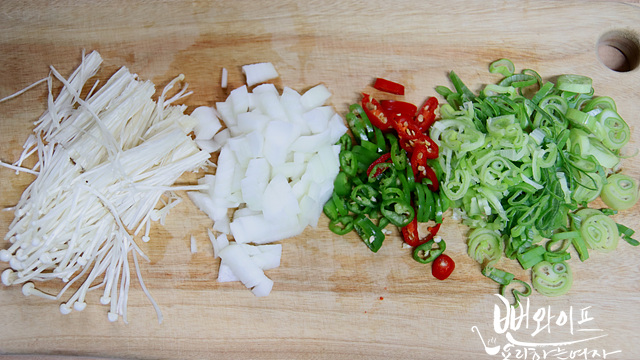
Finely slice the onion, large green onion, and chili peppers, and cut the enoki mushrooms in half for easier eating.
Make green onion chili oil
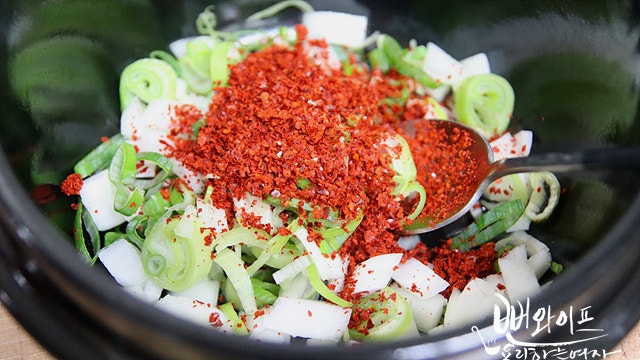
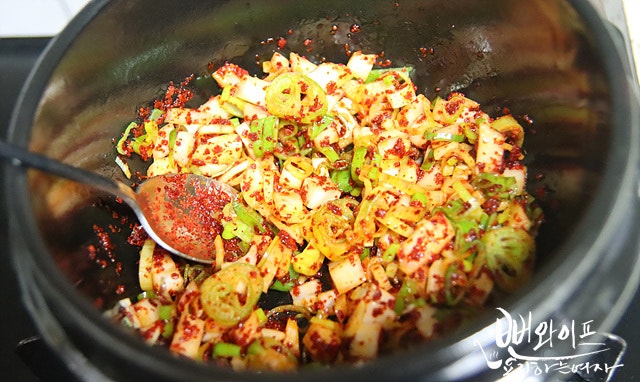
The rich, deep broth flavor of sundubu jjigae comes from chili oil.
Swirl about 2 to 3 tbsp of cooking oil, add the onion, large green onion, and gochugaru, and stir-fry nicely, making sure it cooks well in the juices of the aromatic vegetables and oil without burning.
Do not add all the large green onion; leave a little behind to add at the end of simmering for a fresh aroma.
Stir-fry the pork
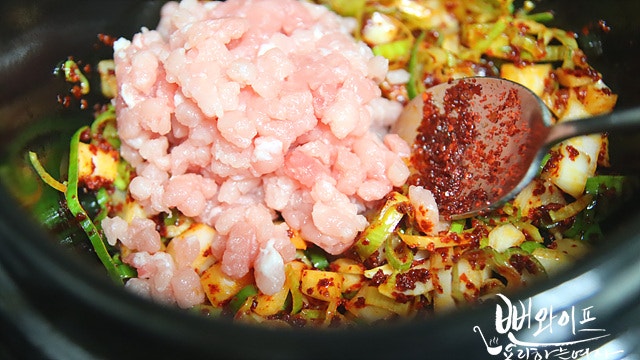
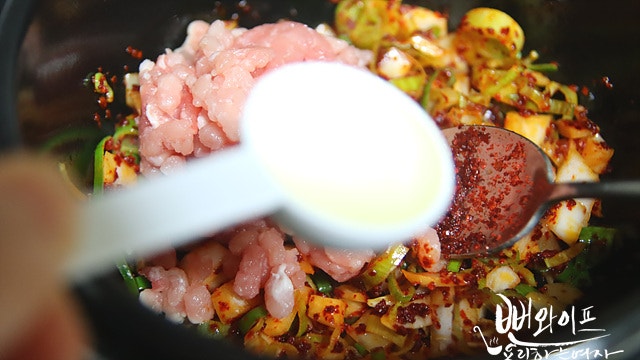
Add the pork as well, along with 1 tbsp mirin...
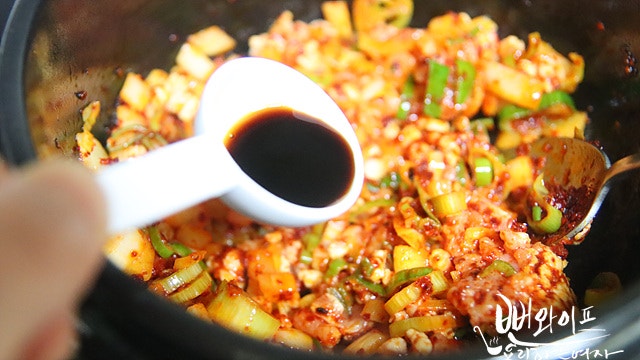
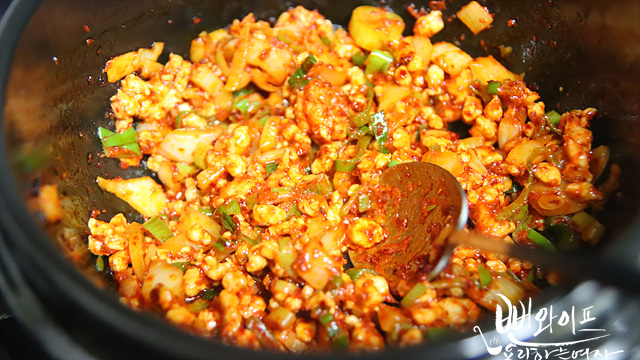
Add 1/2 tbsp soup soy sauce and stir-fry together so the meat is seasoned and any gamey odor is removed.
Simmer
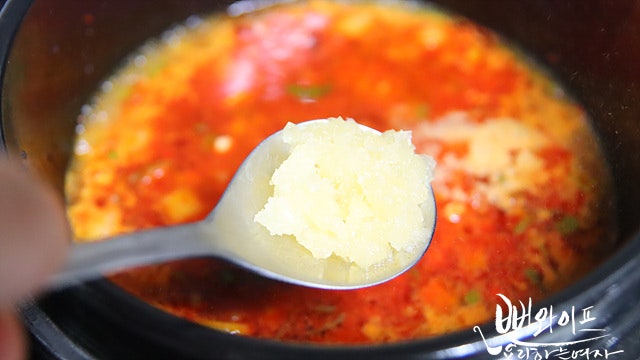
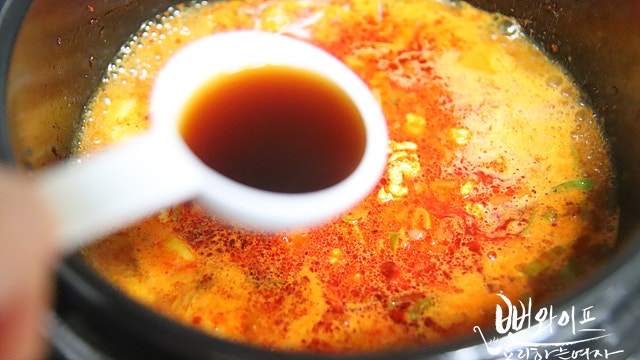
Once the meat is fully cooked, pour in 1 cup anchovy broth, add 1/2 tbsp minced garlic, and 1 tbsp fish sauce...
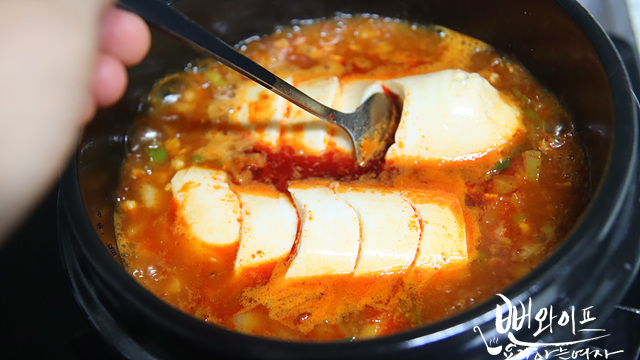
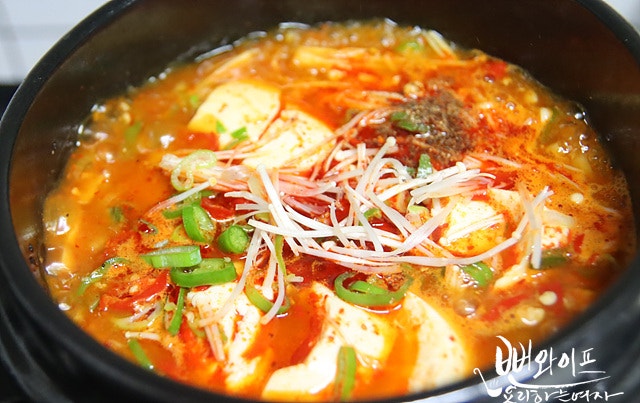
Add the soft tofu as well and bring it to a bubbling boil. Break the soft tofu into bite-sized pieces with a spoon.
The stew can become bland because of the soft tofu, so taste it and make up for any missing seasoning with salt or soup soy sauce.
Finish by adding the chili peppers, enoki mushrooms, reserved large green onion, and ground black pepper.
Finish
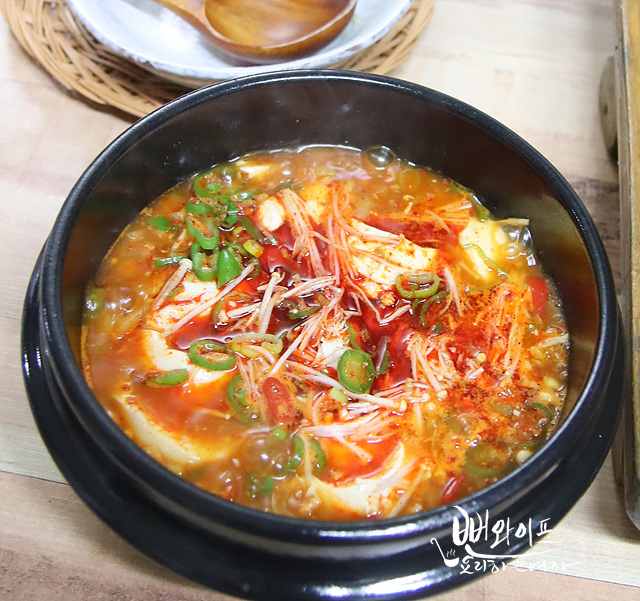
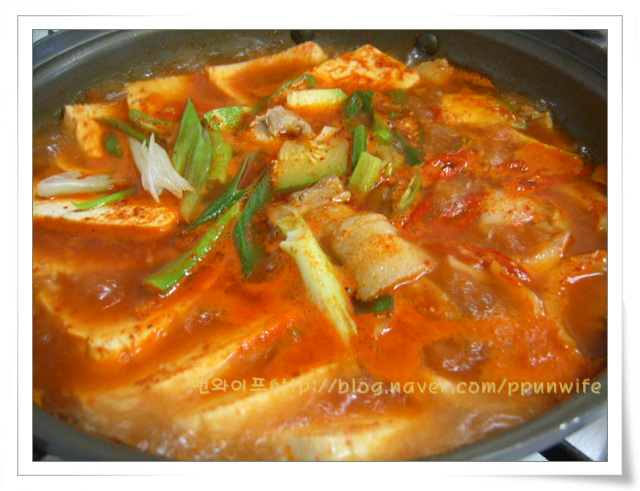
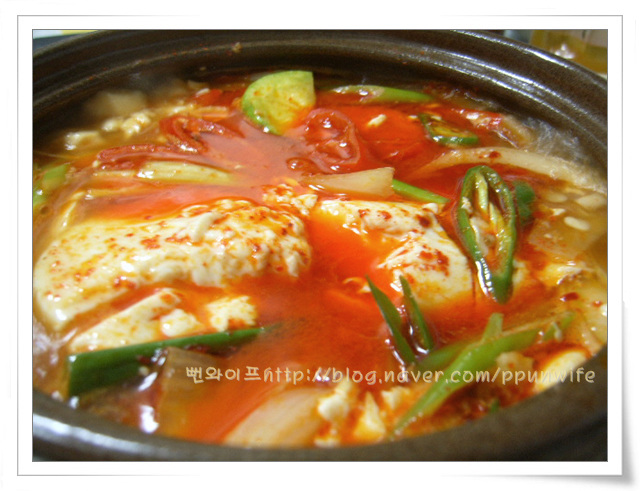
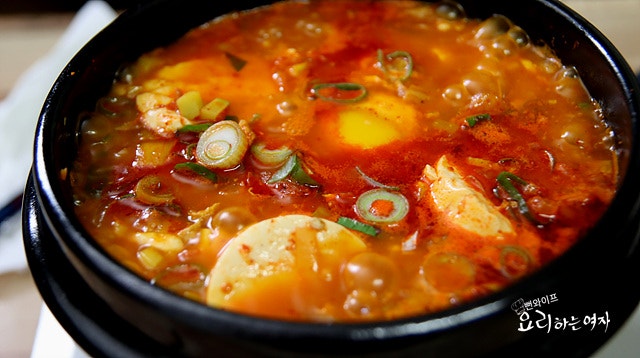
Just like doenjang jjigae, sundubu jjigae tastes best when cooked in an earthenware pot.
Even after taking it off the heat, it keeps bubbling for a while, so you can enjoy the first few spoonfuls piping hot.
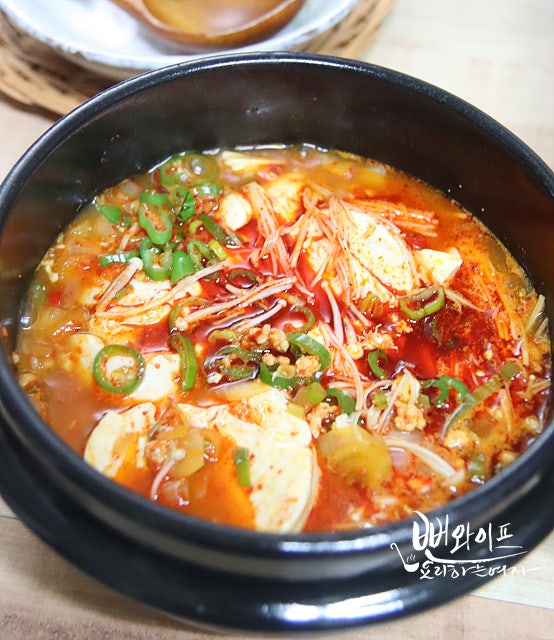
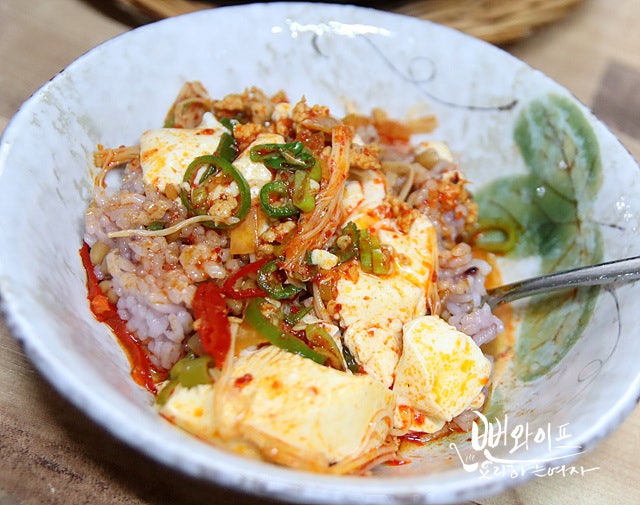
You can also float 1 egg on top at the end.
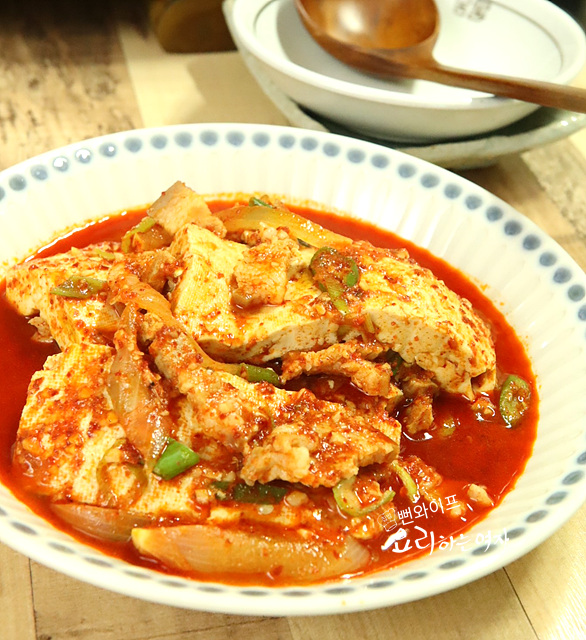
I enjoyed it cleanly without an egg, and after not having made sundubu jjigae in a while, it was so delicious.
There are no fancy ingredients, but the rich, spicy broth might just make you think of having a drink with it.
 Ppunwife's tips
- The rich, deep broth flavor of sundubu jjigae comes from chili oil. Swirl about 2 to 3 tbsp of cooking oil, add the onion, large green onion, and gochugaru, and stir-fry nicely, making sure it cooks well in the juices of the aromatic vegetables and oil without burning.
- Do not add all the large green onion; leave a little behind to add at the end of simmering for a fresh aroma.
- The stew can become bland because of the soft tofu, so taste it and make up for any missing seasoning with salt or soup soy sauce.
- Just like doenjang jjigae, sundubu jjigae tastes best when cooked in an earthenware pot.
FAQ
Can I use other ingredients instead of pork?
Seafood works very well instead of pork, and you can also add aged sour kimchi or zucchini to taste.
Is there anything to keep in mind when making the chili oil?
When stir-frying the large green onion, onion, and gochugaru in oil, stir-fry so that the moisture from the vegetables blends well with the oil without burning.
How do I adjust the seasoning if the broth becomes bland after adding soft tofu?
Taste it and supplement any missing seasoning by adding salt or soup soy sauce.
Can I use anchovy fish sauce instead of sand lance fish sauce?
You can substitute anchovy fish sauce without any problem.