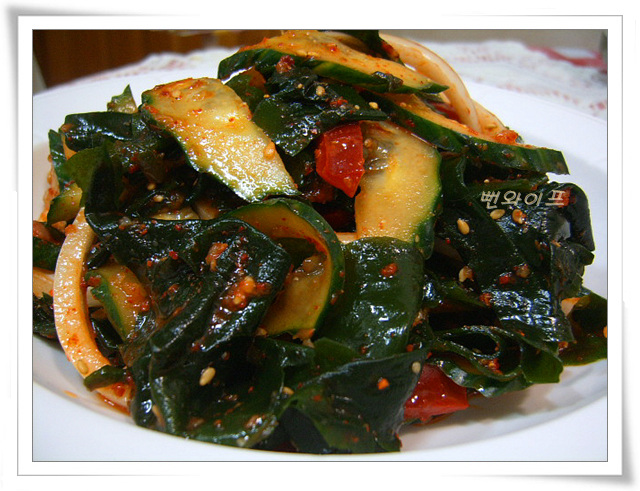
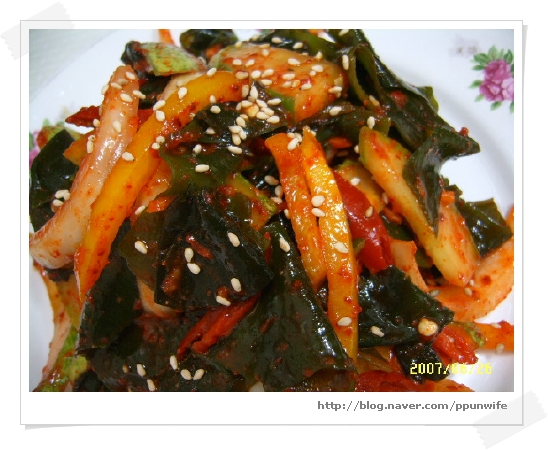
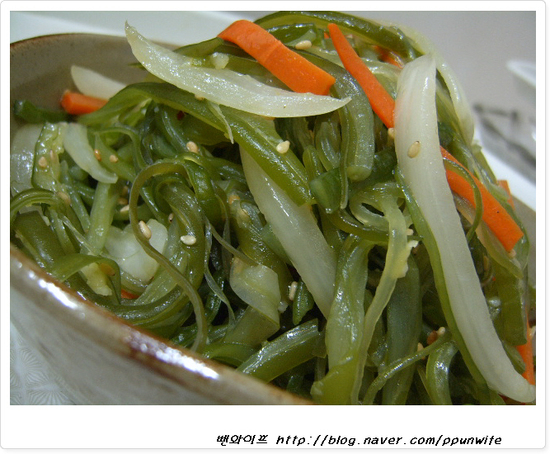
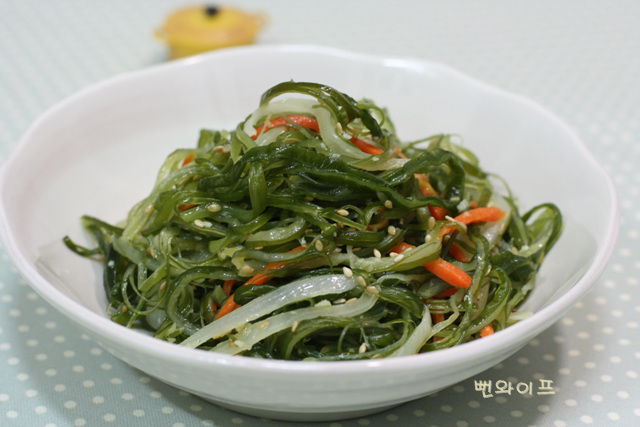
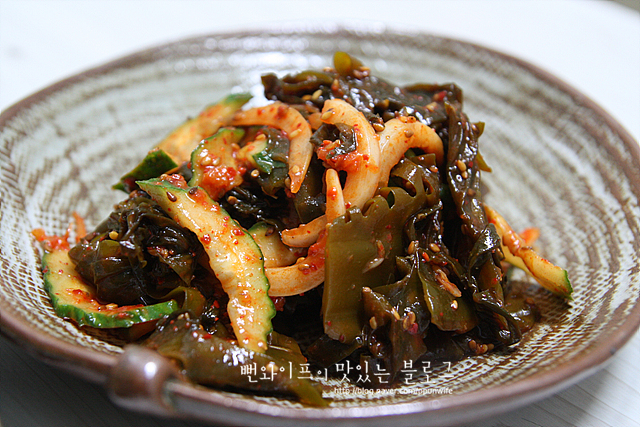
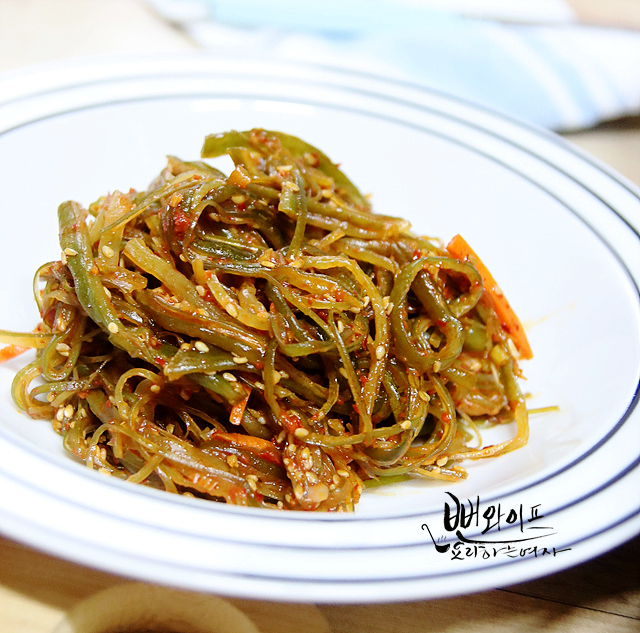
Miyeok Julgi Cho Muchim (Sweet and Sour Seaweed Stems)
An everyday side dish of blanched seaweed stems tossed in a sweet and sour dressing.
Translated from Korean by AI and not yet checked by a native speaker. Amounts and numbers are taken directly from the original recipe. Read the Korean original →
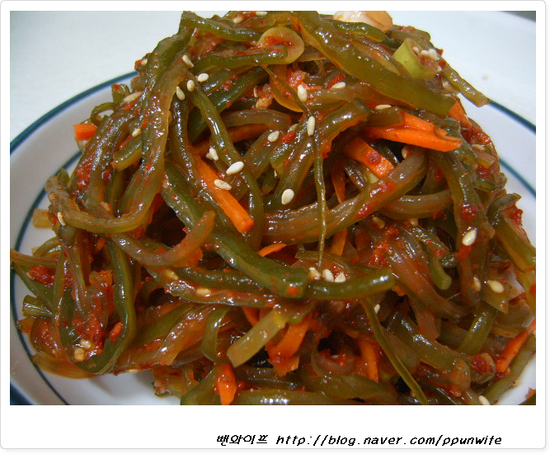
Salted seaweed stems are soaked to draw out the salt, then quickly blanched in boiling water to remove any fishiness before being tossed in a sweet and tangy dressing. With its pleasantly crunchy texture, it makes a wonderful side dish for rice. It is an easy dish to prepare using budget-friendly salted seaweed stems.
- Servings
- about 3–4 servings
- Difficulty
- Medium
- Spiciness
- Mildly spicy
Ingredients
Sweet and Sour Seaweed Stems Ingredients
- Salted seaweed stems250 g
- Onion1/4
- Red chili pepper1
Sweet and Sour Seaweed Stems Seasoning
- Minced garlic1 tbsp
- Salt1 tsp
- Sugar1 tbsp
- Vinegar2 tbsp
- Toasted sesame oila little
- Toasted sesame seeds
Seaweed Stem Pancake Ingredients
- Seaweed stems (miyeok-julgi)150 g
- Canned tuna1/4 can
- Red chili pepper1
- Cheongyang chili pepper (hot green chili)1
Seaweed Stem Pancake Batter
- Korean pancake mix (buchim-garu)1/2 cup
- Water1/4 cup
- Egg1
- For salted seaweed stems, discard the settled salt, rinse 2 to 3 times in clean water, and soak in water for at least 30 minutes to remove the salt.
- You can use bell pepper instead of red chili pepper.
- Instead of tuna, you can finely chop shrimp, clam meat, or squid to add to the pancakes.
Steps
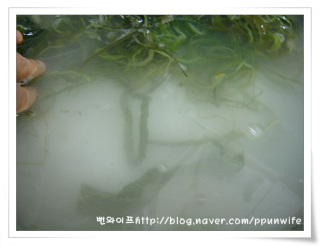
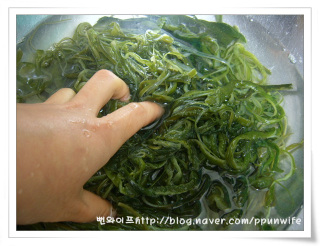
1. When you soak salted seaweed stems in water, a lot of salt settles to the bottom. Lift out the seaweed stems and discard all the settled salt.
Rinse 2 to 3 times in clean water and soak in enough water to cover for at least 30 minutes.
2. Vigorously rub and knead with your hands to remove the remaining salt, rinsing repeatedly in clean water.
When you chew a piece, it should no longer taste salty.
If it has just the right amount of salt left, you do not need to add salt when seasoning.
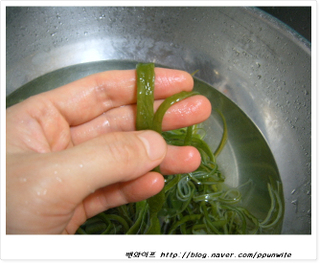
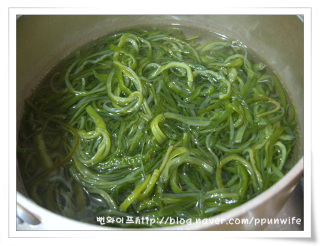
3. Tear any thick portions into thinner strips and drain in a strainer, squeezing out the excess moisture.
4. Drop the seaweed stems into boiling water just like blanching spinach, blanch briefly, rinse in cold water, and squeeze out the water thoroughly.
Blanching this way removes a lot of salt and eliminates fishiness.
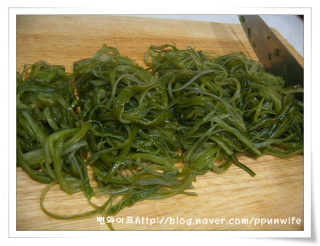
5. Cut into bite-sized lengths.
Packed tightly, 250 g makes about 2 cups.
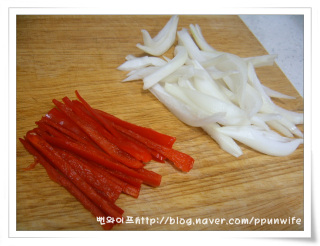
6. Thinly julienne the onion and red chili pepper.
You can substitute bell pepper for the red chili pepper.
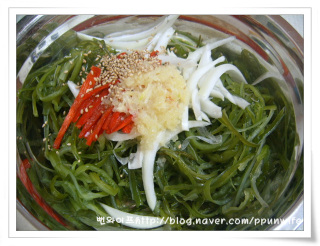
Add the prepared ingredients, add all the seasoning ingredients, and toss to combine.
Adjust the amount of salt depending on how much salt remains in the seaweed stems.
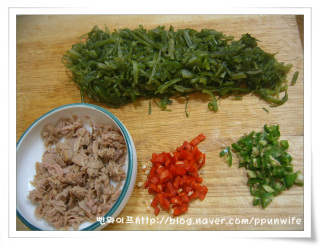
1. Finely chop the prepared seaweed stems. If they are too long, the pancakes are difficult to pan-fry.
Squeeze the moisture thoroughly from the tuna, and finely slice the chili peppers.
Instead of tuna, it is also delicious to finely chop shrimp, clam meat, or squid.
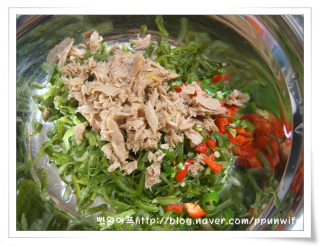
2. Place all the prepared ingredients in a bowl...
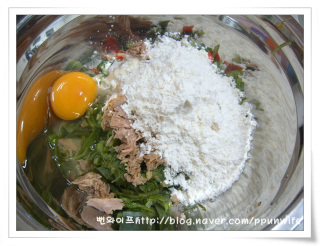
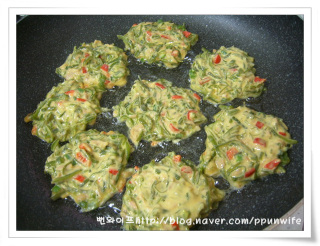
3. Add all the batter ingredients and mix together.
Because of the salt in the tuna, you do not need to add extra salt.
4. Heat cooking oil in a heated skillet and pan-fry on both sides until golden brown.
 Ppunwife's tips
- When washing the seaweed stems, rubbing them vigorously with your hands and briefly blanching them in boiling water greatly reduces fishiness.
- Adjust the amount of salt depending on how much salt remains in the seaweed stems.
- When mixing the pancake batter, you do not need to add extra salt because of the salt in the tuna.
FAQ
How do you remove the saltiness and fishiness from seaweed stems?
Rinse off the salt in water, soak for at least 30 minutes, and briefly blanch in boiling water before rinsing in cold water to reduce both saltiness and fishy flavor.
How do you adjust the salt when tossing the salad?
Taste the seaweed stems first to check how much salt remains, and add only the amount of salt needed to taste.
Can other ingredients be substituted for the red chili pepper in the salad?
If you do not have red chili pepper, you can thinly slice bell pepper to use in its place.
What ingredients other than tuna can be added to the seaweed stem pancakes?
Instead of tuna, you can add finely chopped shrimp, clam meat, or squid to the batter.