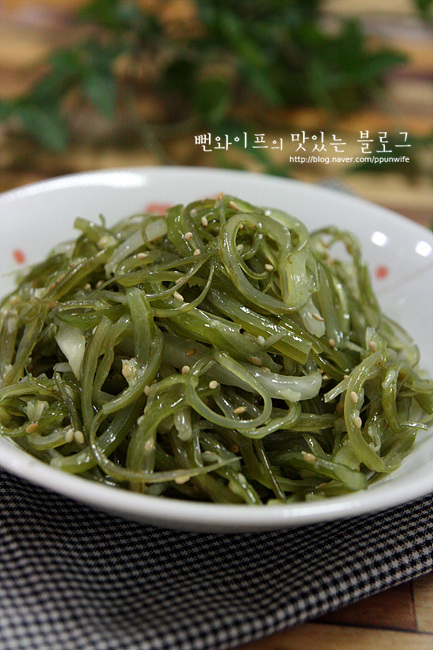
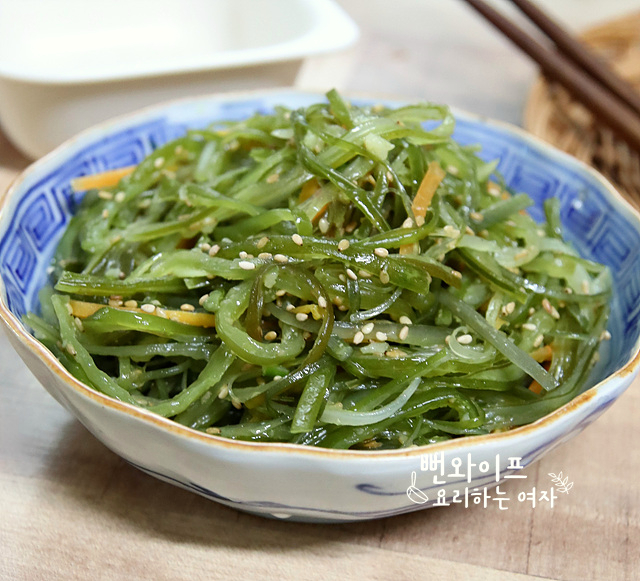
Miyeok Julgi Bokkeum (Stir-Fried Seaweed Stems)
A side dish made by soaking salted seaweed stems to remove excess salt, then stir-frying them with garlic and vegetables.
Translated from Korean by AI and not yet checked by a native speaker. Amounts and numbers are taken directly from the original recipe. Read the Korean original →
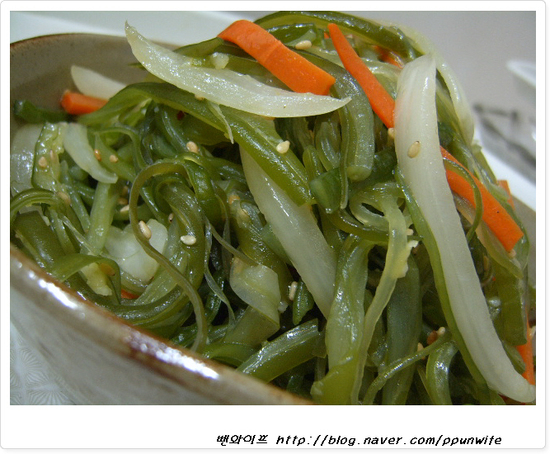
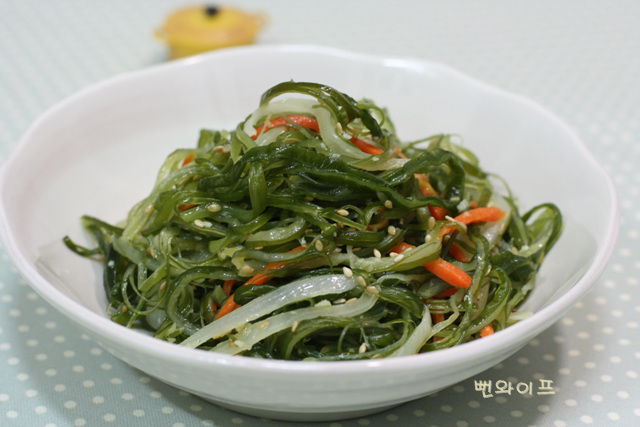
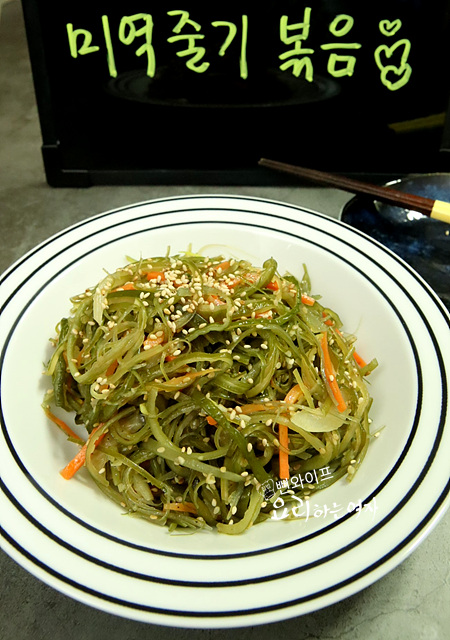
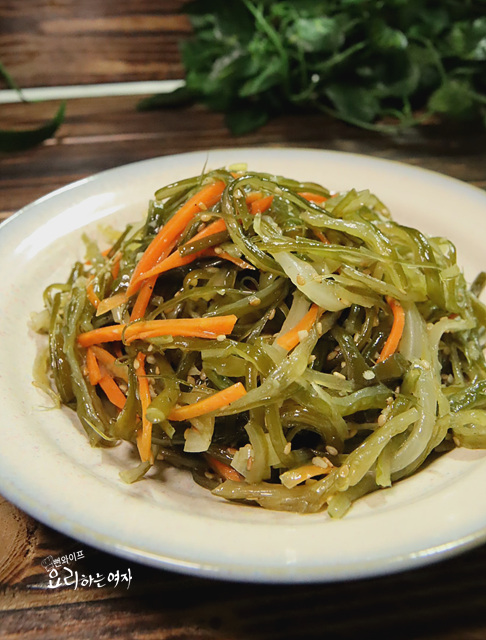
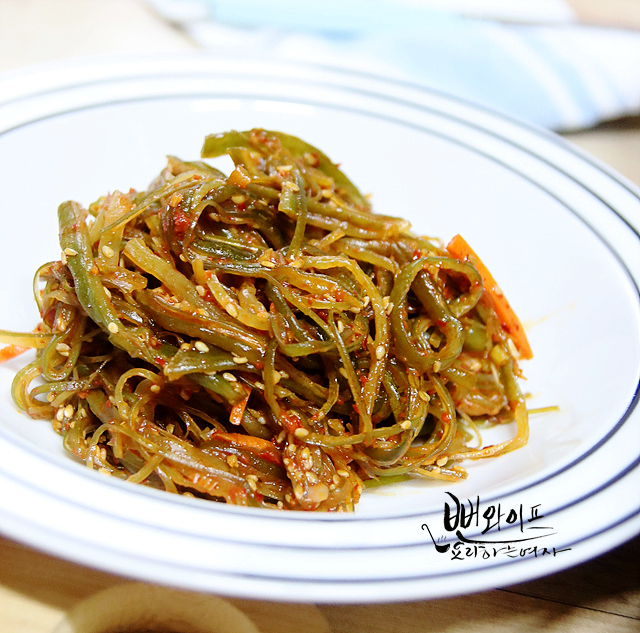
This side dish is made by washing the excess salt from salted seaweed stems and cleanly stir-frying them with onion and carrot. The key to seasoning is carefully adjusting the amount of salt based on how much saltiness remains in the seaweed stems. Any leftover seaweed stems can also be blanched and tossed into a wonderfully tangy chilled salad.
- Servings
- about 8–10 servings
- Difficulty
- Medium
- Spiciness
- Mildly spicy
Ingredients
Stir-fried seaweed stem ingredients
- Salted seaweed stems450 g
- Onion1/4
- Carrot1/3
Stir-fried seaweed stem seasoning
- Salt1 tsp
- Minced garlic1 tbsp
- Sugar0.5 tsp
- Toasted sesame oil1 tbsp
- Toasted sesame seeds
Tangy seaweed stem salad ingredients
- Seaweed stems (miyeok-julgi)450 g
- Carrot1/3
Tangy seaweed stem salad seasoning
- Gochugaru (Korean chili flakes)2 tbsp
- Salt1 tsp
- Sugar1 tbsp
- Vinegar1 tbsp
- Minced garlic1 tbsp
- Toasted sesame oil
- Toasted sesame seeds
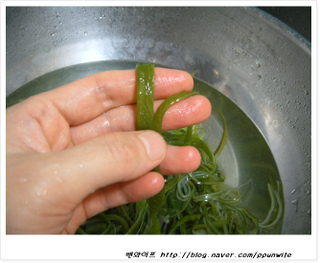
- Rinse the salt off the salted seaweed stems, rub and wash them vigorously, rinse thoroughly, and soak in cold water to draw out the salt. Tear any pieces that are not split properly into thin strips by hand.
- Adjust the amount of salt depending on the saltiness left in the seaweed stems.
- You may also add onion to the tangy salad.
- If you have a large amount of seaweed stems, you can keep half salted and stored to use later.
Steps
Rinse the salt off the salted seaweed stems, rub and wash them vigorously, rinse thoroughly, and soak in cold water to draw out the salt. Tear any thick pieces that are not split properly into thin strips by hand. Once the saltiness is properly drained away, squeeze out all the water thoroughly.
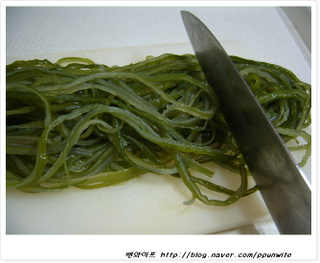
Cut into bite-sized lengths.
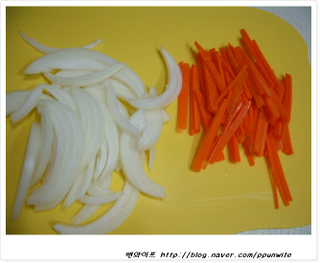
Julienne a little bit of onion and carrot as well.
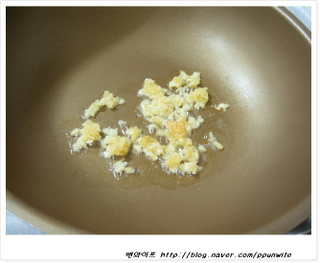
Heat oil in a frying pan and stir-fry the garlic.
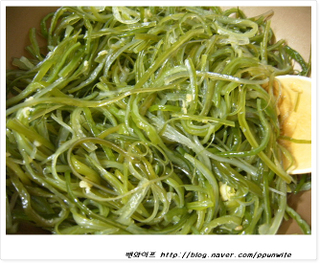
Add the seaweed stems and stir-fry. Once the garlic aroma blends in, transfer to another plate.
Stir-fry the carrot, sprinkling with a little bit of salt.
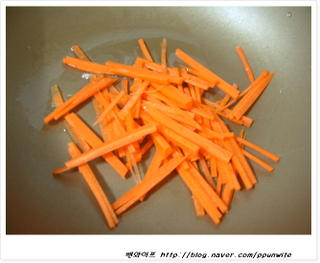
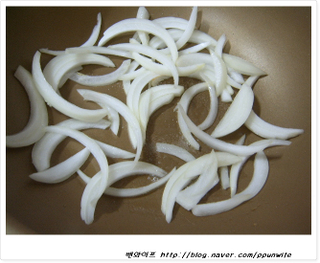
Stir-fry the onion with a little bit of salt as well. Do not cook until it completely goes limp; just stir-fry it lightly.
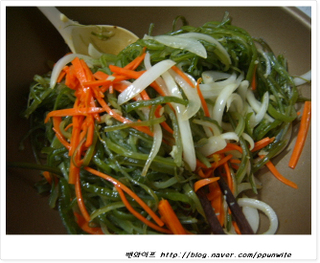
Add the seaweed stems, carrot, and onion together and toss as you stir-fry. If there was some saltiness left after washing, taste first and adjust the amount of salt. Do not add a bunch of salt right from the start. I rinsed mine until completely desalted, so I seasoned with 1 tsp of salt, and because I like a slight sweetness, I added a little sugar. Finish by tossing with toasted sesame oil and toasted sesame seeds.
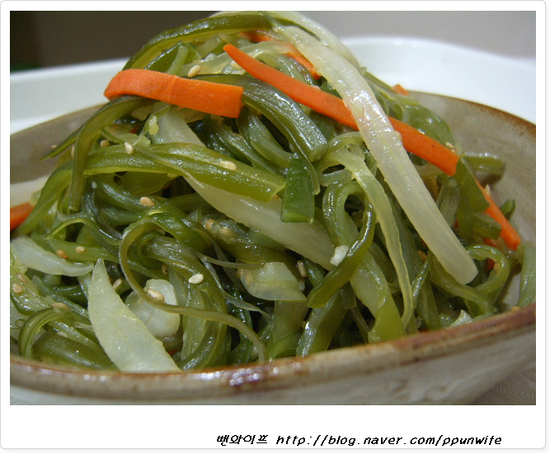
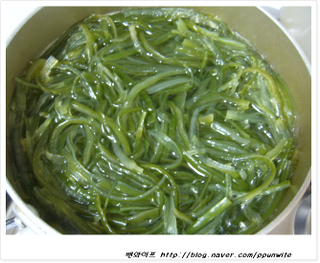
For the salad, follow the same method up to step 2 above. Cut into suitable lengths and blanch briefly in boiling water. You can dress them raw, but this removes a bit of the stiffness.
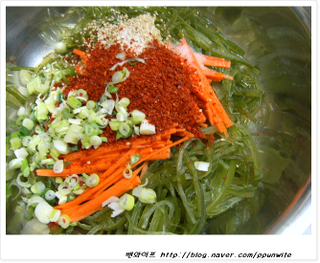
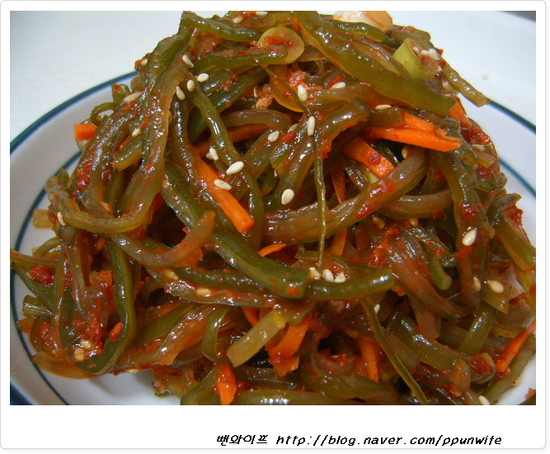
Rinse in cold water and drain thoroughly, then add julienned carrot and onion, along with the seasoning, and toss together. Likewise, adjust the amount of salt depending on how salty the seaweed stems are.
 Ppunwife's tips
- Do not stir-fry the onion until it goes completely limp; just cook it lightly.
- Some saltiness may remain from washing, so be sure to taste first and adjust the amount of salt; do not add too much salt right from the start.
- When making the tangy salad, blanching the seaweed stems briefly removes a bit of their stiffness.
FAQ
How do you control the saltiness of seaweed stems?
Shake off the excess salt, rub and wash them, and soak in cold water to draw out the salinity. Check how much saltiness remains before adjusting the salt when stir-frying.
Why do you blanch the seaweed stems briefly when making the tangy salad?
While you can dress them raw, blanching briefly in boiling water softens their stiff texture.
Is there a way to enjoy the finished stir-fried seaweed stems even more deliciously?
It is great mixed into rice with a little gochujang for a different way to enjoy it.
Is there a trick to keeping the texture of the onion when stir-frying?
It is best to stir-fry it lightly and briefly so it does not become too limp.