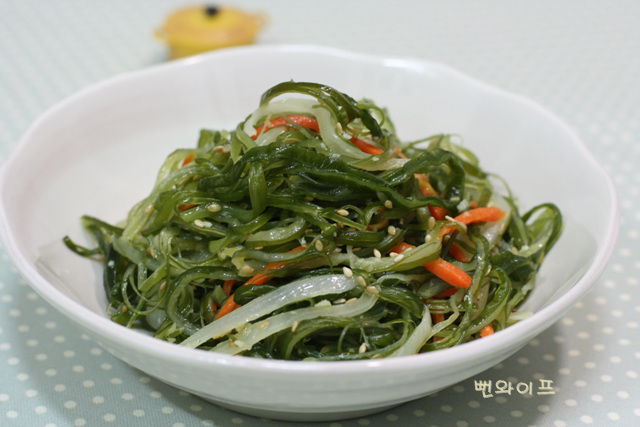
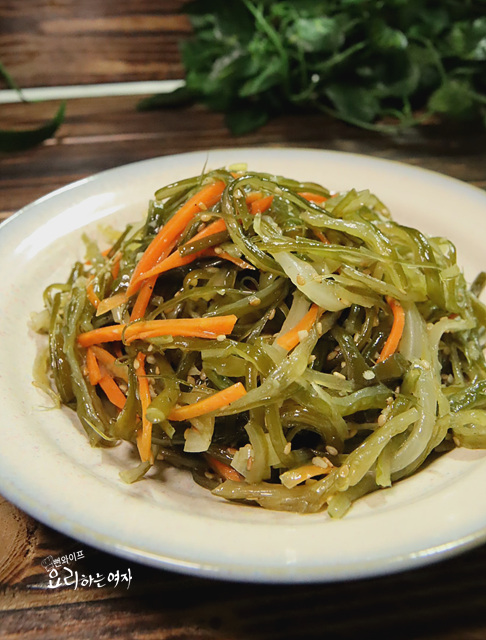
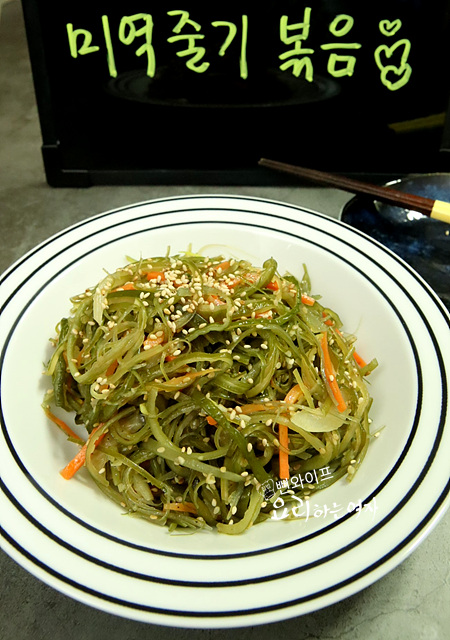
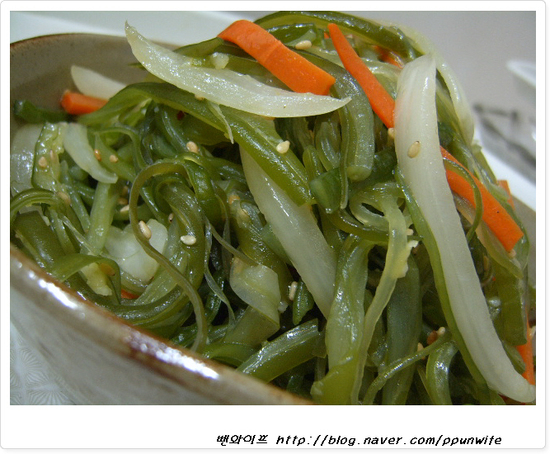
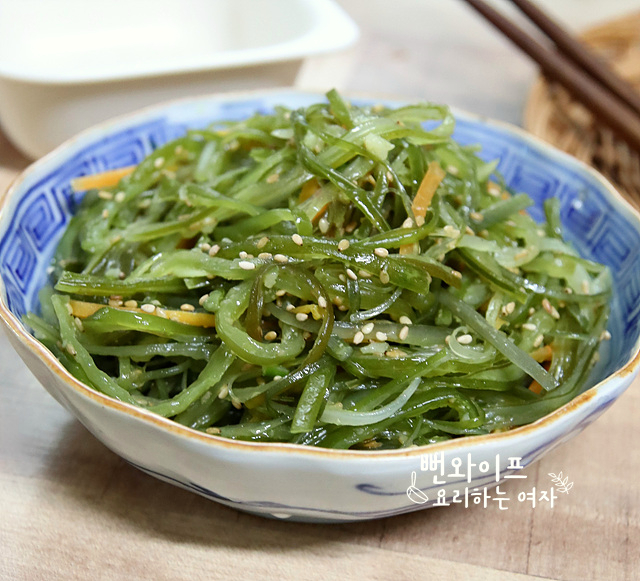
Miyeok Julgi Bokkeum (Stir-Fried Seaweed Stems)
A savory side dish made by soaking salted seaweed stems to remove the salt, then stir-frying them with onion.
Translated from Korean by AI and not yet checked by a native speaker. Amounts and numbers are taken directly from the original recipe. Read the Korean original →
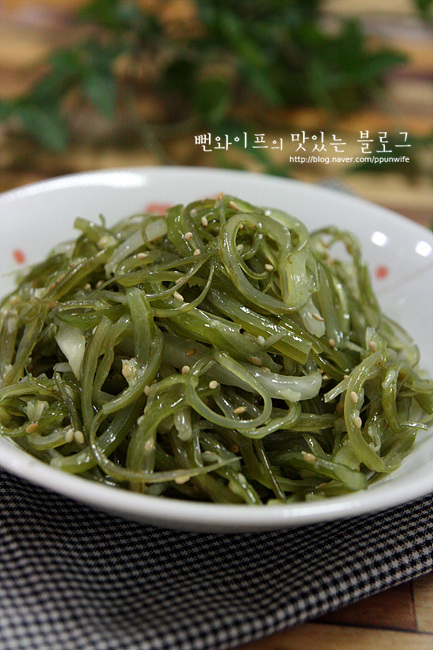
This easy stir-fried side dish uses affordable ingredients you can find year-round. The key is to massage the salted seaweed stems while changing the water multiple times to draw out the excess salt. Adding a splash of anchovy broth brings out a deeper flavor. It has a delightful, crunchy texture that makes it hard to stop eating.
- Servings
- about 4–5 servings
- Difficulty
- Medium
- Spiciness
- Not spicy
Ingredients
Ingredients
- Salted seaweed stems250 g
- Onion1/2
- Anchovy broth3 tbsp
Seasoning
- Minced garlic1/2 tbsp
- Mirin (cooking rice wine)1 tbsp
- Sugar1/2 tsp
- Salt1/2–1 tsp
- Toasted sesame seeds
- Toasted sesame oil
- Rinse the salted seaweed stems in clean water two or three times to shake off the salt, then change the water several times while massaging them by hand to draw out the saltiness. If you soak them in water for too long, they will turn slimy.
- You can also julienne and add vegetables you like, such as carrots, red chili pepper, Cheongyang chili pepper (hot green chili), or bell peppers.
Steps
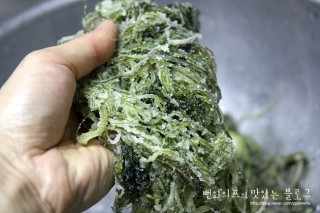
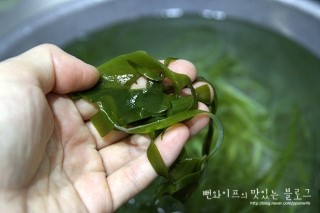
1. Salted seaweed stems come completely coated in salt.
Once you soak them in water and pour it off, you will see a lot of salt.
Rinse them two or three times in clean water to wash the salt away.
2. When you look at the seaweed stems, they are uneven in thickness and some still have wide seaweed fronds attached.
Tear any thick stem portions into thin strips, and snip away the wide fronds with kitchen scissors.
Also, if the top ends of the stems are too tough to chew, snipping those off makes them much easier to eat.
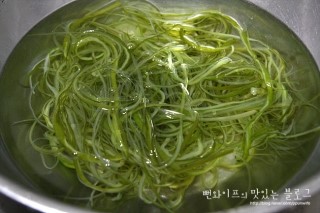
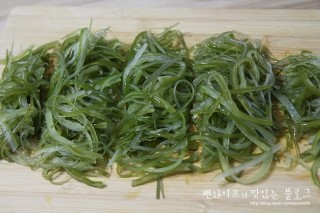
3. Since the first step only shook off the loose salt, a lot of salinity still remains.
If you soak them in water for too long, sticky slime will come out and make them unpleasant to eat,
so change the water several times while massaging them with your hands to draw out the salt effectively.
4. Once enough of the saltiness has been removed, drain them in a colander and cut into bite-sized lengths.
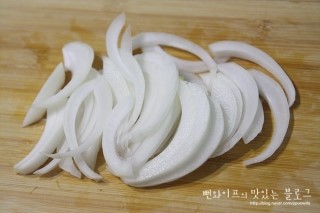
5. I only sliced an onion for this.
You can prepare vegetables you like, such as carrots, red chili pepper, Cheongyang chili pepper (hot green chili), or bell peppers, and julienne them.
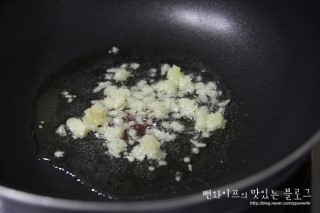
6. In a heated pan, stir-fry the minced garlic to release its aroma.
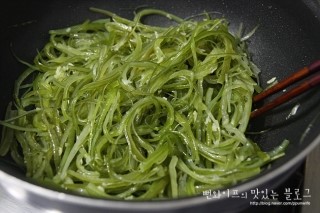
7. Add the seaweed stems and stir-fry thoroughly so the garlic aroma infuses well and the stems become tender.
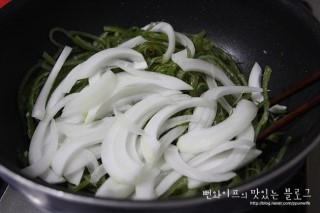
8. Add the onion and stir-fry until translucent...
If you stir-fry a wide variety of vegetables, it is best to cook them separately and then toss them together again when seasoning.
10
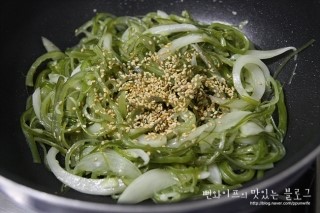
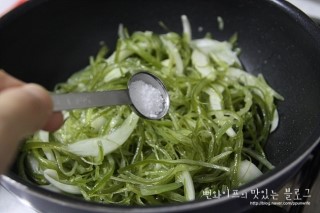
9. Add mirin (cooking rice wine), sugar, and salt to season.
I used 1 tsp because almost no saltiness remained in mine.
You must adjust the amount of salt depending on how much salt is left in your seaweed stems.
To give it an even deeper flavor, add 3 tbsp of anchovy broth and stir-fry until the liquid cooks off.
You can also season it with soup soy sauce (guk-ganjang), regular soy sauce (jin-ganjang), or fish sauce according to your personal taste.
10. Finish by adding toasted sesame oil and toasted sesame seeds, tossing evenly, and it is complete.
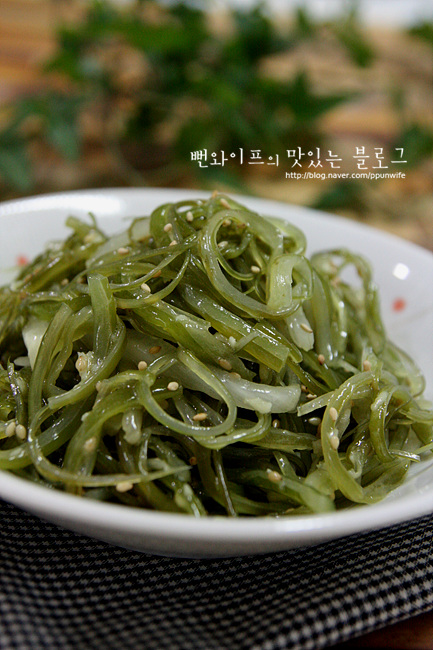
When stir-fried on the milder side, I feel like I eat more of this side dish than rice.
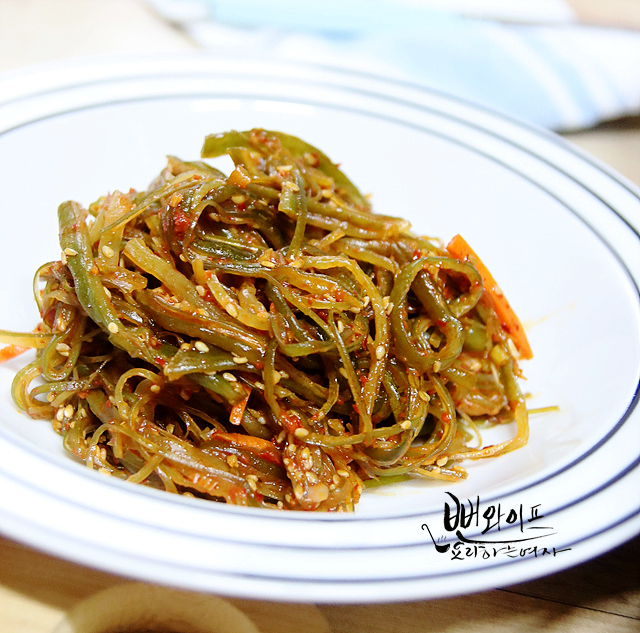
It is also delicious mixed with rice and gochujang (Korean red chili paste).
 Ppunwife's tips
- Keep in mind that because it is heavily salted, you must remove the excess salt properly so you can season it to taste.
- If you stir-fry a wide variety of vegetables, it is best to cook them separately and then toss them together again when seasoning.
- You must adjust the amount of salt depending on how much salt is left in your seaweed stems.
- You can also season it with soup soy sauce (guk-ganjang), regular soy sauce (jin-ganjang), or fish sauce according to your personal taste.
FAQ
How should I remove the saltiness from the seaweed stems?
If you soak them in water for too long, they will become slimy, so change the water several times while massaging them with your hands to draw out the salt.
Can I season it with something other than salt?
Depending on your preference, you can use soup soy sauce (guk-ganjang), regular soy sauce (jin-ganjang), or fish sauce instead of salt to adjust the seasoning.
Can I add other vegetables besides onion?
You can julienne and add carrots, red chili pepper, Cheongyang chili pepper (hot green chili), bell peppers, and more. When using many vegetables, it is best to stir-fry them separately first and then combine them when seasoning.
How should I prep seaweed stems that are tough or thick?
Tear thick stems into thinner strips, and use kitchen scissors to snip off wide seaweed fronds and tough upper stem ends so they are easier to eat.