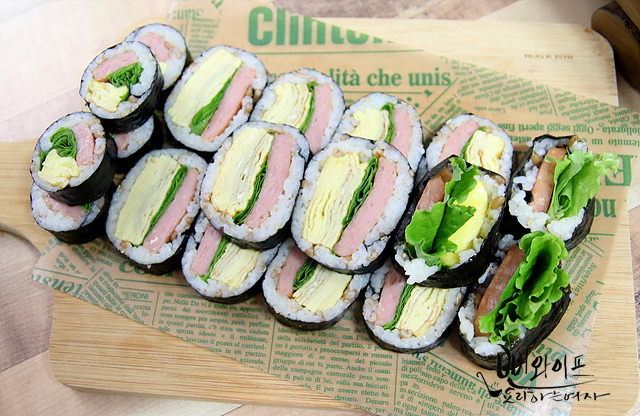
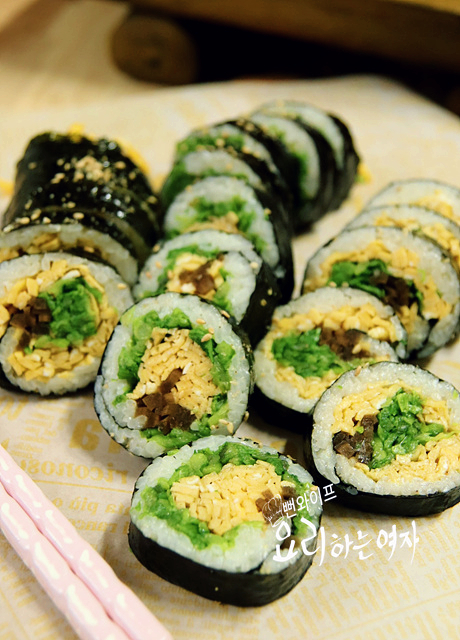
Hearty Kimbap (Seaweed Rice Rolls) for Lunchboxes
A 10-roll recipe for kimbap made by filling fluffy rice cooked in kelp water with essential ingredients.
Translated from Korean by AI and not yet checked by a native speaker. Amounts and numbers are taken directly from the original recipe. Read the Korean original →
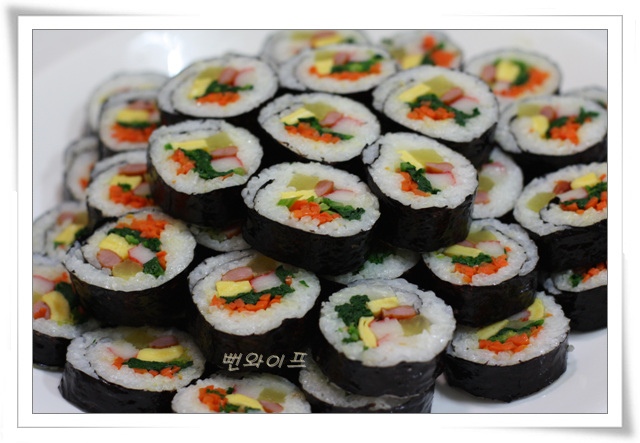
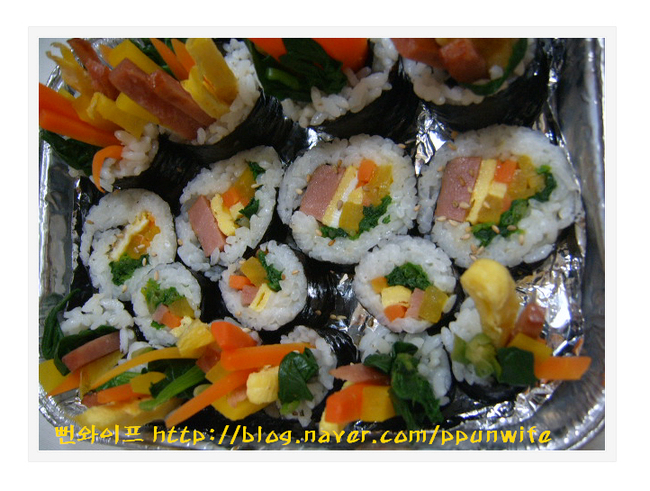
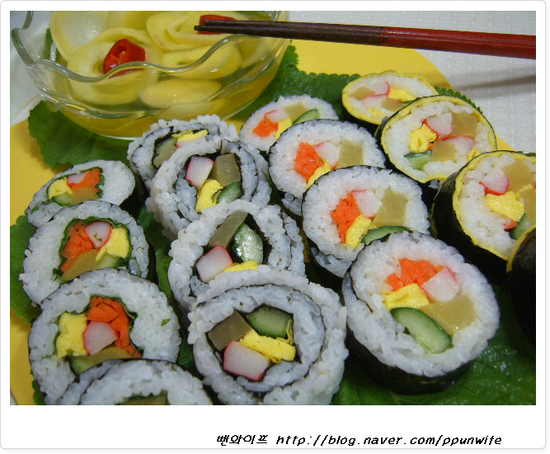
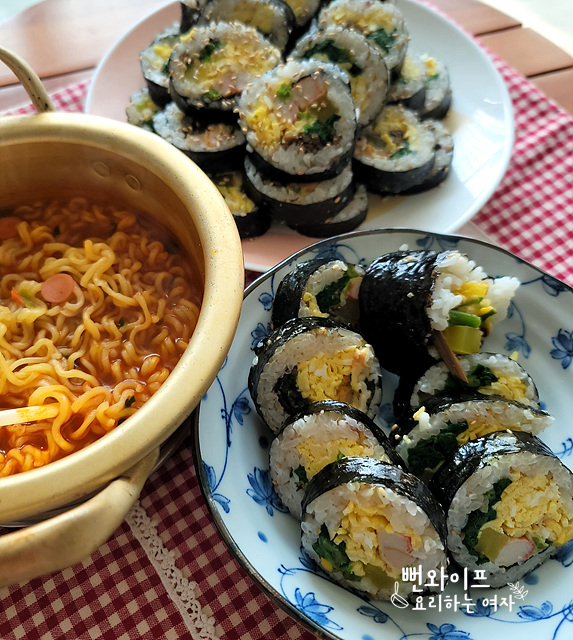
This kimbap is made with fluffy rice cooked in dried kelp water and neatly rolled with classic fillings like spinach, eggs, and carrots. The secret is to season the rice and fillings properly and layer them with contrasting colors so each slice looks vibrant. With a generous yield of 10 rolls, it is perfect for packing into picnic lunchboxes.
- Servings
- about 8–10 servingsOriginal: 10 rolls
- Difficulty
- Hard
- Spiciness
- Not spicy
Ingredients
- White rice5 cups
- Spinach1 bunch
- Egg4
- Imitation crab stick5 strips
- Ham for gimbap10 strips
- Carrot1 (large)
- Yellow pickled radish (danmuji)10 strips
- Besides the ingredients I used, burdock root or water dropwort (minari) instead of spinach is also great.
- Use a 1:1.1 ratio of rice to water and soak the rice for about 30 minutes before cooking to get fluffy rice.
Steps
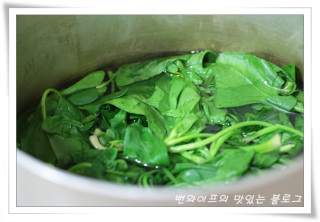
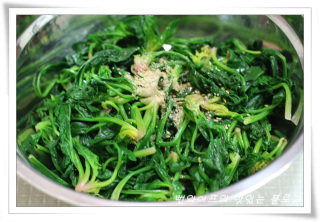
1. Add a little coarse sea salt to boiling water and blanch the spinach.
Blanching with salt keeps the color of the spinach more vibrant.
Once it wilts, quickly transfer it to cold water and rinse.
2. Squeeze out the water and gently toss with salt and ground toasted sesame seeds.
Season it so it is slightly on the lighter side.
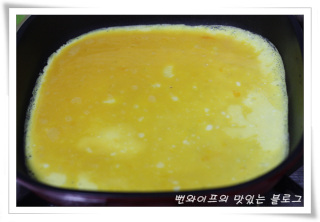
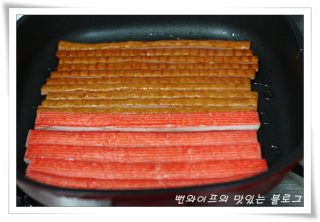
3. Add a little salt to the eggs, beat them, and cook both sides in a skillet.
Slice them thickly to match the length of the other ingredients.
4. Pan-fry the imitation crab stick and ham on both sides until golden brown.
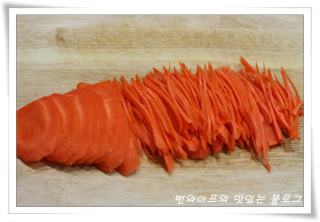
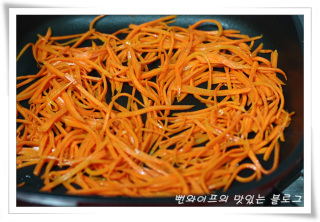
5. For the finely julienned carrots...
6. Add a little salt and sauté in a skillet until tender.
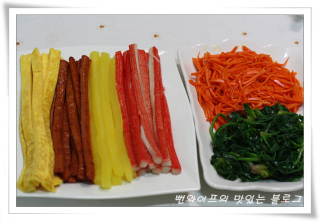
7. The kimbap fillings are all ready.
Besides the ingredients I used, burdock root or water dropwort (minari) instead of spinach is also great.
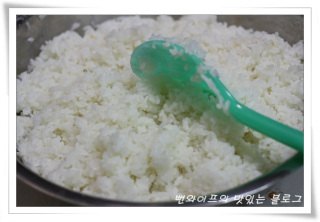
8. When making rice for kimbap or sushi, pouring in dried kelp (dasima) water makes the rice glossy and delicious.
Use a 1:1.1 ratio of rice to water and soak the rice for about 30 minutes before cooking to get fluffy rice.
For freshly harvested rice or aged rice, you should decrease or increase the amount of water.
Once the rice is done, transfer it to a wide bowl and season with salt. For every 1 cup of rice (= that is, 2 bowls of cooked rice), sprinkle
1/2 tsp of salt over it and mix with a slicing motion so the rice does not get mashed while letting it cool.
10
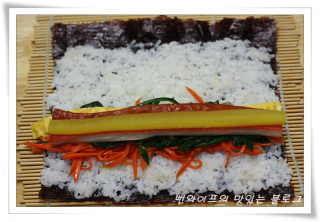
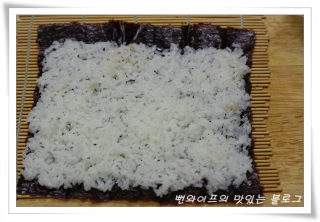
9. Place a dried seaweed sheet (gim) on a bamboo rolling mat and spread the rice evenly over it.
Leave about 2 cm bare at the top edge of the seaweed sheet.
10. Place the fillings on top one by one; place loose ingredients like spinach or carrots that could scatter when rolled at the very bottom rather than solid pieces, and layer the ingredients with contrasting colors stacked over each other.
To get the fillings right in the center of the roll, place the fillings at the point about 1/3 of the way up the seaweed sheet where it can wrap over the ingredients, and then roll.
11
12
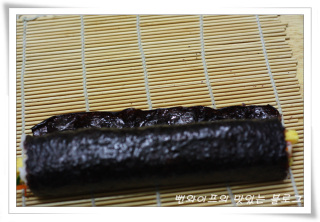
11. Roll it tightly with the bamboo mat, dab water onto the remaining bare edge, finish rolling,
and press firmly with the bamboo mat to seal.
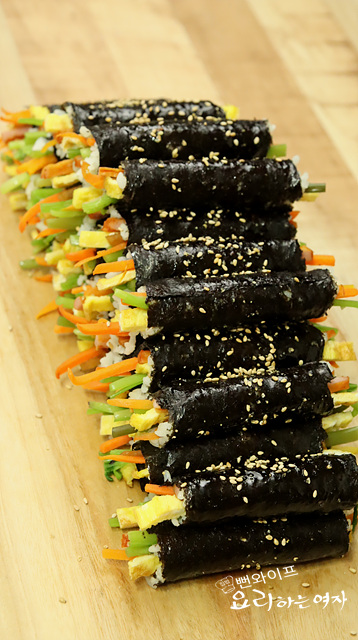
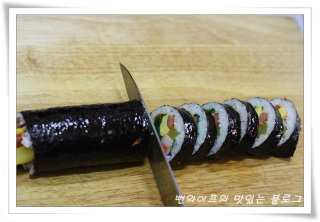
12. Brush toasted sesame oil evenly over the surface of the seaweed and slice to an appropriate thickness using a back-and-forth sawing motion with the knife.
 Ppunwife's tips
- Blanching with salt keeps the color of the spinach more vibrant.
- When making rice for kimbap or sushi, pouring in dried kelp (dasima) water makes the rice glossy and delicious.
- Mix with a slicing motion so the rice does not get mashed while letting it cool.
- Place loose ingredients like spinach or carrots that could scatter when rolled at the very bottom rather than solid pieces, and layer the ingredients with contrasting colors stacked over each other.
- To get the fillings right in the center of the roll, place the fillings at the point about 1/3 of the way up the seaweed sheet where it can wrap over the ingredients, and then roll.
FAQ
What is the water ratio and secret for making kimbap rice?
Cooking the rice with dried kelp (dasima) water gives it a nice sheen, and using a 1:1.1 ratio of rice soaked for about 30 minutes to water yields fluffy cooked rice.
Is there a trick to keeping the fillings right in the center of the kimbap?
Place the fillings about 1/3 of the way up the dried seaweed sheet before rolling, and placing ingredients that scatter easily like carrot or spinach on the bottom first makes it easy to position everything right in the center.
Are there other vegetable fillings that can be used instead of spinach?
You can use water dropwort (minari) instead of spinach, or add burdock root as an extra filling.
What should I do if the edge of the kimbap does not stick well?
Leave about 2 cm of space bare at the edge when spreading the rice, then lightly dab water along that remaining strip before finishing the roll for a clean seal.