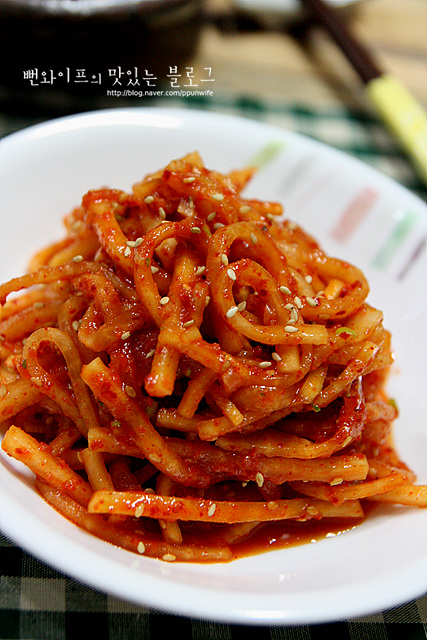
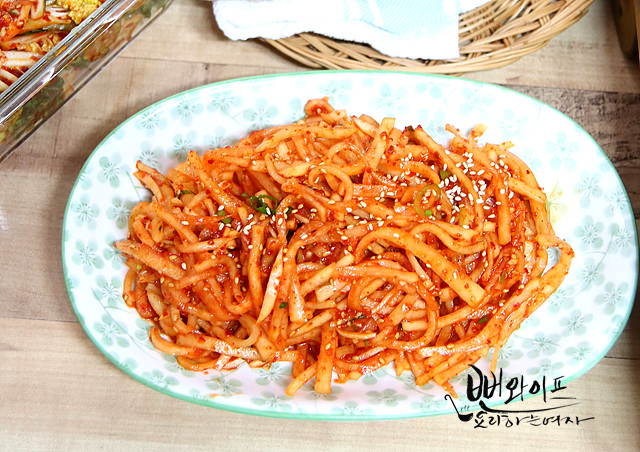
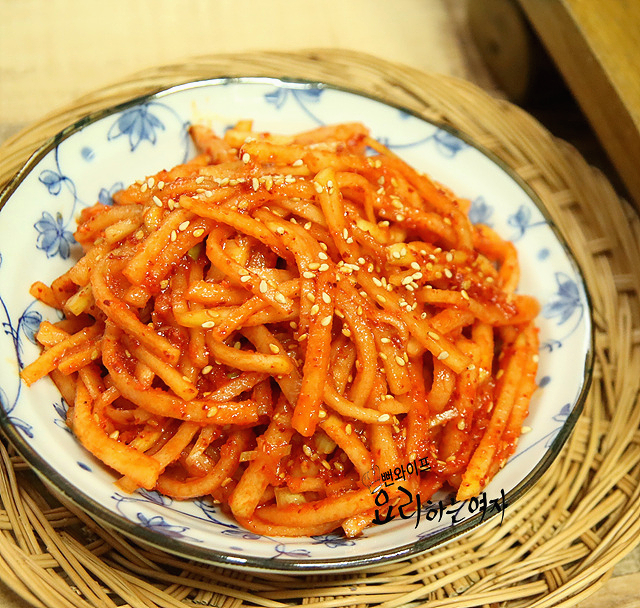
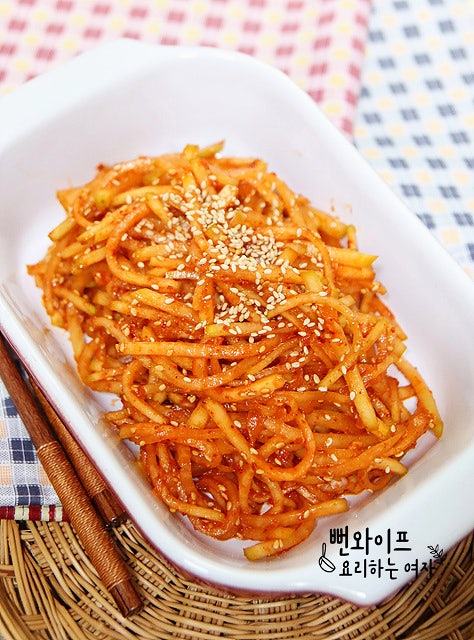
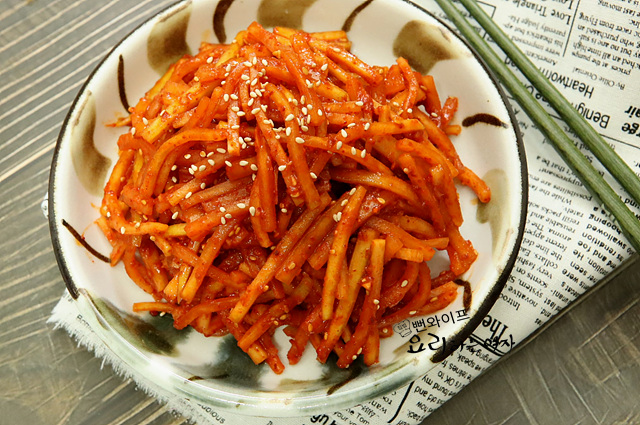
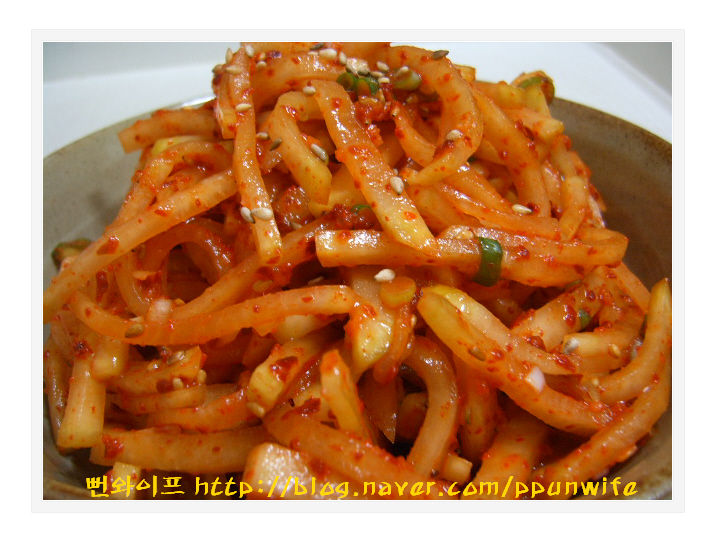
Crisp and Nutty Saengchae (Seasoned Fresh Vegetables)
A simple side dish of in-season Korean radish and sweet inner napa cabbage tossed separately in seasoning, perfect for bibimbap.
Translated from Korean by AI and not yet checked by a native speaker. Amounts and numbers are taken directly from the original recipe. Read the Korean original →
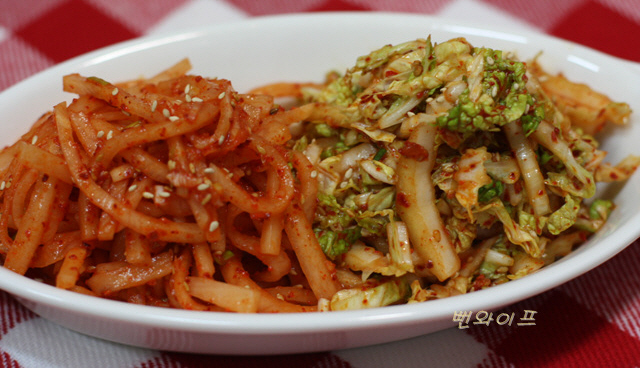
An easy and budget-friendly saengchae made with fall and winter in-season radish and cabbage. The radish is lightly salted and drained to keep it crunchy, while the cabbage is tossed right before serving so it stays crisp and fresh. The spicy, sweet, and tangy seasoning whets your appetite and makes this a great topping for rice bowls.
- Servings
- 2–3 servings
- Difficulty
- Medium
- Spiciness
- Mildly spicy
Ingredients
Radish saengchae
- Korean radish (mu)1/4, 300 g (medium radish)
- Salt1 tsp
Radish saengchae seasoning
- Gochugaru (Korean chili flakes)1 1/2 tbsp
- Minced green onion1 tbsp
- Minced garlic1/2 tbsp
- Sugar1/2 tsp
- Vinegar1/2 tbsp
- Toasted sesame oilas needed
- Ground toasted sesame seedsas needed
Cabbage saengchae
- Inner napa cabbage leaves4–5 leaves, 200 g
Cabbage saengchae seasoning
- Salt1/2 tsp
- Gochugaru (Korean chili flakes)1 tbsp
- Minced green onion1 tbsp
- Minced garlic1 tsp
- Sugar1/2 tsp
- Vinegar1 tsp
- Toasted sesame oilas needed
- Ground toasted sesame seedsas needed
- Toss evenly with coarse sea salt or fine salt, then let it salt for about 20 minutes.
Steps
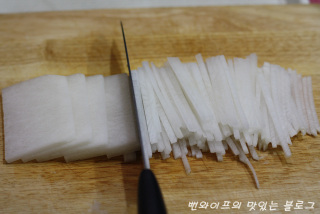
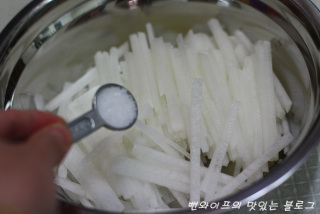
1. Slice the radish thinly and julienne it. If you cut it too fine, it will lose its crunch.
2. Toss evenly with coarse sea salt or fine salt, then let it salt for about 20 minutes.
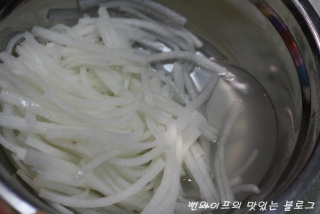
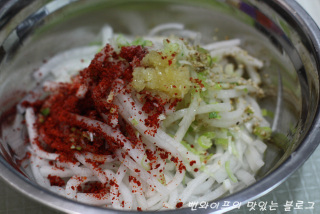
3. A lot of liquid will have come out. Do not rinse with water; just drain it through a strainer to remove the moisture.
4. Place the radish and all the seasoning ingredients in a bowl, then toss and massage gently.
I added a little vinegar when seasoning, but you can leave it out.
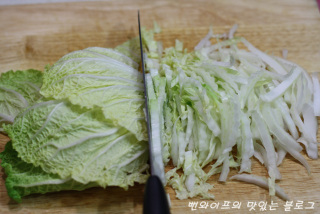
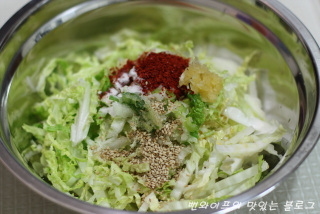
1. Stack 4 to 5 inner napa cabbage leaves and julienne them.
2. Unlike radish, cabbage wilts quickly, so skip the salting step.
Put the julienned cabbage and all the seasoning ingredients into a bowl, then toss and massage gently.
 Ppunwife's tips
- If you cut it too fine, it will lose its crunch.
- A lot of liquid will have come out. Do not rinse with water; just drain it through a strainer to remove the moisture.
- Cabbage wilts quickly as soon as it meets seasoning, so it is best to toss it right before serving.
FAQ
Should I rinse the salted radish in water?
Do not rinse the salted radish with water; simply drain it in a strainer to remove the excess liquid before tossing it with the seasonings.
Do you also salt the cabbage saengchae ahead of time like the radish?
Cabbage wilts quickly, so you do not salt it; simply julienne it and toss immediately with the seasoning.
Do I have to add vinegar to saengchae?
Vinegar is added in a small amount to give a light tangy flavor, so you can leave it out if you prefer.
Can I season it with something else instead of salt?
If it needs more saltiness after tossing, you can add more salt, or season it with fish sauce to suit your personal taste.