Rich Hobaknip Doenjang Jjigae (Soybean Paste Stew)
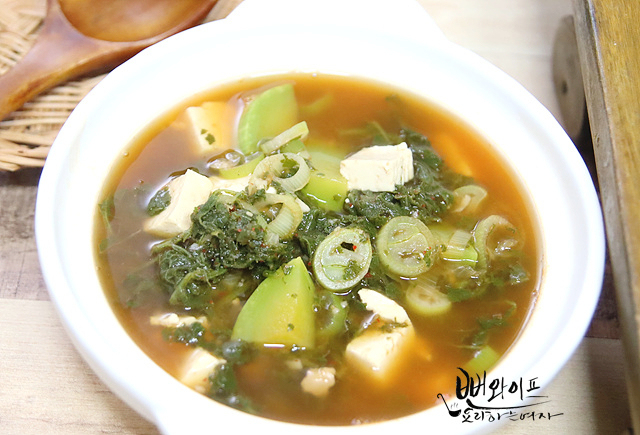
A savory stew made by dissolving doenjang into rice-water anchovy broth and simmering tender pumpkin leaves.
Translated from Korean by AI and not yet checked by a native speaker. Amounts and numbers are taken directly from the original recipe. Read the Korean original →
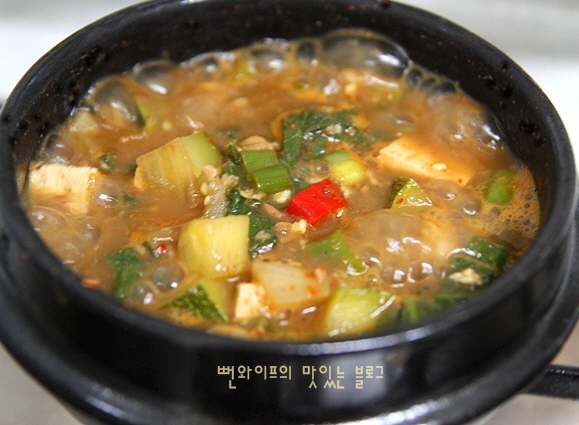
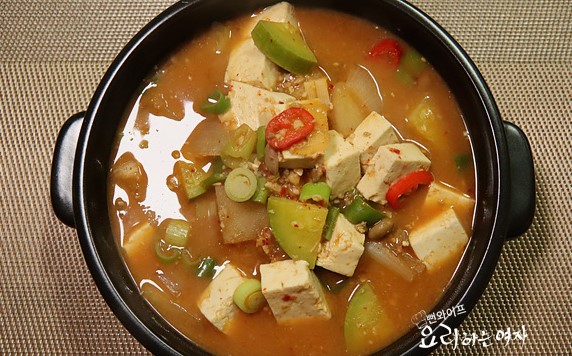
Simmering anchovies and dried kelp in water from washing rice creates an even deeper, more savory broth. Squash, onion, and tofu are combined with finely cut pumpkin leaves for a delicate aroma. A simple, neat stew that 2 to 3 people can enjoy comfortably.
- Servings
- 2–3 servings
- Difficulty
- Medium
- Spiciness
- Mildly spicy
Ingredients
Ingredients
- Doenjang (Korean soybean paste)2 tbsp
- Pumpkin leaves3 leaves
- Squash1/4
- Onion1/4
- Tofu1/5 block
- Cheongyang chili pepper (hot green chili)1
- Red chili pepper1/2
- Large green onion (daepa)a little
Broth
- Water from washing rice (or water)3 cups
- Dried kelp (dasima)1 piece (5 cm square)
- Dried soup anchovies5
Seasoning
- Gochugaru (Korean chili flakes)1/2 tbsp
- Minced garlic1 tsp
- You can also soak the dried kelp in the water from washing rice for about 30 minutes before adding the anchovies to boil.
- The saltiness of doenjang varies by household, so adjust the amount to your taste.
- Snap the stem of the pumpkin leaf and pull downward, and stringy fibers will peel away. Doing this 2 to 3 times makes tough pumpkin leaves tender. Rinse thoroughly in water and drain.
Steps
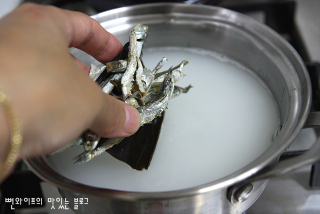
1. Add the dried kelp and dried anchovies to 3 cups of water from washing rice and simmer until the broth reduces to about 2 cups;
10 minutes after it starts boiling, remove the kelp and continue simmering.
You can also soak the kelp in the water from washing rice for about 30 minutes before adding the anchovies to boil.
When making doenjang jjigae or doenjang soup, making anchovy broth with water from washing rice gives it an even richer, deeper flavor.
You will see once you try it yourself.
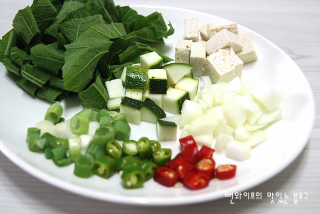
2. Finely cut the pumpkin leaves, and dice or thinly slice the rest of the ingredients.
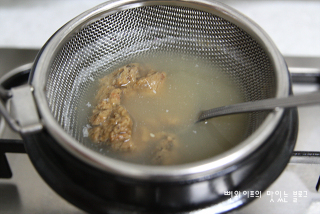
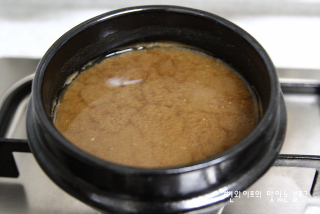
3. Dissolve 2 tbsp of doenjang into the broth by pressing it through a strainer.
If you like the soybean bits, you can skip this step.
The saltiness of doenjang varies by household, so adjust the amount to your taste.
4. Once the broth comes to a rolling boil...
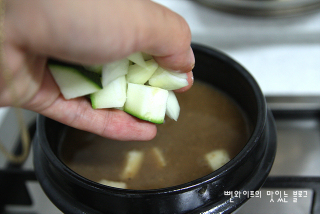
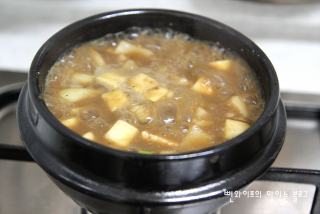
5. Add the squash, onion, and tofu together...
6. Let it simmer gently for a short while.
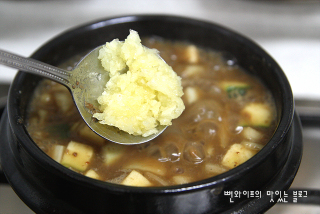
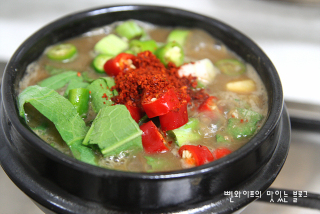
7. Add the minced garlic...
8. Add the pumpkin leaves, chili peppers, large green onion, and gochugaru all together.
Simmer briefly, and it is done.
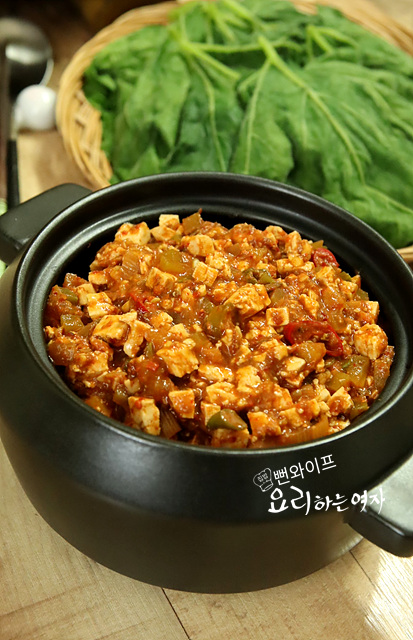
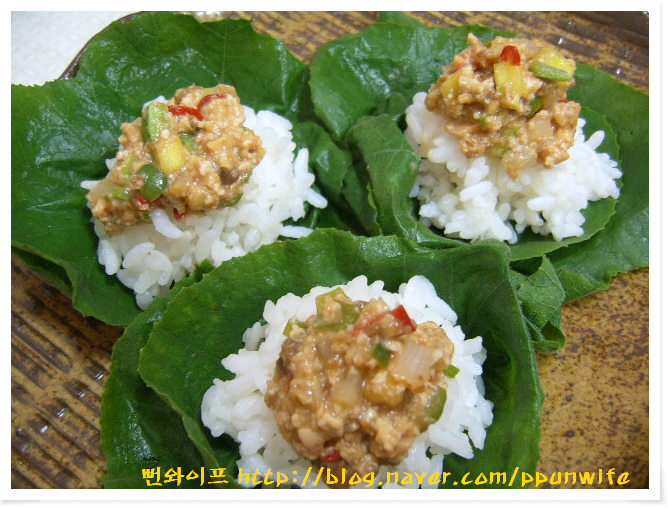
Steamed pumpkin leaves
 Ppunwife's tips
- When making doenjang jjigae or doenjang soup, making anchovy broth with water from washing rice gives it an even richer, deeper flavor.
FAQ
If I do not have water from washing rice, can I make the broth with regular water?
Yes, you can use the same 3 cups of regular water instead and boil it with the dried anchovies and dried kelp.
Do I have to strain the doenjang when adding it?
Straining it through a sieve helps create a cleaner broth, but if you enjoy the bits of fermented soybean, you can skip straining and dissolve it directly.
How do I prep pumpkin leaves to reduce their tough texture?
Gently snap the end of the stem and pull downward to peel away the tough outer skin fibers; repeating this 2 to 3 times will make them tender.
How do I adjust the amount of doenjang for the stew?
Because the saltiness of doenjang differs by brand and household, it is best to taste as you go and adjust the quantity to your liking.