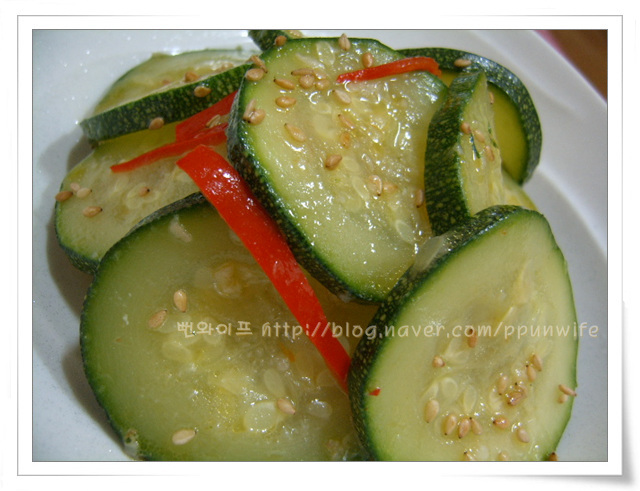
Hobak Jjigae (Squash Stew) with Salted Fermented Shrimp
A saucy stew side dish made by simmering sweet round Korean zucchini in anchovy broth seasoned with salted fermented shrimp.
Translated from Korean by AI and not yet checked by a native speaker. Amounts and numbers are taken directly from the original recipe. Read the Korean original →
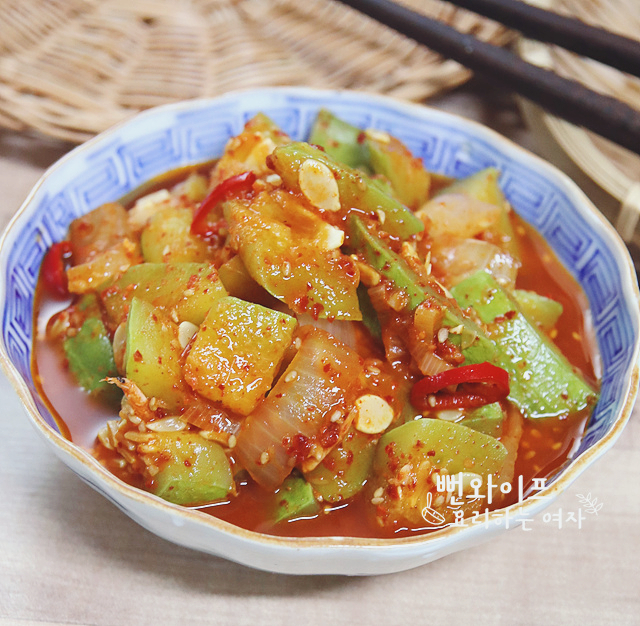
This stew is braised down until saucy, using sweet, firm seasonal round Korean zucchini flavored with savory salted fermented shrimp. Bring it to a boil over high heat, then lower the heat to medium to keep the zucchini tender yet slightly crisp, and finish with nutty perilla oil. Made with simple, accessible ingredients, it is wonderful ladled over rice and mixed together.
- Servings
- 3–4 servings
- Difficulty
- Easy
- Spiciness
- Mildly spicy
Ingredients
Ingredients
- Round Korean zucchini1, 600 g
- Onion1/4
- Large green onion (daepa)white part
- Red chili pepper1
- Anchovy broth1 1/2 cups
Seasoning
- Gochugaru (Korean chili flakes)1 tbsp
- Minced garlic1 tbsp
- Salted fermented shrimp (saeujeot)1 tbsp
- Perilla oil1 tbsp
- Toasted sesame seeds
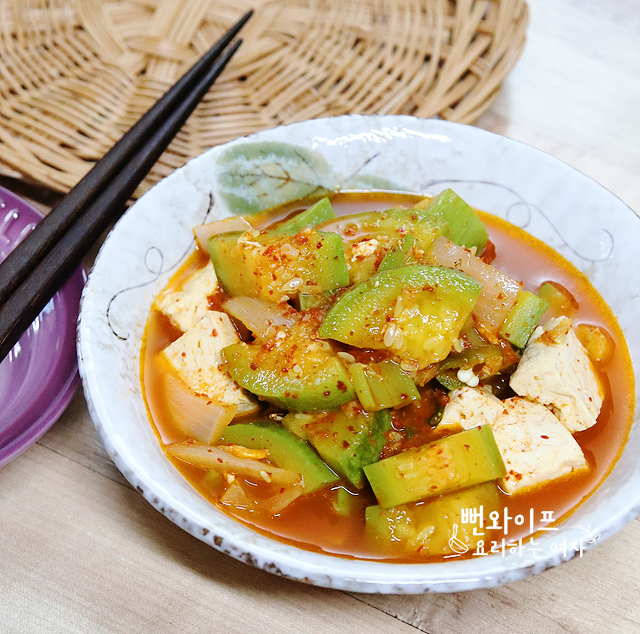
- You can also add extra ingredients like pork or tofu to make it even heartier.
- Seasonal round Korean zucchini has soft seeds, so there is no need to scoop out the center; just slice it.
Steps
Prepare the ingredients
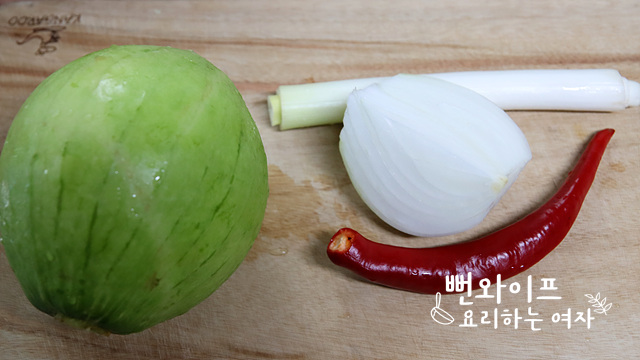
Here are the round Korean zucchini, onion, large green onion, and red chili pepper.
Cut the ingredients
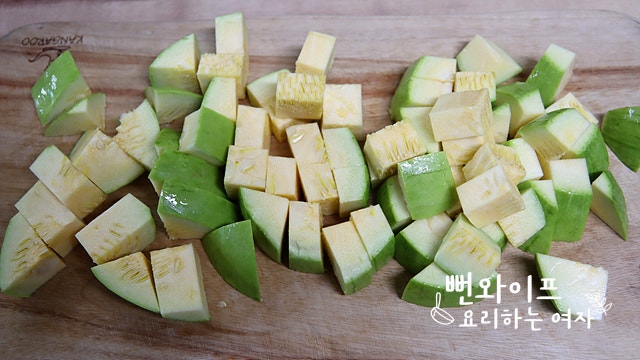
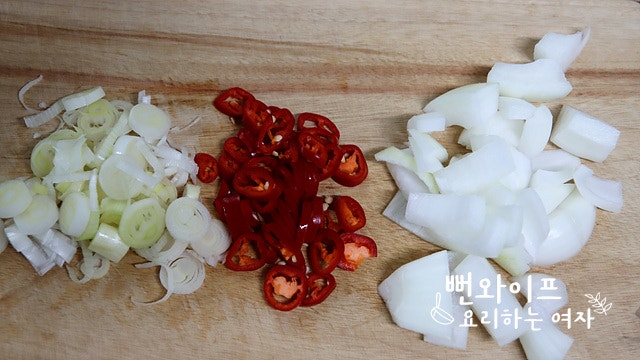
I diced the squash into about 2 cm cubes so it is easy to eat with a spoon.
Cut the onion, chili, and large green onion into similar sizes as well.
Season
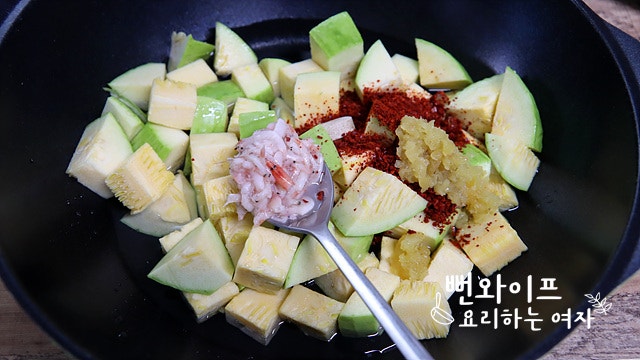
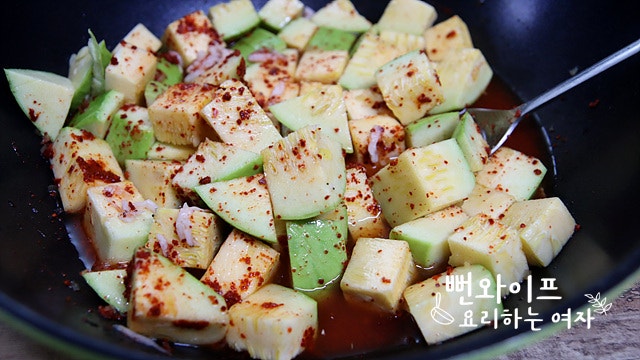
Place the squash into a pan and add the seasonings.
Add 1 tbsp gochugaru (Korean chili flakes), 1 tbsp minced garlic, and 1 tbsp salted fermented shrimp (saeujeot), then pour in 1 1/2 cups anchovy broth.
Stir roughly so the seasonings coat the squash.
Simmer
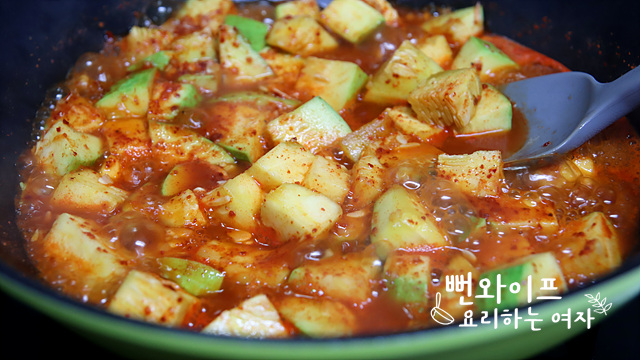
Once it begins to boil vigorously over high heat, reduce the heat to medium, cover with a lid, and simmer until the squash cooks soft and absorbs the flavor.
Stir occasionally so the bottom does not stick.
Cook it so it stays tender-crisp rather than breaking down into complete mush.
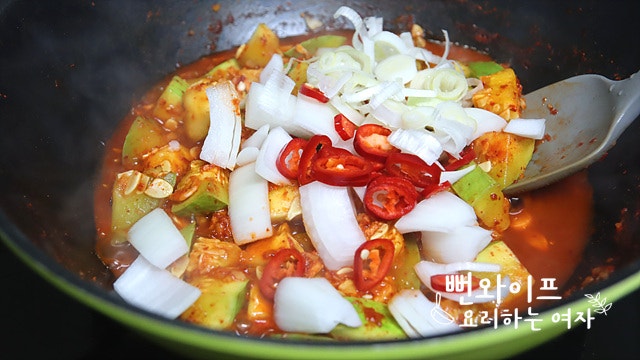
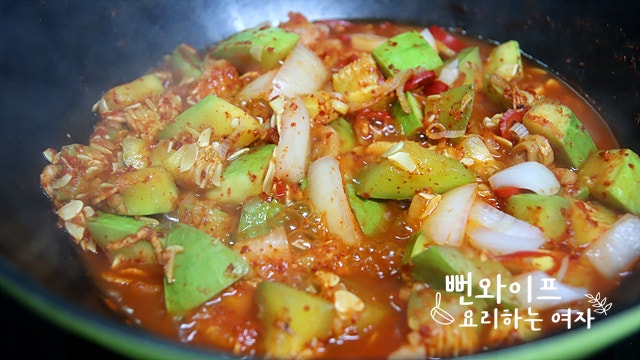
Add the onion, chili pepper, and large green onion, give it a gentle stir, let it boil briefly, and adjust any missing seasoning with salted fermented shrimp or salt.
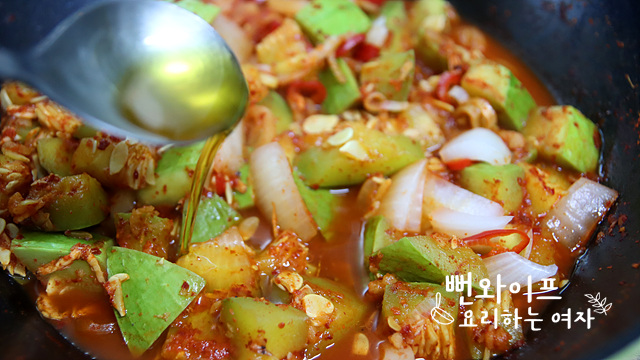
Turn off the heat, add 1 tbsp perilla oil, and mix evenly to finish.
Finish
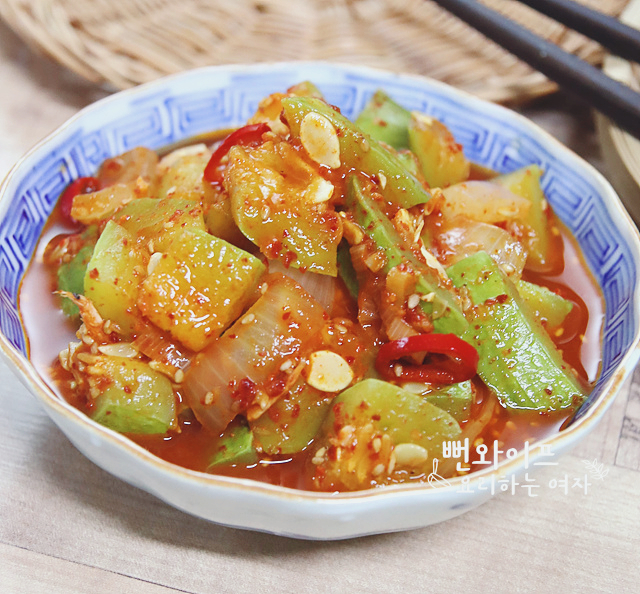
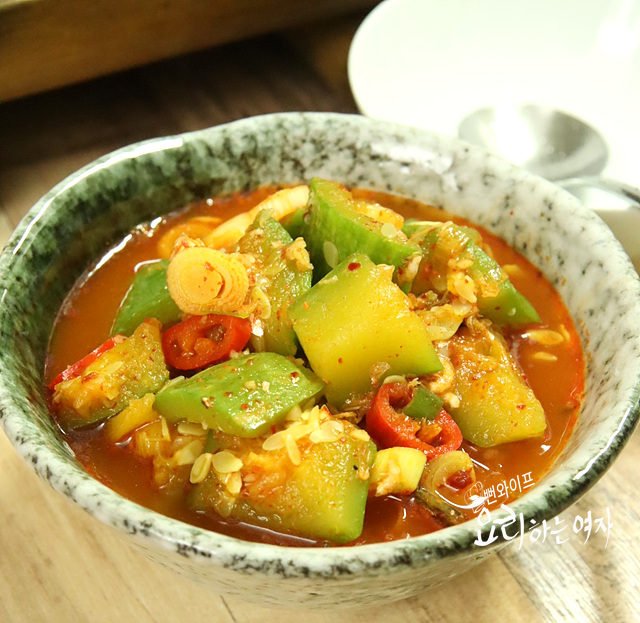
The round hobak jjigae is finished.
I cooked it down until the broth was shallow, halfway between a stew and a braise.
As I ladle it into a dish, the nutty aroma of perilla oil really stimulates the appetite.
 Ppunwife's tips
- When making squash stew, salted fermented shrimp brings out the sweetness of the squash much better than salt and plays a big role in flavoring the broth.
- Cook it so it stays tender-crisp rather than breaking down into complete mush.
- Adjust any missing seasoning with salted fermented shrimp or salt.
FAQ
Do I need to scoop out the seeds of the round Korean zucchini before cooking?
Seasonal squash has soft seeds and firm flesh, so you do not need to hollow it out; you can slice and cook it whole.
What seasoning should I add if the broth needs more salt?
After adding the vegetables and boiling, if it lacks seasoning, adjust it by adding salted fermented shrimp or salt.
Can I add ingredients other than squash?
To your liking, you can add extra ingredients like pork or tofu to make it even more substantial.
When is the best time to add perilla oil during cooking?
After all the ingredients are cooked, turn off the heat and stir it in at the very end to best preserve its savory aroma.