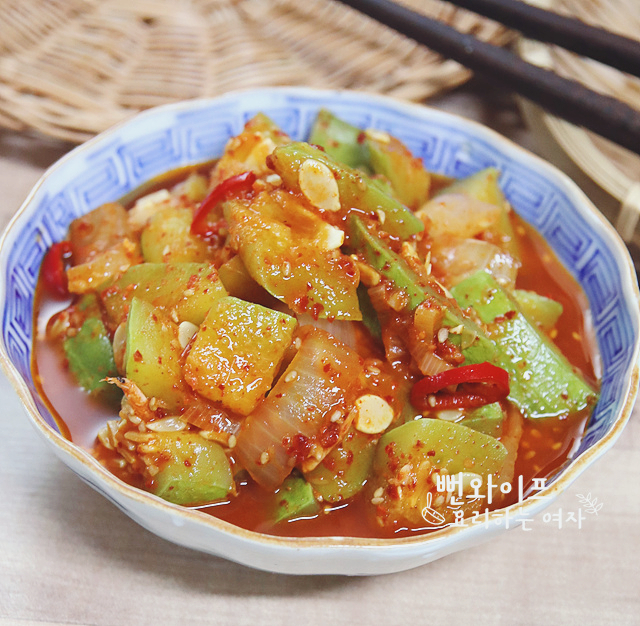
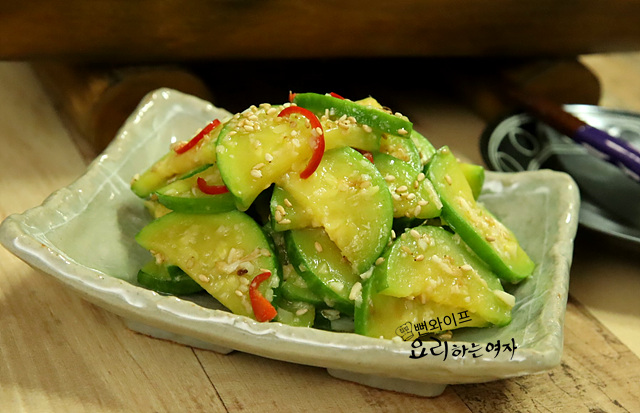
Tender Hobak Jorim (Braised Squash) for Summer
A seasonal summer side dish gently braised with salted fermented shrimp and anchovy broth for deep savory flavor.
Translated from Korean by AI and not yet checked by a native speaker. Amounts and numbers are taken directly from the original recipe. Read the Korean original →
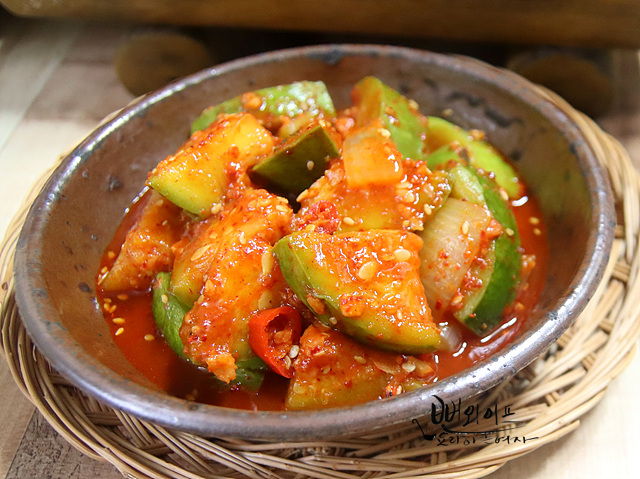
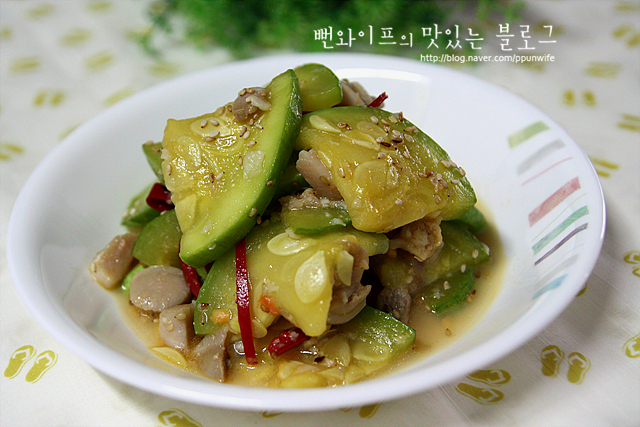
This braised dish features seasonal round Korean zucchini cut into thick pieces and gently simmered in a savory salted fermented shrimp seasoning. Even without meat, a drizzle of perilla oil at the very end adds rich, deep flavor. With its tender, pleasantly soft texture, it makes a wonderfully appetizing side dish for rice.
- Servings
- 3–4 servings
- Difficulty
- Easy
- Spiciness
- Mildly spicy
Ingredients
Ingredients
- Round Korean zucchini2, 700 g
- Onion1/2
- Large green onion (daepa)1/2 stalk
- Red Cheongyang chili pepper2
- Anchovy broth (or water and broth coin tablet)1 1/2 cups
Seasoning
- Gochugaru (Korean chili flakes)1 1/2 tbsp
- Minced garlic1 tbsp
- Salted fermented shrimp (saeujeot)1 tbsp
- Soup soy sauce (guk-ganjang)a little
- Perilla oil1 tbsp
- Toasted sesame seeds1 tbsp
- You can use 2 Korean zucchini instead of round Korean zucchini.
Steps
Prepare the ingredients
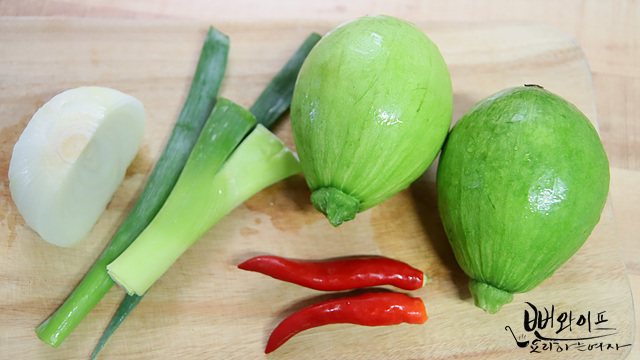
I prepared 2 round Korean zucchini. You can also use 2 Korean zucchini instead.
You will need 1/2 large green onion (daepa), 1/2 medium onion, and 2 red Cheongyang chili peppers.
Slice the ingredients
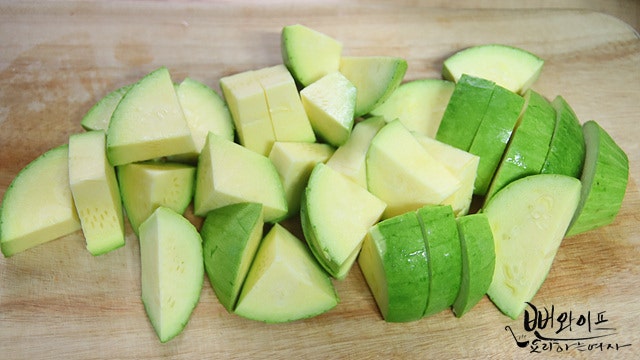
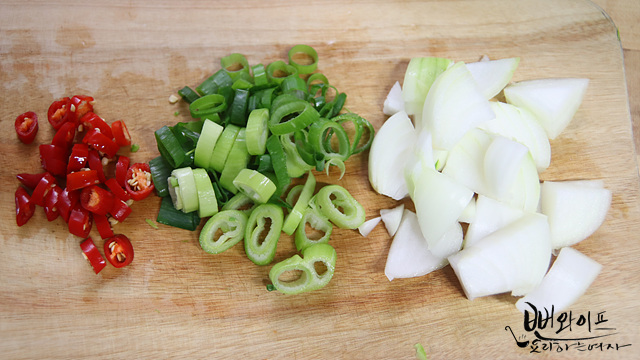
Quarter the zucchini lengthwise and slice it thickly, and slice the onion thickly as well.
Thinly slice the green onion and chili peppers.
Braise
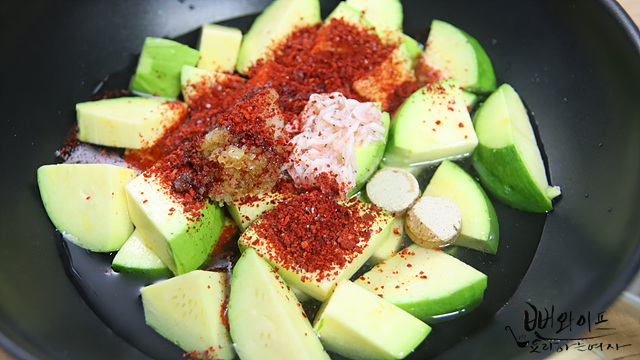
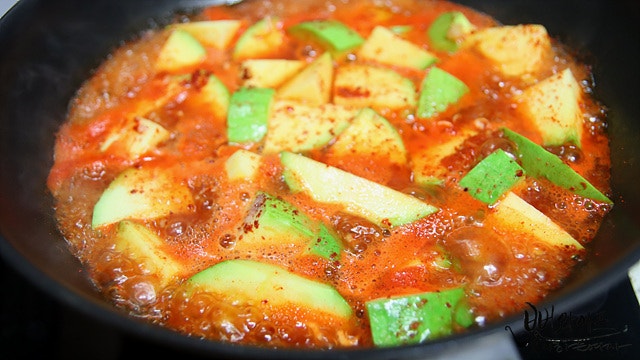
Place all the zucchini in a deep pan and pour in anchovy broth, or use water with broth tablets instead.
Add 1+1/2 tbsp gochugaru (Korean chili flakes), 1 tbsp minced garlic, and 1 tbsp salted fermented shrimp (saeujeot); once it comes to a rolling boil, simmer gently so the zucchini cooks through.
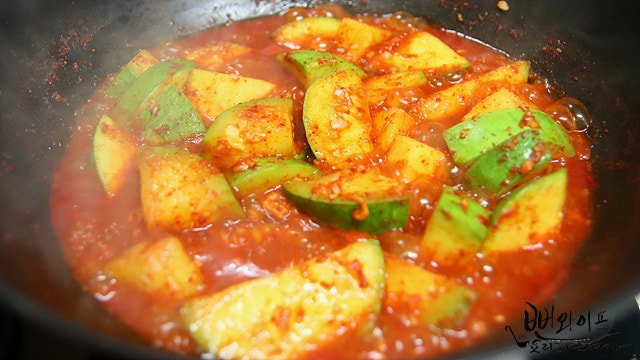
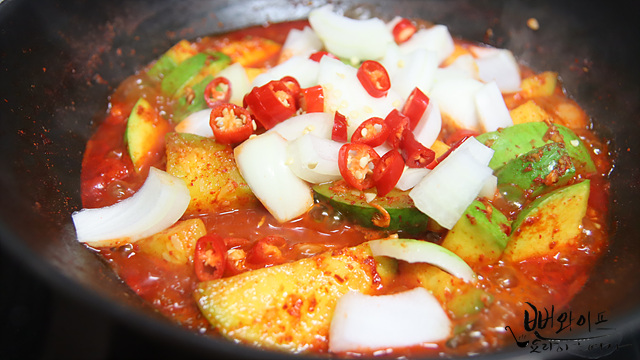
Once the broth has reduced and the zucchini turns tender, add the onion and chili peppers to cook.
Taste it, and if it is too bland, adjust with soup soy sauce (guk-ganjang) or salt...
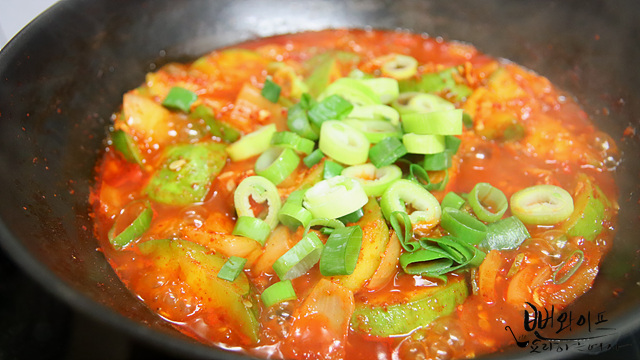
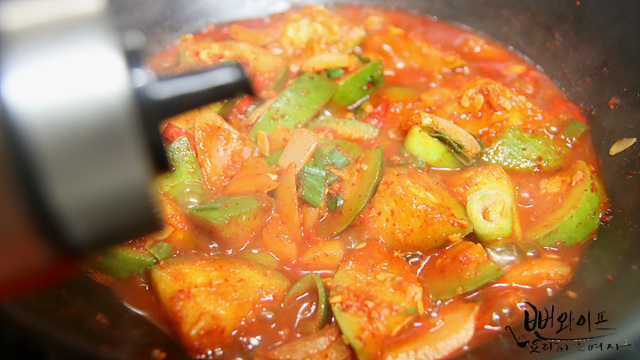
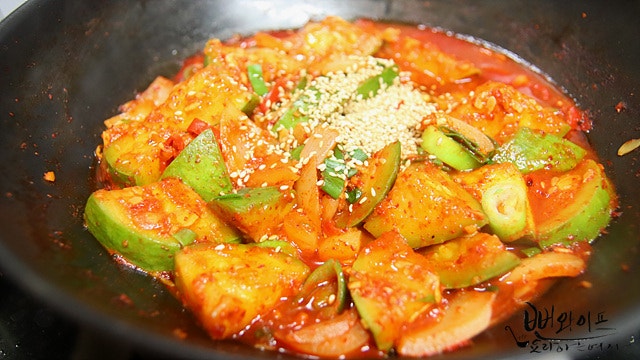
Add the green onion at the end and cook briefly to release its aroma.
Turn off the heat, then finish by adding 1 tbsp perilla oil and 1 tbsp toasted sesame seeds.
Finish
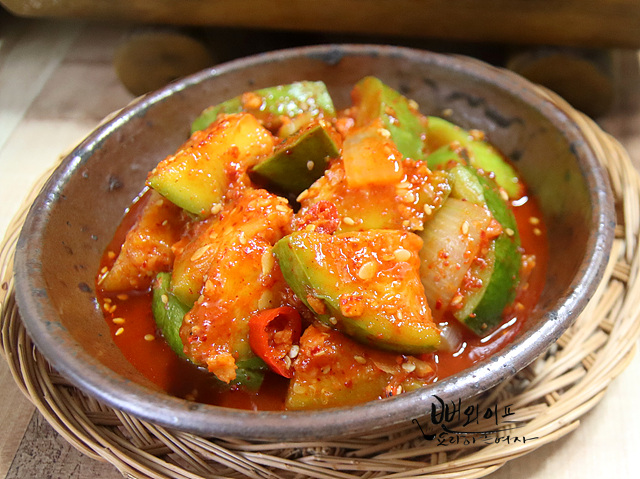
Adding perilla oil at the very end makes a huge difference.
Since there is no meat or special ingredient in the recipe, perilla oil fills that gap perfectly.
As expected of seasonal produce, it has rich natural sweetness and almost no seeds, making it truly delicious even braised on its own.
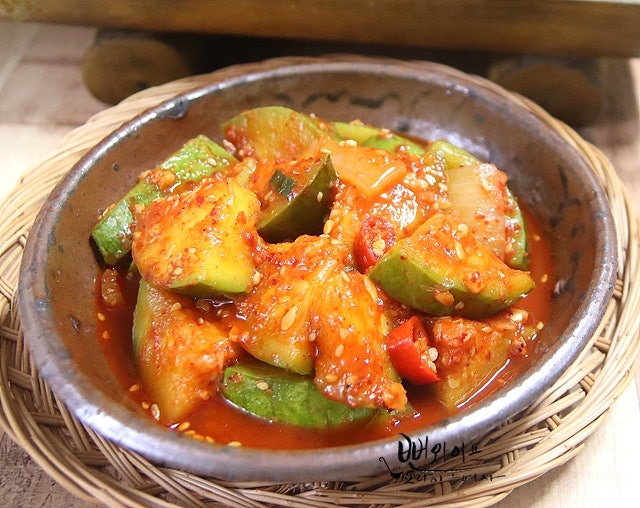
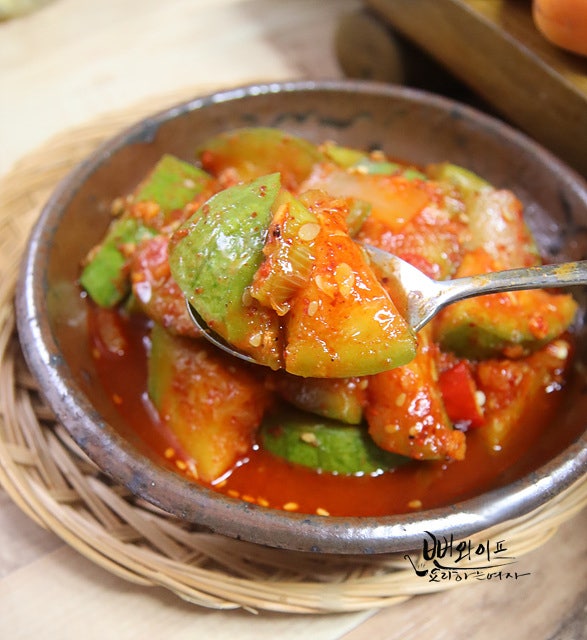
Because it is cut thick and braised, scooping up a generous spoonful and biting into the tender center really whets your appetite as a side dish for rice.
Vegetables are always best when in season, so don't miss out—be sure to make it once or twice and enjoy a delicious meal.
 Ppunwife's tips
- Taste it, and if it is too bland, adjust with soup soy sauce or salt.
- Since there is no meat or special ingredient, it is best to add perilla oil at the very end.
FAQ
If I do not have round Korean zucchini, can I substitute another squash?
You can easily substitute 2 regular Korean zucchini (aehobak).
How can I make this if I do not have anchovy broth?
You can conveniently dissolve broth tablets in plain water as a substitute.
Do I really need to add perilla oil when braising?
Since no meat is used, drizzling perilla oil at the end is necessary to round out the rich savory flavor.
What should I season with if the braised dish tastes bland after cooking?
Taste it, and if it is bland, adjust the seasoning by adding a little soup soy sauce or salt.