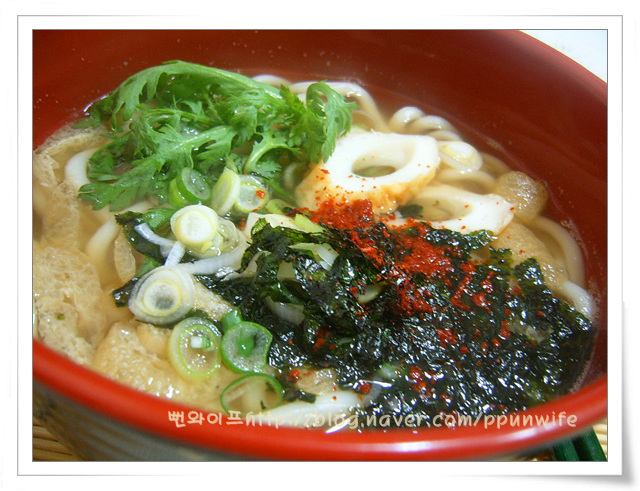
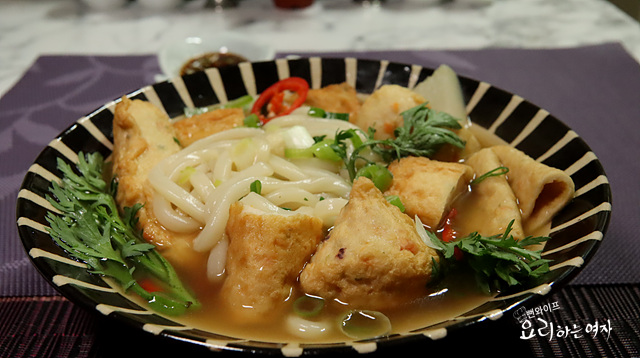
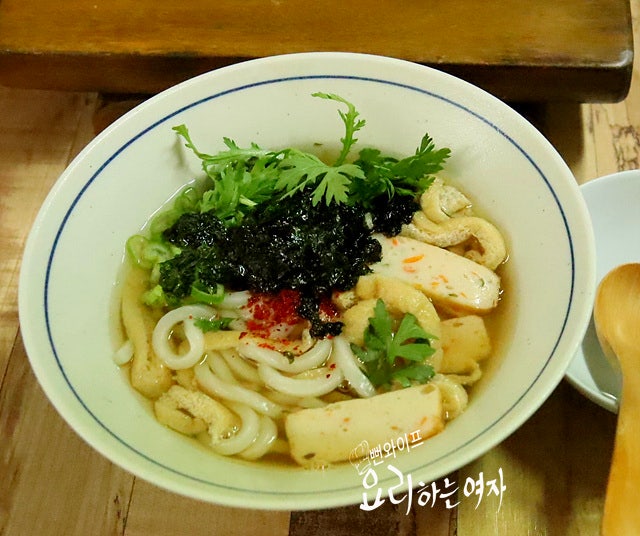
Warm and Refreshing Udon for a Late-Night Snack
A warm noodle dish served with fish cake and fried bean curd in a dried anchovy and bonito flake broth.
Translated from Korean by AI and not yet checked by a native speaker. Amounts and numbers are taken directly from the original recipe. Read the Korean original →
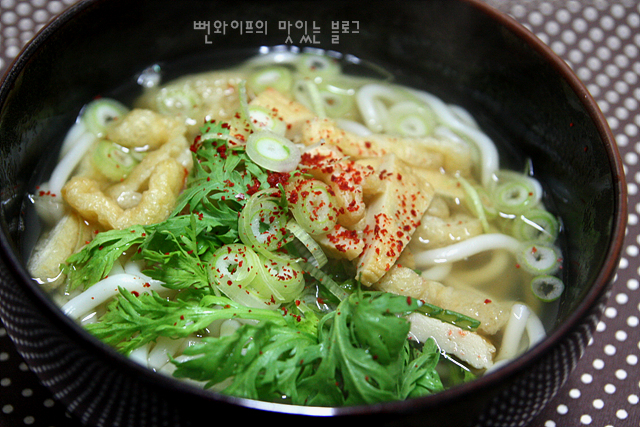
This udon features a deeply savory broth made by infusing bonito flakes into a base of dried anchovies, dried kelp, and shiitake mushrooms. Blanching the fried bean curd and fish cake in boiling water removes excess oil for a clean, comforting bowl that makes a satisfying late-night snack.
- Servings
- 2 servings
- Difficulty
- Medium
- Spiciness
- Not spicy
Ingredients
Ingredients
- Udon noodles
- Fish cake (eomuk)
- Fried bean curd
- Ssukgat (crown daisy)
- Green onion
Udon broth
- Water6 cups
- Dried anchovies10
- Dried kelp (dasima)1 piece (10 cm square)
- Dried shiitake mushrooms1
- Korean radish (mu)100 g
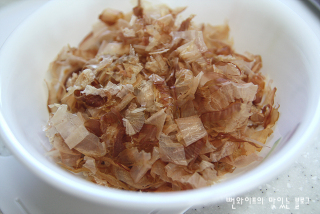
- Bonito flakes (katsuobushi)5 g (1 cup)
- Regular soy sauce (jin-ganjang)1 tbsp
- Mirin (cooking rice wine)1 tbsp
- Salt1/2 tsp
- Pour water into a pot, add the dried anchovies, dried kelp, shiitake mushroom, and Korean radish, and let sit for about 30 minutes.
- You can omit the bonito flakes if you do not have them.
Steps
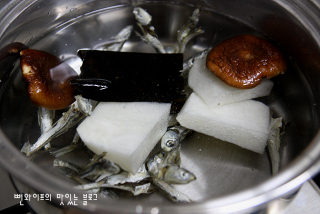
1. Pour water into a pot, add the dried anchovies, dried kelp, shiitake mushroom, and Korean radish, and let sit for about 30 minutes.
Turn on the heat, and once the broth comes to a rolling boil, remove the kelp and simmer over low heat for at least 10 minutes more.
2. Bonito flakes (katsuobushi) are made by drying bonito, a blue-backed fish, and shaving it thin like wood shavings. It is widely used in Japanese cooking to add rich savoriness to broth when steeped with anchovy broth.
You can omit the bonito flakes if you do not have them.
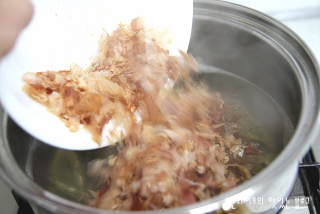
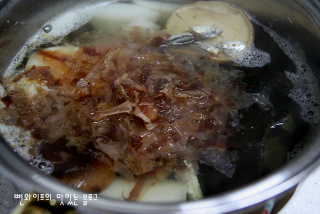
3. Once the anchovy broth is fully simmered, turn off the heat and add the bonito flakes.
4. Let it steep for about 10 minutes.
If you boil bonito flakes, they can taste bitter and fishy, so always add them with the heat turned off.
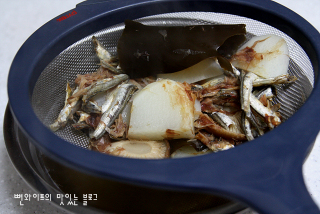
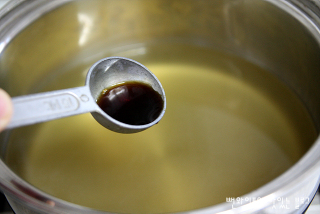
5. Strain through a sieve to collect only the clear broth...
6. Season the broth with regular soy sauce, mirin, and salt, then bring it to a brief boil.
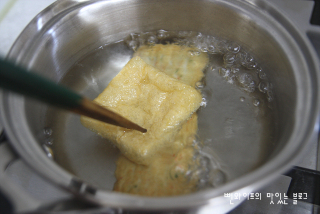
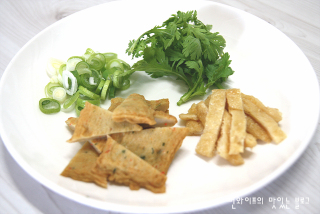
7. Blanch the fried bean curd and fish cake in boiling water to remove excess oil, then drain in a sieve and let cool.
8. Cut the fried bean curd, fish cake, ssukgat, and green onion into bite-sized pieces.
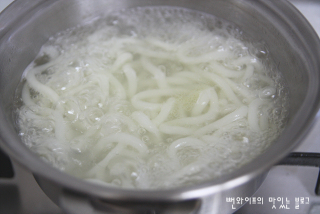
10
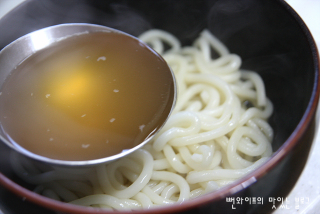
9. Blanch the udon noodles in rolling boiling water.
10. Place the noodles in a bowl, pour in the broth, and arrange the toppings over top to finish.
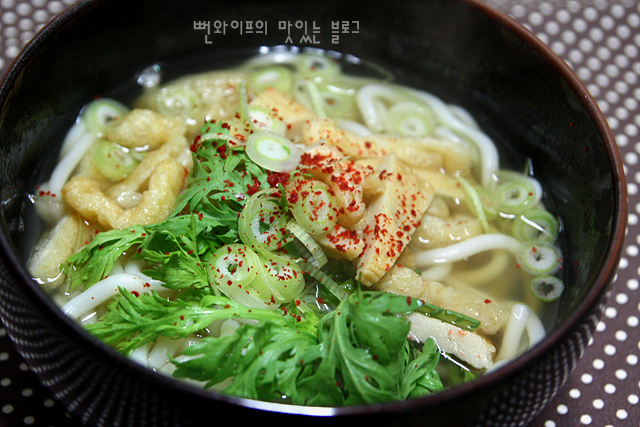
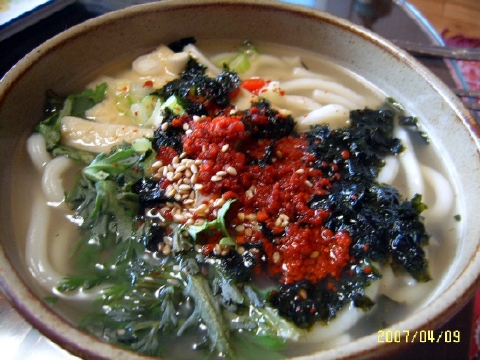
Sprinkle with gochugaru to taste.
 Ppunwife's tips
- If you boil bonito flakes, they can taste bitter and fishy, so always add them with the heat turned off.
- Sprinkle with gochugaru to taste.
- Make a generous batch of this udon broth; it is delicious not only for noodles but also as a base for hot pots and jjigae.
FAQ
What should I do if I do not have bonito flakes?
If you do not have bonito flakes, you can omit them and make the broth using just the basic dried anchovy stock.
Can I boil the broth after adding the bonito flakes?
Boiling them with the heat on can cause a bitter and fishy flavor, so turn off the heat before adding them and steep for about 10 minutes.
Why should I blanch the fried bean curd and fish cake?
Blanching them briefly in boiling water removes excess surface oil, keeping the broth much cleaner.
How can I use leftover udon broth in other dishes?
Broth made in advance can be used as a flavorful soup base for various hot pots or jjigae.