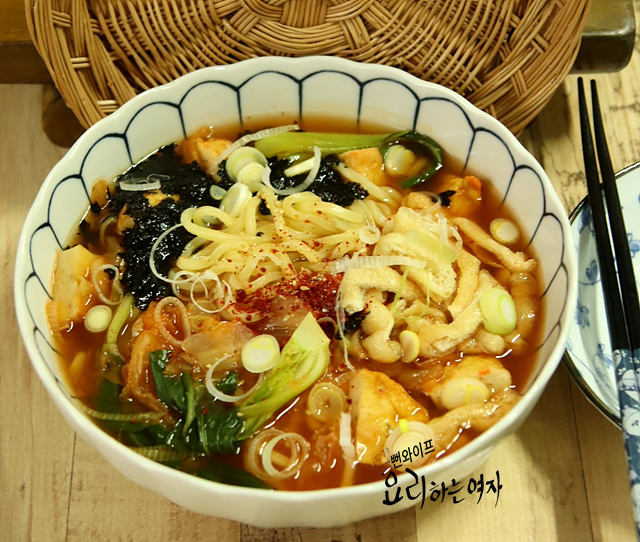
Fried Bean Curd Udon with Clear Broth
A hot noodle soup featuring blanched fried bean curd and fish cake piled generously over noodles in a clear anchovy and kelp broth.
Translated from Korean by AI and not yet checked by a native speaker. Amounts and numbers are taken directly from the original recipe. Read the Korean original →
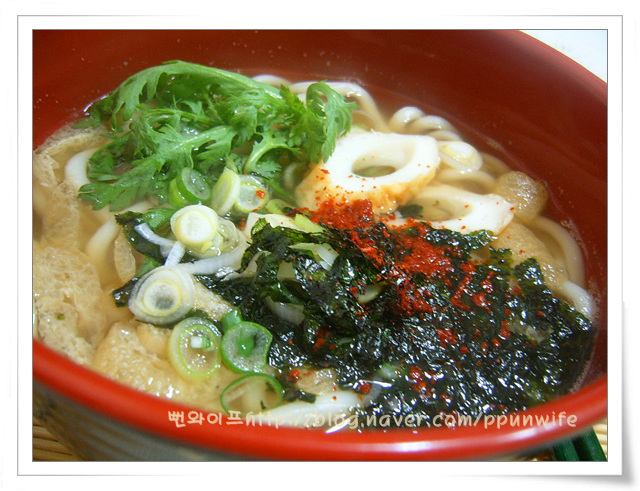
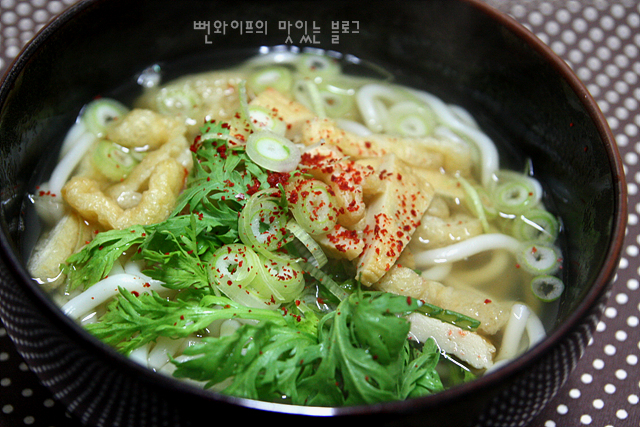
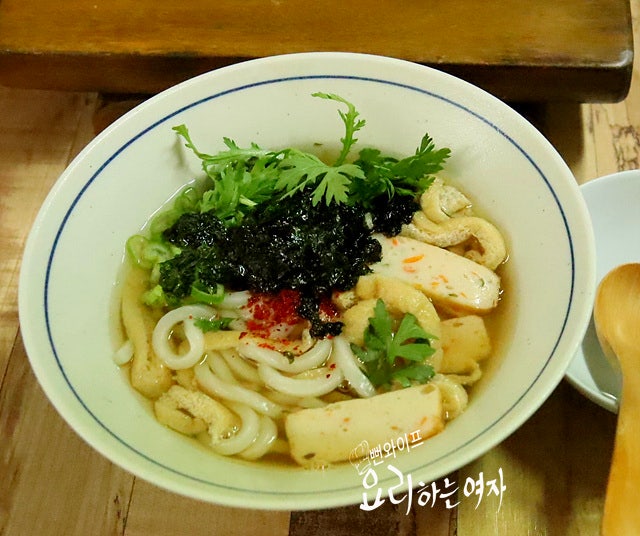
This noodle soup combines a rich, clear broth brewed thoroughly with dried anchovies, kelp, and radish, topped generously with fried bean curd and fish cake. The secret to a clean-tasting broth is quickly blanching the oily fried bean curd in boiling water. You can also add gochugaru to taste for a spicy kick.
- Servings
- 2 servings
- Cook time
- 10 minprep not included
- Difficulty
- Medium
- Spiciness
- Mildly spicy
Ingredients
Ingredients
- Fried bean curd5 sheets
- Round fish cake (eomuk)1
- Ssukgat (crown daisy)
- Large green onion (daepa)finely sliced
- Shredded dried seaweed sheets (gim)
- Gochugaru (Korean chili flakes)a little
- Broth6 cups
Broth ingredients
- Water8 cups
- Dried soup anchovies10
- Dried kelp (dasima)1 sheet (10 cm square)
- Korean radish (mu)200 g
- Large green onion (daepa)1 stalk
Broth seasoning
- Regular soy sauce (jin-ganjang)1.5 tbsp
- Mirin (cooking rice wine)2 tbsp
- Salt1 tsp
- Minced garlic1 tsp
- Soak the dried kelp in water for at least 30 minutes to extract the flavor.
- Use unseasoned fried bean curd found in the freezer section of large grocery stores, which is different from seasoned fried bean curd for sushi.
- Because fried bean curd is oily, blanch it briefly in boiling water, rinse it in cold water, and squeeze out the moisture tightly.
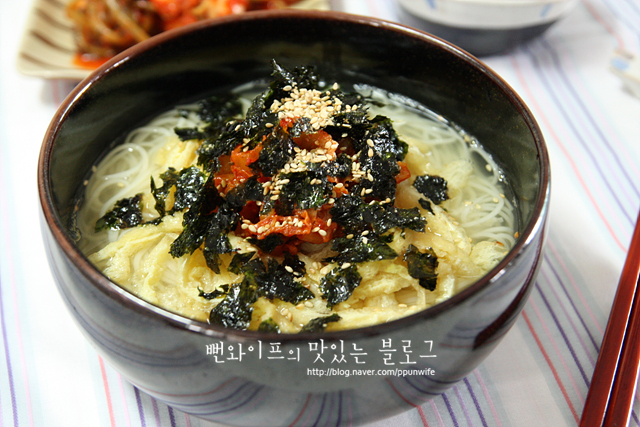
- You can use thin wheat noodles (somyeon) instead of udon noodles.
Steps
Add the dried kelp to 8 cups of water and let it soak for at least 30 minutes.
Add the remaining broth ingredients (dried anchovies, radish, large green onion) and bring to a boil over high heat, then remove the kelp and simmer gently for at least 10 minutes more to make a rich broth.
If using katsuo-bushi (bonito flakes), turn off the heat, add about a handful, let it steep for about 10 minutes, and strain it through a sieve.
Strain through a fine sieve or cheesecloth to collect the clear broth.
While the broth is simmering, prep the fried bean curd and fish cake.
This is unseasoned fried bean curd. Since it is oily, it must be blanched in boiling water.
Once the water boils vigorously, add the fried bean curd and fish cake together and blanch briefly...
Rinse in cold water and squeeze out the moisture tightly.
If you simmer fried bean curd with an appropriate amount of regular soy sauce and mirin, it becomes seasoned bean curd for sushi.
Thinly slice the fried bean curd into strips, and cut the fish cake into bite-sized pieces.
For garnishes, prepare finely sliced ssukgat (crown daisy) and large green onion, along with shredded dried seaweed sheets (gim) and gochugaru (Korean chili flakes).
Blanch the udon noodles in boiling water, drain well, and place them in an udon bowl.
When the prepared broth comes to a boil, add all the broth seasonings (regular soy sauce, mirin, minced garlic, salt)...
Add the sliced fried bean curd and fish cake, simmer briefly to let the flavors infuse, and turn off the heat.
Pour the broth and toppings over the udon, then top with the remaining garnishes (ssukgat, large green onion, shredded dried seaweed).
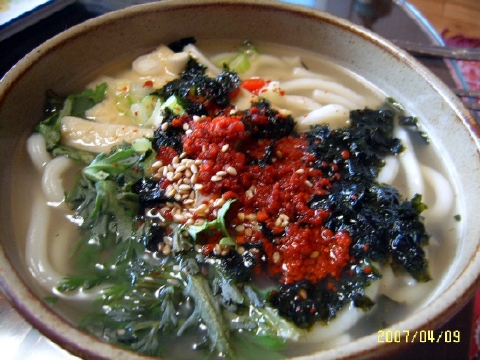
Sprinkle generously with gochugaru at the end to taste.
 Ppunwife's tips
- Make a generous batch of broth ahead of time and whip this up whenever you crave udon.
FAQ
Why do you need to blanch the fried bean curd in boiling water before cooking?
Unseasoned frozen fried bean curd is quite oily, so blanching it briefly in boiling water, rinsing it in cold water, and squeezing out the moisture keeps the broth clean and not greasy.
Can I use different noodles instead of udon noodles?
Boiled thin wheat noodles (somyeon) also go wonderfully in place of udon noodles.
How should I add katsuo-bushi when making the broth?
Turn off the heat, add a handful of katsuo-bushi, let it steep for about 10 minutes, and then strain it through a sieve before using.