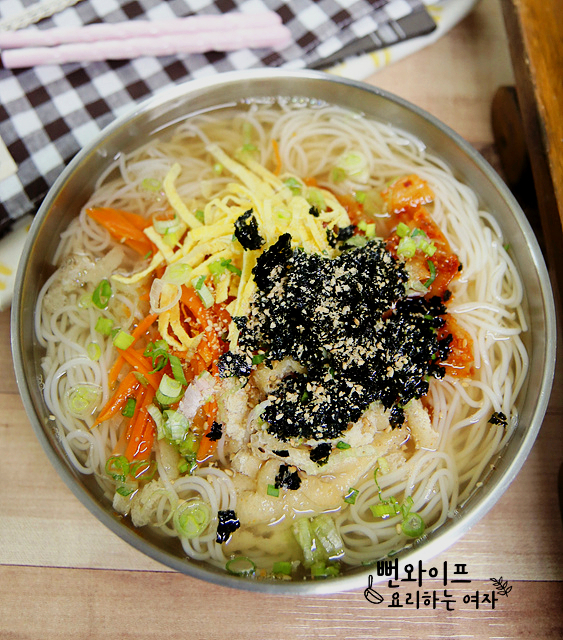
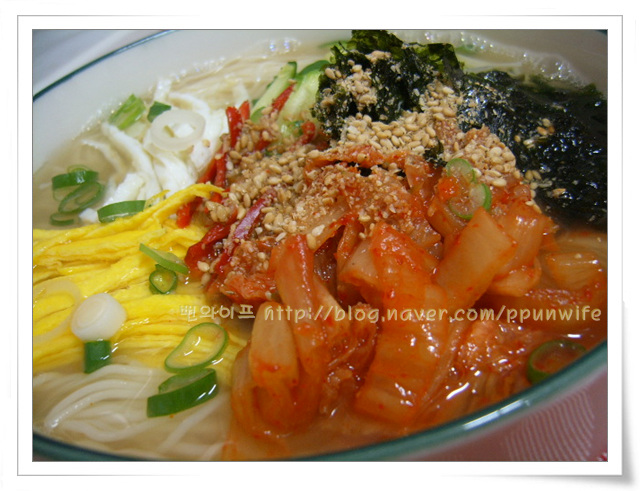
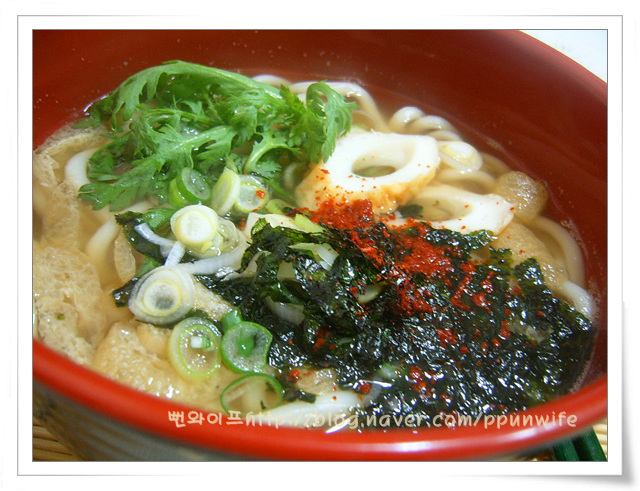
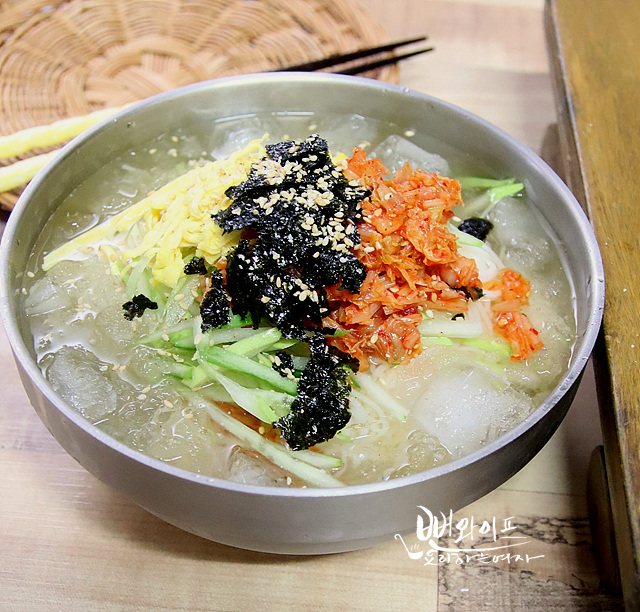
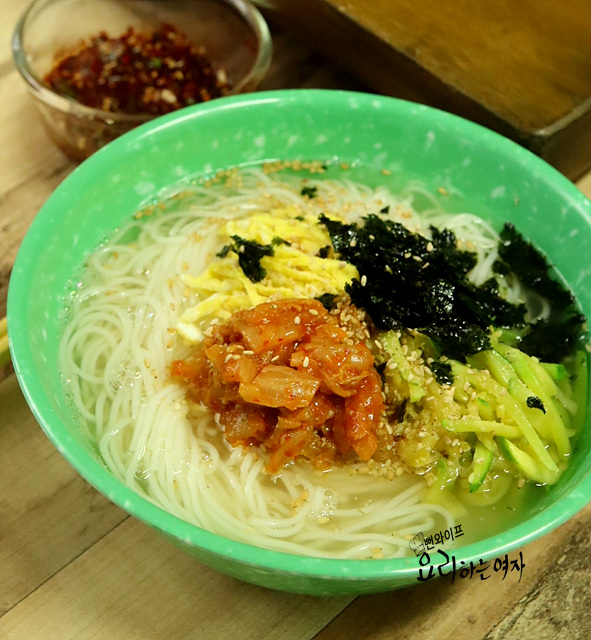
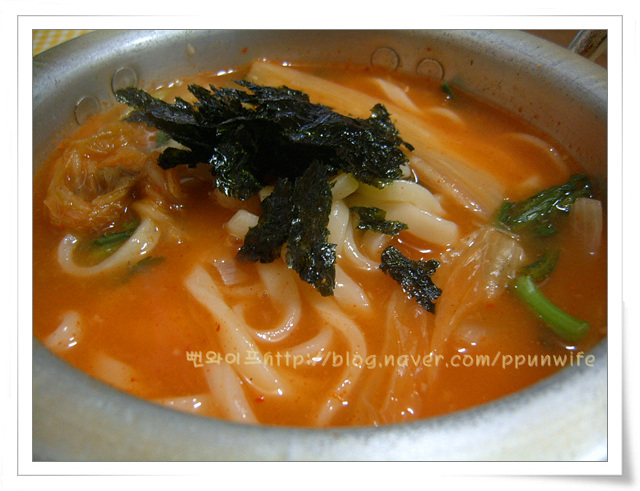
Kimchi Yubu Guksu (Kimchi Fried Tofu Noodle Soup)
A noodle dish served with blanched fried bean curd and sautéed kimchi over a rich anchovy broth.
Translated from Korean by AI and not yet checked by a native speaker. Amounts and numbers are taken directly from the original recipe. Read the Korean original →
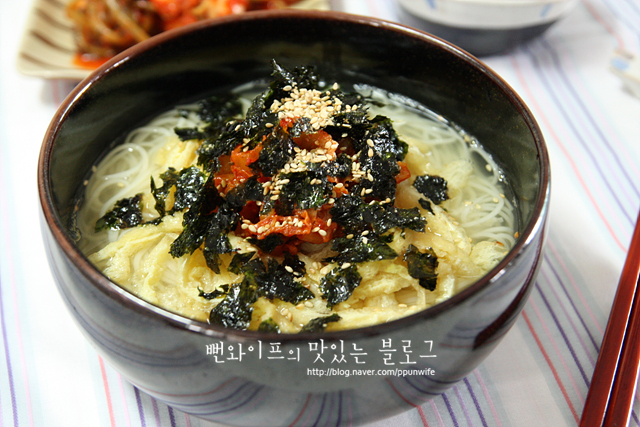
This noodle soup features deep-flavored anchovy broth topped with blanched, degreased fried bean curd and kimchi. Lightly stir-frying aged kimchi brings out savory umami, and you can serve it with the seasoning sauce for a spicy kick.
- Servings
- 2 servings
- Difficulty
- Medium
- Spiciness
- Mildly spicy
Ingredients
Ingredients
- Fried bean curd6 sheets
- Kimchi4 leaves
- Shredded dried seaweed sheets (gim)
- Thin wheat noodles (somyeon)2 servings, 200 g (or more)
Anchovy Broth
- Dried soup anchovies20
- Dried kelp (dasima)2 pieces (10 cm square)
- Korean radish (mu)1/5, 200 g
- Onion1/2 (medium)
- Large green onion (daepa)1/2 stalk
- Water10 cups
Seasoning sauce
- Regular soy sauce (jin-ganjang)2 tbsp
- Soup soy sauce (guk-ganjang) (or soup soy sauce (guk-ganjang), soup soy sauce (guk-ganjang))1 tbsp
- Gochugaru (Korean chili flakes)1 tbsp
- Minced garlic1 tsp
- Minced green onion1 tbsp
- Red chili pepper1/2 (minced)
- Sugar1/2 tsp
- Toasted sesame oil1 tsp
- Ground toasted sesame seeds1 tsp
- Soak the dried kelp in cold water for about 30 minutes to extract the flavor.
- You can find plain fried bean curd in the freezer section of large supermarkets; portion what you need, freeze it, and thaw at room temperature when ready to cook.
- The amount of broth made from these ingredients is enough to serve 3 to 4 people with thin wheat noodles.
Steps
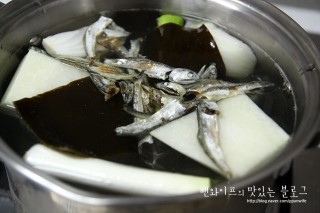
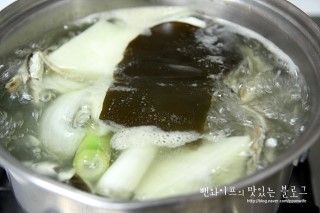
1. There are two ways to make the anchovy broth. First, soak the dried kelp in cold water for about 30 minutes, add all the other broth ingredients, and once it starts boiling, remove only the kelp and simmer gently for at least 10 minutes.
Another method is to put all the ingredients including the kelp into water, fish out the kelp about 10 minutes after it starts boiling, and let it simmer for about 5 more minutes.
2. The broth made with these ingredient amounts is enough to serve 3 to 4 people with thin wheat noodles.
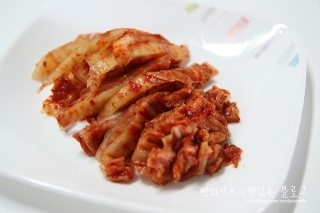
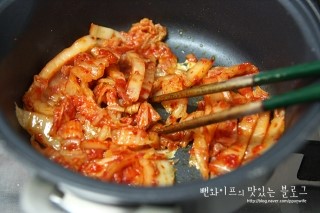
3. I used winter kimchi made last year.
Shake off the stuffing seasoning and slice into thin strips.
4. It had a strong sourness, so I added 1 tsp of sugar, coated a pan with oil, and stir-fried it.
If you want to enjoy the natural sourness and crispness as is, you can skip the stir-frying step.
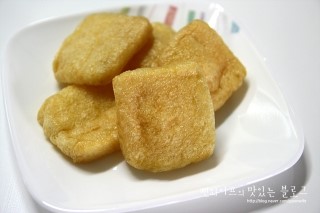
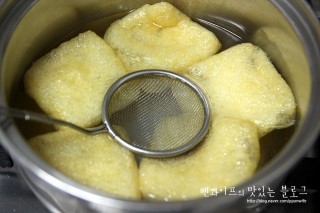
5. This is plain fried bean curd, not seasoned inari sushi pockets.
You can find it in the freezer section of large supermarkets. Portion it into meal-sized amounts, keep it frozen, and thaw at room temperature when needed.
6. Fried bean curd is literally tofu deep-fried in oil.
Because it has a lot of oil, blanching it in boiling water works best.
Add the fried bean curd to rolling boiling water, press down so it does not float, blanch vigorously for about 1 minute, and rinse in cold water.
Fried bean curd prepared this way can be used in broth dishes like hot pots or stews, or used as dumpling skins to make dumplings.
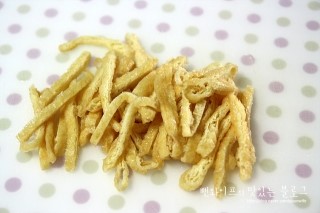
7. Squeeze the moisture from the fried bean curd and slice into thin strips.
8. The packaging for the thin wheat noodles will list the cooking time. Usually about 2–3 minutes.
Bring plenty of water to a boil, add the thin wheat noodles, and when the water boils up again, pour in a cup of cold water. Once it comes back to a boil and 2 minutes have passed, the noodles are almost fully cooked.
Rinse quickly in ice water or cold water and drain well to make the noodles springy and chewy.
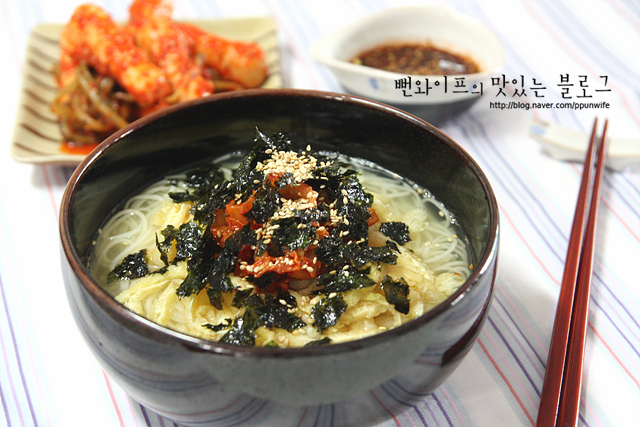
Before moving, I pulled up all the ponytail radishes planted in our vegetable garden in Changnyeong and made chonggak kimchi, which we have been enjoying very much these days.
 Ppunwife's tips
- Fried bean curd is quite oily, so it is best to place it in rolling boiling water, press down so it stays submerged, blanch for about 1 minute, and rinse in cold water.
- When boiling thin wheat noodles, bring plenty of water to a boil, add the noodles, and when it boils up again, pour in a cup of cold water. Once it boils again and 2 minutes pass, the noodles are almost fully cooked; rinse quickly in ice water or cold water and drain well to make the noodles springy and chewy.
- If you want to enjoy the crisp texture and natural sourness of the kimchi, you can skip stir-frying it.
FAQ
Do I have to stir-fry the kimchi?
If the kimchi is very sour, stir-frying it with a little sugar helps mellow it out, but if you prefer its natural crispness and tang, you can use it fresh without stir-frying.
Why should fried bean curd be blanched before cooking?
Fried bean curd is deep-fried and holds a lot of oil, so blanching it in boiling water for about 1 minute while pressing down, followed by a cold rinse, helps remove excess grease.
How should leftover fried bean curd be stored?
Divide it into meal-sized portions and keep it in the freezer, then thaw it at room temperature whenever you need it.
Is there a trick to boiling thin wheat noodles to make them chewy?
Add the noodles to boiling water, pour in a splash of cold water when it boils up again, finish cooking, and rinse promptly in cold or ice water to restore their elasticity.