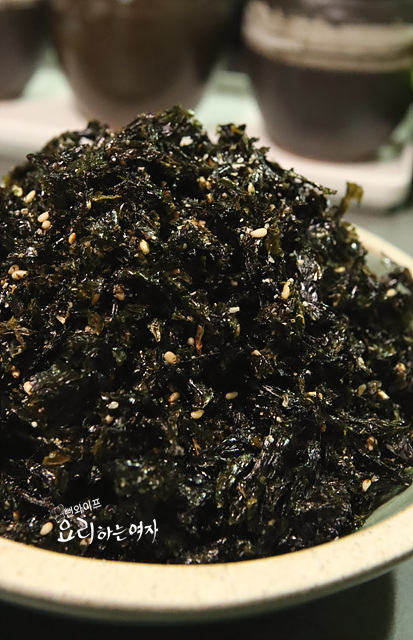
Roasted Sesame Seeds Roasted at Home
A nutty sesame seed seasoning made by washing away dirt and dust and roasting the seeds in a pan until plump.
Translated from Korean by AI and not yet checked by a native speaker. Amounts and numbers are taken directly from the original recipe. Read the Korean original →
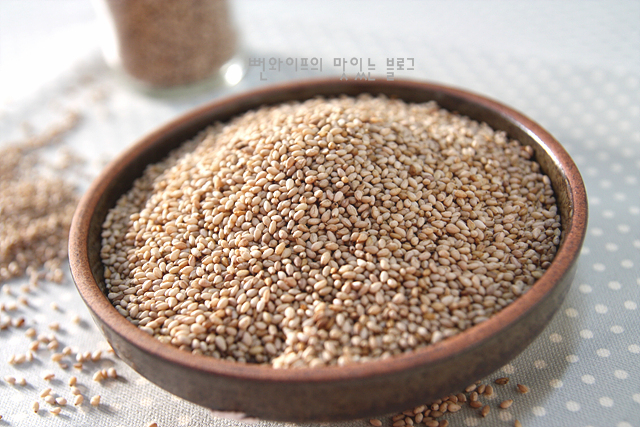
Nutty sesame seeds carefully roasted after soaking in water and straining out dirt and sand. Once the moisture evaporates, stir diligently over low heat until the seeds plump up and crush softly between your fingers.
- Servings
- about 10–12 servings
- Cook time
- 15 minprep not included
- Difficulty
- Medium
- Spiciness
- Not spicy
Ingredients
- Sesame seeds3 cups (amount)
- Waterenough to submerge
- Pour enough water to submerge completely and let sit for 1 to 2 hours so that dust sticking to the seeds can dissolve into the water or come off.
- Once strained, place the sesame seeds in a sieve and let them drain for about 1 hour.
- If you leave sesame seeds at room temperature for too long, their flavor and aroma fade. Keep only the amount you will eat within 1 week at room temperature, and vacuum-pack the rest in a zipper bag to store in the freezer.
Steps
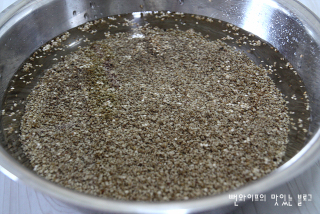
1. This is 3 cups of sesame seeds.
Pour enough water to submerge completely and let sit for 1 to 2 hours so that dust sticking to the seeds can dissolve into the water or come off.
2. Rub the seeds between both hands several times.
Tap the surface with your hand so floating seeds sink to the bottom, then scoop out and discard any seeds that still float. Skim off any visible debris during this step as well.
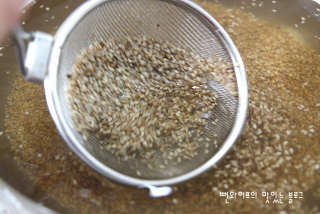
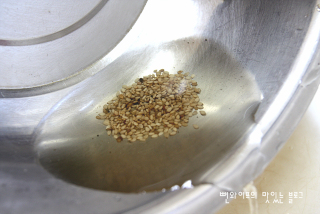
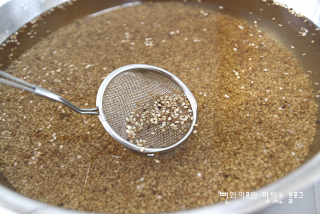
3. Now you need to lift the sesame seeds out of the water. Gently swirl a strainer over the water to scoop up the seeds floating to the top. This technique is called jorijil.
Doing this allows only the sesame seeds to float up while sand and dirt settle to the bottom.
4. Toward the end, swirl the bowl to pour out the sesame seeds along with the water, leaving the sand and dirt behind at the bottom.
Fill with water again and repeat this skimming process three more times to filter out almost all impurities.
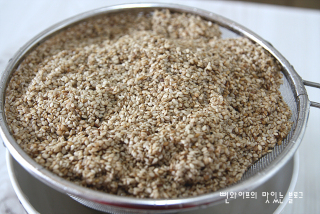
5. Once strained, place the sesame seeds in a sieve and let them drain for about 1 hour.
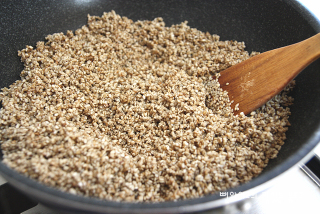
6. Place the sesame seeds in a deep, rounded pan and roast them diligently with a spatula.
Roast over medium heat at first so the moisture from the seeds can evaporate.
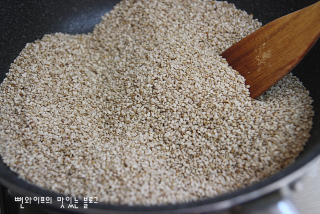
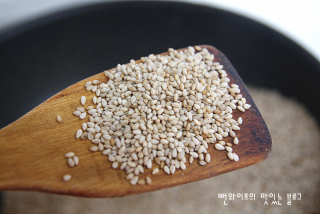
7. As you keep roasting, the moisture will disappear and the seeds will turn white.
From this point on, the seeds start to roast, so lower the heat to low and stir vigorously with the spatula as you roast.
The seeds will begin popping with a crackling sound.
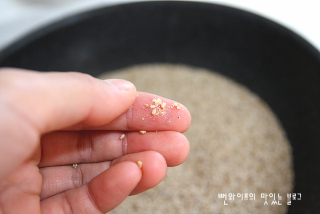
8. After roasting for about 15 minutes, the flat seeds will turn plump...
10
9. If you rub them with your fingers and they crush softly, they are fully roasted, so turn off the heat.
If you roast them any further, they will start to burn and turn brown.
Transfer to another container and let them cool.
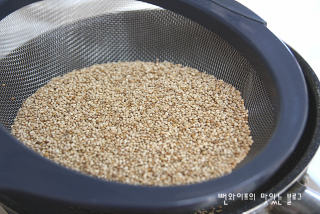
10. Sift the sesame seeds through a sieve to remove any remaining crumbs, then store them in a container to use.
 Ppunwife's tips
- If you roast them any further, the seeds will start to burn and turn brown. Transfer to another container and let them cool.
- If you grind them coarsely in a mortar, you get ground toasted sesame seeds.
FAQ
How do I check if they are fully roasted?
After roasting for about 15 minutes until the seeds plump up, they are done when they crush softly between your fingers.
How should I store roasted sesame seeds?
It is best to keep only the amount you will consume within a week at room temperature, and seal the rest in a zipper bag to keep in the freezer.
How do I filter out debris and dirt from sesame seeds?
Soak them in water and discard floating debris, then gently swirl a strainer over the water multiple times to separate the seeds while letting sand and dirt sink to the bottom.