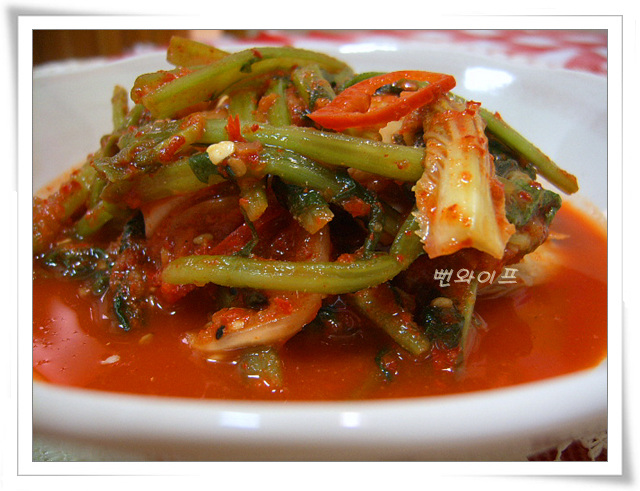
Crisp Summer Yeolmu Kimchi (Young Summer Radish Kimchi)
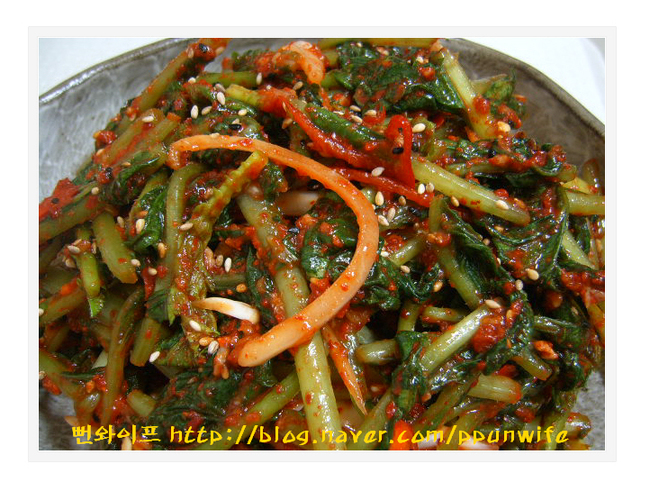
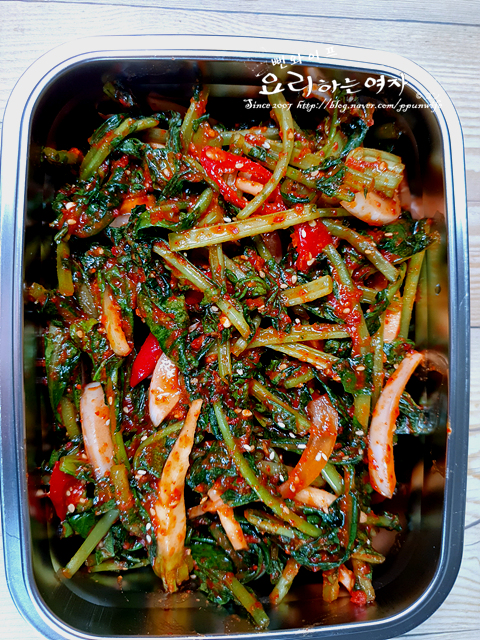
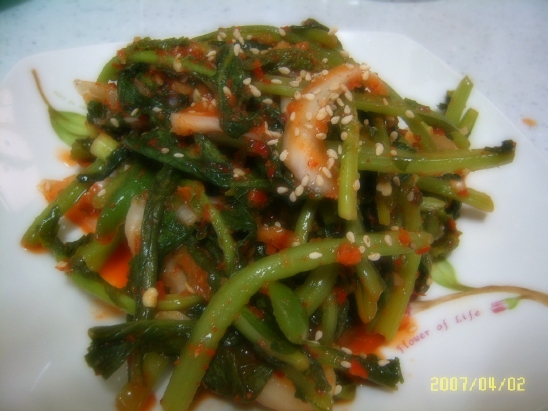
A seasonal summer young summer radish kimchi gently tossed in a seasoning made with ground red chili peppers and glutinous rice paste.
Translated from Korean by AI and not yet checked by a native speaker. Amounts and numbers are taken directly from the original recipe. Read the Korean original →
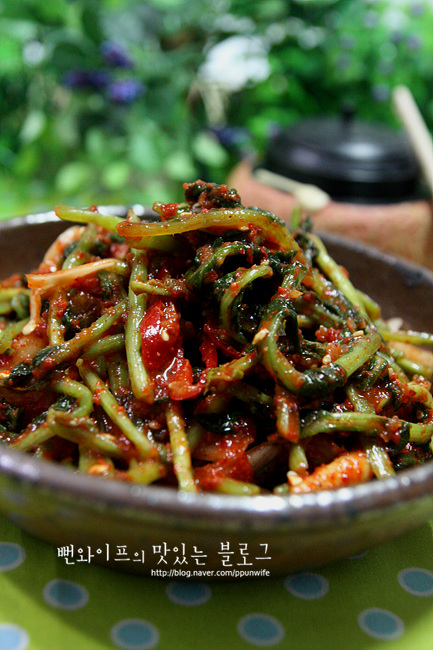
In-season young summer radish is salted, then tossed gently in a seasoning made with glutinous rice paste and ground red chili peppers. Mixing the seasoning ahead of time allows the gochugaru to hydrate properly, giving it a vibrant color and preventing any raw grassy smell. Once suitably fermented, it makes an ideal side dish to enjoy with bibimbap or spicy cold noodles.
- Servings
- about 10–12 servingsOriginal: Yield for 6 bunches
- Difficulty
- Hard
- Spiciness
- Spicy
Ingredients
Ingredients
- Young summer radish (yeolmu)6 bunches (1 kg)
- Onion3
- Red chili pepper15
- Coarse sea salt2 cups
Seasoning
- Gochugaru (Korean chili flakes)3 cups
- Red chili pepper15
- Minced garlic15 tbsp
- Salted fermented shrimp (saeujeot)12 tbsp
- Anchovy fish sauce (or sand lance fish sauce) (or sand lance)12 tbsp
- Sugar6 tbsp
- Minced ginger3 tbsp
- Toasted sesame seedsas needed
Glutinous rice paste
- Water9 cups
- Glutinous rice flour15 tbsp
- Salt for about 2 hours, flipping it over once or twice halfway through so the top and bottom swap places.
- Remove damaged outer leaves and scrape the root radish with the tip of a knife to clean it instead of throwing it away. The root has a nice crunchy texture, so consider trimming it into the kimchi; if it feels like too much trouble, you can cut that part off.
- My onion and red chili peppers were quite large, so I used fewer than the ingredient count above, but if using medium-sized ones, prepare the amounts listed.
Steps
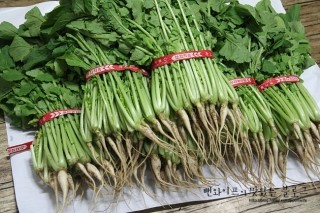
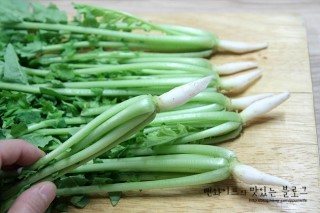
1. In the past, I made it with 1 bunch each of young summer radish and young napa cabbage, but today I prepared 6 bunches of young summer radish weighing about 1kg.
2. Remove damaged outer leaves and scrape the root radish with the tip of a knife to clean it instead of throwing it away.
The root has a nice crunchy texture, so keep that in mind and trim it into the kimchi, but if it feels like too much trouble, you can cut that part off as well.
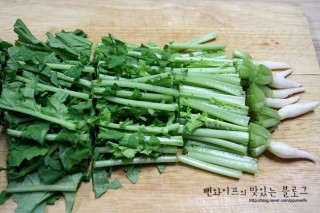
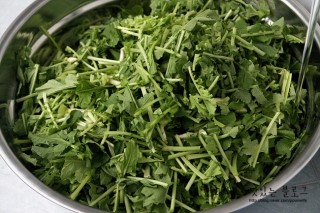
3. Cut into manageable lengths; the leafy tips without visible stems do not need to go into the kimchi, and you can set them aside, boil them, and use them in soup.
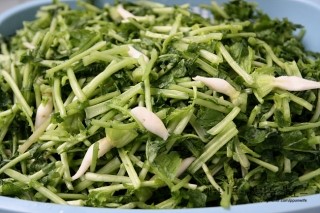
4. Gently swish and wash in water until the water runs clear.
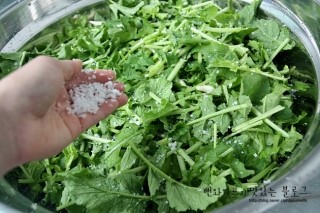
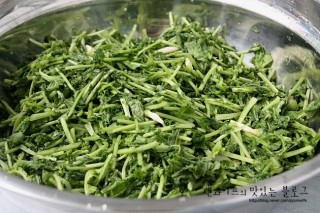
5. To salt the washed young summer radish, spread one layer of radish, sprinkle about 1-2 tbsp of salt, then add another layer of radish and sprinkle salt, salting it in layers like this.
6. Salt for about 2 hours, flipping it over once or twice halfway through so the top and bottom swap places.
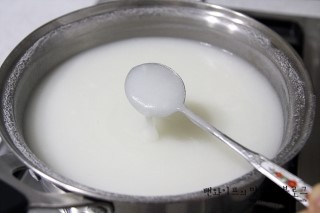
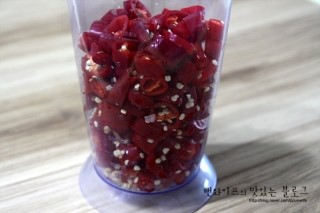
7. Make the seasoning while the young summer radish is salting.
First, to make the glutinous rice paste, combine the specified amount of water and glutinous rice flour in a pot, mix well, and simmer over low heat until thick, then let it cool.
8. Place the red chili peppers for the seasoning into a blender and grind them.
10
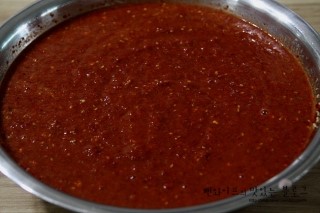
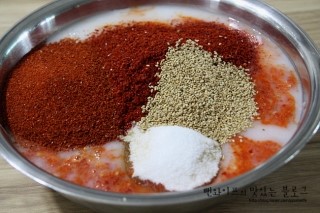
9. Combine the cooled glutinous rice paste and the seasoning ingredients together and mix.
10. Making the seasoning as early as possible is good because over time all the seasonings harmonize and the gochugaru hydrates well, giving it a vibrant color.
11
12
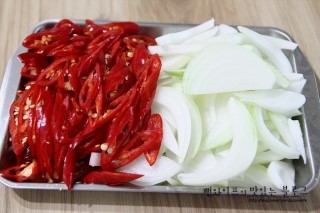
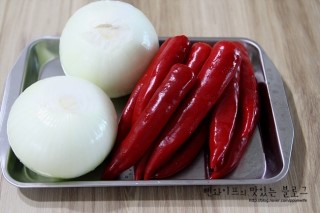
11. While the greens are salting, slice the supplementary ingredients and prepare the seasoning.
My onion and red chili peppers were quite large, so I used fewer than the ingredient count above, but if using medium-sized ones, prepare the amounts listed.
12. Slice the onion and red chili peppers to an appropriate thickness.
13
14
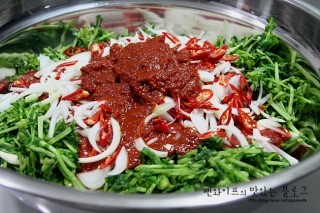
13. Rinse the fully salted young summer radish once in water and drain it in a colander.
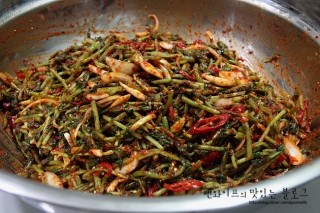
14. Add the young summer radish, sliced onion, red chili pepper, and all of the seasoning...
15
16
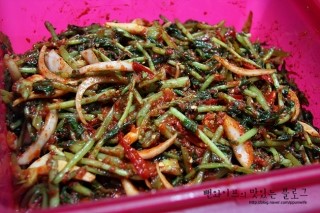
15. Toss gently. If you rub too hard, it can develop a raw grassy smell.
Taste it, and if it is too bland, adjust by adding salt.
16. On hot summer days like these, let it ferment at room temperature for one day or overnight, then put it into the refrigerator.
 Ppunwife's tips
- Making the seasoning as early as possible is good because over time all the seasonings harmonize and the gochugaru hydrates well, giving it a vibrant color.
- Toss gently. If you rub too hard, it can develop a raw grassy smell.
FAQ
How can I prevent a raw grassy smell when mixing young summer radish?
Gently toss the greens without rubbing too forcefully when coating them in seasoning to prevent a raw grassy smell.
Can I use the young summer radish roots in the kimchi as well?
If you discard just the bruised outer leaves and scrape the root radishes clean with the tip of a knife, they add a great crunchy texture. If that feels too troublesome, cutting them off is fine too.
Why mix the seasoning ahead of time?
It lets the ingredients meld together thoroughly and allows the gochugaru to hydrate evenly, giving the kimchi a much richer and prettier color.
How long should the prepared kimchi ferment before going into the refrigerator?
During the hot summer, let it ferment at room temperature for about a day or overnight, then store it in the refrigerator.