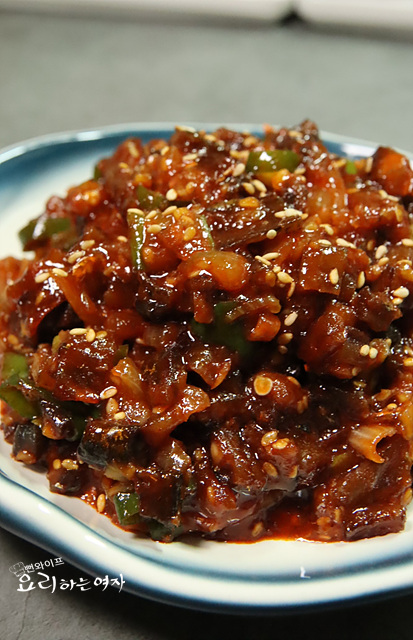
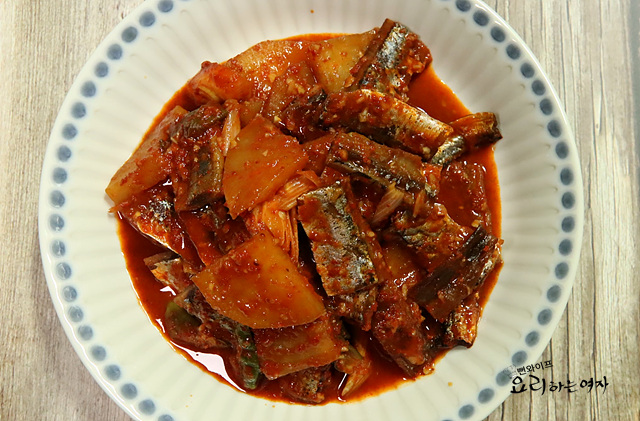
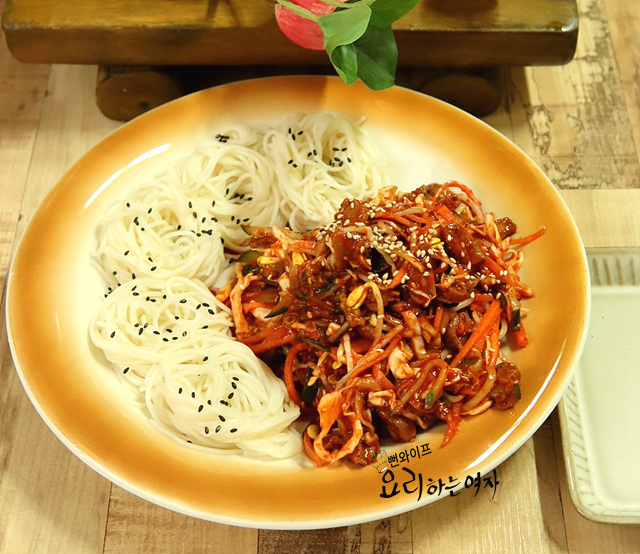
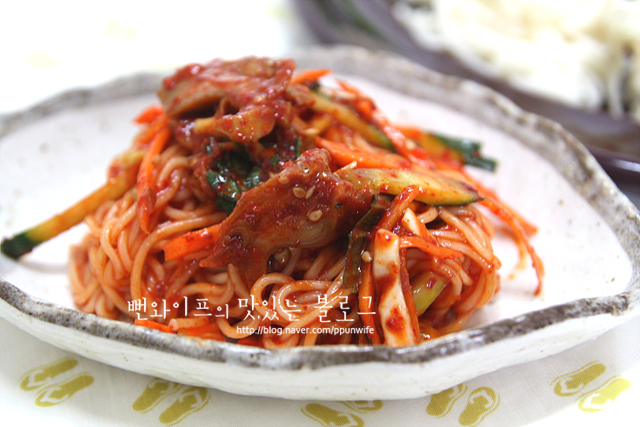
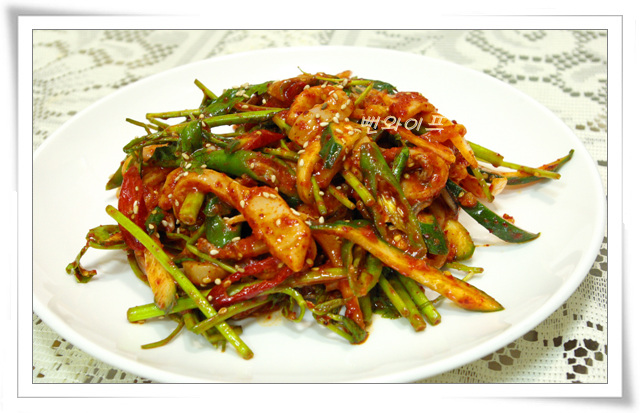
Sweet and Sour Gwamegi Muchim (Seasoned Semi Dried Herring)
A special one-dish meal of prepared gwamegi tossed with fresh vegetables and a sweet and sour sauce.
Translated from Korean by AI and not yet checked by a native speaker. Amounts and numbers are taken directly from the original recipe. Read the Korean original →
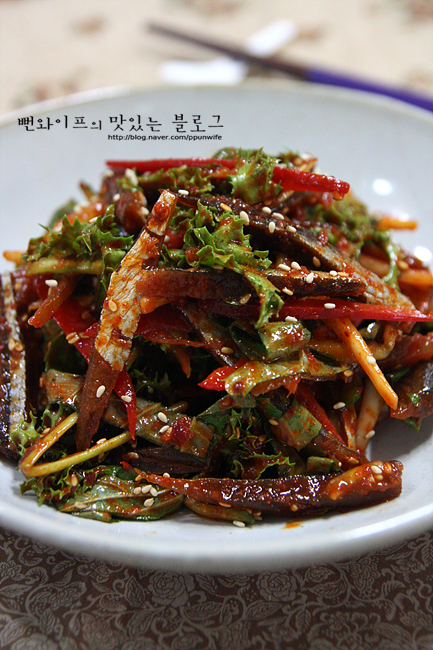
This winter delicacy features in-season gwamegi, peeled and tossed with vegetables in a sweet and sour dressing. The sauce incorporates vinegar, mirin, and fruit juice to neatly tone down any fishiness, making it spicy and enjoyable. It pairs wonderfully as a drinking snack or as a dish for entertaining guests.
- Servings
- 3–4 servings
- Difficulty
- Medium
- Spiciness
- Spicy
Ingredients
Ingredients
- Gwamegi (semi-dried Pacific saury or herring)6 whole
- Cucumber1/3
- Onion1/3
- Perilla leaves5 leaves
- Chicory4 leaves
- Bell pepper1/4
Seasoning
- Gochujang (Korean red chili paste)2 tbsp
- Regular soy sauce (jin-ganjang)1 tbsp
- Gochugaru (Korean chili flakes)1.5(1 1/2) tbsp
- Vinegar3 tbsp
- Minced garlic1 tbsp
- Sugar1 tbsp
- Corn syrup (mulyeot)1 tbsp
- Mirin (cooking rice wine)1 tbsp
- Fruit juice (apple juice, pear juice, etc.)3 tbsp (plain water if unavailable)
Finishing touches
- Toasted sesame seeds
- Ground black pepper
- Gwamegi has skin on the outside. Peeling off the skin makes it tender and pleasant to eat. When buying gwamegi, you can often ask them to peel it for you.
- You can also add aromatic vegetables not listed here, such as scallions or water dropwort, which smell wonderful and help remove any fishiness from the gwamegi. Feel free to use whatever vegetables you have at home.
Steps
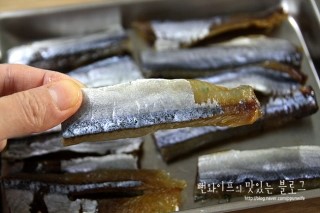
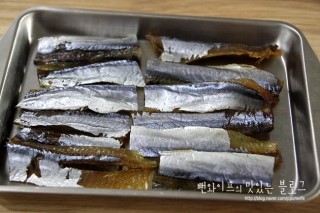
1. Gwamegi has skin on the outside. Peeling off the skin makes it tender and pleasant to eat.
When buying gwamegi, you can often ask them to peel it for you.
2. I cut them in half into manageable bite-sized lengths.

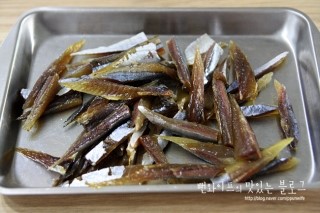
3. Roughly cut the halved gwamegi into thin strips using a knife or kitchen shears.
4. Slicing 6 whole pieces might not look like much, but in person, it is quite a large amount.
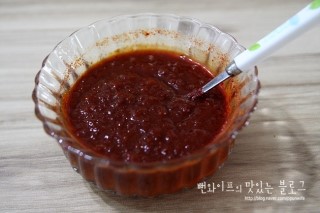
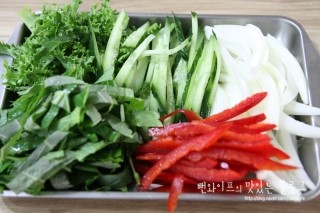
5. If you are concerned about any fishiness in the gwamegi, it helps to add a generous amount of tangy vinegar or add
mirin, which removes meat odors and fishy smells, when making the sauce, and mix in fruit juice or water to keep the sauce moist.
Also, making the sauce and letting it mature for about a day deepens the flavor and makes the color much prettier.
6. You can also add aromatic vegetables not listed here, such as scallions or water dropwort, which smell wonderful and help remove any fishiness from the gwamegi.
Feel free to use whatever vegetables you have at home.
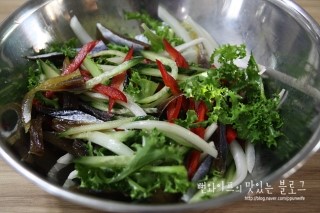

7. Add all of the gwamegi and vegetables to a bowl and mix them evenly, then...
8. At the end, sprinkle in the ground black pepper and toasted sesame seeds, add the sauce, and gently toss together with your hands.
Depending on the size of the gwamegi, in my case, after tossing 6 whole pieces with the amount of vegetables listed above, about 1/3 of the sauce was left over.
I made a rather generous amount of sauce, roughly enough for 6 to 7 servings.
Of course, that will vary if you add more vegetables.
At any rate, do not add all the sauce at once; start by mixing in about half, taste it, and add more little by little.
If the seasoning feels too strong, you can add more vegetables to mellow the flavor.
 Ppunwife's tips
- If you are concerned about any fishiness in the gwamegi, it helps to add a generous amount of tangy vinegar or mirin, which removes meat odors and fishy smells, when making the sauce, and mix in fruit juice or water to keep the sauce moist.
- Making the sauce and letting it mature for about a day deepens the flavor and makes the color much prettier.
- Do not add all the sauce at once; mix in about half first, taste it, and add more little by little.
- For seasoned salads like this, prepare all the ingredients and sauce ahead of time, then toss them right before eating so you can enjoy them looking neat and taste the dressing clinging cleanly to the ingredients before water draws out.
FAQ
How can I reduce the fishiness of gwamegi?
Adding a generous amount of vinegar to the sauce or using mirin, along with pairing it with aromatic vegetables like scallions or water dropwort, helps eliminate fishy flavors.
Is there a trick to making the sauce taste even better?
If you make the sauce in advance and let it mature for about a day, the flavor deepens and the color becomes much richer.
Do I have to peel the skin off when preparing gwamegi?
Peeling off the outer skin ensures a tender texture that is not tough to chew.
When is the best time to toss the dish so that it does not become watery?
Prepare the ingredients and sauce in advance, then toss them right before serving so that moisture does not draw out and you can enjoy it fresh and clean.