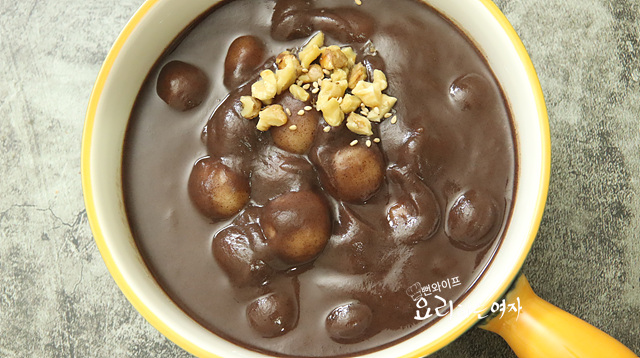
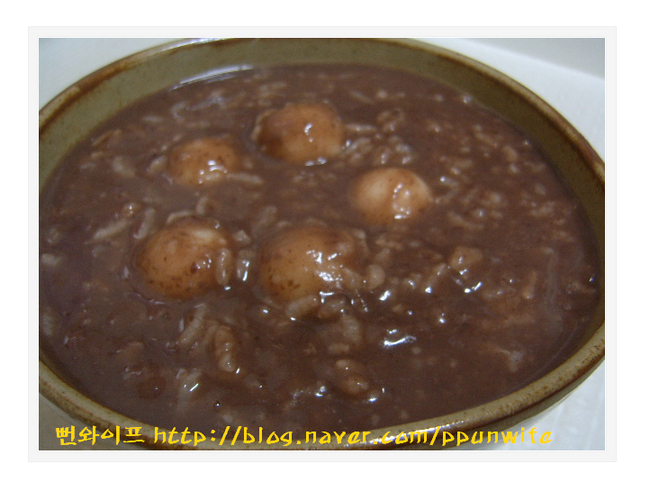
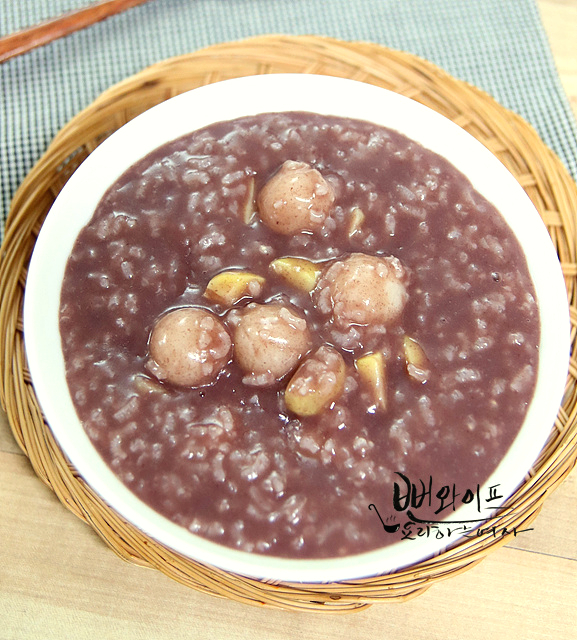
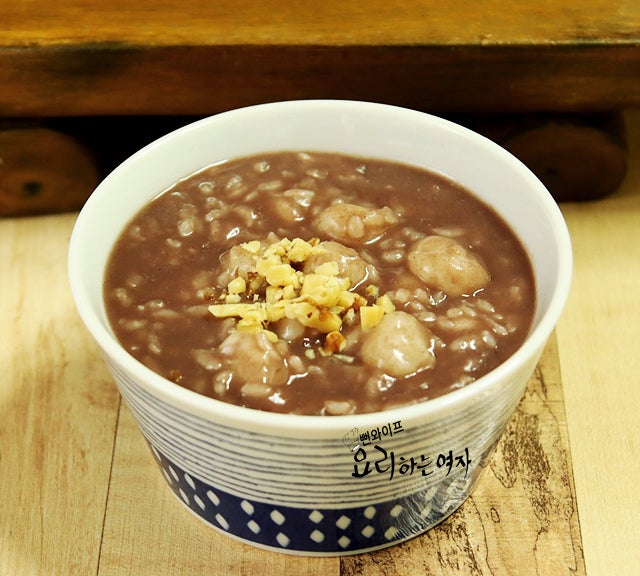
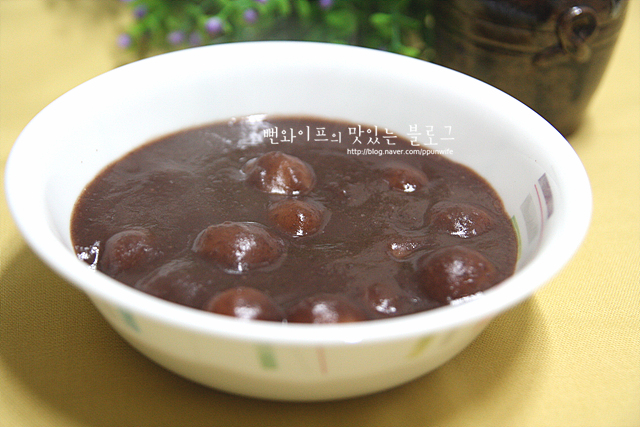
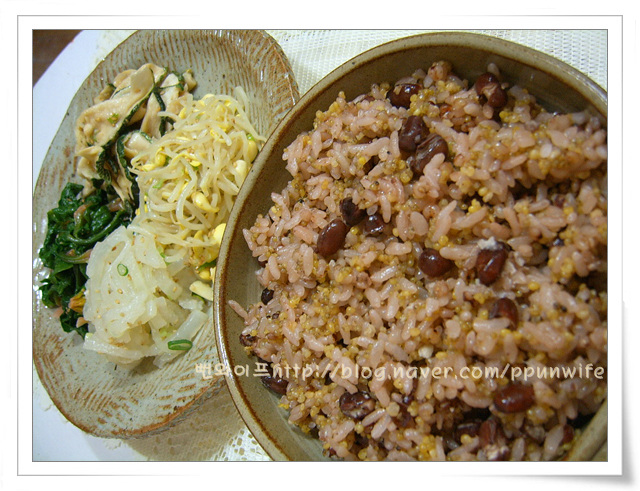
Dongji Patjuk (Winter Solstice Red Bean Porridge)
A traditional Dongji patjuk made with smooth, strained red bean sediment and chewy glutinous rice cake balls.
Translated from Korean by AI and not yet checked by a native speaker. Amounts and numbers are taken directly from the original recipe. Read the Korean original →
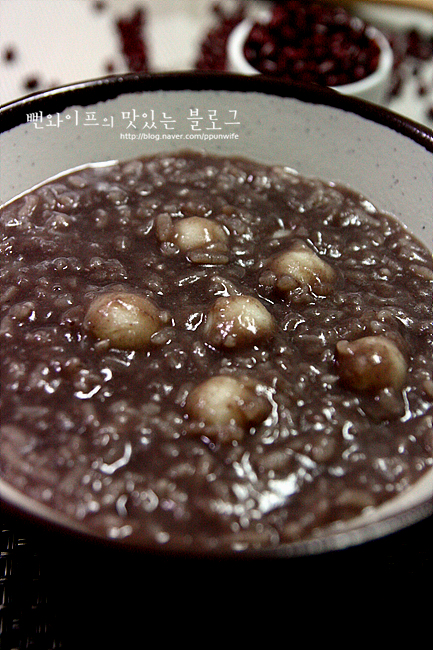
The rice is first simmered in the clear red bean liquid before adding the bean sediment, resulting in a smooth, clean texture without chalkiness. Boiling the rice cake balls separately and chilling them in cold water before adding them at the very end keeps them wonderfully chewy and prevents them from getting mushy. It is a hearty and satisfying winter solstice treat.
- Servings
- 2 servings
- Cook time
- 85 minprep not included
- Difficulty
- Hard
- Spiciness
- Not spicy
Ingredients
Ingredients
- Red beans1 cup
- Water7 cups
- Glutinous rice (or non-glutinous white rice)1/2 cup
Rice cake balls
- Glutinous rice flour1 cup
- Salt1/2 tsp
- Hot water7 tbsp
Porridge seasoning
- Salt1 tsp
- Sugar1 tbsp
- While the sediment settles, soak the rice (glutinous rice) in water for about 30 minutes.
- If you don't care for the strong flavor of glutinous rice, you can mix it half-and-half with regular non-glutinous rice flour.
- If you are grinding soaked glutinous rice at home rather than using fully dried store-bought glutinous rice flour, you need to reduce the amount of water.
Steps
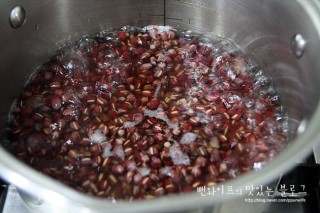
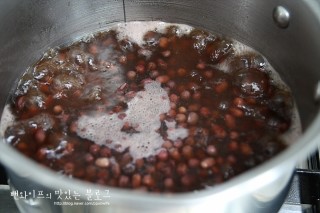
1. Sort through 1 cup of red beans to pick out debris or spoiled beans, place them in a pot, add about 2 cups of water to submerge them, and bring to a boil.
After boiling for about 5 minutes, discard this first batch of water.
It not only carries an astringent taste, but also contains compounds that can cause stomach upset.
2. Pour in 5 cups of water and, once it starts boiling, reduce the heat to low and simmer.
As the red beans cook, replenish the evaporated water; I added about 2 cups more.
It is best to add boiling water when replenishing. The same applies when making porridge.
Simmer for 1 hour or more until the red beans are very soft.
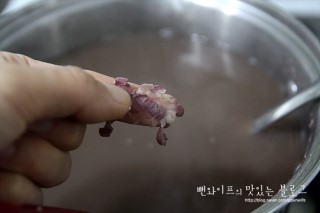
3. They must be boiled until they mash smoothly when rubbed between your fingers.
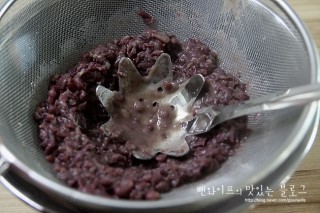
4. Set a fine sieve over a bowl and press the red beans through to extract the smooth sediment, discarding the bean skins.
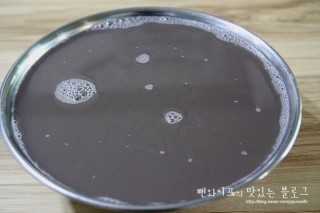
5. Let the strained red bean liquid sit undisturbed so the sediment settles to the bottom.
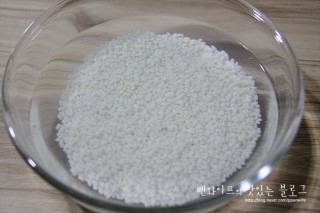
6. While the sediment settles, soak the rice (glutinous rice) in water for about 30 minutes.
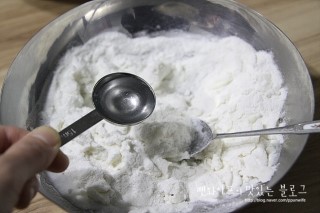
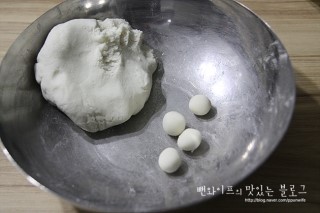
7. For the rice cake balls, pour hot water over the glutinous rice flour to make a hot-water dough so
the flour binds well without crumbling.
Boil water and pour in 7 tbsp. Since it is hot, mix it with a spoon first, then...
If you don't care for the strong flavor of glutinous rice, you can mix it half-and-half with regular non-glutinous rice flour.
I used fully dried store-bought glutinous rice flour, which needed 7 tbsp of water, but
if you grind soaked glutinous rice at home, you must reduce the amount of water.
Rather than adding all the indicated water at once, it is better to add it little by little as you knead to achieve the right consistency.
8. Knead with your hands until the dough comes together.
10
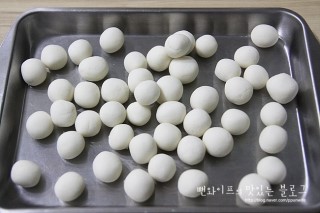
9. This time I made them a bit smaller than before.
I didn't count carefully, but there seem to be roughly 40 of them.
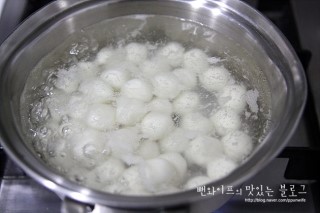
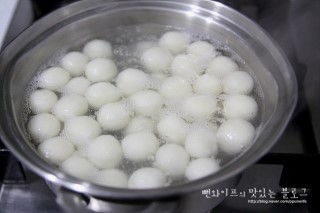
10. Drop the rice cake balls into rolling boiling water and cook.
11
12
11. When the rice cake balls all float to the surface, they are fully cooked.
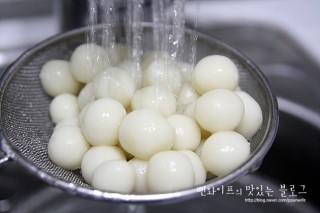
12. Cool them in cold water and drain. They look just like peeled quail eggs.
When I added the rice cake balls directly to the red bean porridge while cooking, they became mushy quickly and lost their chewy bite.
If you boil them separately and add them at the very end to cook briefly,
you can enjoy a chewy texture all the way to the end.
13
14
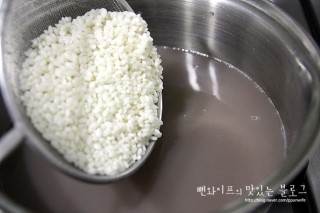
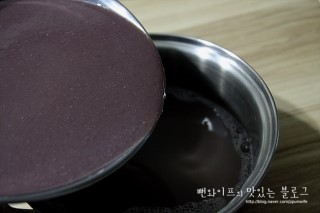
13. Carefully pour off the clear upper liquid from the red bean water that has rested for about 1 hour, leaving the settled sediment behind.
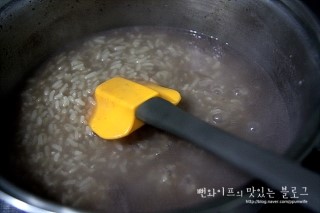
14. Add the soaked rice to the clear red bean liquid and bring to a boil.
15
16
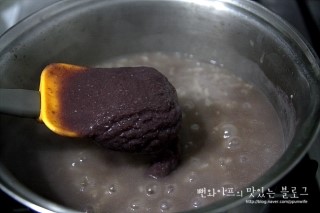
15. Once it boils, simmer over gentle heat for about 20 minutes so the rice expands properly.
If water evaporates as it simmers, replenish it with hot water as well.
Cook until the rice is fully done and the consistency is slightly thinner than ideal porridge;
that way, once the red bean sediment is added, it will reach the perfect porridge thickness.
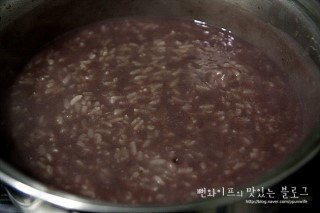
16. Add the red bean sediment and mix evenly...
17
18
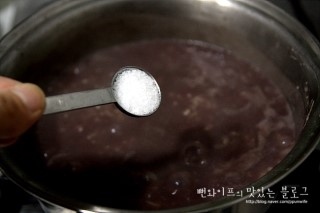
17. If the consistency feels too thick, simply add a little water.
18. Season with salt and sugar.
If you like it sweet, you can add more sugar.
19
20
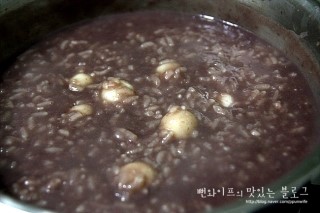
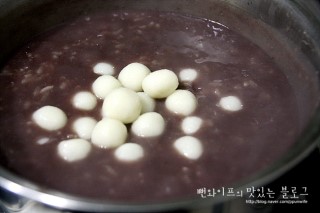
19. Finally, add the rice cake balls and...
20. Bring to a quick boil, and it is done.
 Ppunwife's tips
- After boiling for about 5 minutes, discard this first batch of water. It not only carries an astringent taste, but also contains compounds that can cause stomach upset.
- It is best to add boiling water when replenishing. The same applies when making porridge.
- For the rice cake balls, pour hot water over the glutinous rice flour to make a hot-water dough so the flour binds well without crumbling.
- Rather than adding all the indicated water at once, it is better to add it little by little as you knead to achieve the right consistency.
- If you boil them separately and add them at the very end to cook briefly, you can enjoy a chewy texture all the way to the end.
- Cook until the rice is fully done and the consistency is slightly thinner than ideal porridge; that way, once the red bean sediment is added, it will reach the perfect porridge thickness.
FAQ
Why do you discard the first batch of water after boiling the red beans?
The first water after boiling red beans for about 5 minutes contains astringent components and compounds that can cause stomach upset, so it is discarded before adding fresh water.
What should I keep in mind when kneading the rice cake balls?
You must use boiling hot water to make a hot-water dough so the glutinous rice flour binds smoothly without crumbling, and add the water little by little depending on the moisture level of your flour to get the right consistency.
Why boil the rice cake balls separately instead of cooking them directly in the porridge?
Cooking them directly in the porridge makes them turn mushy quickly and lose their texture. Parboiling them separately in boiling water, cooling them in cold water, and adding them at the very end keeps them delightfully chewy.
How can I use any leftover red bean sediment?
You can mix the sediment with a little water and starch slurry, simmer until thick, and season with sugar and salt to make a simple sweet red bean porridge (danpatjuk).