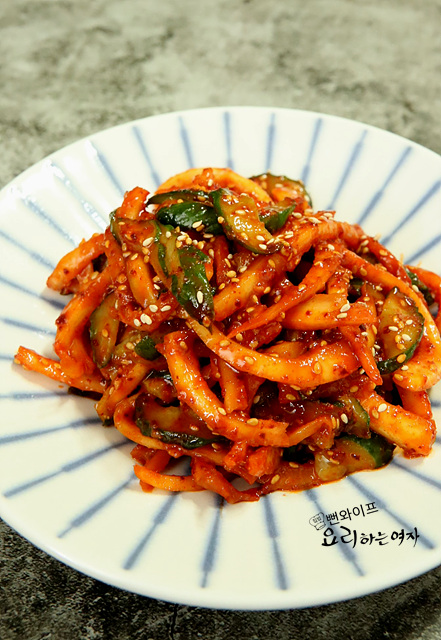
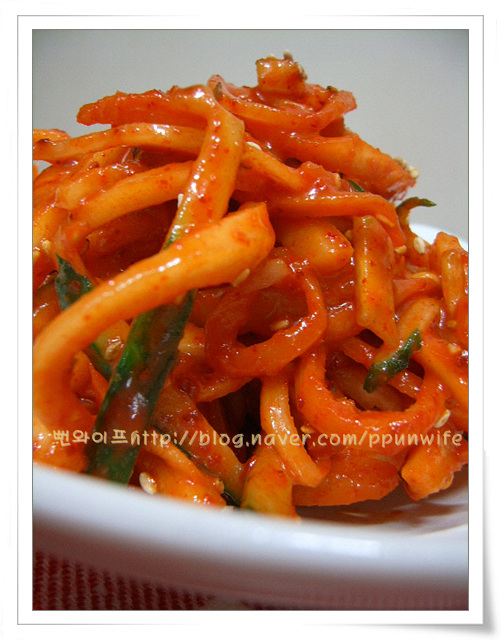
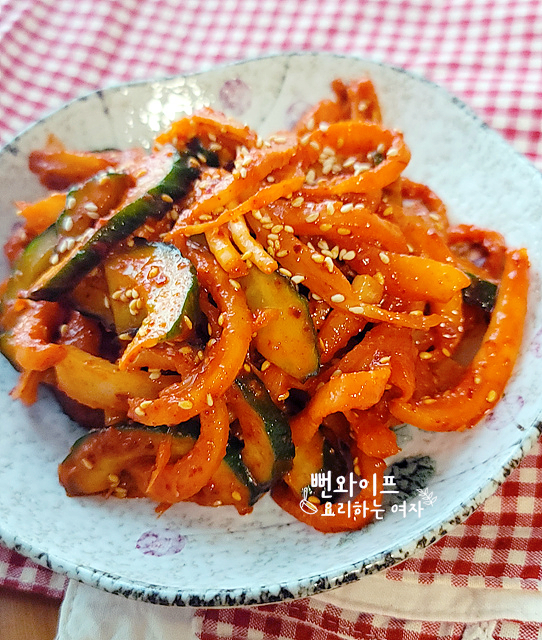
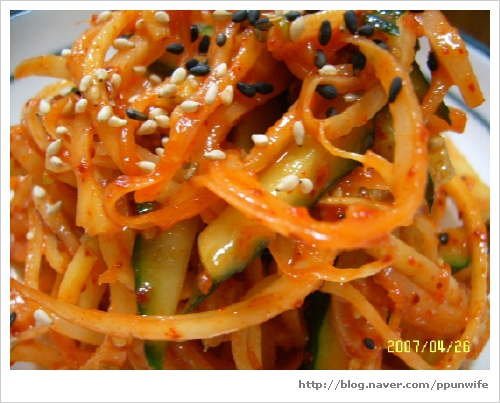
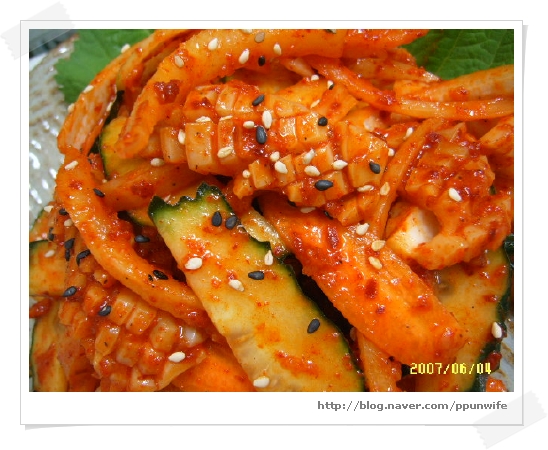
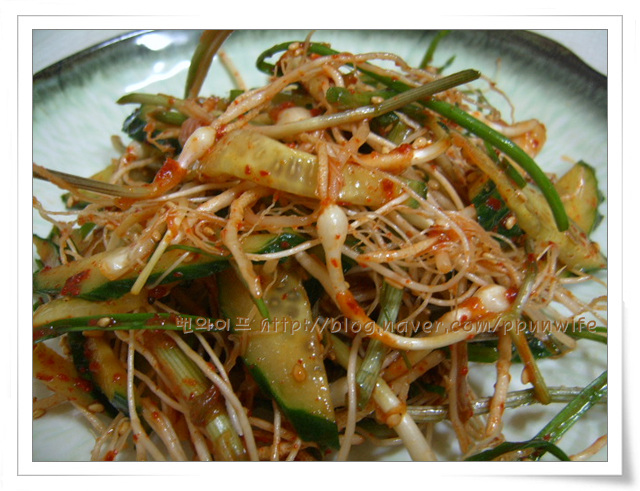
Doraji Cho Muchim (Sweet and Sour Bellflower Root) with Cucumber
A special side dish of bellflower root rubbed with salt to remove its bitterness and tossed with cucumber in a sweet and sour dressing.
Translated from Korean by AI and not yet checked by a native speaker. Amounts and numbers are taken directly from the original recipe. Read the Korean original →
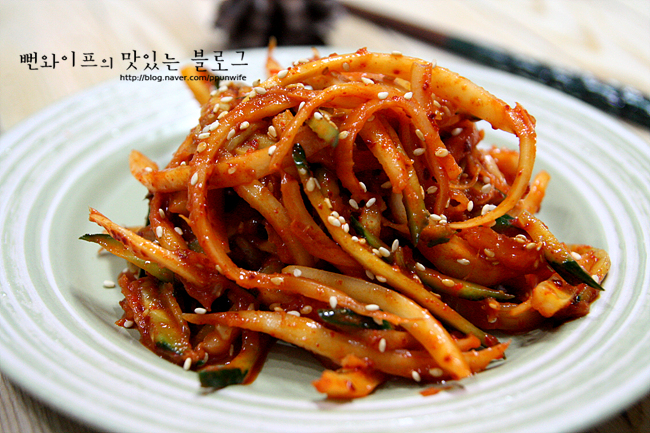
This side dish for 2 to 3 servings is made by rubbing bellflower root with coarse sea salt to remove bitterness, then tossing it with cucumber. The key is mixing the seasonings ahead of time to bring out the bright color of the gochugaru. With its sweet, sour, and spicy flavor, it is perfect alongside rich holiday dishes.
- Servings
- 2–3 servings
- Difficulty
- Medium
- Spiciness
- Mildly spicy
Ingredients
Ingredients
- Bellflower root (doraji)1 handful, 130 g (heaping)
- Cucumber1/4
- Coarse sea salt1 tbsp
Seasoning
- Gochugaru (Korean chili flakes)1 tbsp
- Regular soy sauce (jin-ganjang)1 tsp
- Gochujang (Korean red chili paste)1 tbsp
- Vinegar1.5 tbsp (1 1/2 tbsp)
- Minced garlic1/2 tbsp
- Corn syrup (mulyeot)1/2 tbsp
- Sugar1/2 tsp
- Toasted sesame seedsa little
- Toasted sesame oila little
- Bellflower root has a strong bitter taste, so it needs preparation before cooking. Sprinkle about 1 to 2 tbsp of coarse sea salt evenly over the bellflower root, sprinkle a little water, and scrub vigorously with your hands until foamy to remove most of the bitterness.
- You can also add squid and toss it together.
Steps
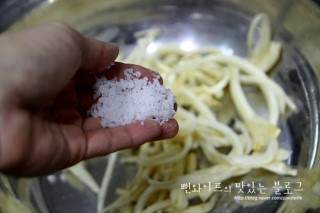
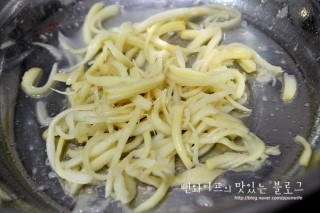
1. If using whole bellflower roots, peel them and split them to a suitable thickness.
I bought a small 130g pack of pre-split bellflower roots.
Bellflower root has a strong bitter taste, so it needs preparation before cooking.
Sprinkle about 1 to 2 tbsp of coarse sea salt evenly over the bellflower root and sprinkle a little water.
2. Scrub it vigorously with your hands; after a little while, the stiff bellflower root will soften and foam will form.
This foam contains the saponins that cause the bitterness, and prepping it this way removes most of that bitter taste.
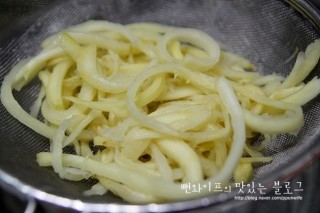
3. Rinse several times in clean water, then taste a piece; if saltiness remains,
soak it in water to draw out the remaining saltiness. Squeeze out the water thoroughly.
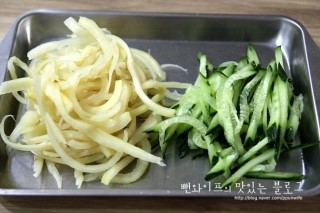
4. Julienne a generous handful of prepped bellflower root and about 1/4 cucumber.
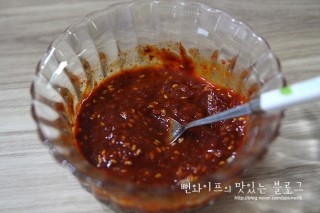
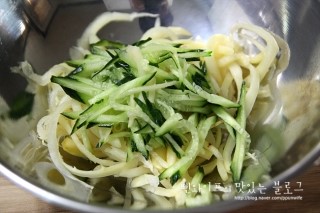
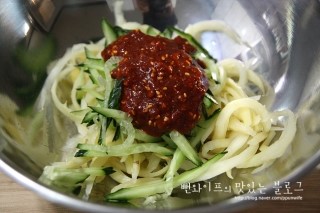
5. Add all seasoning ingredients according to the listed amounts and mix them together ahead of time.
Doing this allows the gochugaru to hydrate with the moist seasonings and bloom, which brightens its color
and fully dissolves the dry seasonings.
6. Add all the seasoning together with the bellflower root and cucumber...
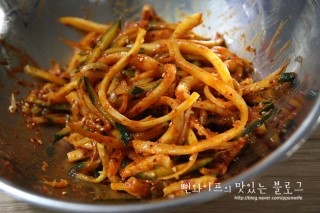
7. Toss evenly.
8. You can add more sugar or vinegar at this point to suit your taste.
In a tart salad, adding just a tiny bit of toasted sesame oil brings out the best flavor.
 Ppunwife's tips
- In a tart salad, adding just a tiny bit of toasted sesame oil brings out the best flavor.
- When buying bellflower roots for the ancestral rites table, buy a little extra, prep them, and set them aside; serving this tart salad after the rites alongside rich, greasy holiday food will make it a big hit.
FAQ
How do you remove the bitterness from bellflower root?
Sprinkle coarse sea salt and a little water, then rub vigorously with your hands until foam appears to draw out the bitter compounds. Afterward, rinse several times with clean water.
What should you do if the bellflower root still tastes salty after prepping?
Taste it, and if saltiness remains, soak it briefly in water to draw out the salt, then squeeze out the water thoroughly before using.
Why do you use only a little toasted sesame oil in sweet and sour dishes?
In tart tossed dishes, adding only a very small touch of toasted sesame oil preserves the refreshing, tangy flavor best.
Can other ingredients be added besides bellflower root and cucumber?
Adding squid and tossing it together works very well too.