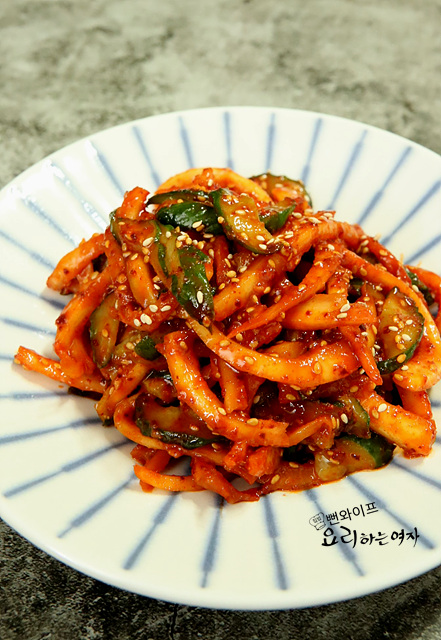
Sweet, Sour, and Crunchy Oi Doraji Muchim
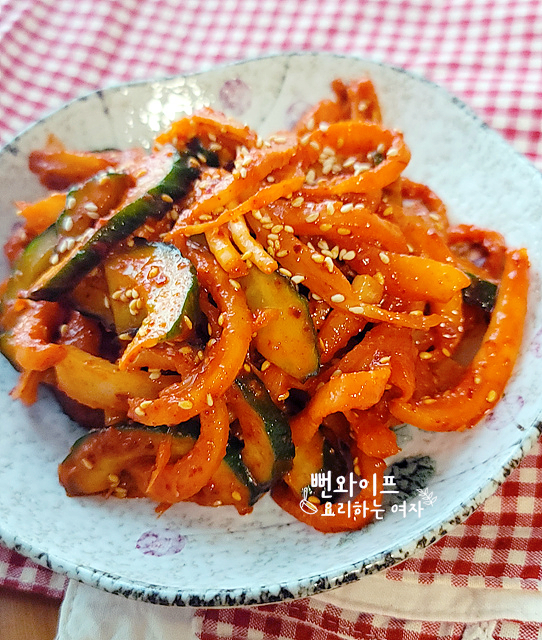
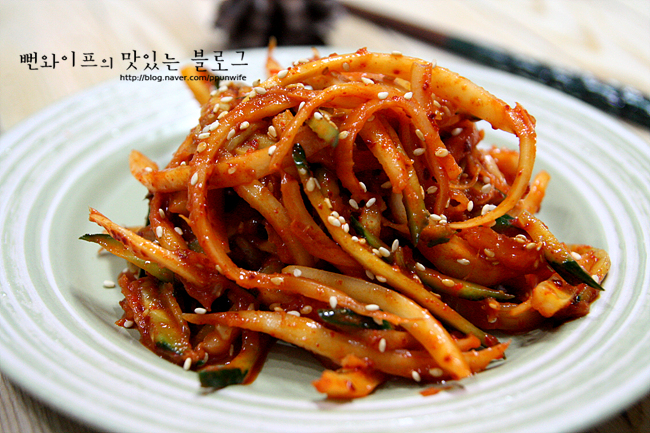
A spicy and sour side dish made by tossing crunchy cucumber with bellflower root that has been salted to remove its bitterness.
Translated from Korean by AI and not yet checked by a native speaker. Amounts and numbers are taken directly from the original recipe. Read the Korean original →
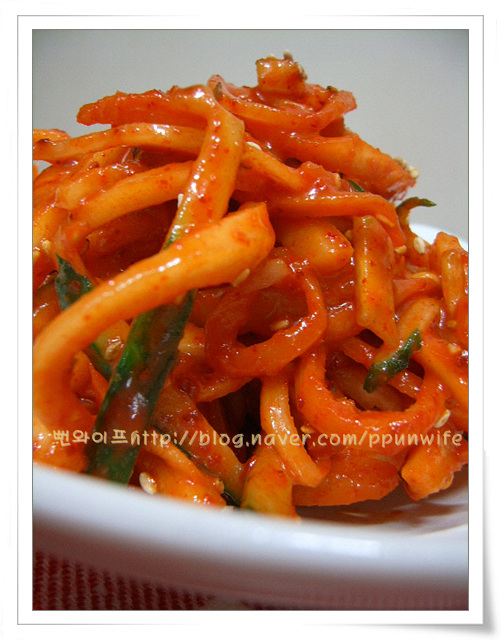
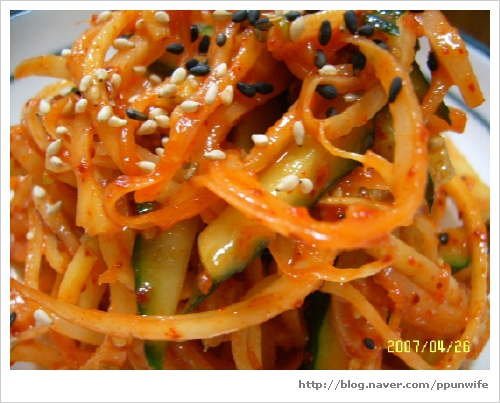
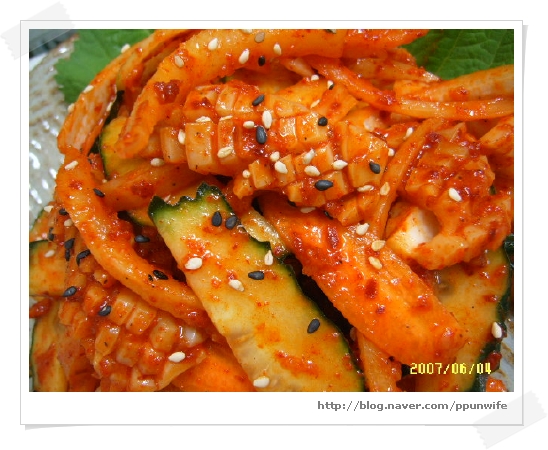
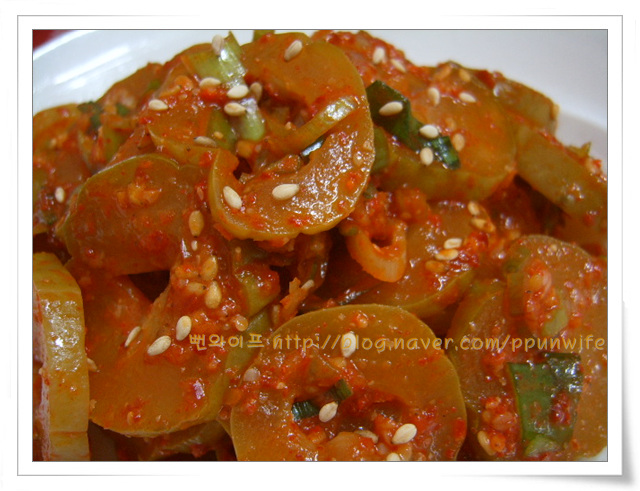
This side dish is made by massaging bellflower root with coarse sea salt to wash away its bitterness, then tossing it with crunchy cucumber. Seasoned sweet and sour with gochujang, vinegar, and corn syrup, it makes a great appetite stimulator. Prepared fresh without blanching, it lets you fully enjoy its distinctive crunchy texture.
- Servings
- about 3–4 servings
- Difficulty
- Easy
- Spiciness
- Spicy
Ingredients
Ingredients
- Bellflower root (doraji)2 handfuls, 250 g
- Cucumber1/2
- Coarse sea salt
Seasoning
- Gochugaru (Korean chili flakes)2 tbsp
- Gochujang (Korean red chili paste)2 tbsp
- Vinegar2 tbsp
- Corn syrup (mulyeot)1 tbsp
- Minced garlic1 tbsp
- Toasted sesame oila little
- Toasted sesame seedsa little
- If you bought whole bellflower roots, peel them and split them into suitable thicknesses. Bellflower root has a strong bitter taste, so it requires prep work when cooking it for dishes.
- If you want more cucumber, you can add about one whole cucumber.
Steps
■ 1 tbsp (Ts) - 15 ml (use an adult soup spoon instead)
■ 1 tsp (ts) - 5 ml (use a tea spoon instead)
■ 1 cup - 200 ml (a standard paper cup)
. 0.5 tbsp = 1/2 tbsp = half a tablespoon
. 0.5 tsp = 1/2 tsp = half a teaspoon
. 0.5 cup = 1/2 cup = half a cup
Oi doraji muchim
Ingredients: bellflower root 250 g (two handfuls), cucumber half, coarse sea salt
Seasoning: gochugaru 2 tbsp, gochujang 2 tbsp, vinegar 2 tbsp, corn syrup 1 tbsp, minced garlic 1 tbsp, toasted sesame oil a little, toasted sesame seeds a little
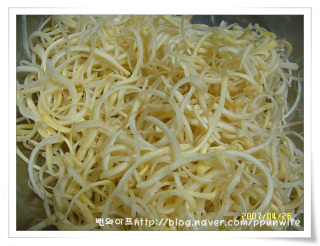
1. If you bought whole bellflower roots, peel them and split them into suitable thicknesses.
Bellflower root has a strong bitter taste, so it requires prep work when cooking it for dishes.
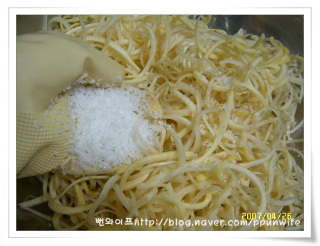
2. Sprinkle coarse sea salt evenly over the bellflower root, along with a little water (1/4 cup).
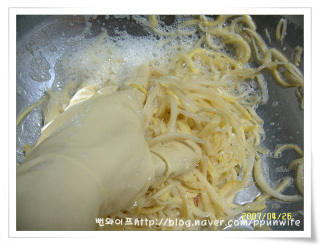
3. Rub vigorously with your hands, and foam will begin to form.
This foam comes from saponin, which causes the bitter taste. Once the bellflower root softens and
a lot of foam appears, rinse it in water.
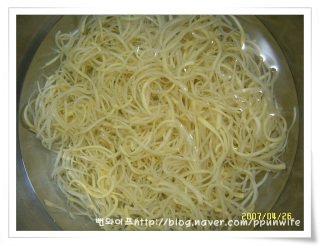
4. Rinse several times in clean water, then soak in water to remove any remaining saltiness.
Remove from the water and squeeze out the moisture thoroughly.
To enjoy a crunchy texture in salads, do not blanch the bellflower root in boiling water, as it will lose its crunch,
so please go through this prep process even if it is a bit cumbersome.
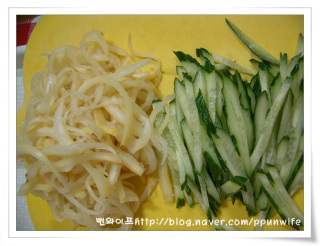
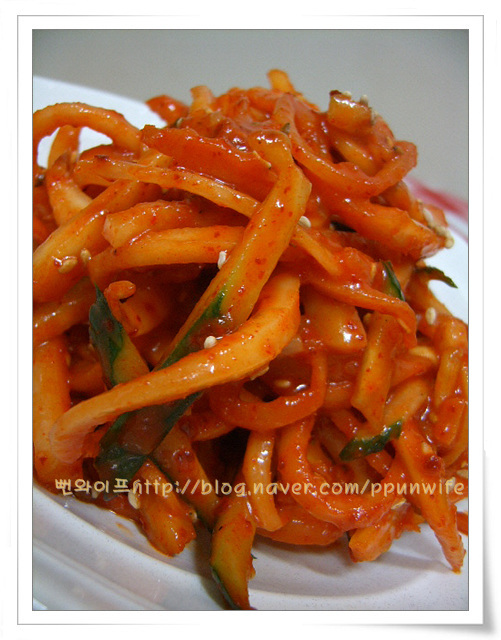
5. Julienne two handfuls of prepped bellflower root and half a cucumber.
If you want more cucumber, you can add about one whole cucumber.
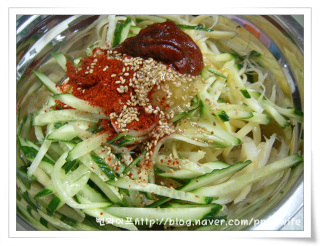
6. Add all the seasonings in the listed amounts to the bellflower root and cucumber, then toss gently with your hands.
 Ppunwife's tips
- To enjoy a crunchy texture in salads, bellflower root will lose its crunch if blanched in boiling water, so please follow this prep method even if it is a bit cumbersome.
- I seasoned this to have a distinctively sour profile, but you can adjust the amounts of vinegar and corn syrup to your taste.
- You can also keep its natural bitterness and use it in deep-fried dishes or savory pancakes.
FAQ
How do you remove the bitterness from bellflower root?
Sprinkle with a small amount of coarse sea salt and water, then rub vigorously with your hands to create foam, which draws out the bitterness. Rinse several times in clean water, soak briefly to remove excess salt, and squeeze out the moisture thoroughly before using.
Can I blanch the bellflower root in boiling water before tossing it?
Boiling it removes the distinctive crunchy texture of bellflower root, so if you want a crunchy salad, it is best not to blanch it and massage it with salt instead.
Can I increase the amount of cucumber to taste?
If you prefer more cucumber, you can increase it from the standard half to about one whole cucumber.