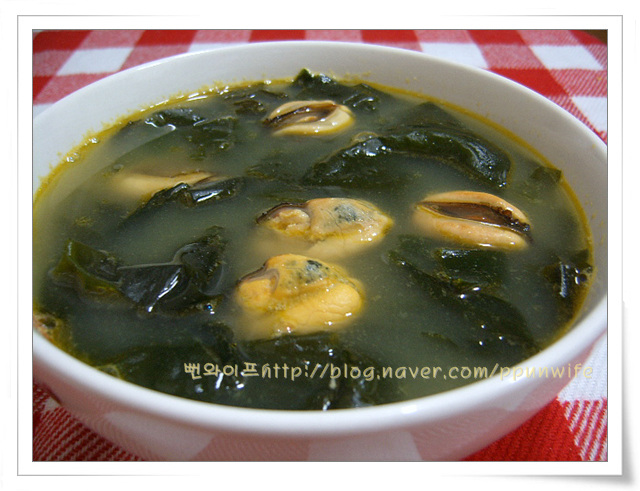
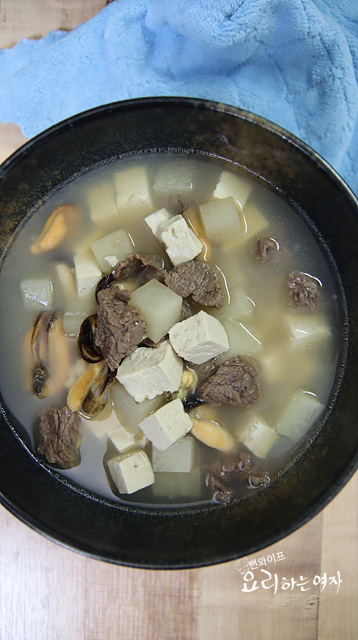
Honghap Tang (Clear Mussel Soup)
A refreshing Honghap tang (clear mussel soup) made with minimal water to draw out a milky, deeply rich broth.
Translated from Korean by AI and not yet checked by a native speaker. Amounts and numbers are taken directly from the original recipe. Read the Korean original →
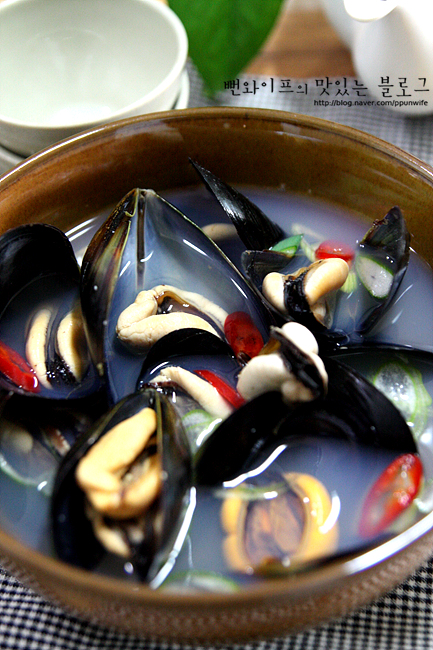
By adding just enough water to barely cover the mussels, you can extract a rich, milky broth without any added seasoning. Turn off the heat as soon as the shells open so the meat stays tender, making it wonderful as a drinking snack or a soothing hangover soup.
- Difficulty
- Medium
- Spiciness
- Mildly spicy
Ingredients
- Mussels
- Large green onion (daepa)a little of each
- Chili peppera little of each
- Salta little of each
- Ground black peppera little of each
- I bought one pack of mussels to feed the two of us.
- Pull the beards on the sides of the mussels downward to remove them or trim them with scissors, scrub off any debris on the shells by rubbing them together or using a brush or toothbrush, rinse until the water runs clear, and drain in a strainer.
Steps
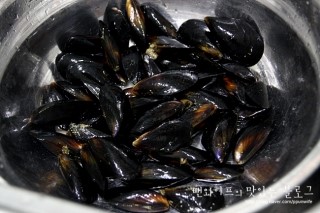
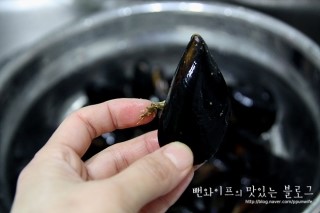
1. I bought one pack of mussels to feed the two of us.
Cleaning the mussels thoroughly ensures a clean and delicious broth.
2. You will see the beards attached to the sides of the mussels.
If you pull these beards downward, they come off easily.
If they do not come off, pull them as much as you can and snip them with scissors.
Leaving the beards makes them unpleasant to chew on while eating.
You also need to remove any debris on the shells; you can rub the mussels against each other to clean them off,
and if there is too much stuck on, scrub them with a brush or toothbrush.
Rinse until the water runs clear and drain briefly in a strainer, and the prep is done.
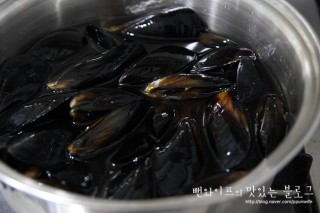
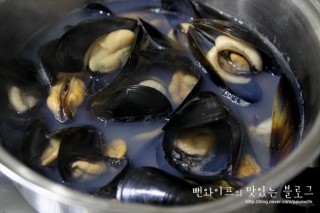
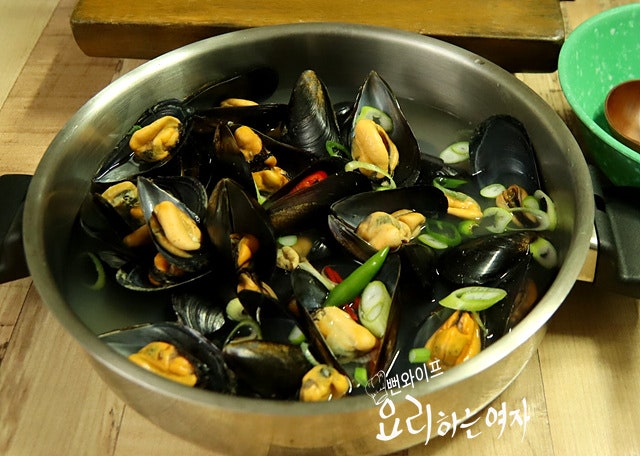
3. Pour water into the pot with the mussels, but do not add enough to submerge the topmost mussels completely;
add just enough to reach along their sides.
Mussel shells are bulky, so if you add too much water, you cannot get a rich broth.
4. Boil over high heat, and once the mussels begin to open, swap their positions from bottom to top with a spatula or spoon.
Doing this helps the mussels open quickly and coaxes out a milky broth.
Boiling them too long makes the meat lose its flavor, so turn off the heat once all the shells have opened.
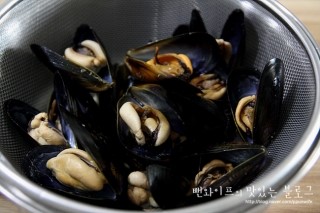
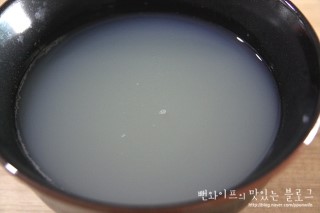
5. Strain the broth through a fine mesh strainer.
6. Let it sit briefly so any sediment settles to the bottom, then gently pour it off.
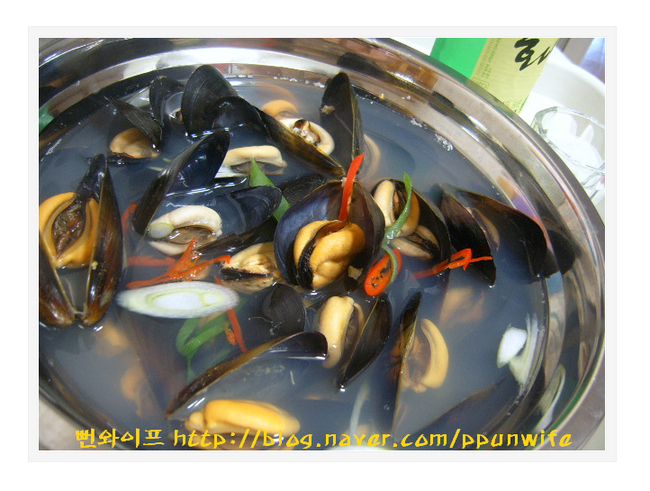
The broth turned out as rich as gomtang.
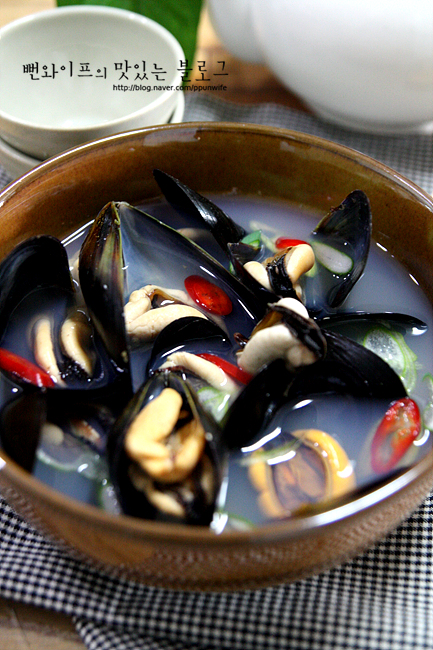
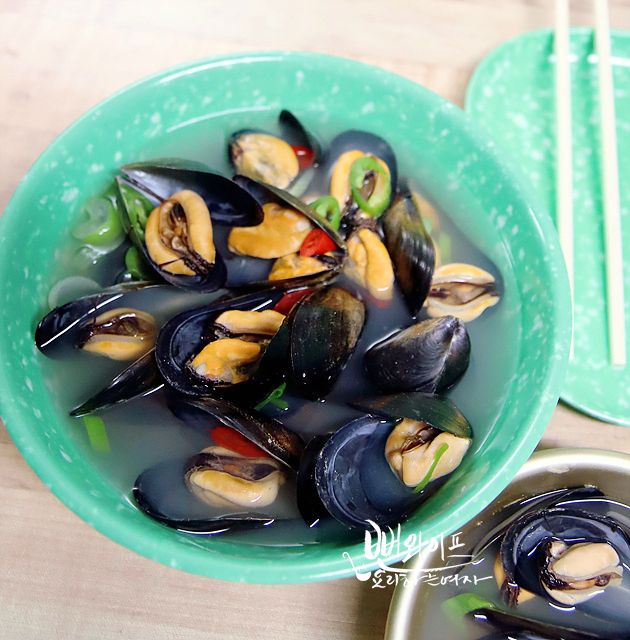
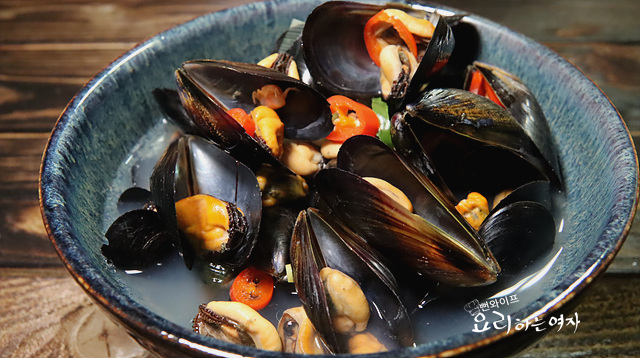
Ladle the broth into a bowl, add a little thinly sliced large green onion and chili pepper, add the mussels, and it is ready.
Perhaps because not much water was used, the broth is so rich that it tastes perfectly seasoned without adding extra salt.
 Ppunwife's tips
- Mussel shells are bulky, so if you add too much water, you cannot get a rich broth.
- Boiling them too long makes the meat lose its flavor, so turn off the heat once all the shells have opened.
- Let it sit briefly so any sediment settles to the bottom, then gently pour it off.
FAQ
How much water should I add to get a rich broth?
Pour in just enough water so it reaches the sides of the mussels without completely submerging them to achieve a deep, rich flavor.
How do you clean the mussel beards?
Pull them downward to remove them, or pull them taut and snip them with kitchen shears if they do not come off easily.
When is the right time to turn off the heat?
Cooking them too long ruins the flavor and texture of the meat, so it is best to turn off the heat as soon as the shells open.
How do you filter out remaining sediment from the broth?
Pour it through a strainer, let it sit briefly so any grit sinks to the bottom, and then gently pour off the clear broth from the top.