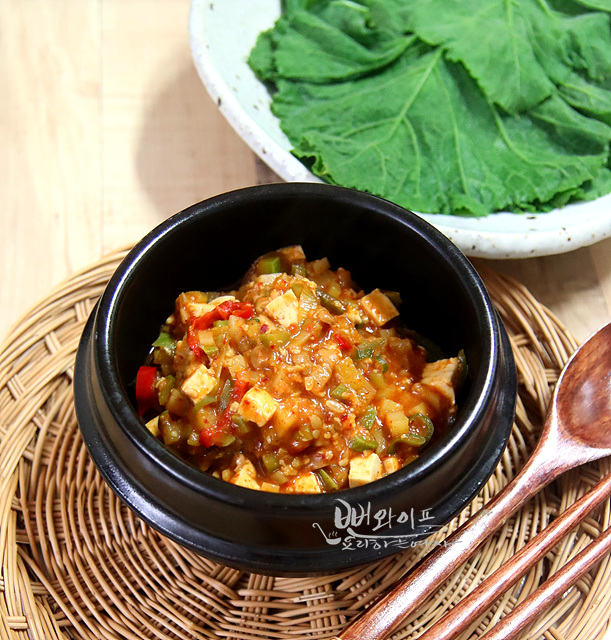
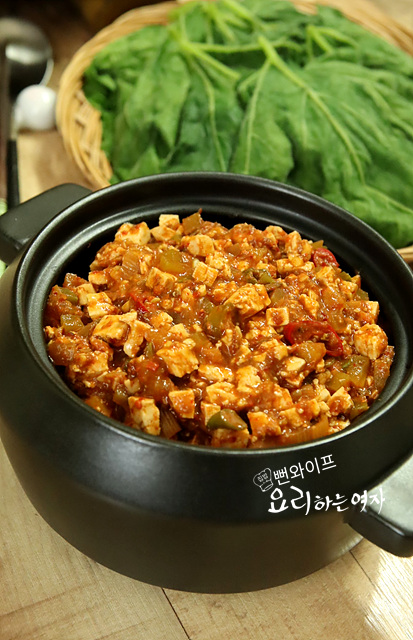
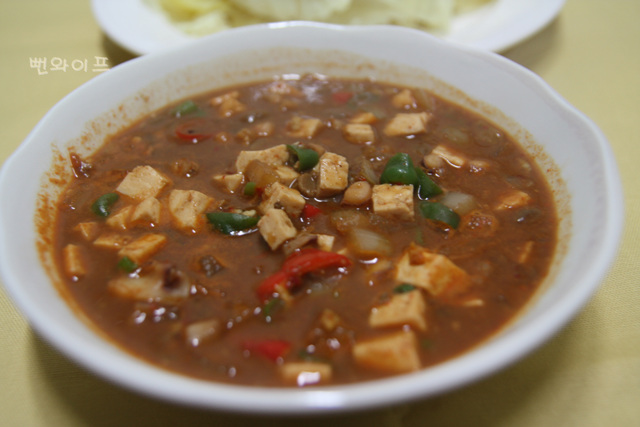
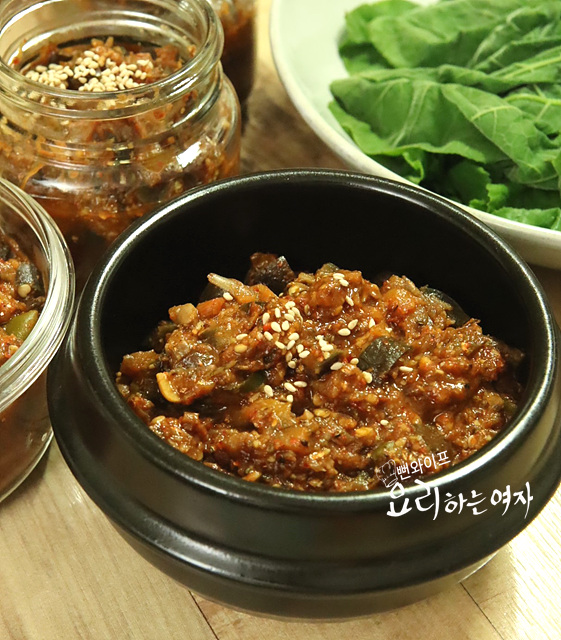
Gang Doenjang (Thick Soybean Paste Stew) with Pork
A thick, simmered gang doenjang made with rich rice-water anchovy broth, finely chopped pork, and vegetables.
Translated from Korean by AI and not yet checked by a native speaker. Amounts and numbers are taken directly from the original recipe. Read the Korean original →
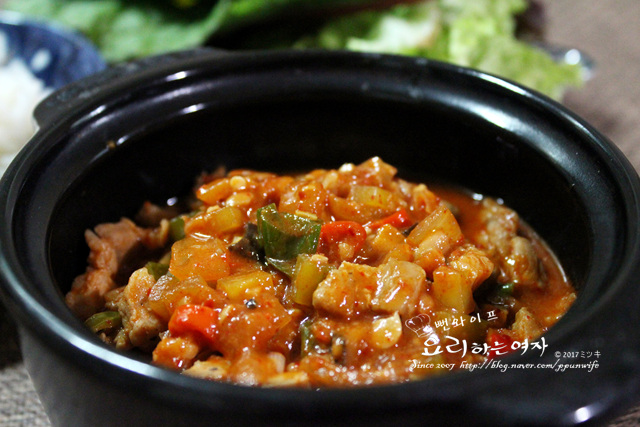
A rich broth made by simmering anchovies and dasima in rice-washing water provides deep umami. Hand-cutting the seasoned pork gives it a great chewy texture, making it wonderfully spicy and hearty. Simmered with whatever vegetables you have on hand, it is perfect for rice wraps or as an everyday side dish.
- Servings
- 2 servings
- Difficulty
- Medium
- Spiciness
- Spicy
Ingredients
Ingredients
- Pork100 g
- Onion1/4 (medium)
- Korean zucchini (aehobak)1/4
- Shiitake mushrooms2
- Large green onion (daepa)1/4 stalk
- Cheongyang chili pepper (hot green chili)2
- Red chili pepper1
- Anchovy broth with rice-washing water1 cup
Pork marinade
- Ginger1/2 tsp
- Mirin (cooking rice wine)1 tbsp
- Ground black peppera little
Seasoning
- Doenjang (Korean soybean paste)2 tbsp
- Gochujang (Korean red chili paste)1 tsp
- Gochugaru (Korean chili flakes)1/2 tbsp
- Minced garlic1/2 tbsp
- Corn syrup (mulyeot)1 tsp
Rice-water anchovy broth
- Water from washing rice2 cups
- Dried soup anchovies5
- Dried kelp (dasima)1 piece (5 cm square)
- You can use pork belly, shoulder, front leg, or hind leg. Chopping it yourself rather than using ground meat gives it a much better chew.
- Prepare the vegetables according to what is in your fridge; adding potatoes or tofu is also great.
- You can use seafood instead of pork, or add nuts to make a mild, non-spicy stew.
Steps
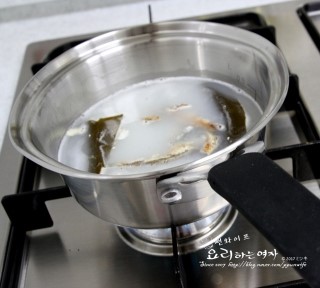
1. Add dried anchovies and dried kelp (dasima) to 2 cups of water from washing rice. Once it begins to boil, reduce the heat to low and simmer until it reduces down to 1 cup.
A rich, savory broth is the key to delicious gang doenjang.
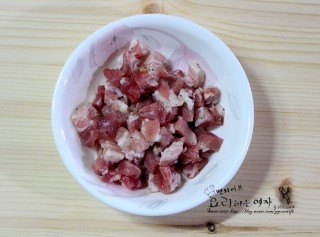
2. You can use pork belly, shoulder, front leg, or hind leg. Trim away any excess fat and chop finely.
I think chopping it by hand gives a better chew than using ground meat.
Season the pork with 1/2 tsp ginger, a little ground black pepper, and 1 tbsp mirin (cooking rice wine).
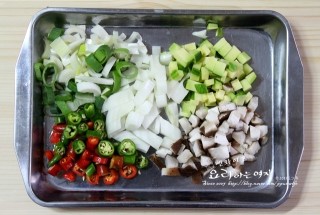
3. Dice or slice the vegetables into bite-sized pieces.
Use whatever ingredients you have in your fridge.
Potatoes or tofu are also good.
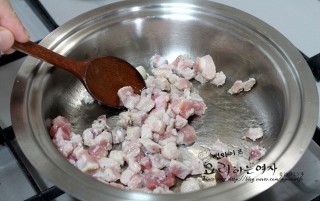
4. Drizzle a little oil in a heated pan, add the seasoned pork, and stir-fry until halfway cooked...
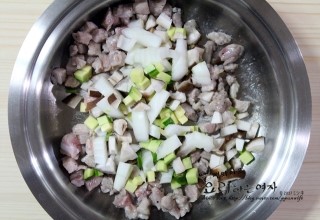
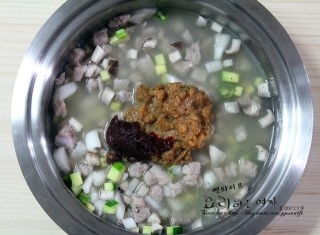
5. Add the onion, Korean zucchini (aehobak), and shiitake mushrooms, then stir-fry briskly.
6. Add 1 cup of broth, 2 tbsp doenjang (Korean soybean paste), and 1 tsp gochujang (Korean red chili paste)...
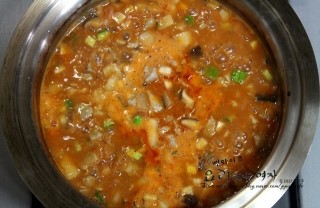
7. Simmer vigorously so that all the ingredients blend together nicely.
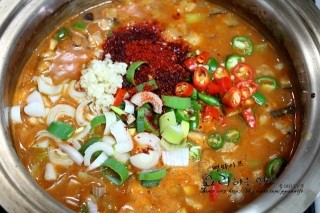
8. Add the large green onion (daepa), Cheongyang chili pepper (hot green chili), red chili pepper, 1/2 tbsp gochugaru (Korean chili flakes), 1/2 tbsp minced garlic, and 1 tsp corn syrup (mulyeot), then bring to a brief boil to finish.
 Ppunwife's tips
- If you are using homemade doenjang with a high salt content, reduce the amount to 1.5 tbsp.
- A rich, savory broth is the key to delicious gang doenjang.
FAQ
Which cut of pork is best to use?
You can use pork belly, shoulder, front leg, or hind leg. Trim off excess fat before using. Chopping the meat by hand with a knife rather than using ground meat provides a much better chew.
How do I adjust the seasoning when using homemade doenjang?
When using homemade doenjang, which is saltier than store-bought varieties, reduce the amount of doenjang to 1.5 tbsp.
How should I make this for children?
Instead of spicy seasonings like gochujang, gochugaru, and Cheongyang chilies, add savory nuts and cook it without spicy ingredients so kids can easily enjoy it.
Can I substitute other ingredients for the pork?
It is also delicious made with seafood instead of pork, and you can freely use leftover vegetables from your fridge like tofu or potatoes.