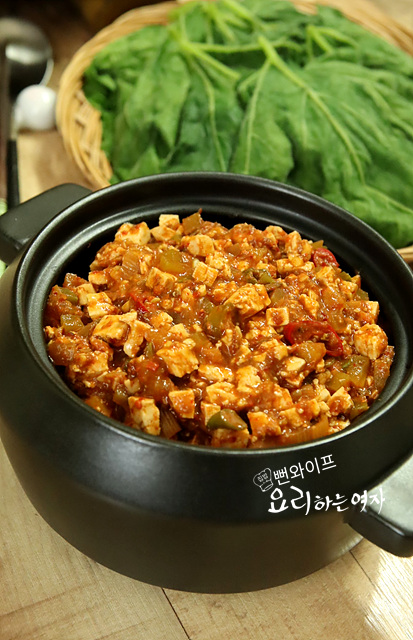
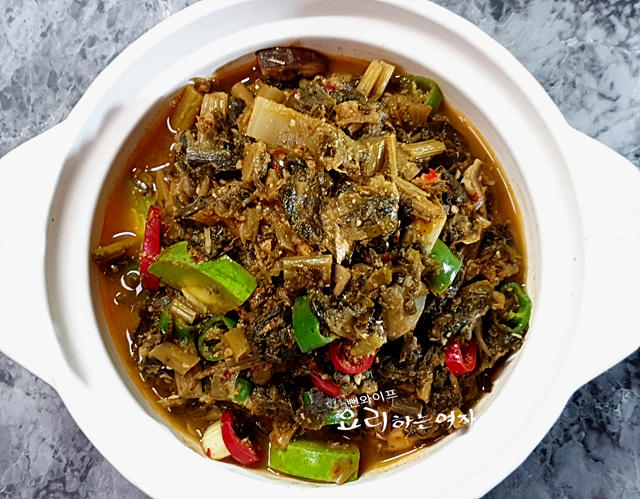
Eggplant Gang Doenjang (Thick Soybean Paste Stew)
A savory gang doenjang simmered thick with toasted dried anchovies and eggplant in rice-washing water, perfect for vegetable wraps.
Translated from Korean by AI and not yet checked by a native speaker. Amounts and numbers are taken directly from the original recipe. Read the Korean original →
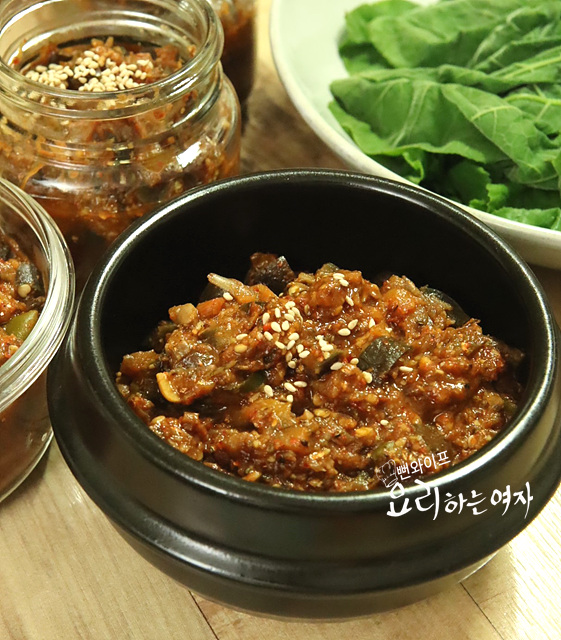
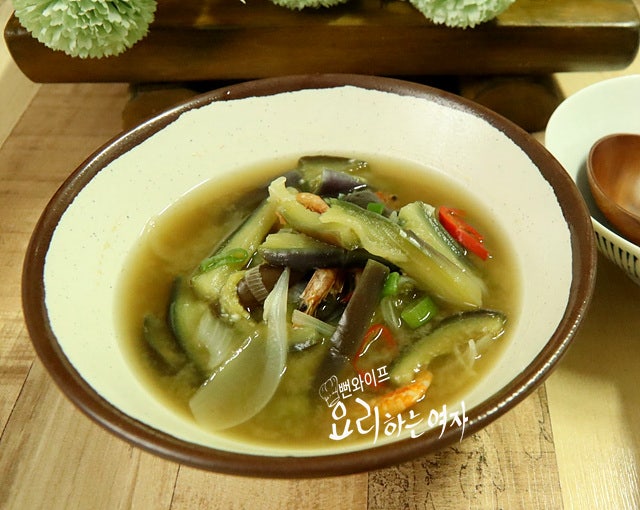
This special side dish gets its savory depth from toasted dried anchovies and tender eggplant simmered together. Even without meat, the pleasantly chewy texture of the anchovies stands out, while the rice-washing water and corn syrup gently soften the saltiness of the doenjang. It pairs wonderfully with rice and leafy wrap greens like pumpkin leaves or cabbage.
- Servings
- 7–8 servings
- Difficulty
- Easy
- Spiciness
- Mildly spicy
Ingredients
Ingredients
- Eggplant3 (600 g)
- Dried anchovies2 cups
- Large green onion (daepa)1 stalk
- Cheongyang chili pepper (hot green chili)2
- Water from washing rice4 cups
Seasoning
- Doenjang (Korean soybean paste)6 tbsp (3 tbsp store-bought + 3 tbsp homemade)
- Gochujang (Korean red chili paste)1 tbsp
- Gochugaru (Korean chili flakes)2 tbsp
- Minced garlic2 tbsp
- Corn syrup (mulyeot)2 tbsp
- Mirin (cooking rice wine)2 tbsp
- Ground black peppera little
- I didn't have soup anchovies, so I used dried anchovies that were slightly smaller than medium size.
- Zucchini, tofu, or onion also make great additions to gang doenjang.
Steps
Prepare the ingredients
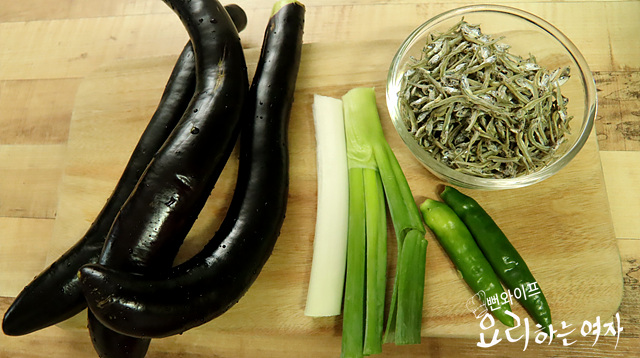
Prepare 3 eggplants and, since I didn't have large soup anchovies, 2 cups of dried anchovies slightly smaller than medium size.
Have the large green onion and Cheongyang chili peppers ready.
I used only eggplant to use them up quickly, but zucchini, tofu, or onion also work nicely in gang doenjang.
Chop the ingredients
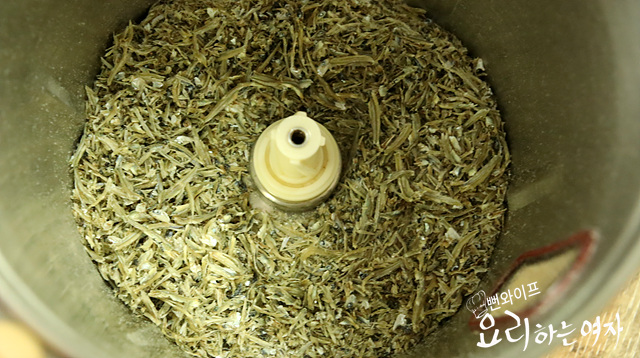
Place the anchovies in a food processor to chop them finely, but don't grind them into powder. Pulse them so they still have a nice, chewy texture.
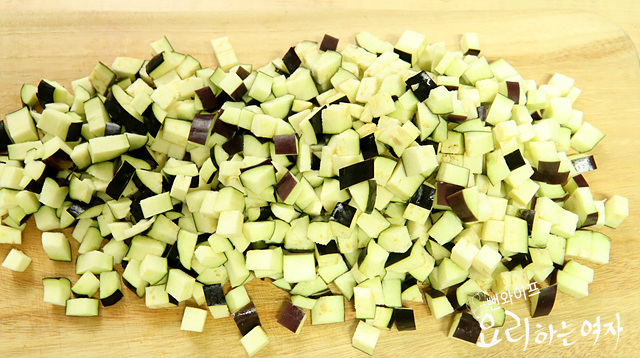
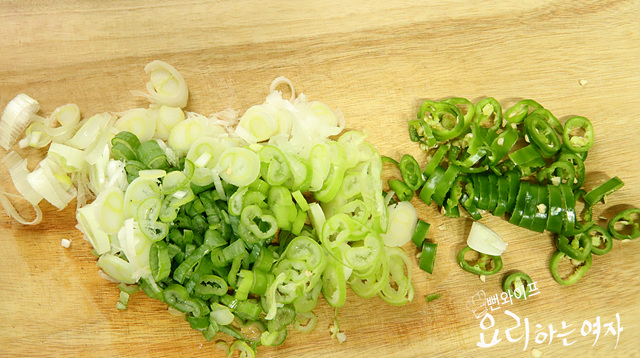
Dice the eggplant into small cubes, and thinly slice the large green onion and Cheongyang chili peppers.
Make the anchovy broth
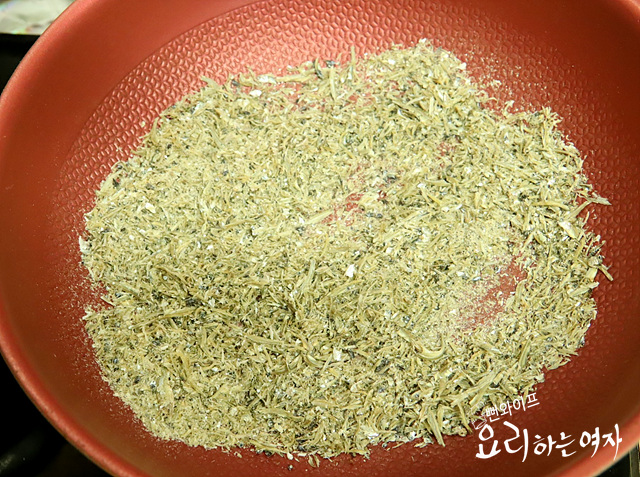
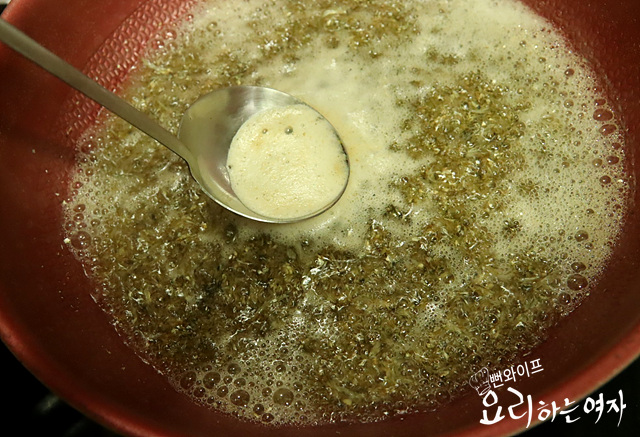
Add the anchovies to a dry pan without oil and toast them carefully so they do not burn.
Toasting them until golden brings out their nutty flavor and removes any off-odors.
Pour in 4 cups of water from washing rice and simmer so the anchovy flavor infuses the broth, skimming off any foam that rises.
When making gochu jangmul (chili anchovy stew), toasting and simmering the anchovies like this also lets you consume all the flavorful, savory anchovies completely.
Simmer the gang doenjang
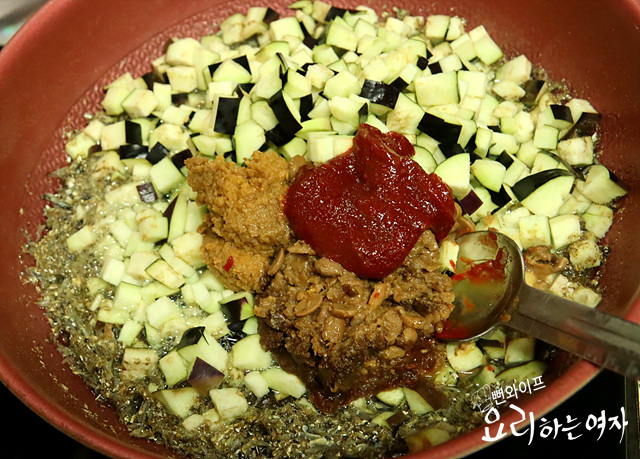
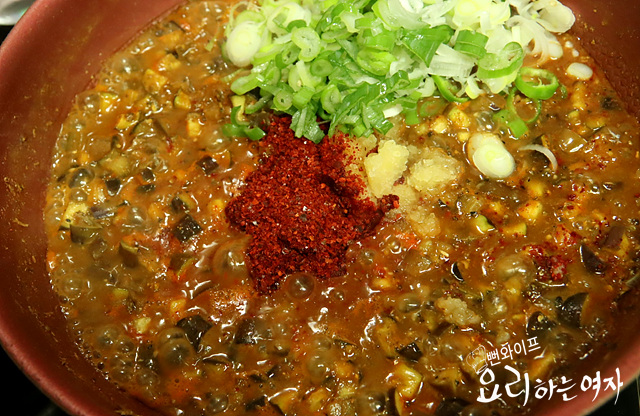
Add the eggplant, 6 tbsp doenjang (Korean soybean paste), and 1 tbsp gochujang (Korean red chili paste), simmering so the pastes dissolve well.
Add the chopped green onion, Cheongyang chili peppers, 2 tbsp gochugaru (Korean chili flakes), 2 tbsp minced garlic, and 2 tbsp mirin (cooking rice wine), then simmer until the seasonings blend together nicely.
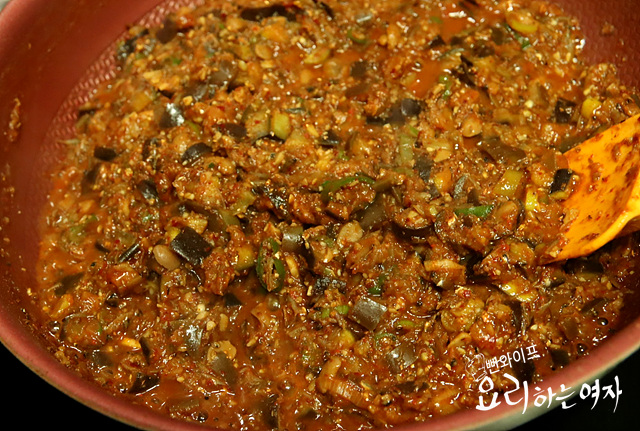
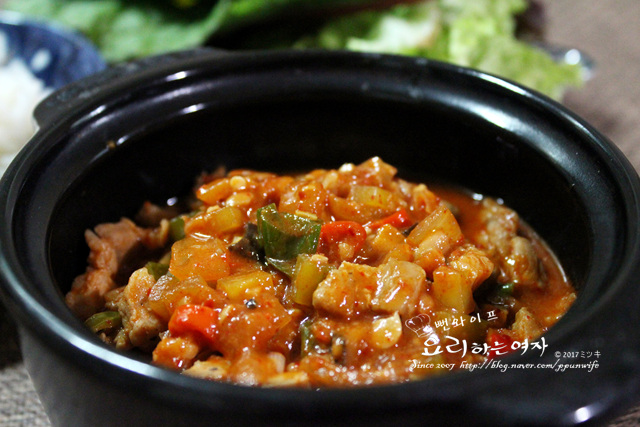
Finish by adding 2 tbsp corn syrup (mulyeot) and a little ground black pepper, then simmer until thick with little liquid left. The corn syrup helps balance out the salty edge of the doenjang.
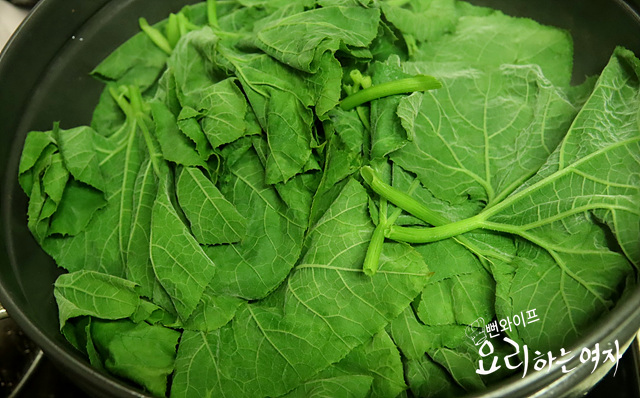
If serving with pumpkin leaves, steam them in a rolling-boil steamer for about 5 minutes.
Finish
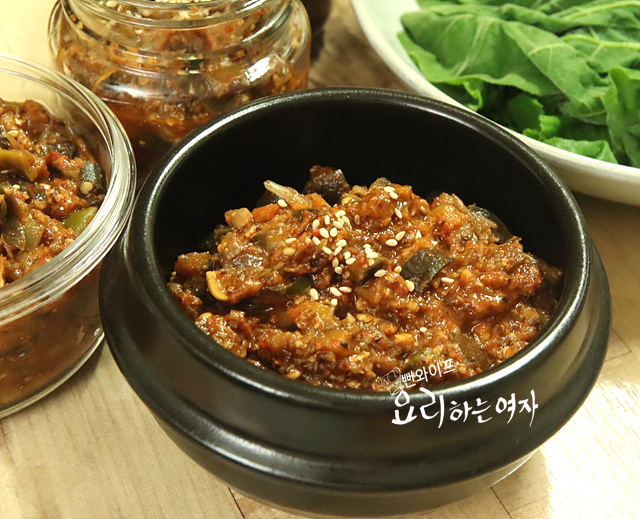
It is so satisfying you won't miss meat in your gang doenjang at all.
Divide it into single-serving containers and store them so you can easily reheat a portion whenever you want to eat ssam (wraps).
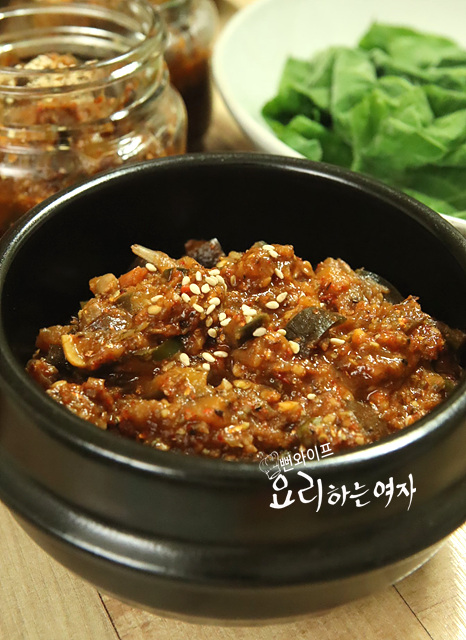
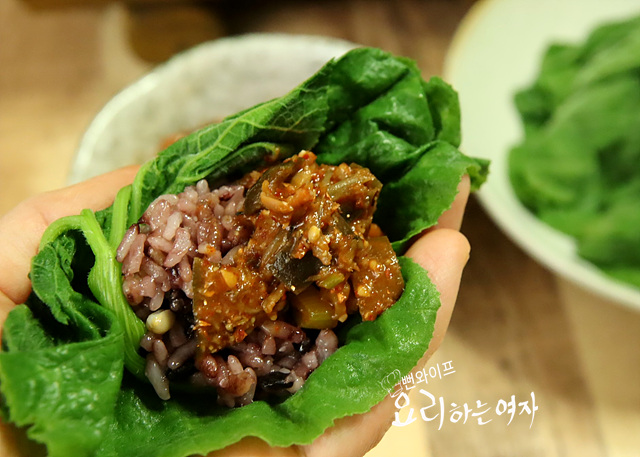
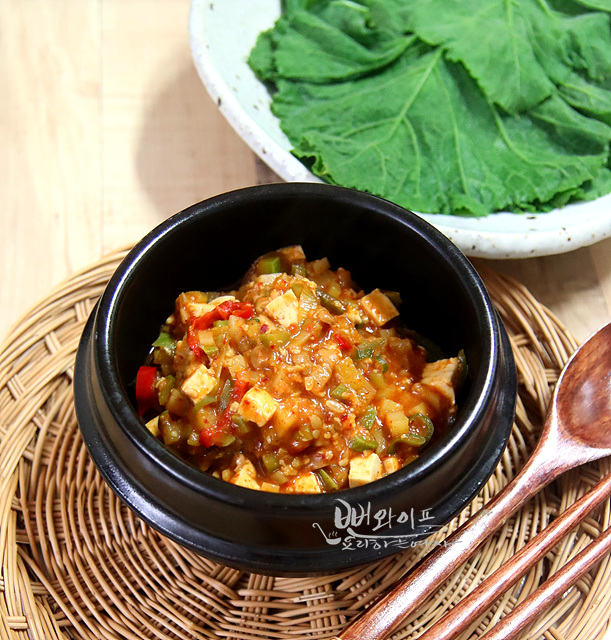
Ladle a portion into a warm earthenware pot and serve it alongside warm rice and wrap greens.
I made a large batch of gang doenjang to use up my eggplants, but you can gather any leftover vegetables rolling around in your fridge and make gang doenjang too.
With just some greens, you can enjoy a delicious meal. It is wonderful wrapped in steamed cabbage, lettuce, perilla leaves, and more.
Once cooled, you can use it in place of ssamjang as a dip for grilled meat, chili peppers, or cucumbers, or reheat it warm to wrap with freshly cooked rice.
 Ppunwife's tips
- Do not grind the anchovies too finely; pulse them so they retain a pleasant, chewy texture.
- Toasting the anchovies until lightly golden brings out a nutty aroma and gets rid of any fishy odor.
- The corn syrup softens and balances the sharp saltiness of the doenjang.
- Portion it into small containers so you can conveniently reheat single servings whenever you crave rice wraps.
FAQ
Is there anything to keep in mind when processing the anchovies in a blender or food processor?
To keep the pleasant texture of the anchovies, avoid grinding them into a fine powder; pulse them coarsely so small pieces remain.
Why do you toast the anchovies in a dry pan first?
Toasting them in a dry, un-oiled pan until golden removes unpleasant fishy odors and brings out their nutty, savory flavor.
Can I add other vegetables besides eggplant?
Yes, leftover refrigerator vegetables such as Korean zucchini, tofu, or onions work very well chopped and added to the pot.
How do you steam pumpkin leaves to serve with gang doenjang?
Place the pumpkin leaves in a steamer once steam starts rising, and steam them for about 5 minutes before serving as wraps.