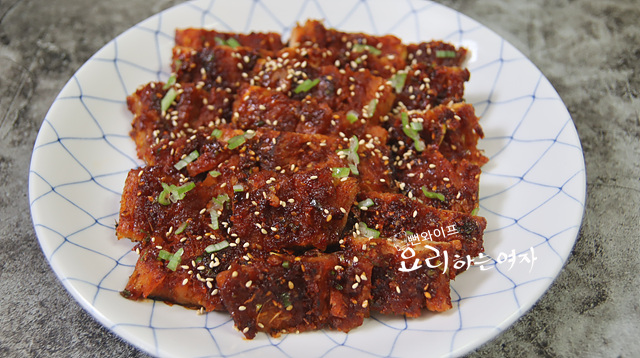
Chewy, Sweet, and Spicy Hwangtae Jangajji (Pickled Dried Pollack)
A long-lasting side dish made by coating dried shredded yellow pollack in a boiled gochujang-soy sauce seasoning and aging it.
Translated from Korean by AI and not yet checked by a native speaker. Amounts and numbers are taken directly from the original recipe. Read the Korean original →
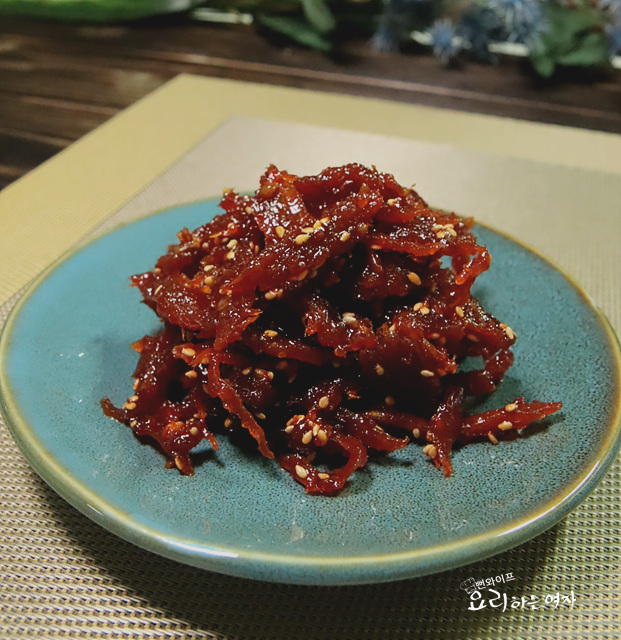
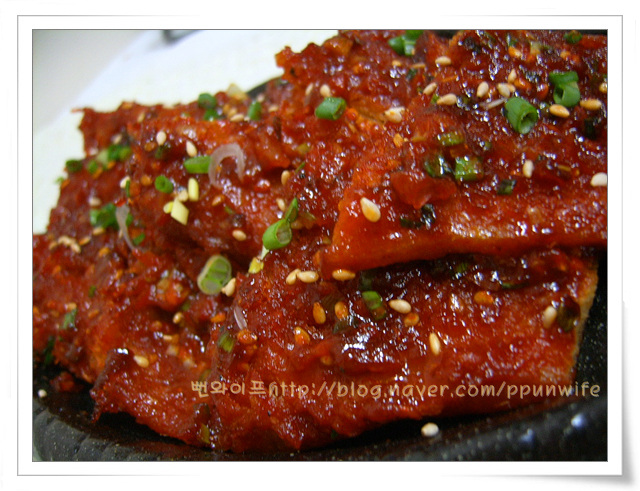
This pickle is made by tossing sanitized dried shredded yellow pollack with a boiling-hot sweet and spicy sauce while it is hot, then letting it age. After ten days of aging in the refrigerator, the once-moist pollack turns pleasantly chewy with great texture. Adding toasted sesame oil and toasted sesame seeds right before serving makes it excellent as a side dish for rice or as a drinking snack.
- Servings
- about 6–8 servings
- Cook time
- 3 minprep not included
- Difficulty
- Easy
- Spiciness
- Mildly spicy
- Keeps
- 365 days
Ingredients
Ingredients
- Dried shredded yellow pollack (hwangtae-chae)200 g
- Cheongju (Korean rice wine) (or soju, cheongha (clear Korean rice wine))1/4 cup (for sterilizing)
Seasoning
- Regular soy sauce (jin-ganjang) (or brewed soy sauce (yangjo-ganjang))1 cup
- Gochujang (Korean red chili paste)1/2 cup
- Gochugaru (Korean chili flakes)1/2 cup
- Mirin (cooking rice wine) (or mirin (cooking rice wine))1 cup
- Rice syrup (jocheong) (or green plum syrup (maesil-cheong), corn syrup (mulyeot), oligosaccharide syrup (oligodang))1 1/2 cups
- Minced garlic2 tbsp
- Minced ginger1/2 tbsp
- If you have whole dried yellow pollack, you can take a little time to shred it, but buying pre-shredded dried yellow pollack makes this recipe super simple.
- If using whole dried yellow pollack, tear it into bite-sized pieces before use.
Steps
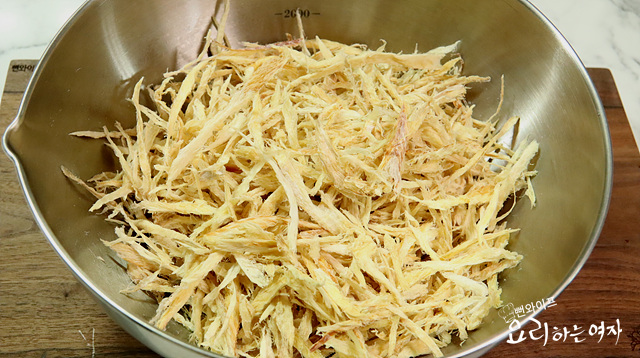
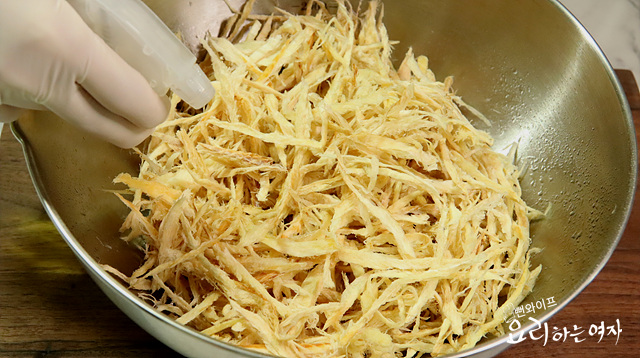
To sterilize and sanitize, put cheongju (Korean rice wine) or soju into a spray bottle and spray it evenly over the dried pollack while tossing it around.
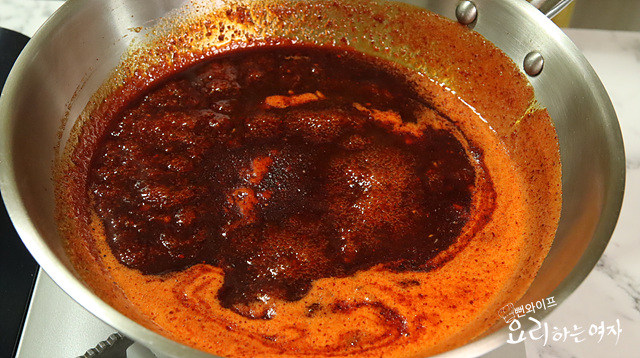
Add all seasoning ingredients and boil for about 3 minutes so the flavors blend together.
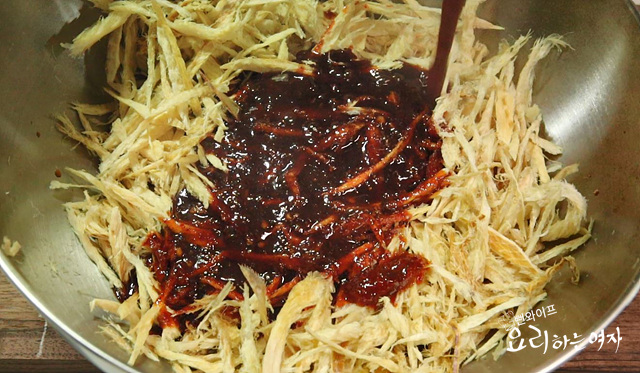
While the seasoning is still hot, pour it over the dried pollack and mix well with a spoon so it is evenly coated.
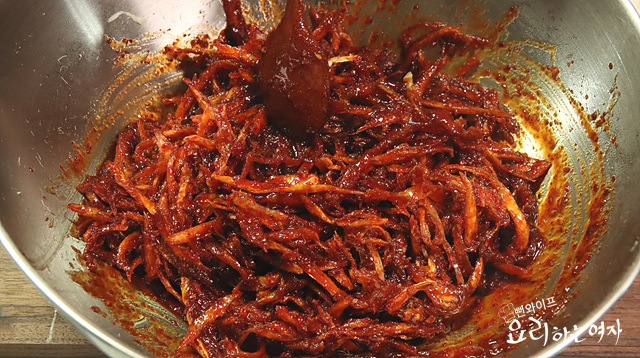
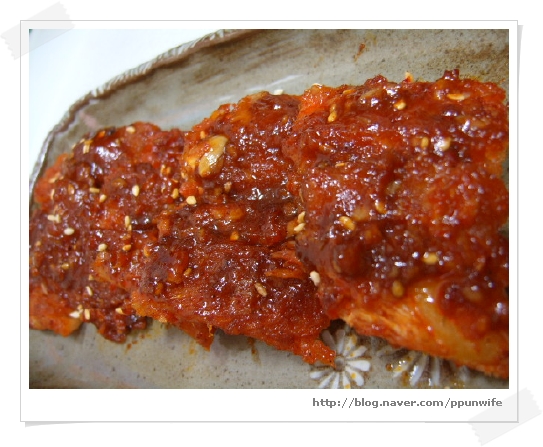
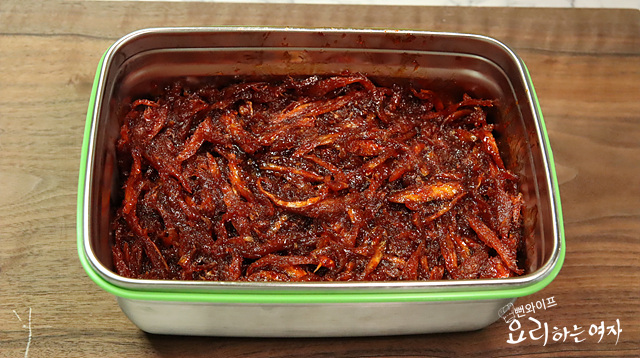
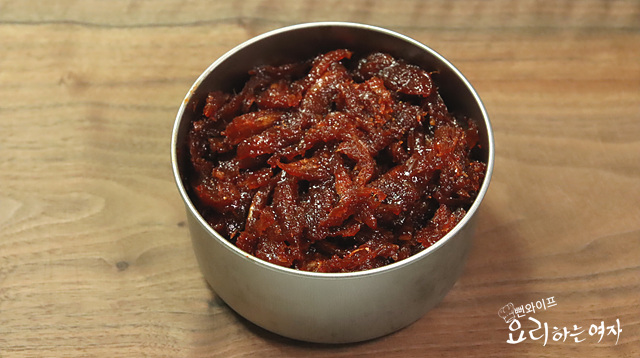
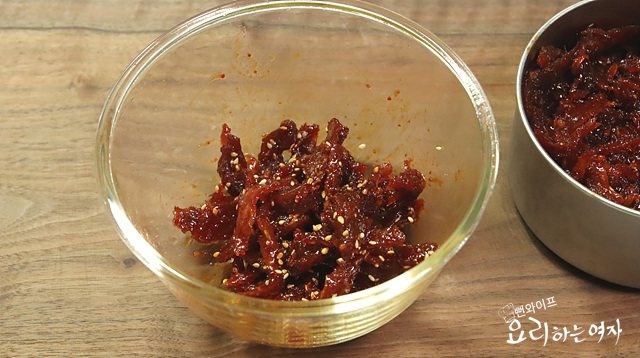
Once cooled, transfer to an airtight container and let it age in the refrigerator for about ten days. At first, the dried shredded yellow pollack is moist, but after aging, it turns pleasantly chewy. Right before serving, take out small portions and toss with toasted sesame oil, toasted sesame seeds, or extra sweetness before eating.
 Ppunwife's tips
- If you use corn syrup, green plum syrup, or oligosaccharide syrup, reserve about 10 to 20% of it, boil the rest, taste, and then add the remaining amount as needed.
- If you cover the seasoned dried pollack pickle with plastic wrap or a plastic food bag to keep air out, it will keep well for over 1 year.
FAQ
Can I eat hwangtae jangajji right after making it?
After tossing with the seasoning and letting the steam cool down, transfer to an airtight container and let it age in the refrigerator for about ten days before eating.
Can I use corn syrup or oligosaccharide syrup instead of rice syrup?
You can substitute corn syrup, green plum syrup, or oligosaccharide syrup. In that case, reserve about 10 to 20% of the amount, boil the seasoning, and add the rest after tasting.
How long can hwangtae jangajji be stored?
If you seal it airtight in a container covered with plastic wrap or a plastic food bag to keep air out, you can store and enjoy it for over 1 year.
Can I use whole dried yellow pollack or regular dried pollack instead of shredded dried yellow pollack?
You can also use whole dried yellow pollack or dried pollack; simply tear it into bite-sized pieces before preparing.