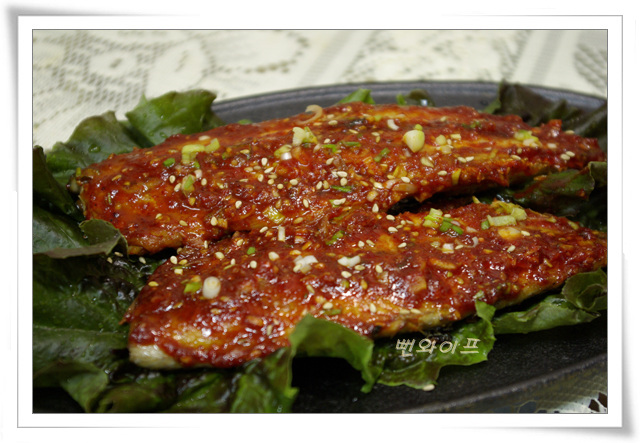
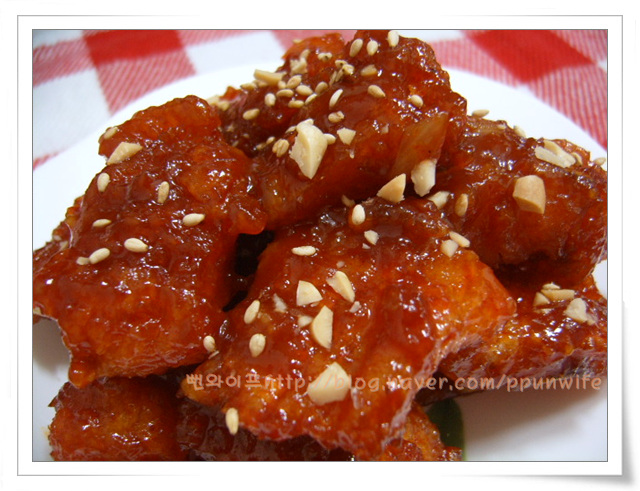
Sweet and Spicy Hwangtae Gui (Grilled Dried Yellow Pollock)
A sweet and spicy hwangtae gui side dish pre-grilled with an oil-soy marinade for deeper flavor.
Translated from Korean by AI and not yet checked by a native speaker. Amounts and numbers are taken directly from the original recipe. Read the Korean original →
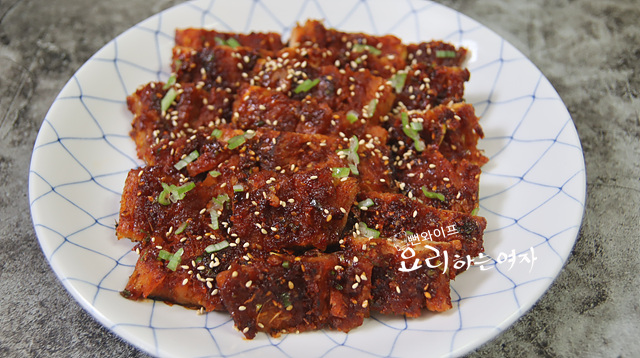
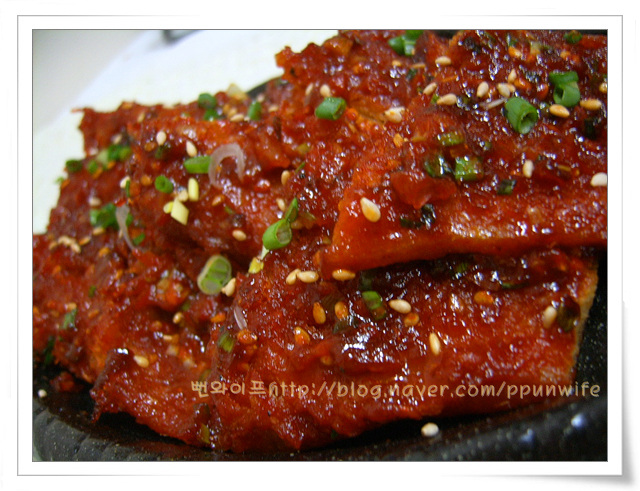
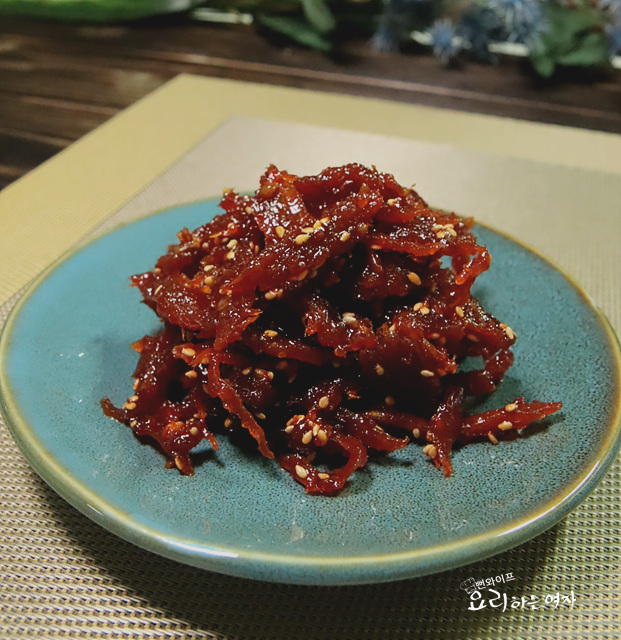
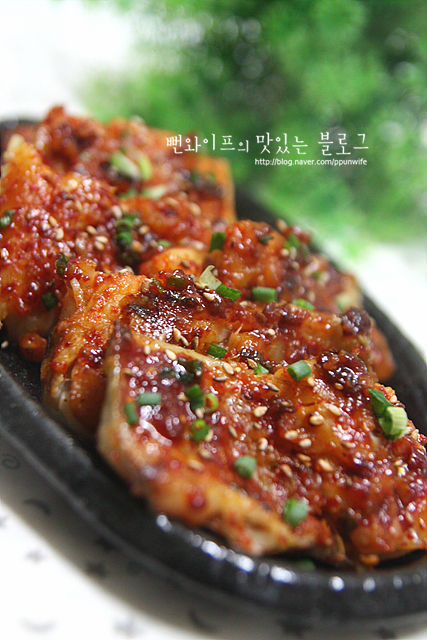
This side dish uses leftover dried pollack from the holidays, coats it in an oil-soy marinade, pre-grills it, and finishes it with a gochujang sauce. Grilling it first with toasted sesame oil and soy sauce prevents the seasoning from separating, while the sweet, spicy, and savory flavor makes it great as a banchan with rice, a snack with drinks, or a lunchbox dish.
- Servings
- about 2–3 servings
- Difficulty
- Medium
- Spiciness
- Mildly spicy
Ingredients
Hwangtae gui
- Dried pollack strips (hwangtae-po) (or dried pollock sheets)1 whole
Oil-soy marinade (yujang)
- Regular soy sauce (jin-ganjang) (or brewed soy sauce (yangjo-ganjang))1 tbsp
- Toasted sesame oil1 tbsp
Seasoning
- Gochujang (Korean red chili paste)2 tbsp
- Regular soy sauce (jin-ganjang) (or brewed soy sauce (yangjo-ganjang))1 tbsp
- Gochugaru (Korean chili flakes)1 tbsp
- Minced garlic1 tbsp
- Mirin (cooking rice wine)2 tbsp
- Corn syrup (mulyeot)2 tbsp
- Minced green onion2 tbsp
- Water2 tbsp
- Ground black peppera little
- Toasted sesame seeds1/2 tbsp
- I used dried pollack (hwangtae-po), but standard dried pollack (bugeo-po) also works well.
- Moisten it under running water, press out just enough moisture so it doesn't drip, and let it sit for more than 10 minutes; the hard, skinny flesh will plump up like a sponge.
Steps
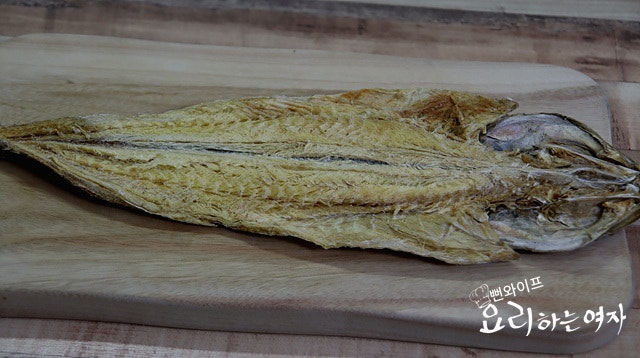
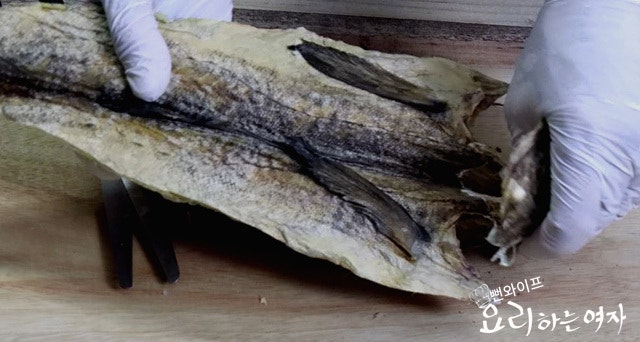
I used dried pollack (hwangtae-po), but standard dried pollack (bugeo-po) also works well.
I am going to cut off the head and tail of the dried pollack to use for broth later. If you are making broth right away, it is easier to wet them before cutting, but since I am storing them, I cut them off while dry.
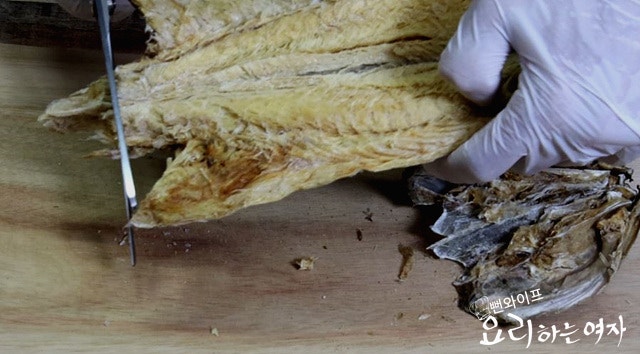
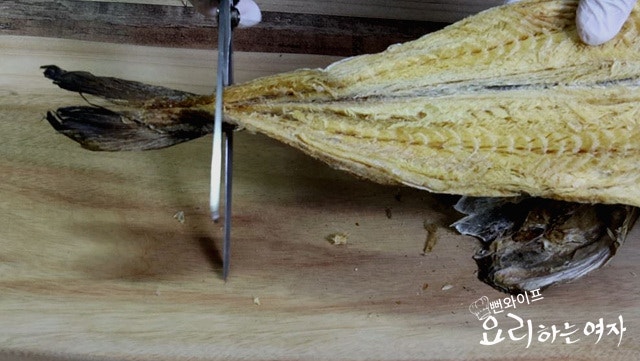
Trim the edges a bit so the shape is roughly neat, and cut off the tail fin to store for making broth.
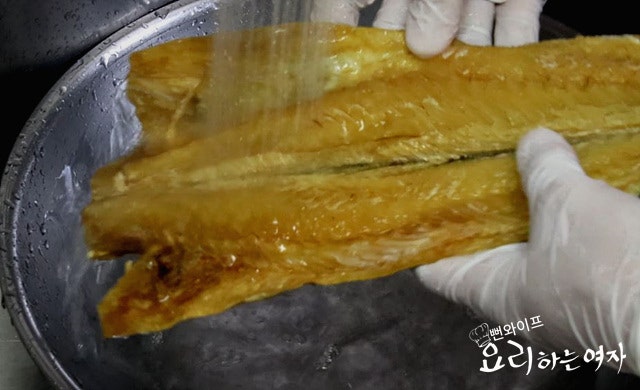
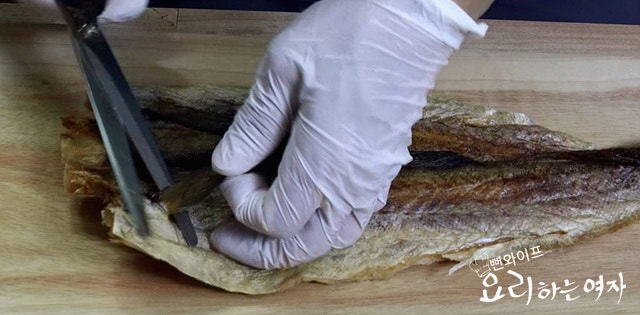
Moisten it under running water, press out just enough moisture so it doesn't drip, and let it sit for more than 10 minutes; the hard, skinny flesh will plump up like a sponge.
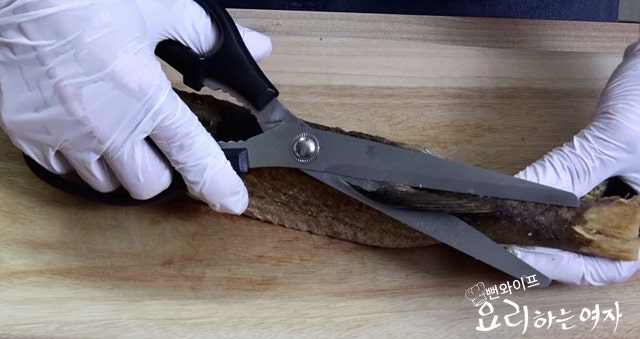
Cut off the fins on the back with kitchen shears as well.
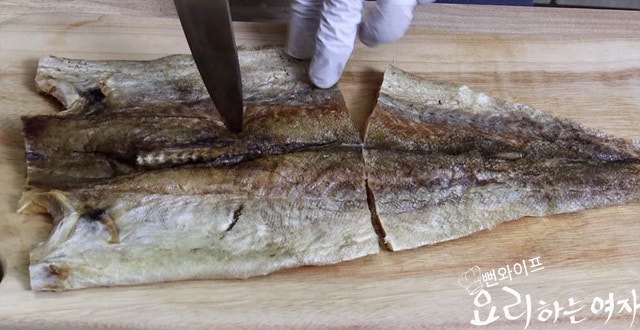
Pricking all over the skin side of the dried pollack with a knife seems to help the seasoning absorb better and keeps it from curling up too much when grilled.
I cut it in half so it fits into the frying pan.
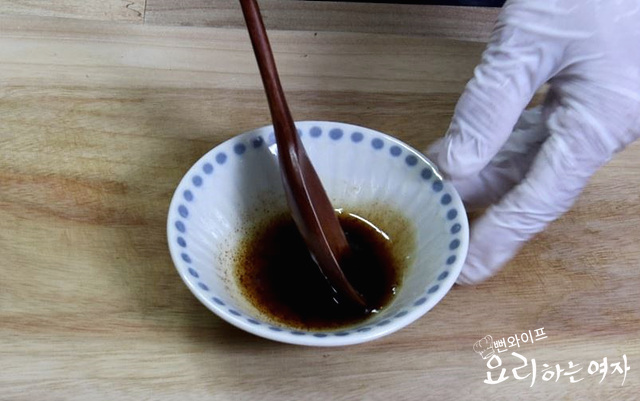
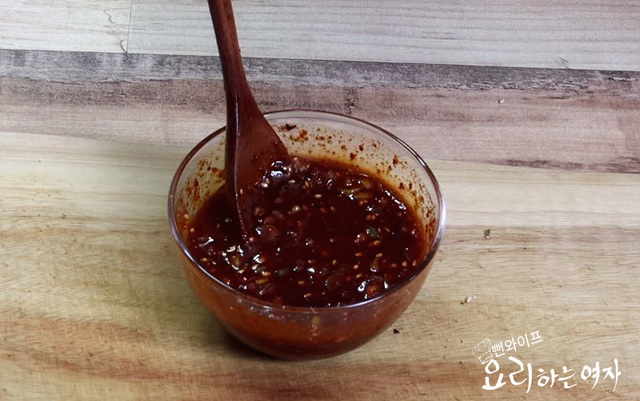
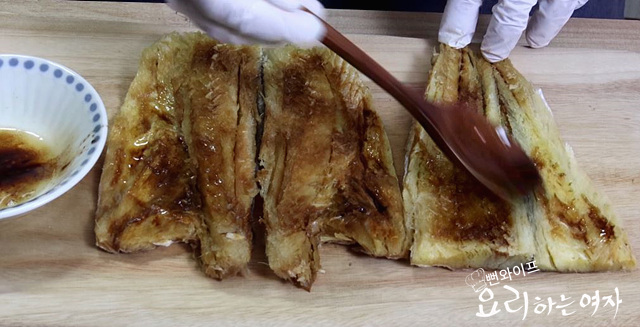
This is the oil-soy marinade (yujang) for the first seasoning. You need to mix the toasted sesame oil and regular soy sauce (jin-ganjang) and grill with it first so the sauce doesn't separate when grilled with the final seasoning, allowing the flavor to soak in deeply for better taste.
Mix together all the ingredients for the second seasoning sauce in advance as well. Thoroughly and evenly brush the oil-soy marinade onto the flesh side.
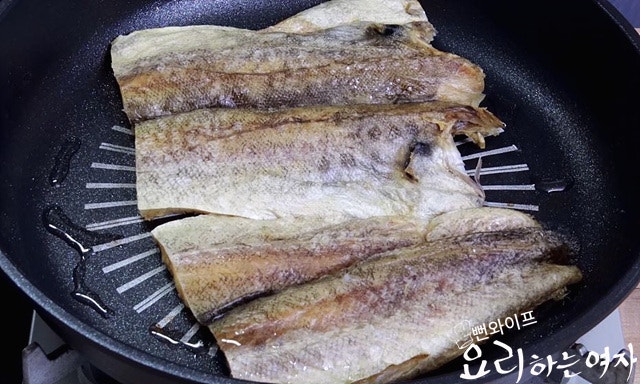
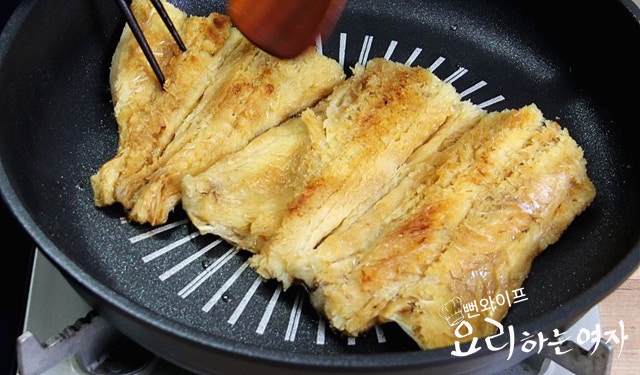
Coat a heated pan with cooking oil and grill both sides over medium-low heat until golden brown so it doesn't burn. Even grilling it just like this fills the air with a delicious aroma.
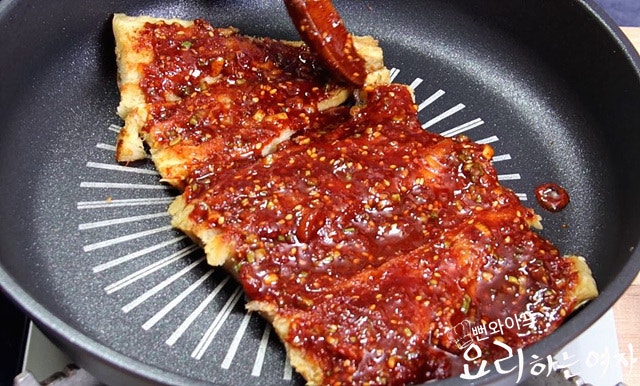
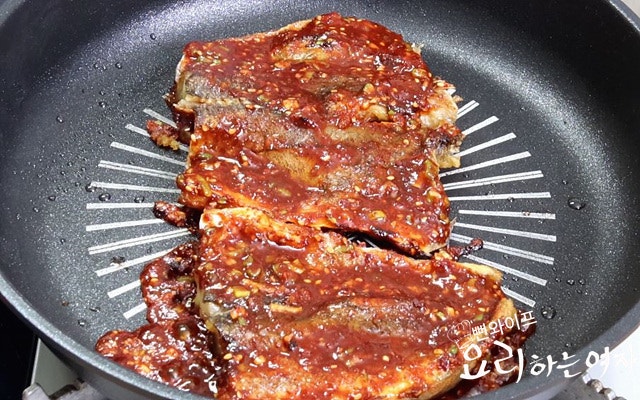
Spread the seasoning sauce evenly, let it sit for about 10 minutes so the flavors absorb, and grill over low heat so it does not burn.
Because it was already grilled in the 1st round brushed with oil-soy marinade, the flesh is already cooked, so you only need to grill until the sauce soaks into the meat.
If you have a lid, covering it while grilling is good.
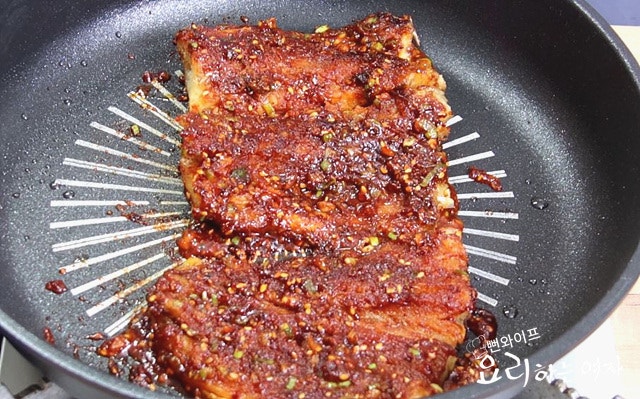
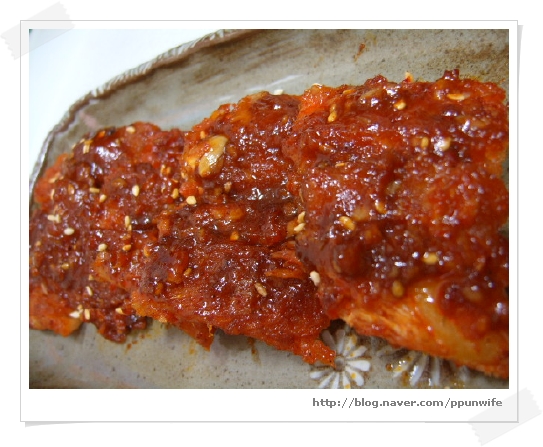
Once it is grilled so that the delicious seasoning aroma and color develop evenly, scrape up any seasoning remaining in the frying pan and spread it over the fish.
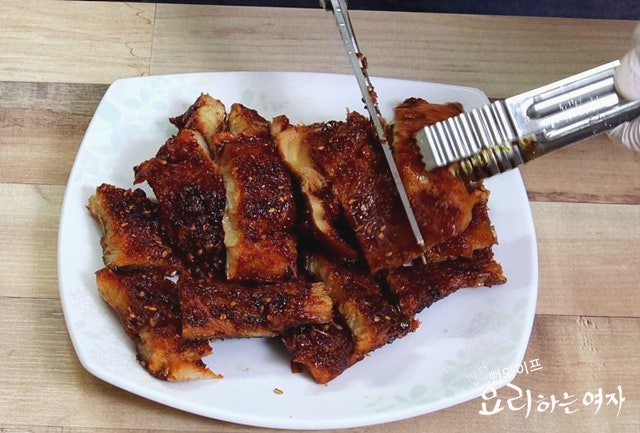
Cut into bite-sized pieces, and your hwangtae gui is finished.
 Ppunwife's tips
- Pricking all over the skin side of the dried pollack with a knife seems to help the seasoning absorb better and keeps it from curling up too much when grilled.
- You need to mix the toasted sesame oil and regular soy sauce (jin-ganjang) and grill with it first so the sauce doesn't separate when grilled with the final seasoning, allowing the flavor to soak in deeply for better taste.
- If you have a lid, covering the pan while grilling is good.
FAQ
Can I use standard dried pollack (bugeo-po) instead of yellow pollack (hwangtae-po)?
Using standard dried pollack (bugeo-po) is completely fine.
How do I prevent the dried pollack from curling up severely while grilling?
Pricking the skin side all over with the tip of a knife reduces curling and helps the seasoning soak in well.
Why do you apply the oil-soy marinade before applying the seasoning sauce?
Grilling it first after brushing with the oil-soy marinade of soy sauce and toasted sesame oil prevents the seasoning sauce from separating and ensures it absorbs deeply into the flesh.
How do I use the leftover head and fins after trimming?
You can cut them off dry, store them, and use them later when making soup broth.