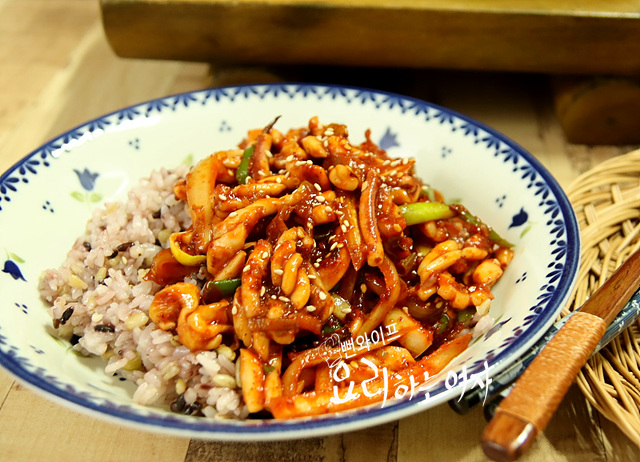
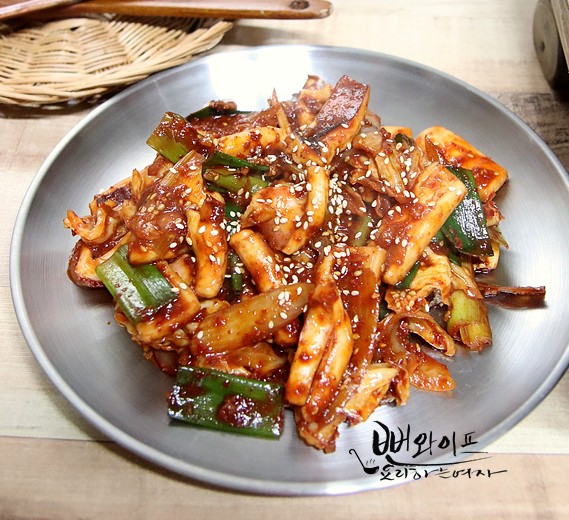
Ojingeo Bokkeum (Spicy Stir-Fried Squid)
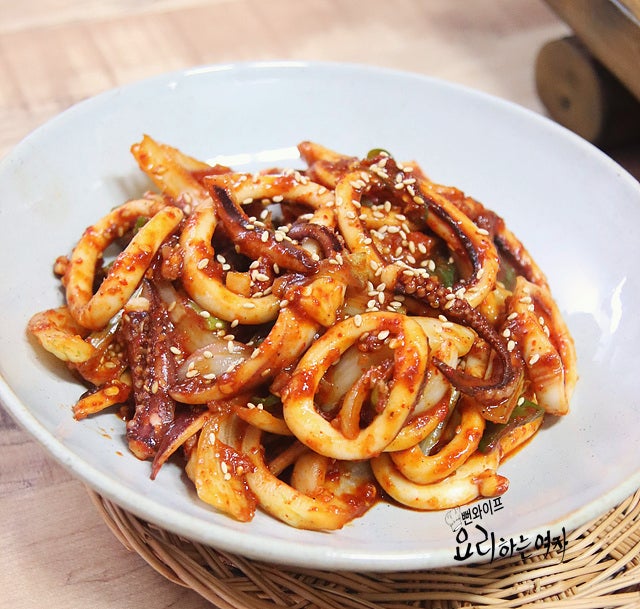
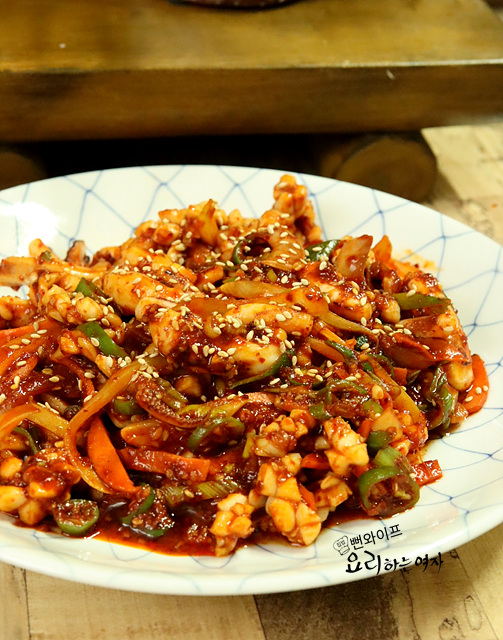
A sweet and spicy stir-fried squid dish cooked quickly over high heat without parboiling so that no liquid pools.
Translated from Korean by AI and not yet checked by a native speaker. Amounts and numbers are taken directly from the original recipe. Read the Korean original →
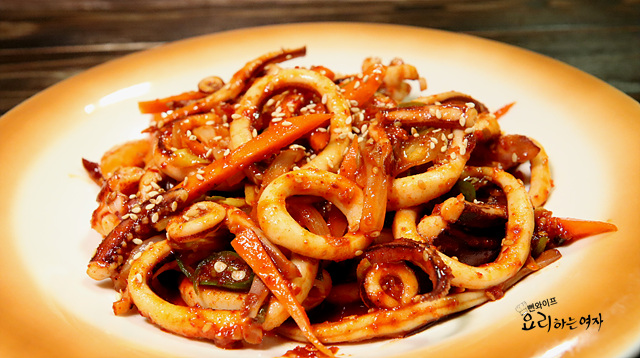
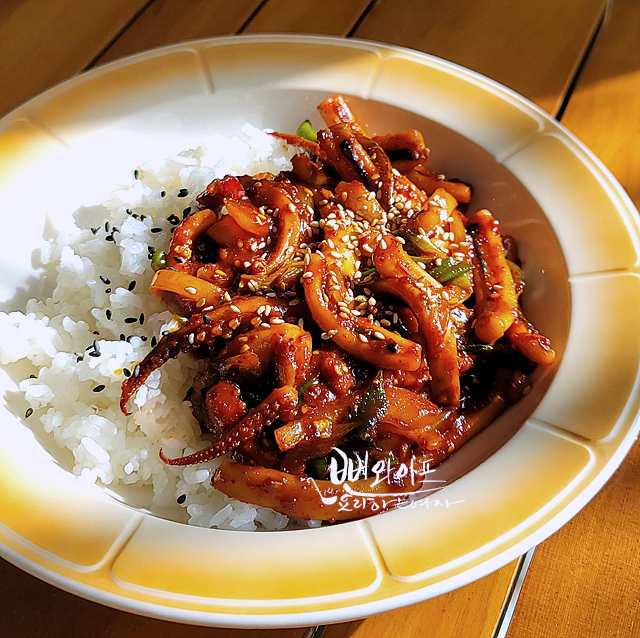
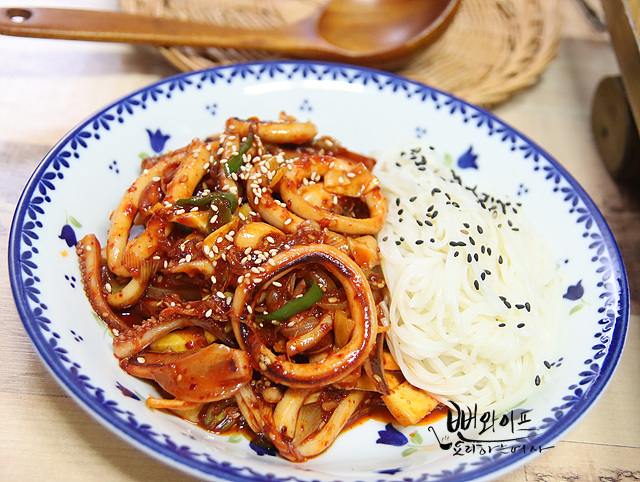
This is a one-plate dish made by stir-frying squid without parboiling to keep all its natural juices. Cooking it quickly over medium-high to high heat prevents moisture from coming out and keeps the squid tender. It is wonderful served spicy as a side dish for rice or as an accompaniment for drinks.
- Servings
- 2–3 servings
- Difficulty
- Medium
- Spiciness
- Spicy
Ingredients
Ingredients
- Squid1 whole (medium)
- Onion1/2 (small)
- Carrot1/4
- Large green onion (daepa)1/4 stalk
- Cheongyang chili pepper (hot green chili)2
Seasoning
- Minced garlic1 tbsp
- Gochugaru (Korean chili flakes)2 tbsp
- Regular soy sauce (jin-ganjang)2 tbsp
- Oyster sauce1 tbsp
- Mirin (cooking rice wine)1 tbsp
- Corn syrup (mulyeot) (or rice syrup (jocheong))1 tbsp
- Sugar1 tsp
- Ground black peppera little
- Toasted sesame oil1 tsp
- Toasted sesame seeds1/2 tbsp
- If you have cabbage, mushrooms, or zucchini, you can substitute them.
Steps
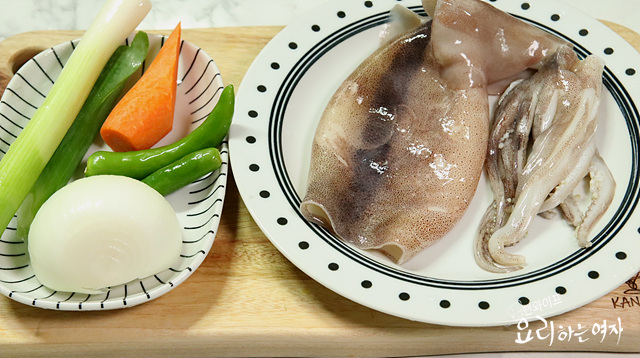
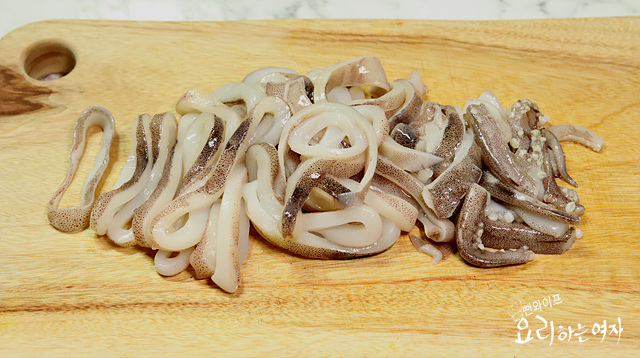
I kept the body intact to slice it into rings
and separated just the legs.
Slice them to a bite-sized thickness.
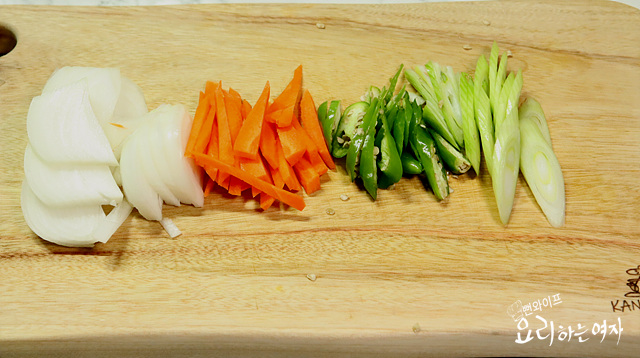
For the vegetables, julienne the onion, carrot, and chili pepper not too thinly,
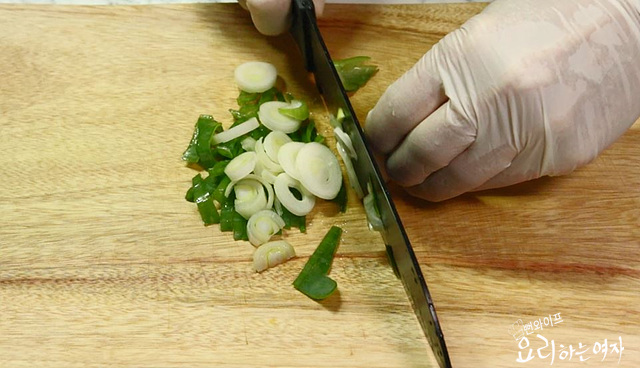
and julienne half the large green onion (daepa) while finely slicing the other half.
(If you have cabbage, mushrooms, or zucchini, you can substitute them.)
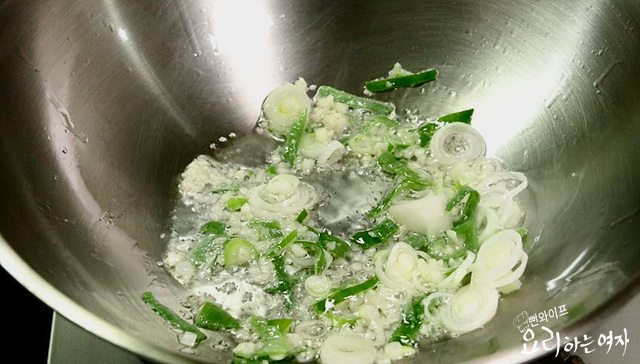
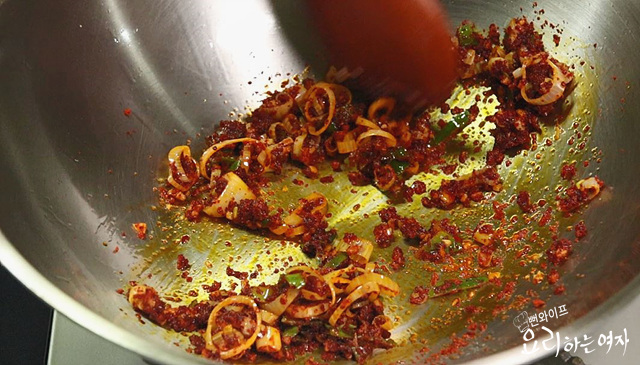
Heat the pan, swirl in a generous amount of oil (about 3 tbsp), and add the minced garlic and green onion.
Once they become fragrant, add the gochugaru (Korean chili flakes) and stir-fry briskly without letting it burn.
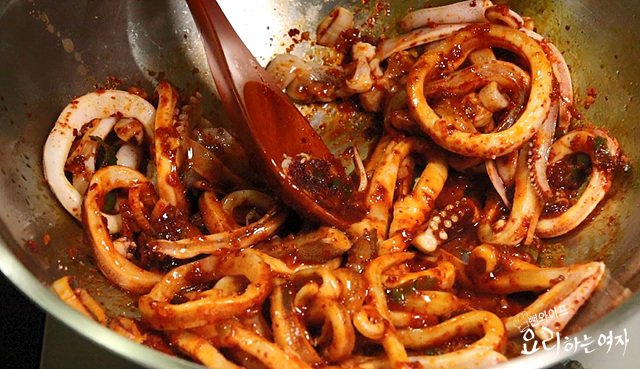
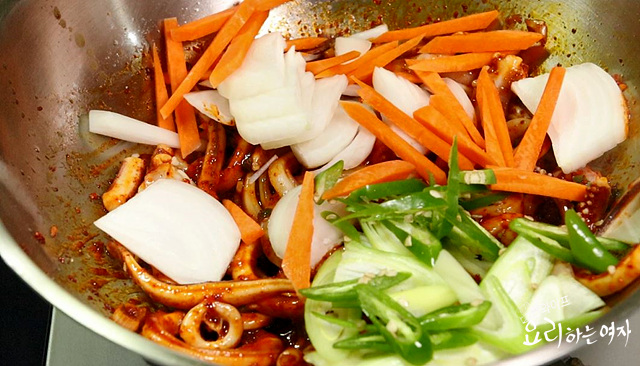
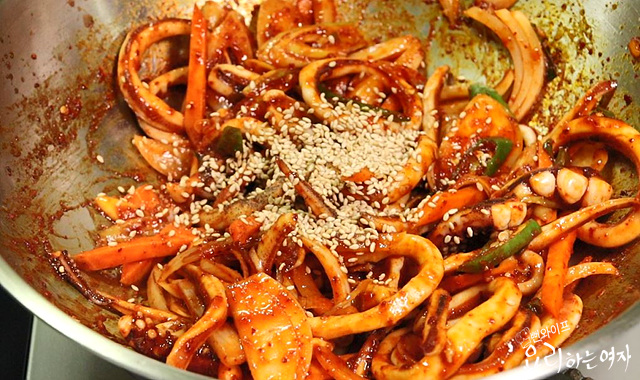
Add the squid and mix evenly.
For the seasonings, roughly mix in 2 tbsp regular soy sauce (jin-ganjang), 1 tbsp oyster sauce, 1 tbsp mirin (cooking rice wine), 1 tbsp corn syrup (mulyeot) (or rice syrup), and 1 tsp sugar,
then add all the vegetables and stir-fry quickly over medium-high to high heat.
Turn off the heat, add the toasted sesame oil, ground black pepper, and toasted sesame seeds, and mix to finish.
The reason lots of liquid forms after stir-frying is that it was cooked over low heat for too long.
Also, if you stir-fry over low heat for too long, the squid turns tough, and the vegetables wilt too much and lose their pleasant crunch.
 Ppunwife's tips
- The reason lots of liquid forms after stir-frying is that it was cooked over low heat for too long.
- If you stir-fry over low heat for too long, the squid turns tough, and the vegetables wilt too much and lose their pleasant crunch.
FAQ
Why does liquid form or the squid turn tough while stir-frying?
If you stir-fry over low heat for a long time, lots of moisture releases and the texture can become tough. It is best to stir-fry quickly over medium-high or high heat.
Can I substitute other vegetables?
Yes, you can substitute other vegetables such as cabbage, mushrooms, or zucchini instead of the ones prepared here.
Should I parboil the squid before stir-frying?
Stir-frying it directly without parboiling helps preserve the squid's natural juices and chewy texture.