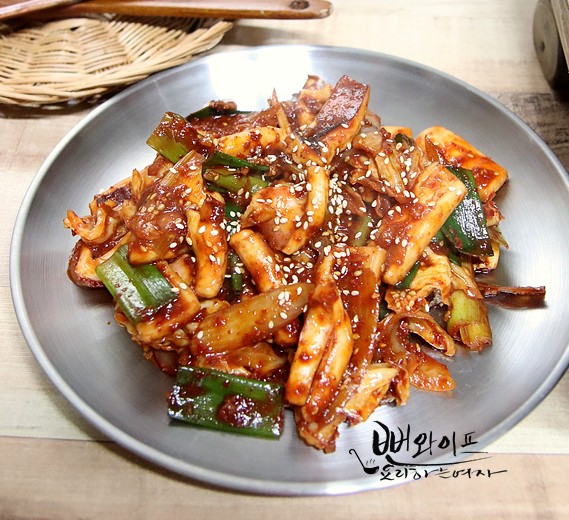
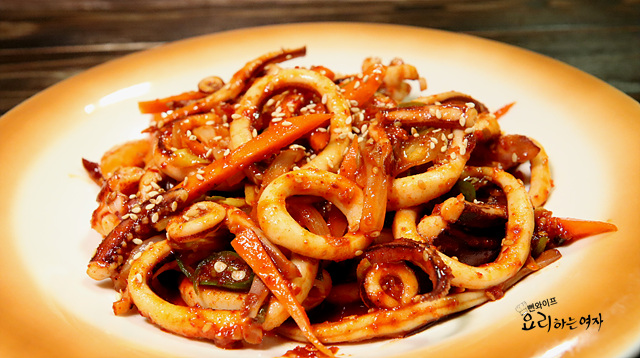
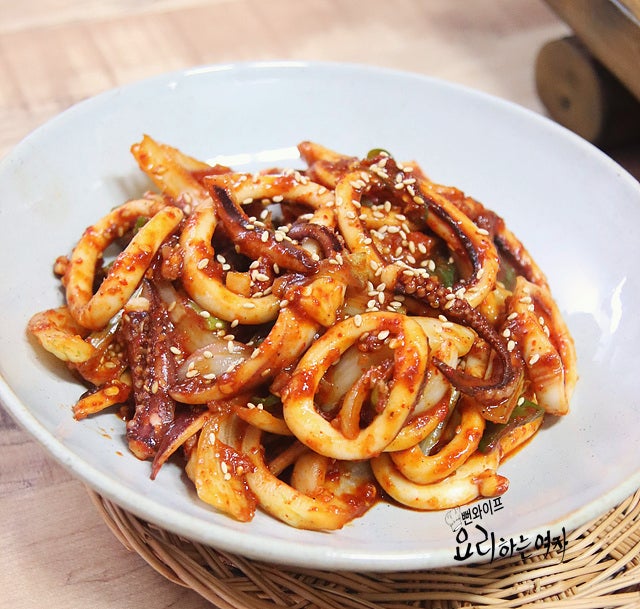
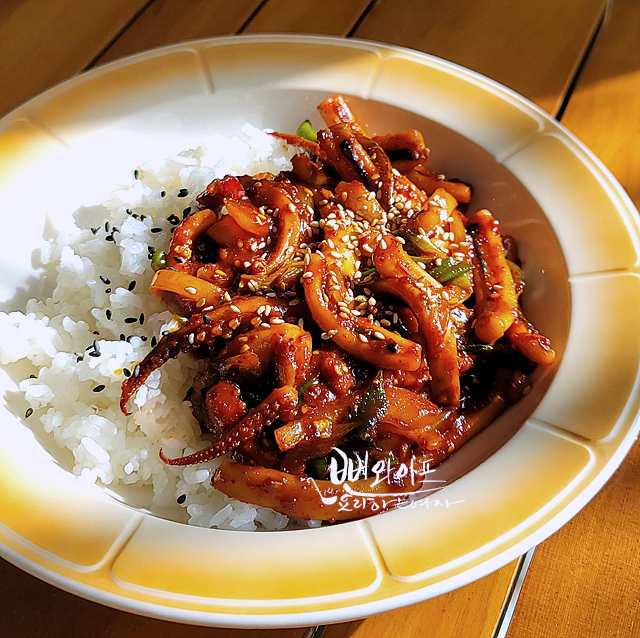
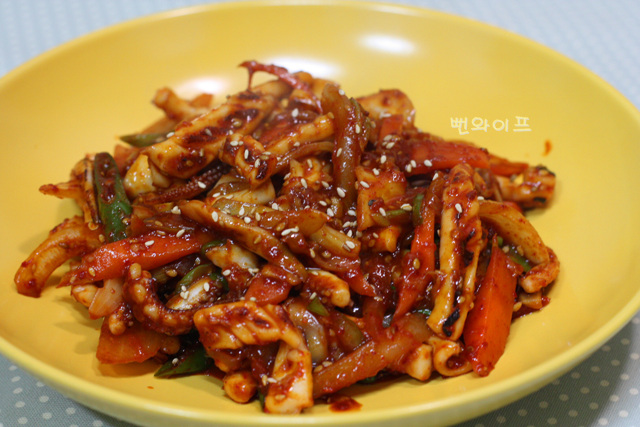
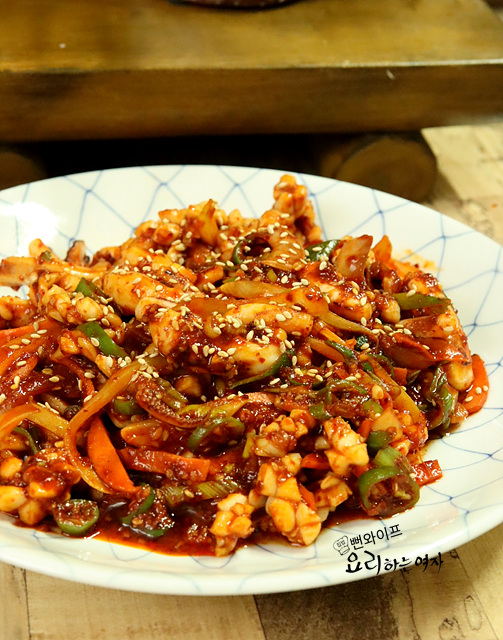
Smoky Spicy Ojingeo Bokkeum (Spicy Stir-Fried Squid)
A spicy stir-fried squid made by infusing chili oil and stir-frying quickly over high heat for a smoky, sauce-coated finish without excess moisture.
Translated from Korean by AI and not yet checked by a native speaker. Amounts and numbers are taken directly from the original recipe. Read the Korean original →
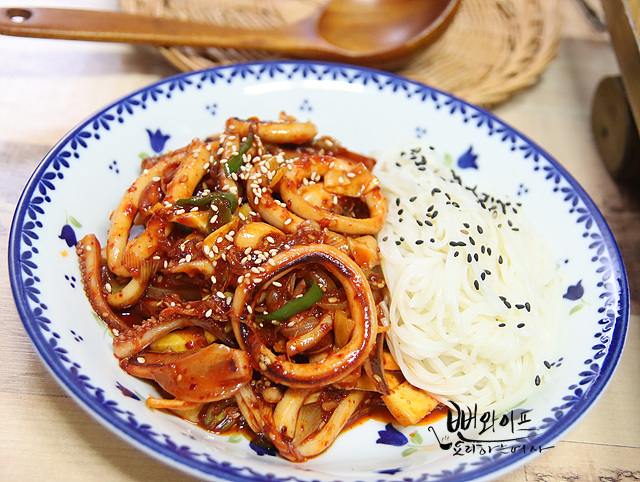
This spicy stir-fried squid starts with making chili oil first, giving it a rich color and deep flavor without any raw powdery taste. Cooking it quickly over high heat keeps too much moisture from pooling while delivering a bold kick. It makes a wonderful side dish for rice, or serve it alongside boiled thin wheat noodles for a hearty one-bowl meal.
- Servings
- 2–3 servings
- Difficulty
- Medium
- Spiciness
- Spicy
Ingredients
Ingredients
- Squid1 whole (large)
- Onion1/2 (medium)
- Cabbage4 leaves (1/4 clove)
- Large green onion (daepa)white part
- Cheongyang chili pepper (hot green chili)1
Seasoning
- Minced garlic1 tbsp
- Gochugaru (Korean chili flakes)2 tbsp
- Soy sauce (or brewed soy sauce (yangjo-ganjang))2 tbsp (jin-ganjang)
- Oyster sauce1 tbsp
- Corn syrup (mulyeot)1 tbsp
- Sugar1/2 tbsp
- Ground black peppera little
- Toasted sesame oil
- Toasted sesame seeds
- Instead of cutting the squid open, I kept the tube intact, removed the innards, and rinsed it clean.
- Cabbage, onion, large green onion, and Cheongyang chili peppers go great with stir-fried squid. Carrots are good too.
Steps
Prepare the ingredients
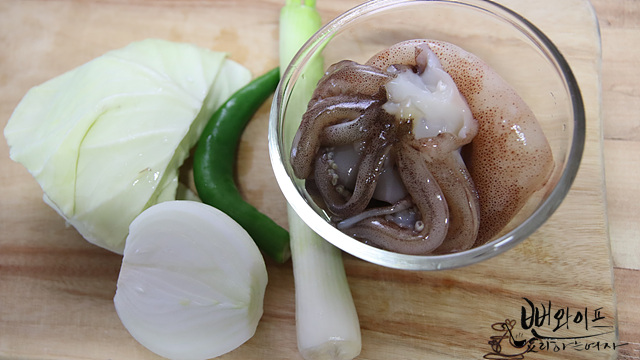
Instead of cutting the squid open, I kept the tube intact, removed the innards, and rinsed it clean.
Cabbage, onion, large green onion, and Cheongyang chili peppers go great with stir-fried squid.
Carrots are good too.
Cut the ingredients
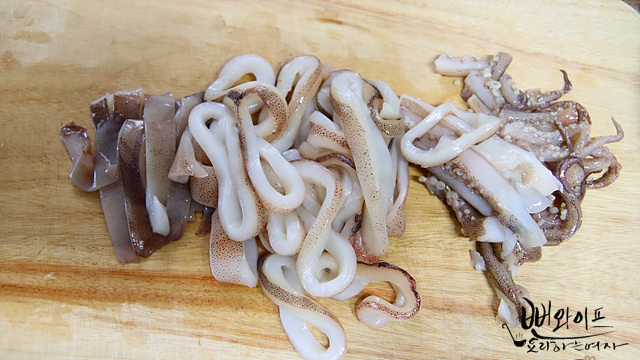
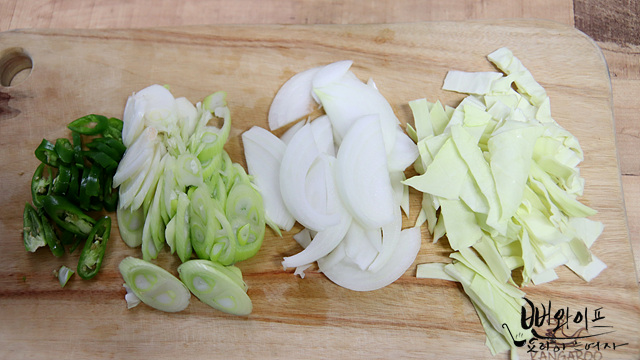
Cut the squid tube into thin rings, and slice the legs to a similar length.
Thickly slice the cabbage and onion, and thinly slice the large green onion and Cheongyang chili pepper diagonally.
Mix the sauce
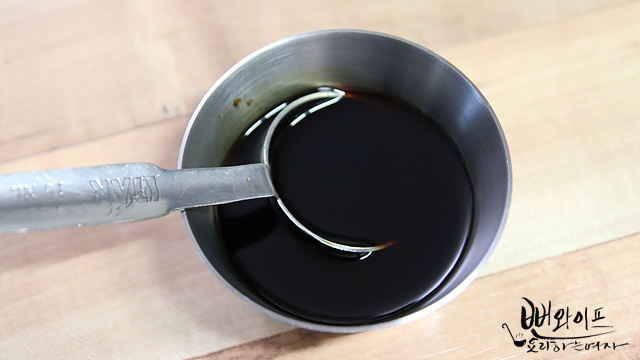
In a bowl, mix together the sauce ingredients: 2 tbsp regular soy sauce, 1 tbsp oyster sauce, 1 tbsp corn syrup, and 1/2 tbsp sugar.
Make garlic chili oil
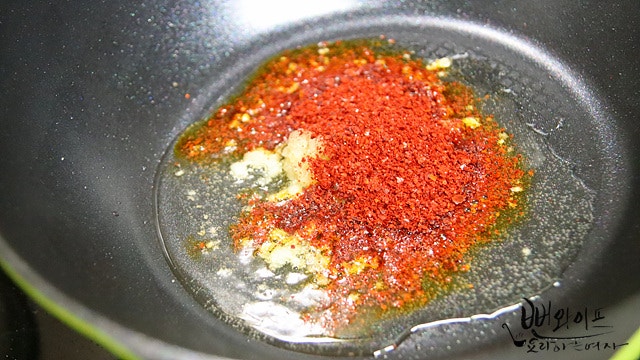
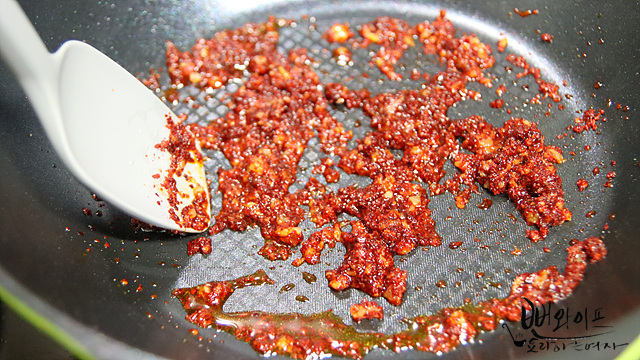
Heat a generous amount of cooking oil in a heated pan, add 1 tbsp minced garlic and 2 tbsp gochugaru, and stir-fry gently so it does not burn.
Stir-fry with ingredients
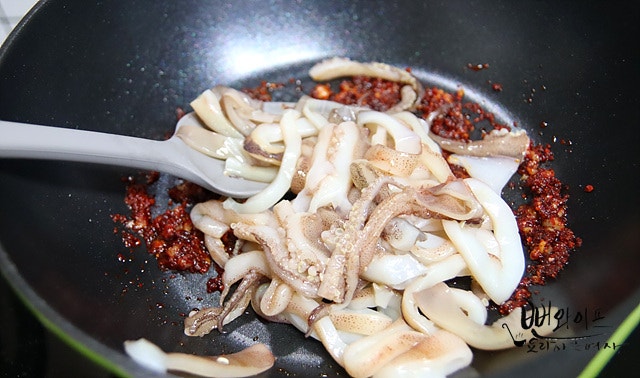
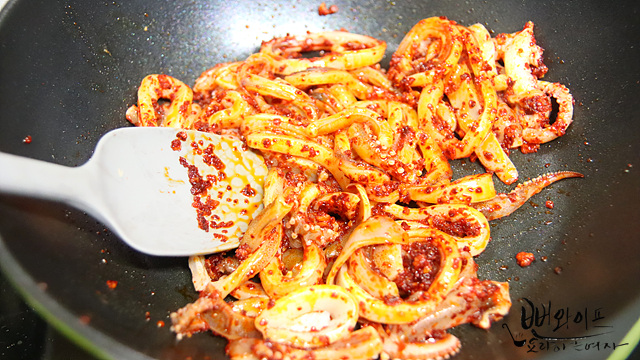
Add the squid and stir-fry so it gets evenly coated in the chili oil and turns plump and firm.
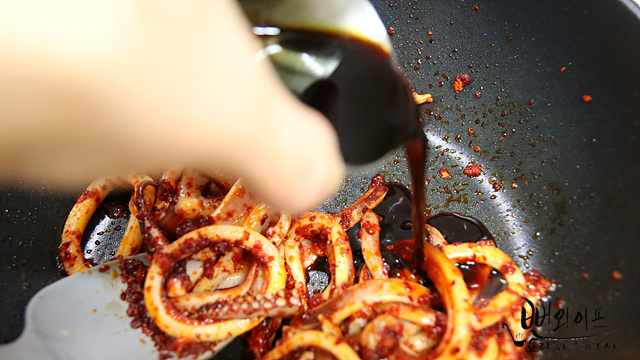
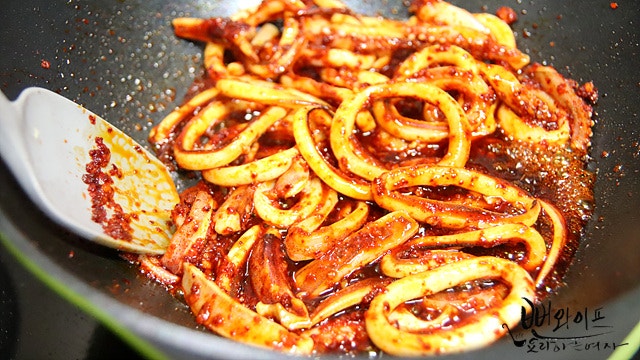
Pour in the sauce, let it simmer and bubble, then coat the squid with it...
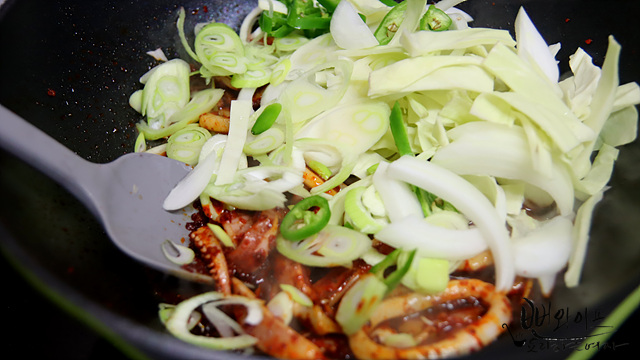
Add all the sliced vegetables and stir-fry quickly over high heat.
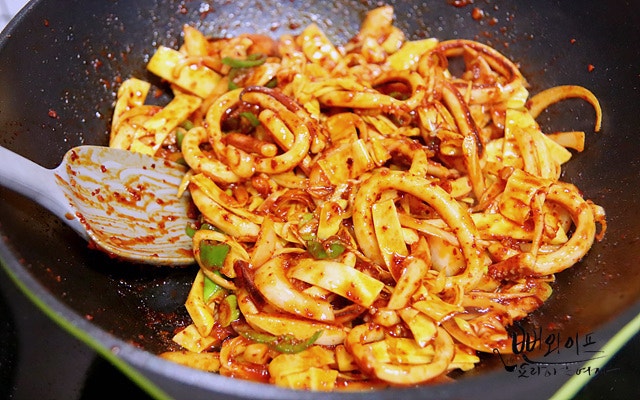
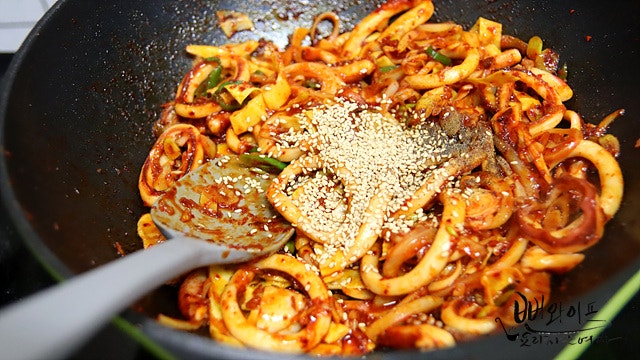
Over high heat, as the sauce and the moisture from the vegetables reduce and the sauce lightly scorches, scrape the bottom of the pan to coat the ingredients.
Taste it, and if you plan to serve it mixed with noodles, adjust the seasoning with salt so it is not bland.
Once the vegetables have softened slightly, finish by adding ground black pepper, toasted sesame oil, and toasted sesame seeds.
Finish
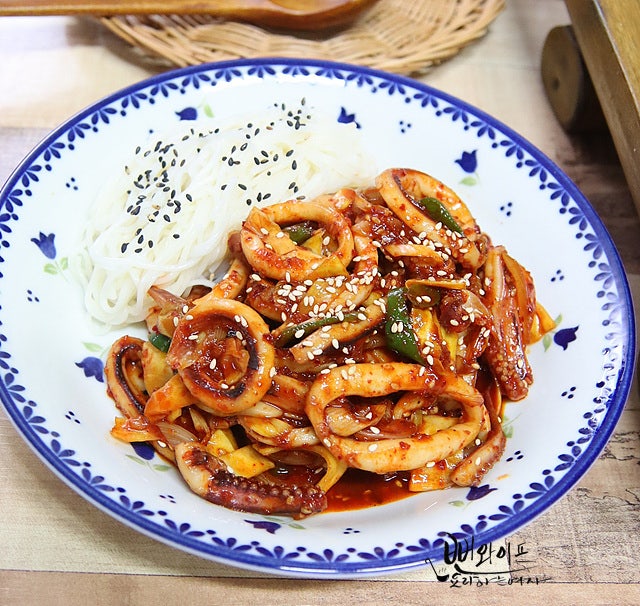
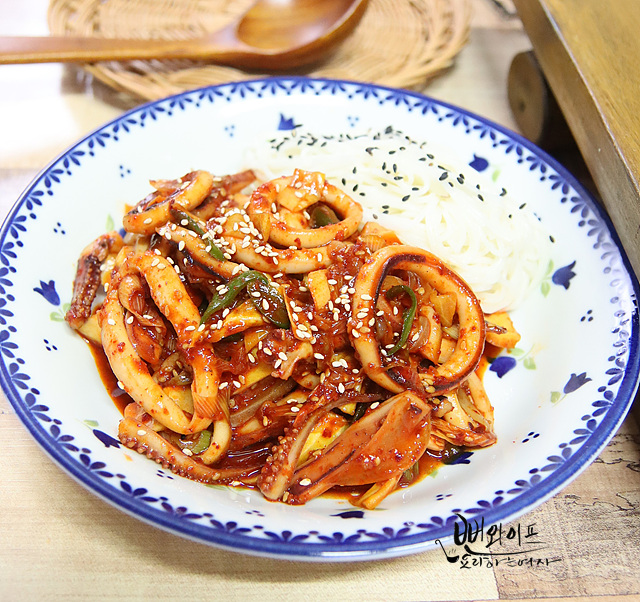
Making chili oil first removes the raw taste of gochugaru and gives the dish a much prettier, richer color.
When adding the sauce and stir-frying the vegetables, you must stir-fry quickly over high heat to keep too much liquid from forming and to get that smoky stir-fried squid flavor.
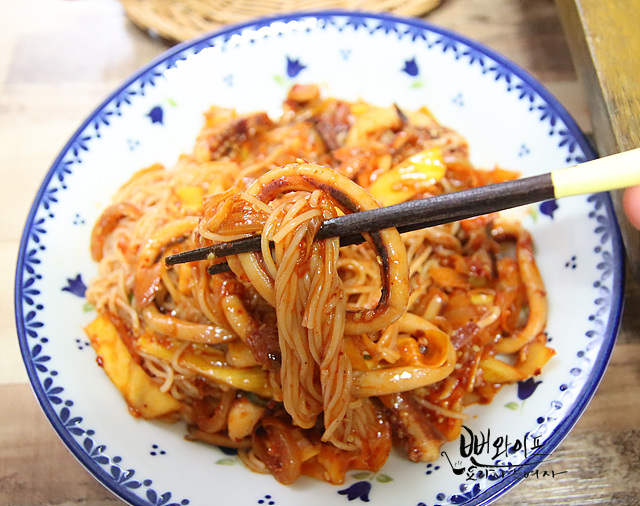
Instead of rice, serve it with thin wheat noodles and toss them together for a satisfying complete meal without extra side dishes.
A refreshing cold soup or egg soup is also great with it.
Stir-frying briefly keeps the cabbage crisp, making it much more delicious.
 Ppunwife's tips
- Making chili oil first removes the raw taste of gochugaru and gives the dish a much prettier, richer color.
- When adding the sauce and stir-frying the vegetables, you must stir-fry quickly over high heat to keep too much liquid from forming and to get that smoky stir-fried squid flavor.
- Stir-frying briefly keeps the cabbage crisp, making it much more delicious.
FAQ
How do I prevent too much liquid from pooling while stir-frying?
After adding the sauce and vegetables, you must stir-fry quickly over high heat to keep excess moisture from forming and preserve the smoky flavor.
How should I adjust the seasoning when serving it tossed with thin wheat noodles?
Tossing in noodles can dilute the flavor, so taste it and add a little salt as needed.
What are the benefits of making chili oil first?
It removes the raw smell and taste of gochugaru while giving the stir-fry a much brighter, richer color.
Can I add other seafood besides squid? AI-generated
Yes, you can easily stir-fry it with seafood like shrimp or small octopus to turn it into an assorted seafood stir-fry.