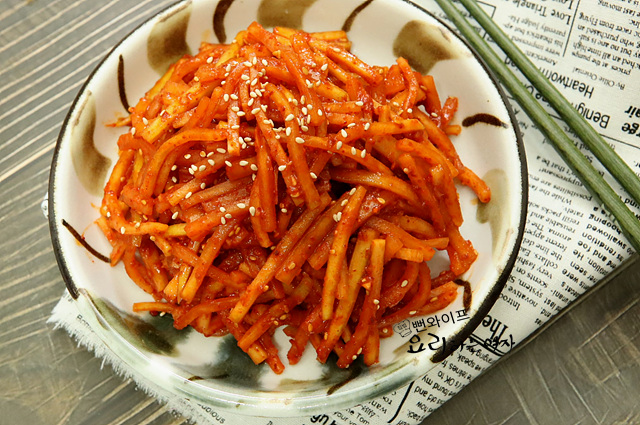
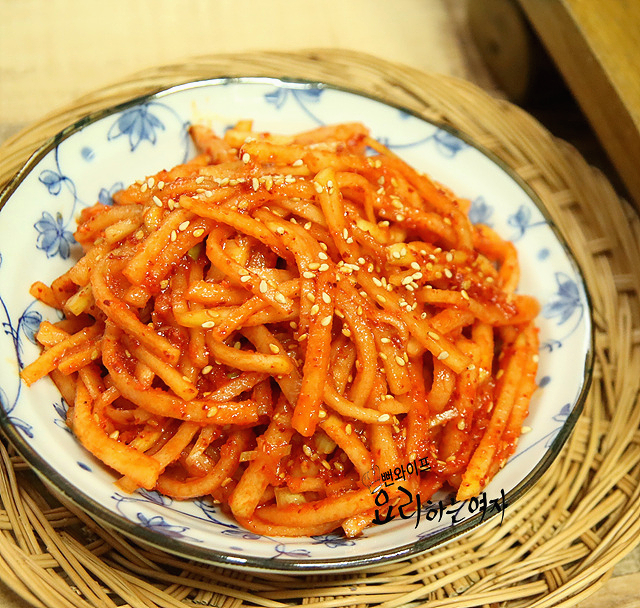
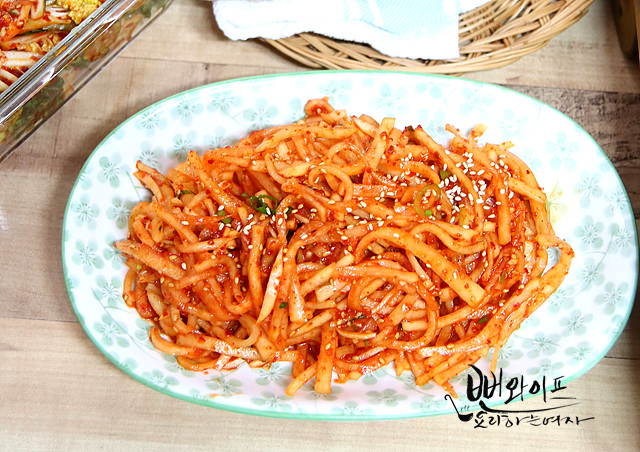
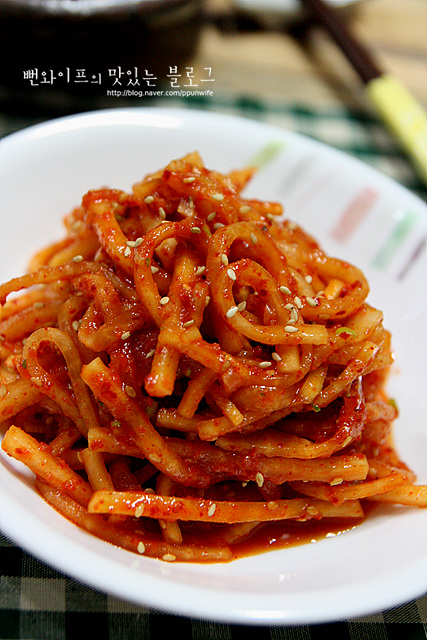
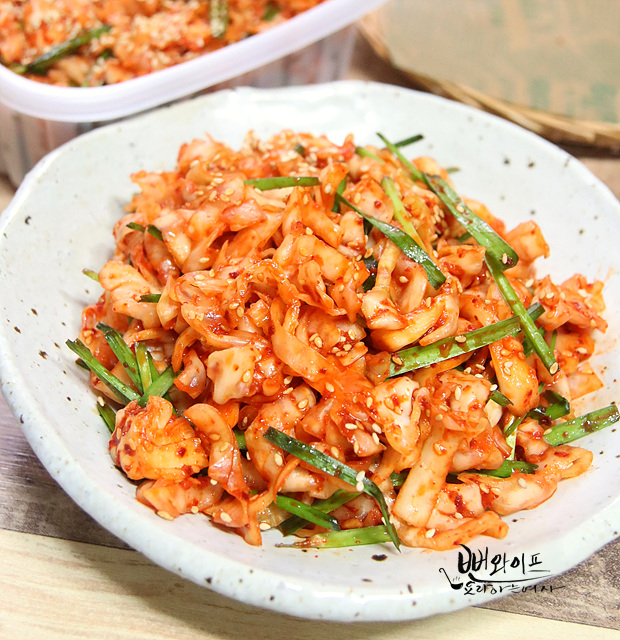
Crispy, Sweet Kohlrabi Saengchae (Julienned Kohlrabi Salad)
A clean, crisp side dish of salted kohlrabi tossed in a spicy, sweet-and-sour dressing without turning watery.
Translated from Korean by AI and not yet checked by a native speaker. Amounts and numbers are taken directly from the original recipe. Read the Korean original →
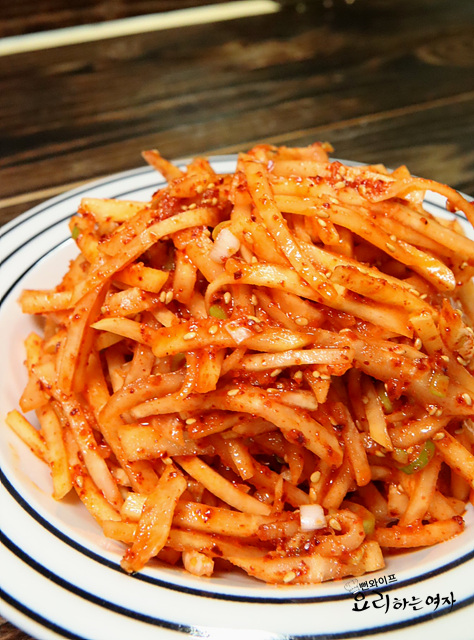
This saengchae features sweet, exceptionally crunchy kohlrabi, julienned and salted for 20 minutes before tossing with seasonings. Coat the strips with gochugaru first for color, then season with fish sauce and vinegar for a bright sweet-and-sour taste. Because kohlrabi releases less water than regular radish, the dressing stays clinging neatly to the strips over time.
- Servings
- about 3–4 servings
- Cook time
- 20 minprep not included
- Difficulty
- Easy
- Spiciness
- Mildly spicy
Ingredients
Ingredients
- Kohlrabi1, 500 g
- Coarse sea salt1 tbsp
Seasoning
- Gochugaru (Korean chili flakes)2 tbsp
- Sand lance fish sauce2 tbsp
- Minced garlic1 tbsp
- Minced green onion2 tbsp
- Vinegar2 tbsp
- Sugar1/2 tbsp
- Toasted sesame seeds1 tbsp
- Toasted sesame oil1/2 tbsp
- Cut away any tough core in the center. Kohlrabi skin tends to be thick, so I peeled it completely with a peeler, but if the skin is tender you do not have to peel it.
Steps
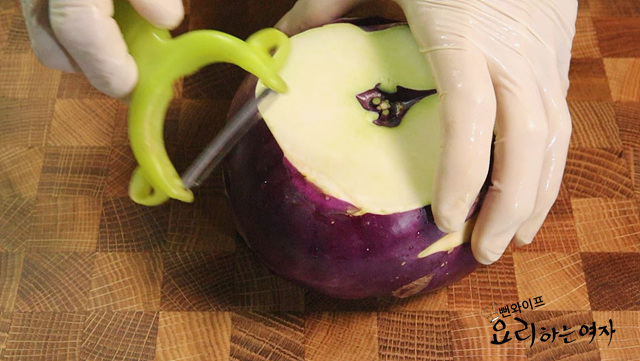
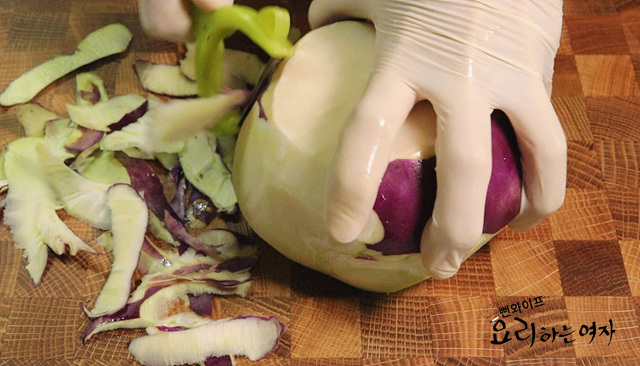
Kohlrabi is a vegetable bred from cabbage that is very rich in vitamins.
It has a distinctive sweetness and crunch that makes it delicious even eaten plain.
Cut away any tough core in the center. Kohlrabi skin is thick, so I peeled it completely with a vegetable peeler,
but if the skin is tender you do not have to peel it.
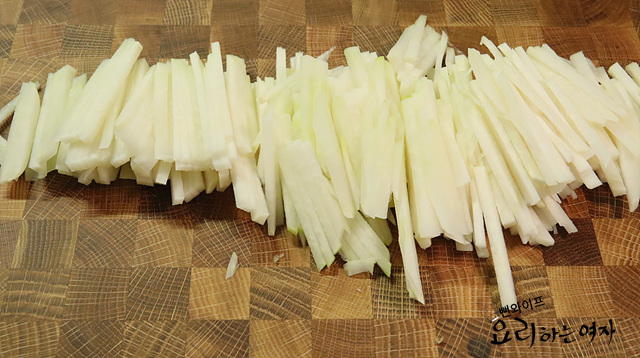
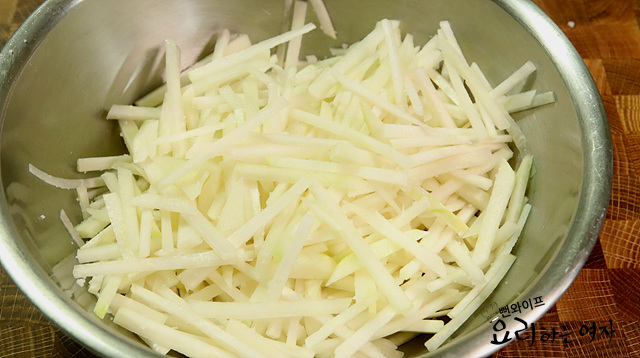
The texture is very dense and firm, so julienne it carefully.
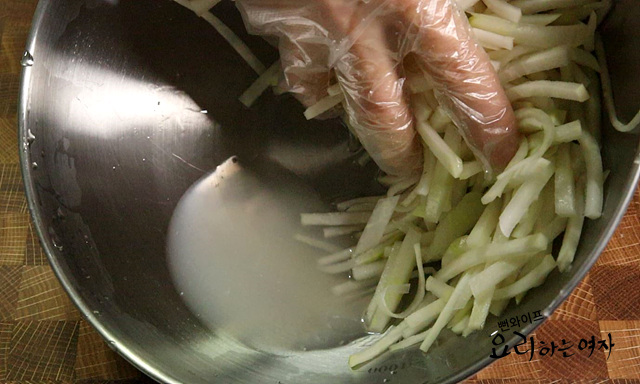
Cut it into matchsticks that are not too thin. Since the pieces are stiff, toss them with salt to pickle them; after about 20 minutes,
they will soften and release liquid like this.
It does not release nearly as much water as regular radish.
Pour off the liquid...
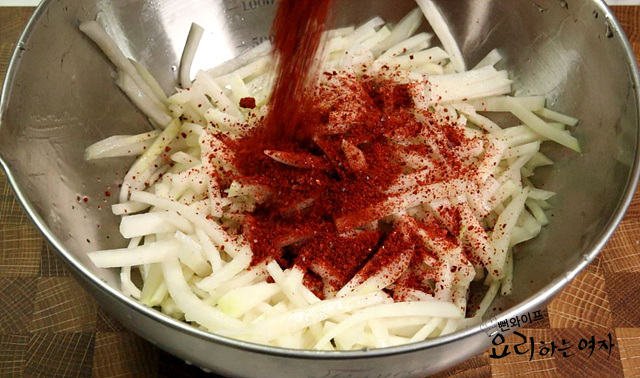
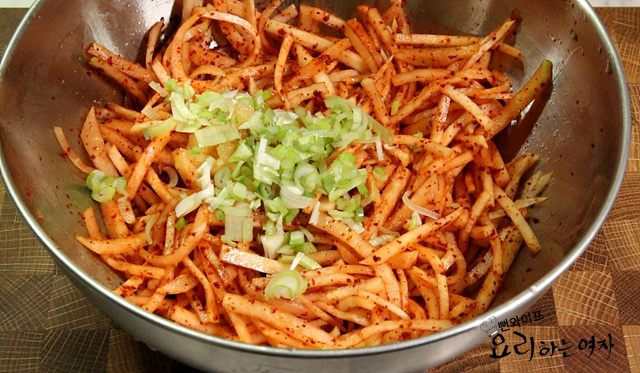
Add the gochugaru first and toss to coat it with color.
Add 2 tbsp sand lance fish sauce, 1 tbsp minced garlic, 2 tbsp minced green onion, 2 tbsp vinegar, and 1/2 tbsp sugar.
Toss gently by hand, then taste; if it needs more saltiness, you can add a little more fish sauce or salt.
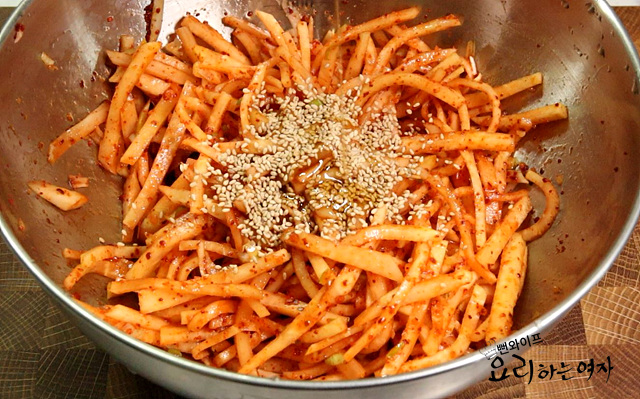
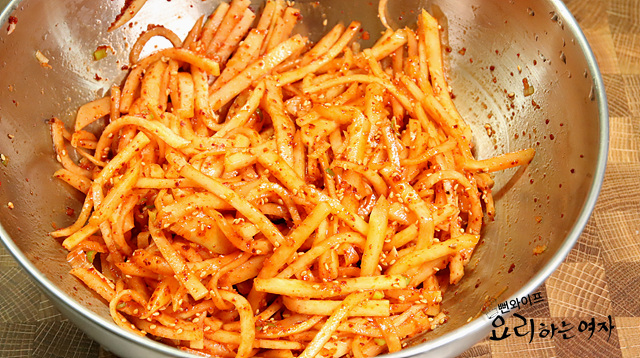
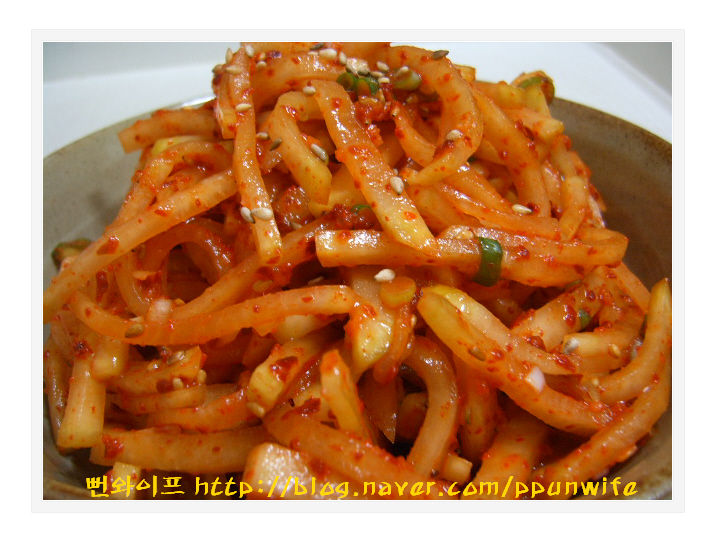
Finish by adding the toasted sesame oil and toasted sesame seeds, toss gently, and it is done.
 Ppunwife's tips
- Even after it is dressed, hardly any liquid comes out, so the seasoning stays clinging neatly to the strips and keeps the dish tasting clean and crisp.
FAQ
Do I have to peel the kohlrabi?
The skin tends to be thick, so it is best to peel it with a vegetable peeler, but if the skin is tender and soft, you can use it without peeling.
How long should the julienned kohlrabi be salted?
Sprinkle with coarse sea salt and let it sit for about 20 minutes; it will soften and release liquid. Simply drain off that released moisture before seasoning.
Why is the gochugaru added first?
Tossing the kohlrabi with gochugaru before adding liquid seasonings dyes the vegetable strips a vibrant, even red color.
What should I add if the dish tastes too mild after tossing?
You can add a little more fish sauce or salt to adjust the seasoning to your taste.