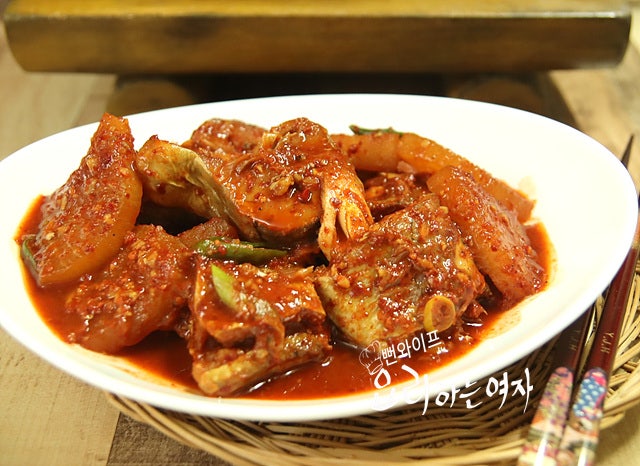
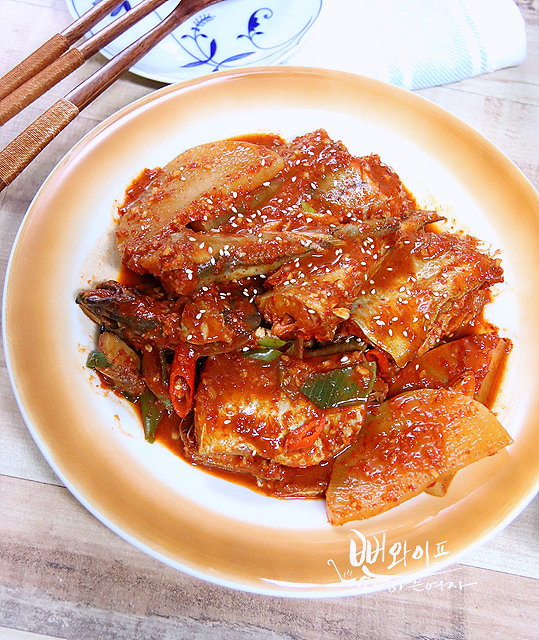
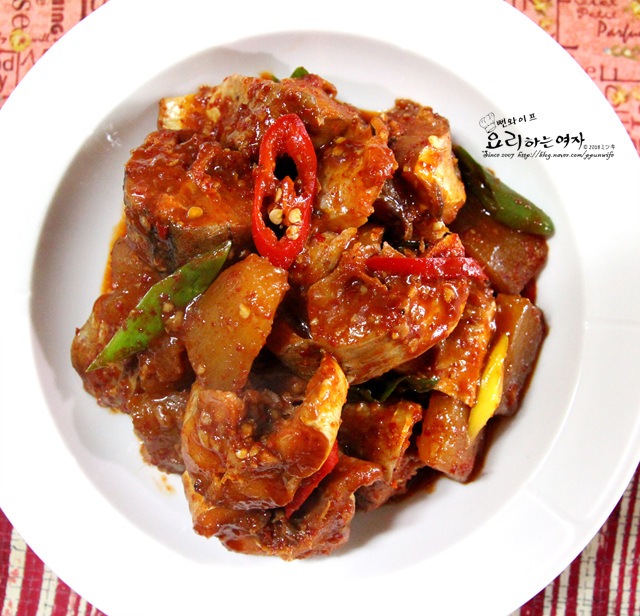
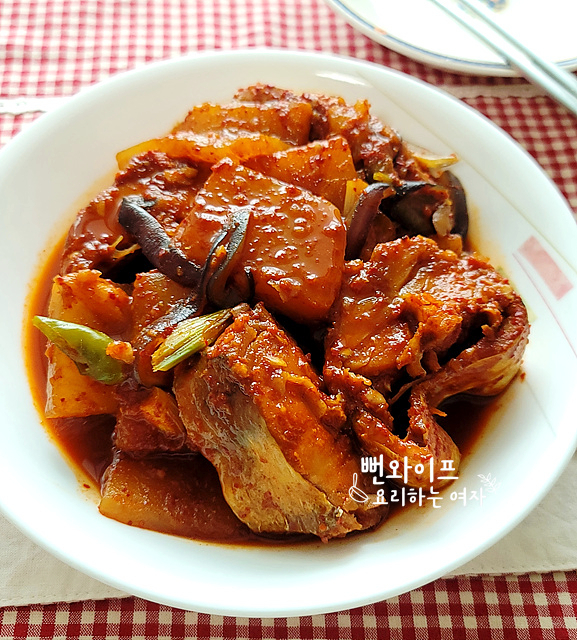
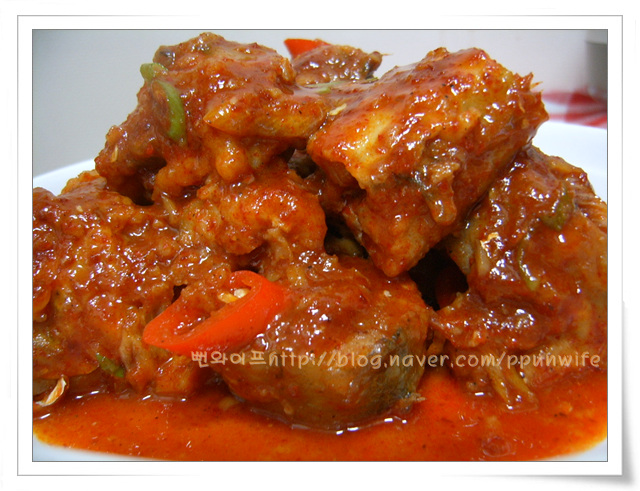
Spicy Kodari Jorim (Braised Semi-Dried Pollock) with Siraegi
A special main dish featuring semi-dried pollock gently braised in seasoning over a bed of tender dried radish greens and Korean radish.
Translated from Korean by AI and not yet checked by a native speaker. Amounts and numbers are taken directly from the original recipe. Read the Korean original →
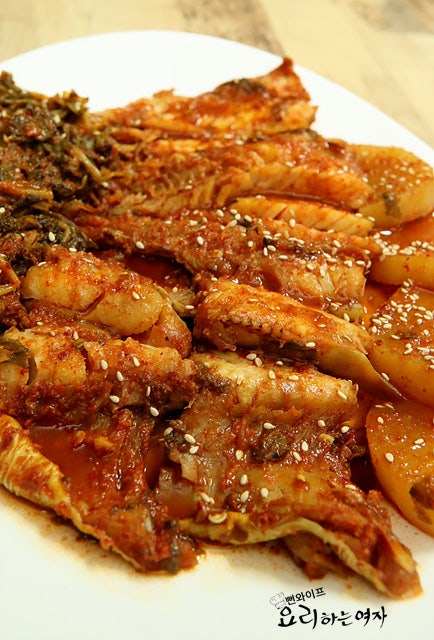
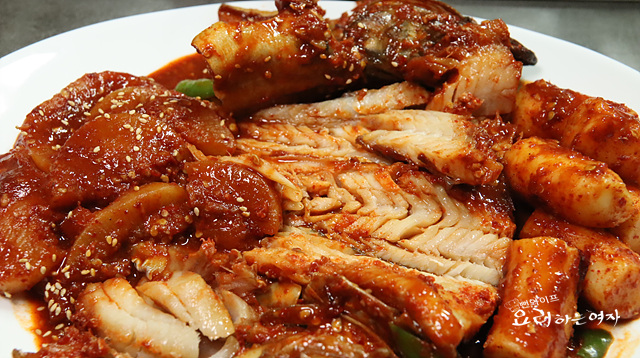
This kodari jorim features semi-dried pollock gently braised over a generous layer of dried radish greens and Korean radish with a spicy seasoning sauce. Pouring in kelp broth and drizzling perilla oil brings out deep savory flavor, while spooning the simmering sauce over the fish keeps the flesh plump and tender. It is a hearty spread that works wonderfully as an accompaniment for drinks or as a main meal for guests.
- Servings
- 2–3 servings
- Difficulty
- Medium
- Spiciness
- Spicy
Ingredients
Ingredients
- Semi-dried pollack (kodari)2 whole, 600 g
- Dried radish greens (siraegi)350 g
- Korean radish (mu)200 g
- Large green onion (daepa)1/2 stalk
- Cheongyang chili pepper (hot green chili)2
- Perilla oil2 tbsp
- Dried kelp (dasima)2 sheets (5 cm square each)
- Water5 cups
Seasoning
- Regular soy sauce (jin-ganjang) (or brewed soy sauce (yangjo-ganjang))5 tbsp
- Gochugaru (Korean chili flakes)5 tbsp
- Corn syrup (mulyeot)3 tbsp
- Gochujang (Korean red chili paste)2 tbsp
- Mirin (cooking rice wine)3 tbsp
- Minced garlic2 tbsp
- Minced ginger1/2 tbsp
- Ground black peppera little
- Trim all the fins (back, belly, tail, etc.) of the semi-dried pollock with kitchen shears, scrape off scales using the tip of a knife, scrape away black coagulated blood along the spine inside the belly cavity, and rinse under running water.
- Peeling the outer skin from the stems of the dried radish greens makes them much more tender to eat.
- You can also add plenty of rice cakes or other favorite vegetables, such as soybean sprouts.
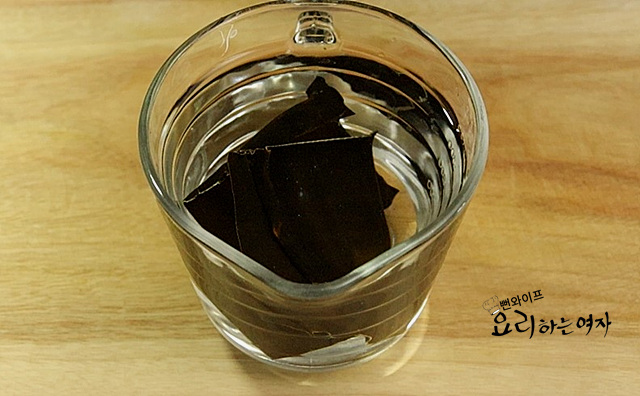
- Steep the dried kelp in cold water for at least 30 minutes to make the broth.
Steps
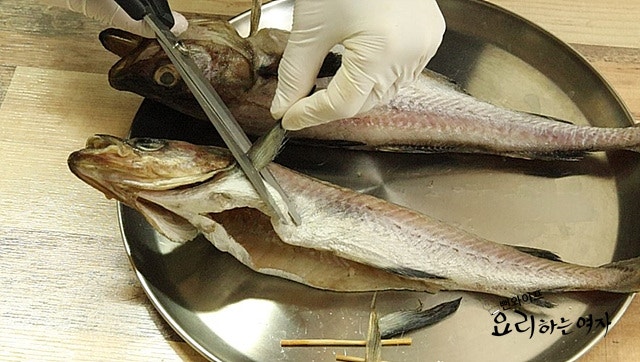
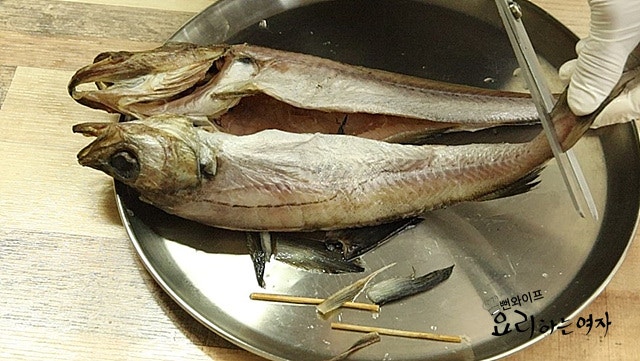
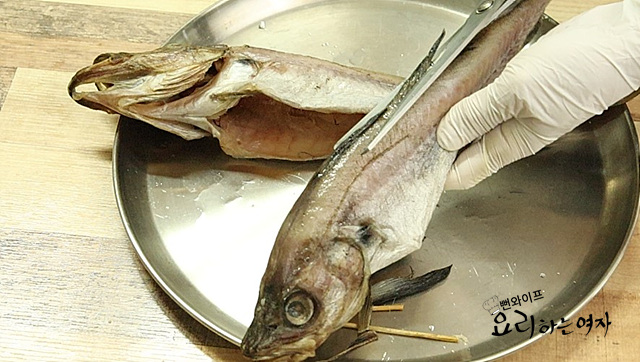
To prepare the semi-dried pollock, first trim off all the fins with kitchen shears.
Neatly cut away the fins on the back, belly, tail, and other parts.
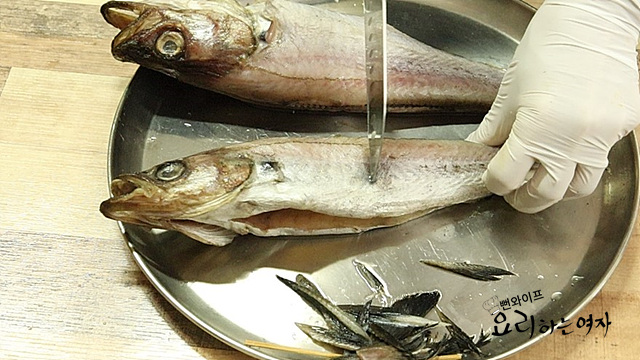
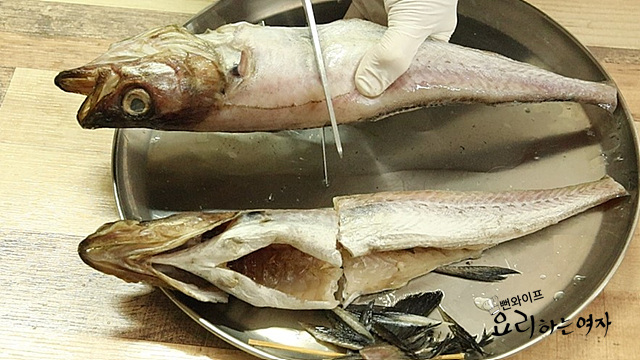
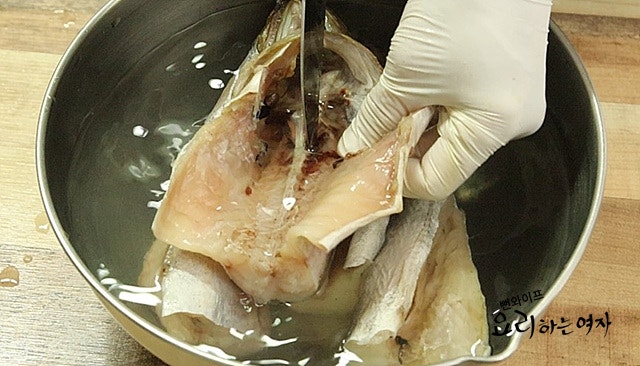
Although the semi-dried pollock is cleaned in the 1st stage, scales may still remain. Quite a few will come off if you scrape with the tip of a knife.
Cut it into bite-sized pieces; you can chop it into smaller chunks, or like me, divide it into two large pieces including the head.
Adding the pollock head makes the broth flavor much richer.
When you open the belly, there is a lot of black coagulated blood clinging to the spine. Scrape it away with the tip of a knife and wash it under running water to prevent any fishy odor.
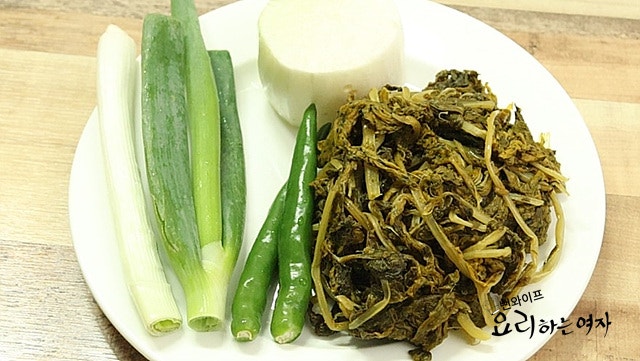
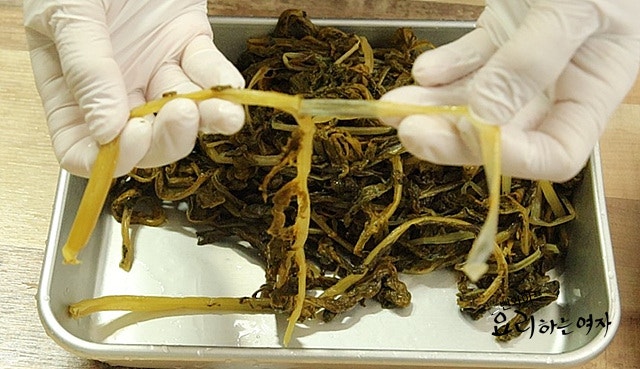
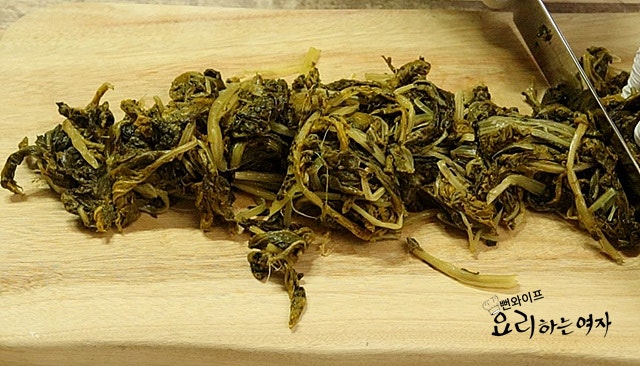
These are the secondary ingredients for the kodari jorim, and today I also prepared dried radish greens.
I have dried radish greens, Korean radish, large green onion, and Cheongyang chili peppers ready, but rice cakes or soybean sprouts are also great additions.
Peeling the skin off the stems of the dried radish greens makes them much more tender to eat, so prepare them this way if the greens are thick or tough. Cut them into bite-sized lengths.
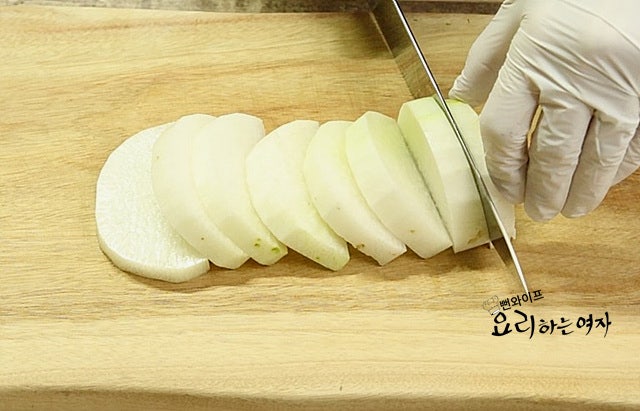
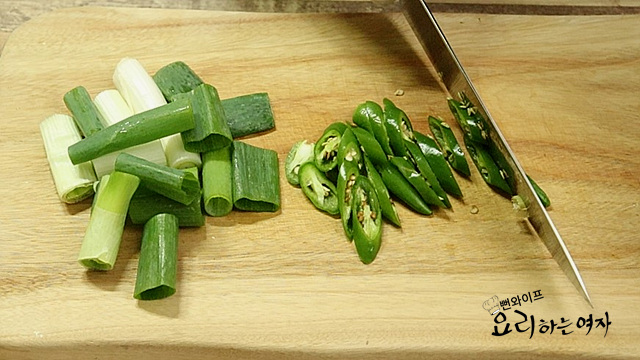
Slice the Korean radish slightly thick, and cut the large green onion and Cheongyang chili peppers into large pieces.
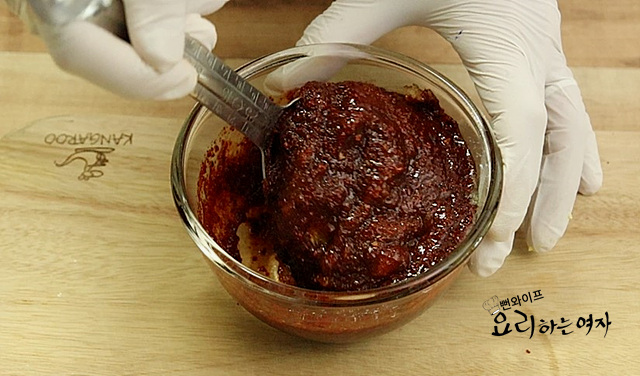
Seasoning for kodari jorim that includes dried radish greens requires more gochugaru than when using radish alone, because the greens soak it up like a sponge.
Mix all the seasoning ingredients together and let sit so the gochugaru can bloom, and steep the dried kelp in cold water for at least 30 minutes to use as broth.
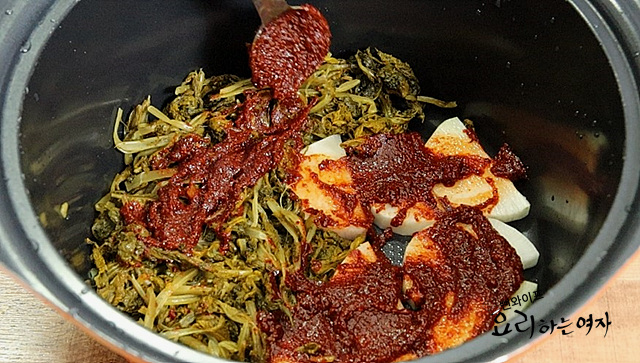
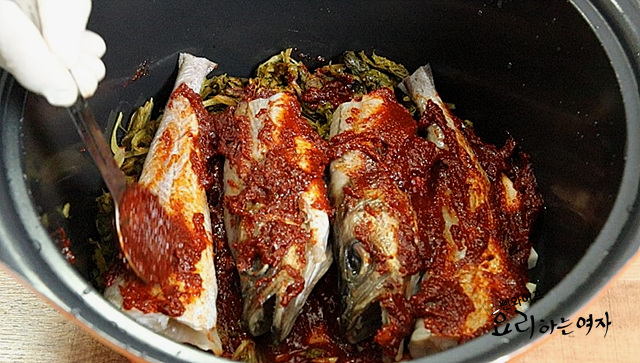
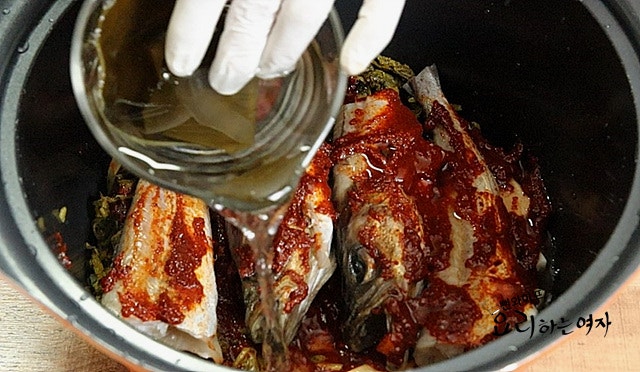
Spread the Korean radish and dried radish greens across the bottom of a wide, heavy pan, spread half of the seasoning evenly over them, arrange the pollock neatly on top, and spread all the remaining seasoning over it.
Pour in all of the kelp broth as well.
The broth should reach the level of the pollock so that it cooks evenly, so add more broth if it seems insufficient.
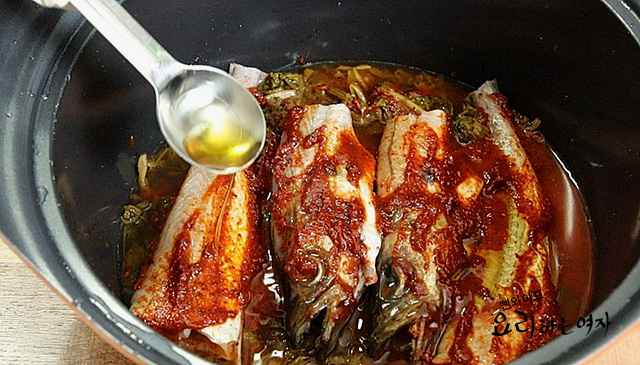
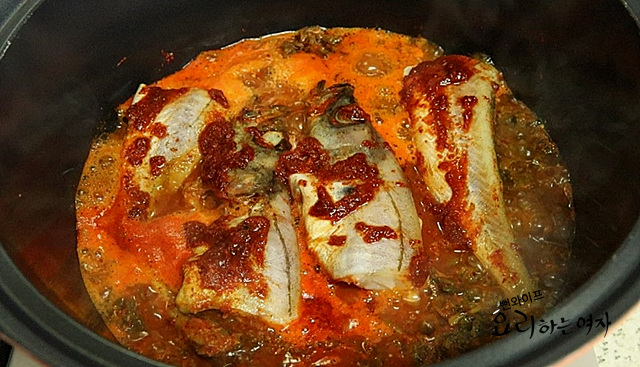
Finally, drizzle the perilla oil evenly all over, and once it comes to a boil over high heat, reduce the heat and simmer gently.
Spooning the boiling broth over the pollock from time to time cooks the surface of the flesh and keeps it plump.
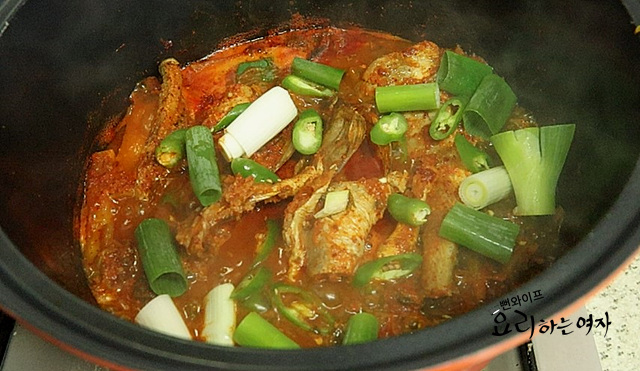
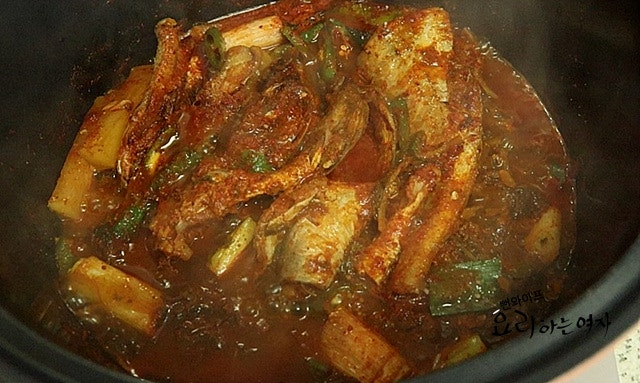
Once the liquid has reduced by about half, turn the pollock over once, add the large green onion and Cheongyang chili peppers, and braise until only a shallow layer of broth remains to finish. Taste the broth, and if it is bland, you may add a little soy sauce or salt.
 Ppunwife's tips
- Adding the pollock head makes the broth flavor much richer.
- Scraping away the black coagulated blood clinging to the spine inside the belly with the tip of a knife and washing it under running water prevents any fishy odor.
- Because dried radish greens absorb sauce, seasoning for kodari jorim that uses them requires more gochugaru than when using radish alone.
- The broth should reach the level of the pollock so it cooks evenly, so pour in more if it is not enough.
- Spooning the boiling broth over the pollock from time to time cooks the surface of the flesh and makes it plump.
FAQ
How should I clean the semi-dried pollock to eliminate any fishy smell?
Trim the fins with kitchen shears, scrape off scales from the skin with the tip of a knife, and thoroughly scrape away the coagulated black blood along the spine inside the belly cavity before rinsing clean under running water to prevent off-odors.
Is there a way to make tough dried radish greens tender?
Peeling off the thin outer skin from the stems of the dried radish greens before cutting them into bite-sized pieces will yield a much softer texture.
Should I braise the pollock head along with the fish?
Adding the pollock head to the braise makes the broth much richer and enhances its savory depth, so cutting it into chunks and simmering it together is recommended.
Can I add ingredients other than dried radish greens and Korean radish?
You can generously add rice cakes, soybean sprouts, or other vegetables you enjoy along with the seasoning according to your preference.