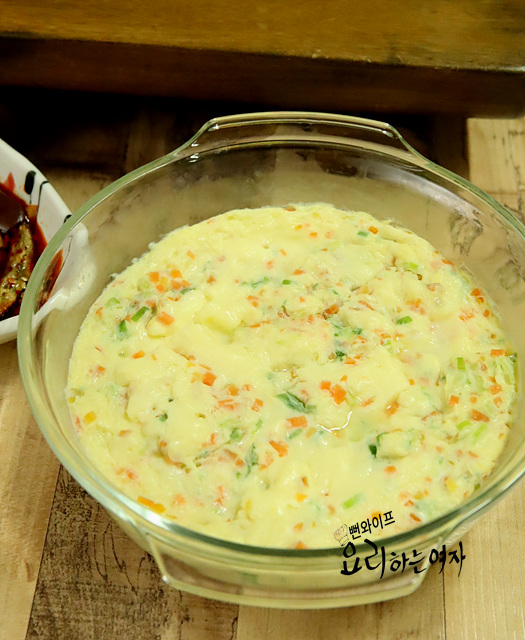
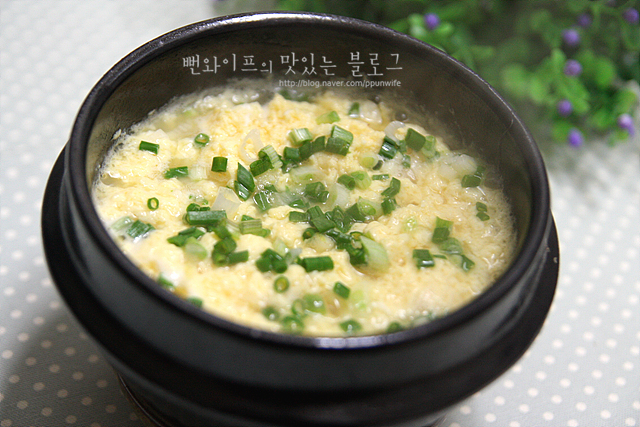
Fluffy Gyeran Jjim (Steamed Eggs) in an Earthenware Pot
A hot steamed egg dish made by boiling broth in an earthenware pot, pouring in beaten eggs, and letting them puff up.
Translated from Korean by AI and not yet checked by a native speaker. Amounts and numbers are taken directly from the original recipe. Read the Korean original →
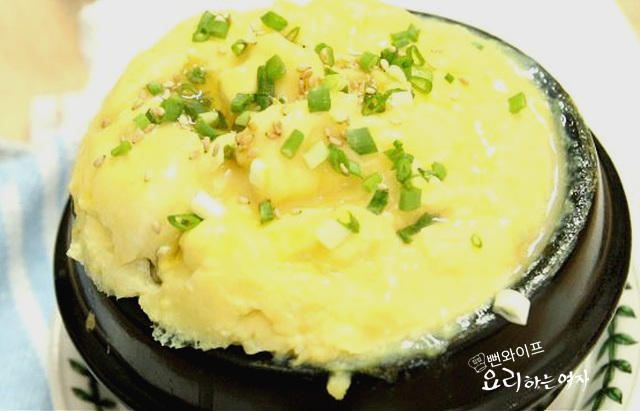
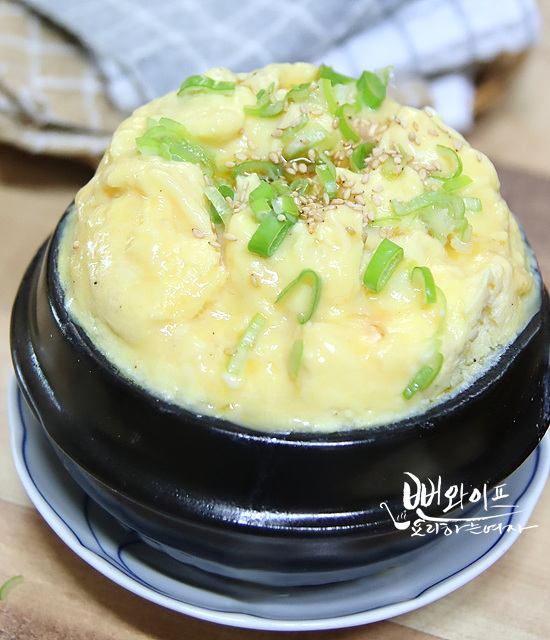
This is a 2-serving gyeran jjim made easily with simple, accessible ingredients starring eggs. Bring broth to a boil in an earthenware pot first, pour in the egg mixture, scrape the bottom, and cover with a bowl to let it steam and puff up beautifully. It retains heat for a long time, making it great to serve as a side dish with rice on cold days.
- Servings
- 2 servings
- Difficulty
- Easy
- Spiciness
- Not spicy
Ingredients
- Egg5, 250 g (ml)
- Anchovy broth (or water)150 g (ml)
- Salted fermented shrimp (saeujeot)1 tbsp (liquid only)
- Salt1/4 tsp
- Mirin (cooking rice wine)1 tbsp
- Scallions (jjokpa)a little
- Toasted sesame seedsa little
- Toasted sesame oila little
- You can use finely sliced large green onion (daepa) instead of scallions.
- If you want to use only salt instead of salted fermented shrimp (saeujeot), you can substitute 1 tsp of salt or 1 tbsp of tuna extract sauce (chamchi-aek).
- A ratio of egg to water (or broth) between 3:1 and 2:1 is ideal; adding more water gives a soft, curd-like texture like soft tofu (sundubu), while a higher egg ratio yields a bouncy, firmer texture.
Steps
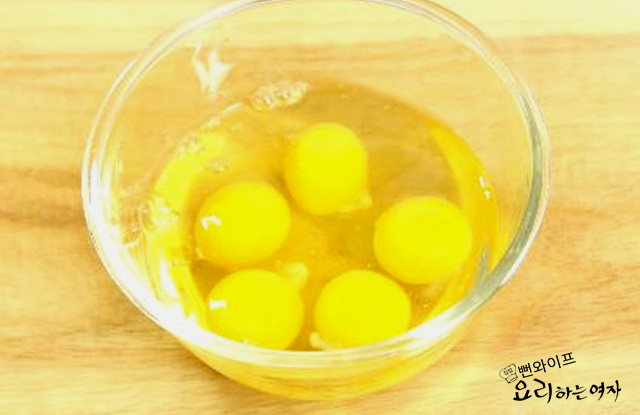
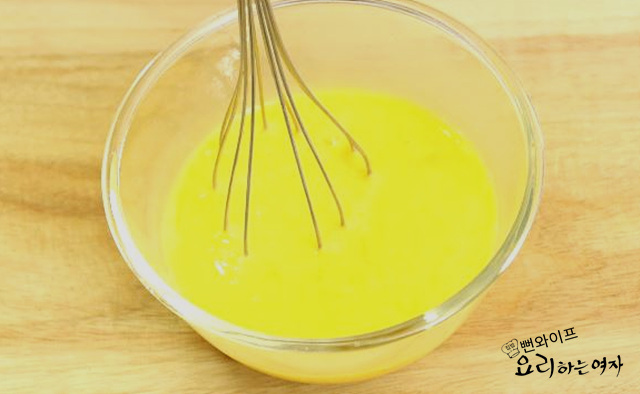
Beat 5 eggs well until the whites and yolks are blended and the chalazae are no longer visible, then season with 1 tbsp of salted fermented shrimp (saeujeot) liquid, 1 tbsp of mirin (cooking rice wine), and 1/4 tsp of salt.
If you want to use only salt instead of salted fermented shrimp, you can substitute 1 tsp of salt or 1 tbsp of tuna extract sauce (chamchi-aek).
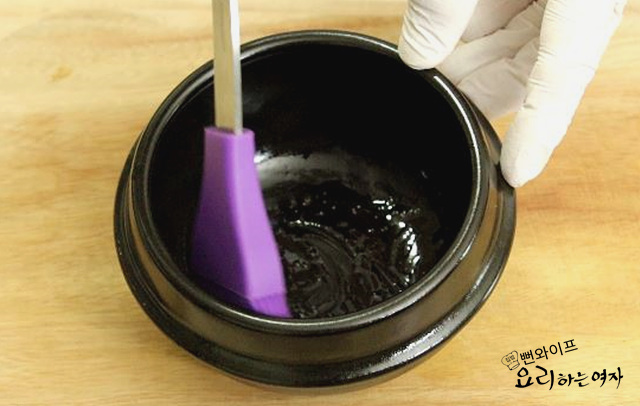
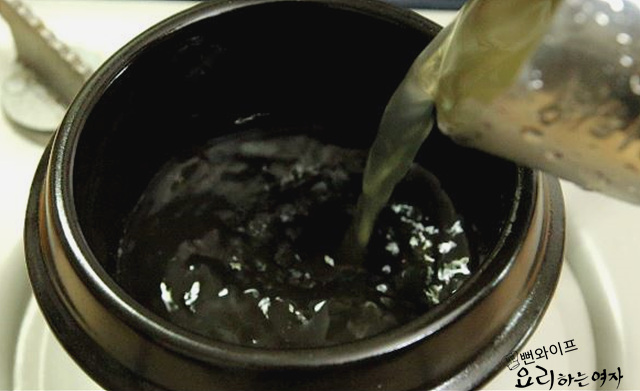
The earthenware pot I used is sized for 2 servings, holding about 2 cups (400 ml) of water just right.
Adding 5 eggs (250 ml) and 150 ml of broth fills it to the ideal height to create a puffed-up "volcano" steamed egg.
A ratio of egg to water (or broth) between 3:1 and 2:1 is ideal; adding more water gives a soft, curd-like texture like soft tofu (sundubu), while a higher egg ratio yields a bouncy, firmer texture.
Greasing the earthenware pot thoroughly with toasted sesame oil prevents the eggs from sticking too much, making cleanup much easier.
Pour in the broth or water.
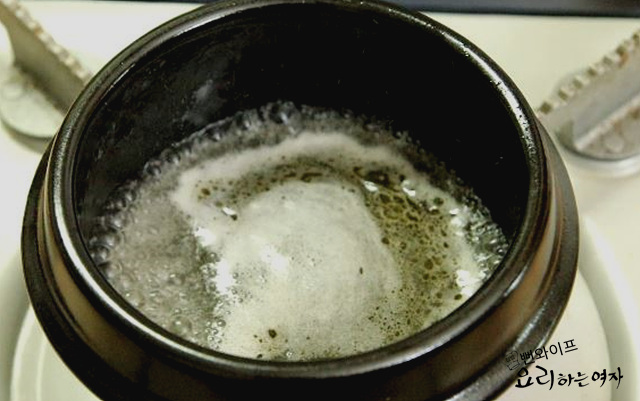
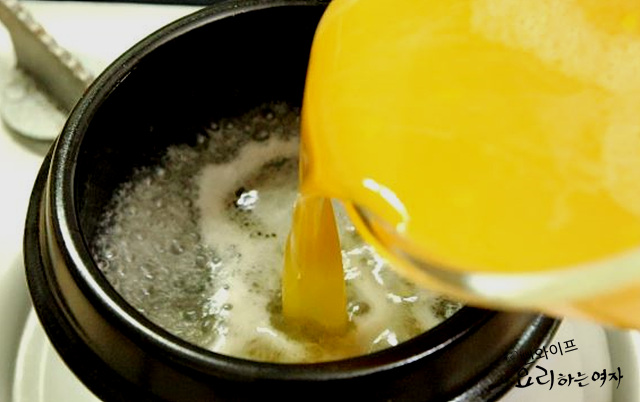
When it comes to a rolling boil, pour the egg mixture into the earthenware pot.
For earthenware pot steamed eggs, boiling the water separately first before pouring in the eggs cuts down the cooking time compared to cooking them mixed together from the start.
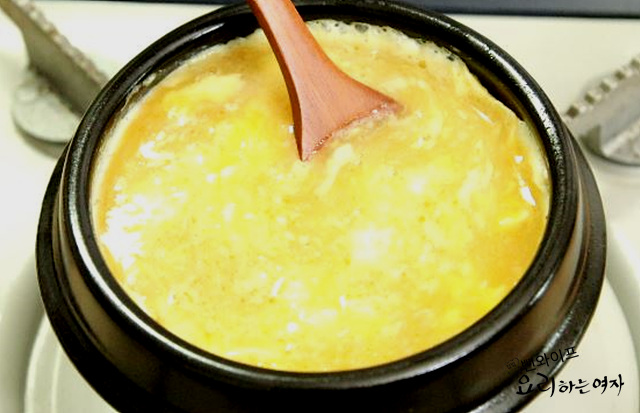
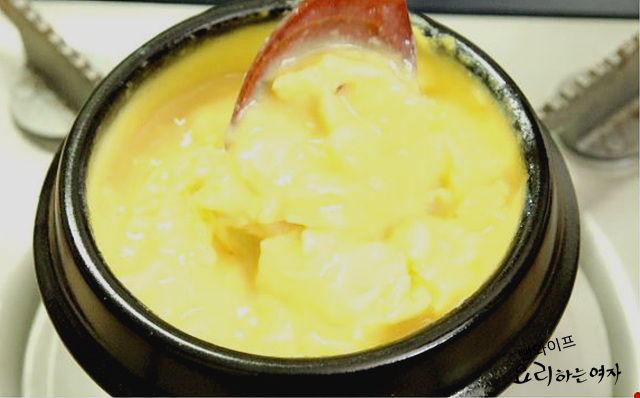
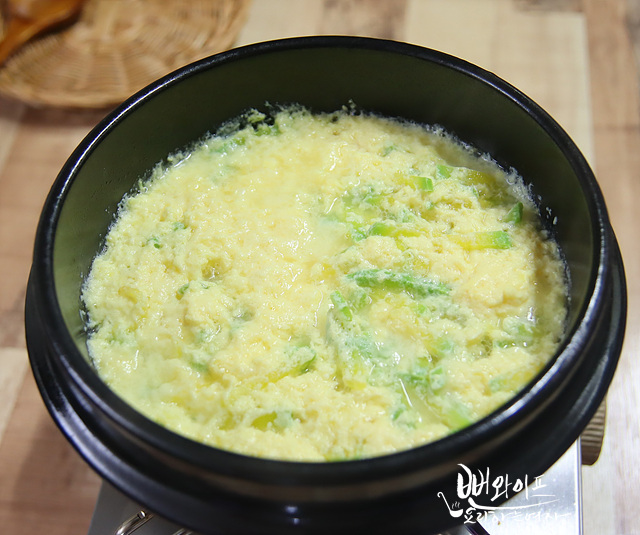
As the eggs begin to cook, soft curds will start to form.
Lower the heat to medium-low and scrape the bottom and sides of the pot thoroughly with a spoon.
If you do not stir diligently, it will scorch in an instant.
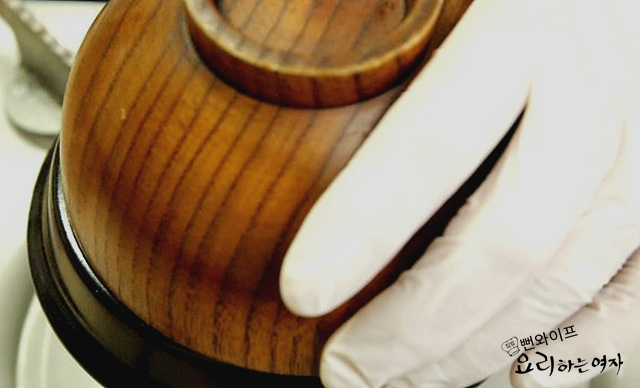
Once the mixture is mostly set and curds stop forming, turn the heat down very low just enough to keep the flame lit, cover with an earthenware bowl or fitted bowl,
let it steam for 2 minutes, and turn off the heat.
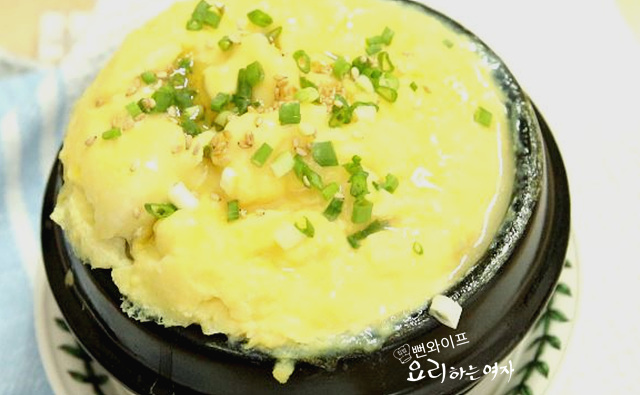
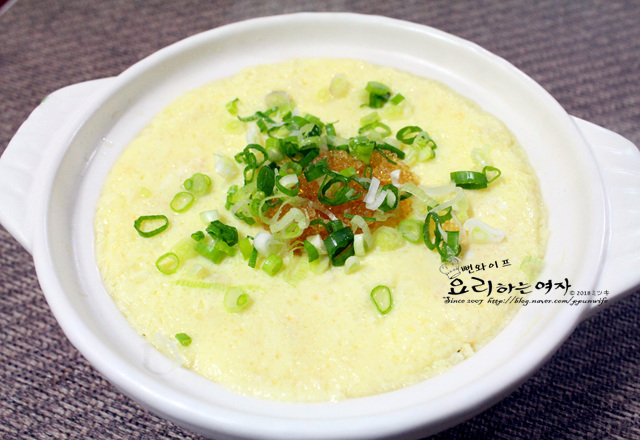
Sprinkle with finely sliced scallions or large green onion, toasted sesame oil, and toasted sesame seeds, and you will get the look of restaurant steamed eggs.
 Ppunwife's tips
- Greasing the earthenware pot thoroughly with toasted sesame oil prevents the eggs from sticking too much, making cleanup much easier.
- For earthenware pot steamed eggs, boiling the water separately first before pouring in the eggs cuts down the cooking time compared to cooking them mixed together from the start.
FAQ
What seasoning can I substitute if I do not have salted fermented shrimp (saeujeot)?
You can season the dish with 1 tsp of salt or 1 tbsp of tuna extract sauce (chamchi-aek) instead of the liquid from salted fermented shrimp.
How do I prevent the eggs from sticking to the bottom of the earthenware pot?
Rubbing the inside of the earthenware pot evenly with toasted sesame oil before cooking prevents scorching and makes dishwashing easier.
How does the ratio of eggs to broth affect the texture?
A higher proportion of water creates a delicate texture like soft tofu (sundubu), while a higher proportion of eggs results in a firmer, bouncier bite.
How can I achieve an even smoother texture? AI-generated
Strain the beaten egg mixture through a fine sieve once to completely remove the chalazae, and the texture will turn out much silkier.