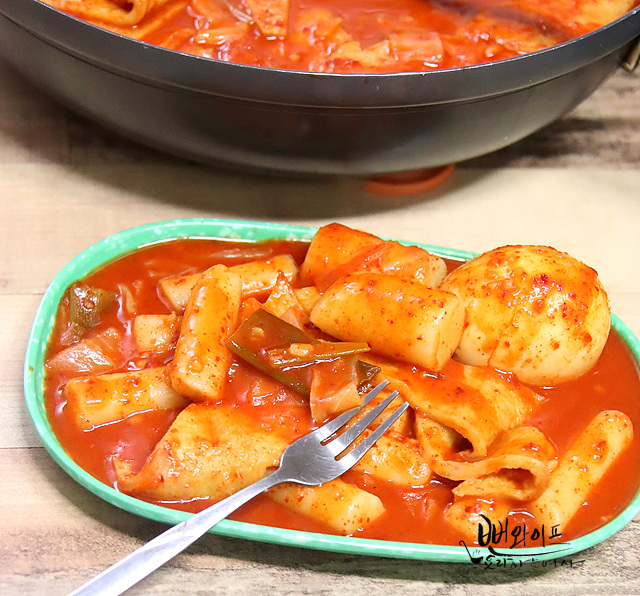
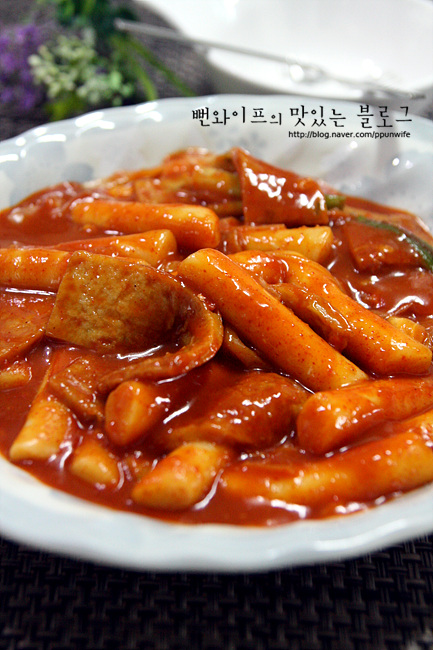
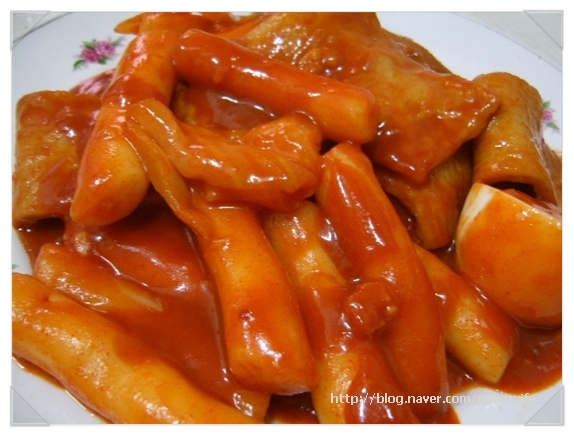
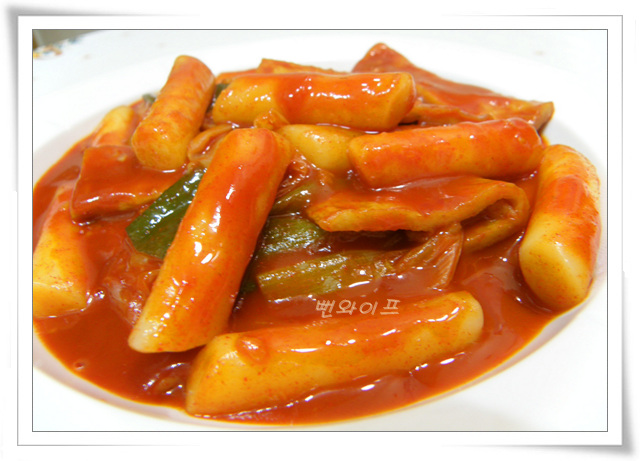
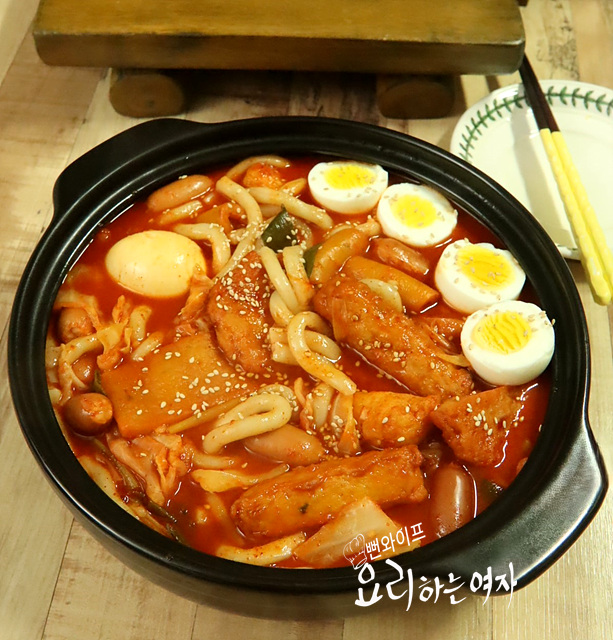
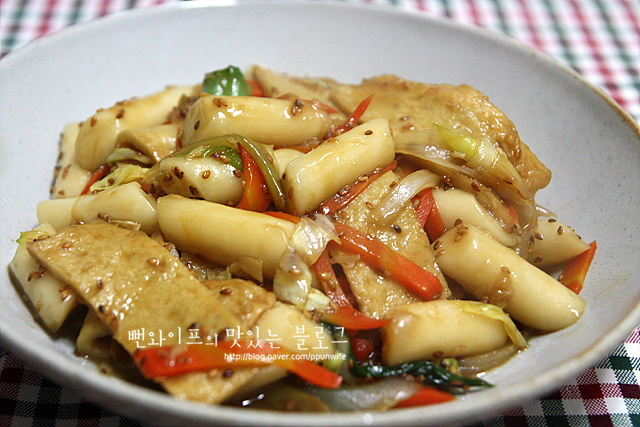
Old-School Tteokbokki (Simmered Rice Cakes) with Broth
A snack-bar-style tteokbokki simmered in a rich broth made with fish cake and dried shrimp, combined with a smooth seasoning sauce.
Translated from Korean by AI and not yet checked by a native speaker. Amounts and numbers are taken directly from the original recipe. Read the Korean original →
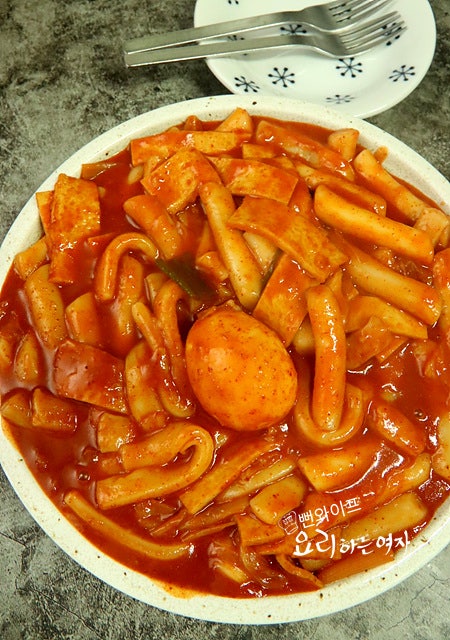
This 4-serving tteokbokki brings out deep savory flavor using broth brewed with dried shrimp and fish cakes. Fine gochugaru gives it a bright, vivid color, and adding the fish cakes at the very end keeps them wonderfully chewy without getting soggy. It is a fantastic spicy weekend treat for the whole family.
- Servings
- 4 servings
- Cook time
- 10 minprep not included
- Difficulty
- Medium
- Spiciness
- Spicy
Ingredients
Ingredients
- Tteokbokki600 g
- Square fish cake (eomuk)3 sheets
- Cabbage3 leaves
- Large green onion (daepa)1 stalk
- Boiled egg2
Fish cake broth
- Dried shrimp1 cup
- Dried kelp (dasima)2 sheets (5 cm square)
- Square fish cake (eomuk)1 sheet
- Water6 cups
Seasoning
- Gochujang (Korean red chili paste)3 tbsp
- Tuna extract sauce (chamchi-aek) (or regular soy sauce (jin-ganjang))2 tbsp
- Fine gochugaru (Korean chili flakes)3 tbsp
- Mirin (cooking rice wine)2 tbsp
- Corn syrup (mulyeot)3 tbsp
- Sugar2 tbsp
- Minced garlic1/2 tbsp
- Boiled eggs are optional, and you may add onion, perilla leaves, or Cheongyang chili pepper to taste.
- Toast the dried shrimp for the fish cake broth in an air fryer or in a dry pan without oil until crisp.
- If the rice cakes were frozen, soak them in warm water to soften, then rinse.
Steps
Prepare the ingredients
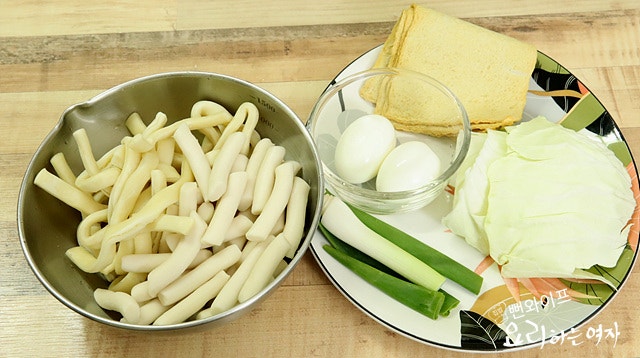
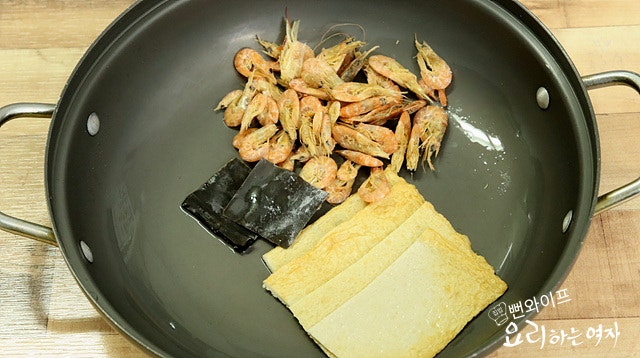
I used 1 bag (400 g) of regular tteokbokki rice cakes and 200 g of noodle-style rice cakes. The fish cake comes in a pack of 4 sheets; I use 1 sheet for brewing the broth and keep 3 sheets for the dish.
For vegetables, cabbage and large green onion are plenty. Boiled eggs are optional, so prepare them if you like them. Onion, perilla leaves, or Cheongyang chili pepper are also great additions.
I prepared dried shrimp instead of anchovies to boost the savory depth in the fish cake broth. Just toast them crisp in an air fryer or in a dry pan without oil. Prepare 2 sheets of dried kelp, and roughly slice the 1 sheet of fish cake.
Make the fish cake broth
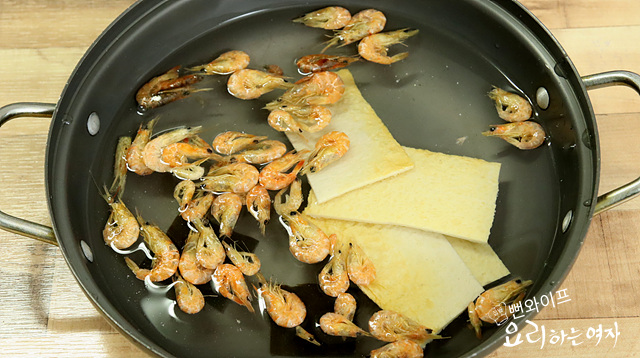
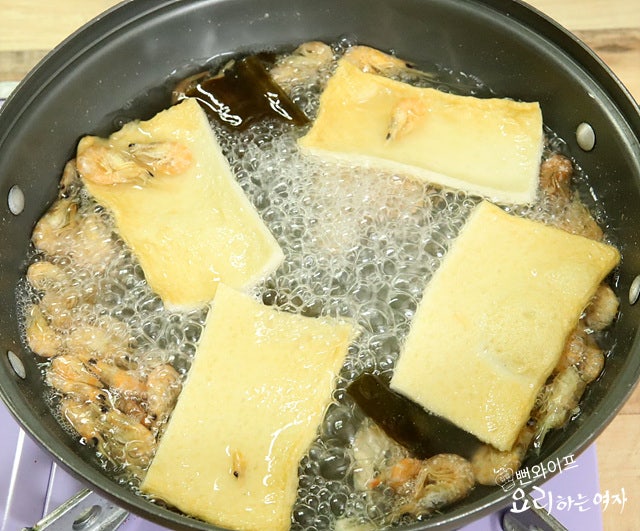
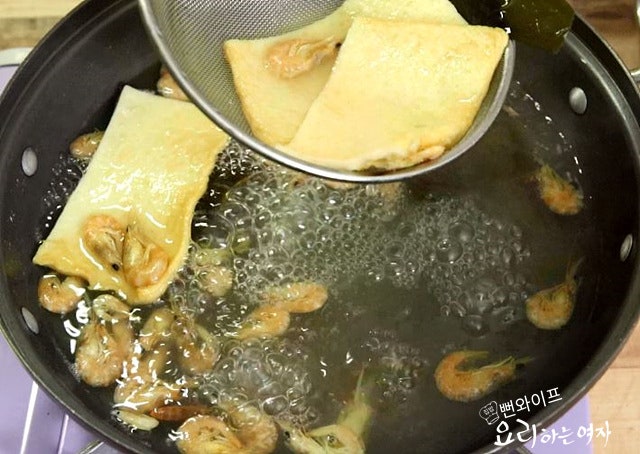
Pour 6 cups of water into the pot you will use for the tteokbokki and bring it to a rolling boil. Simmer gently for about 10 minutes to draw out the flavors.
Strain out and discard all the broth solids. You should have about 5 cups of broth left for cooking the tteokbokki.
Since the fish cake was used for the broth, all its flavor is extracted and it has turned mushy, so we will not be adding it to the final tteokbokki.
Prep the main ingredients
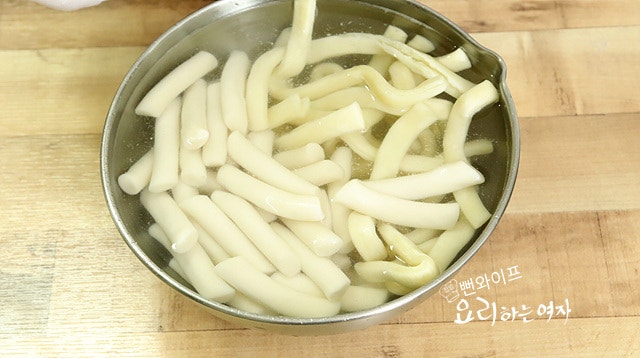
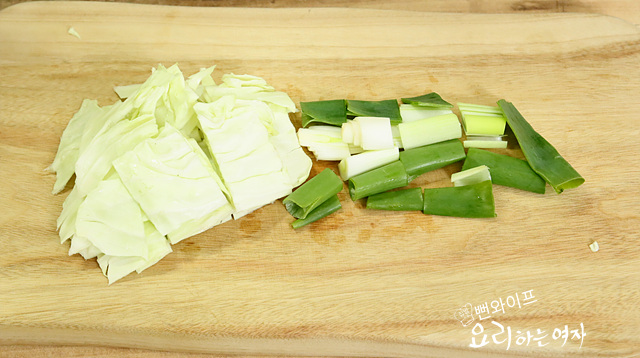
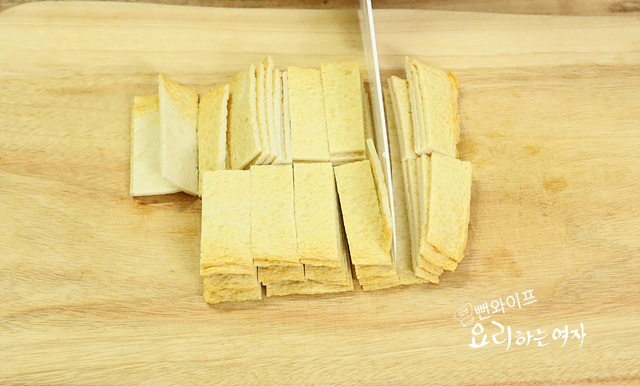
While the broth is simmering, prepare the other ingredients.
If the rice cakes were frozen, soak them in warm water to soften, then rinse.
Cut the cabbage and large green onion into large pieces, and cut the fish cakes into bite-sized pieces.
Cook the tteokbokki
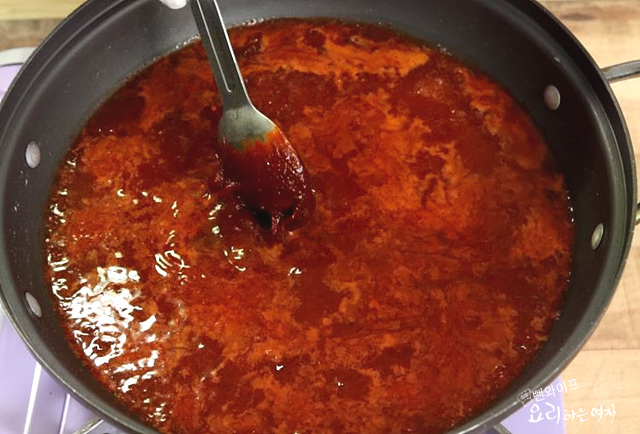
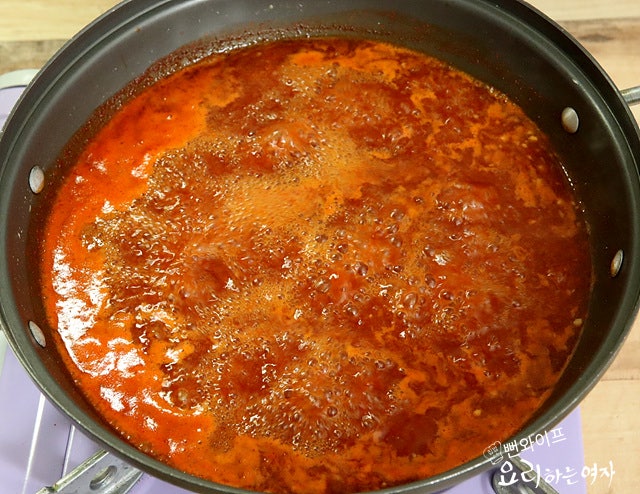
Add 3 tbsp gochujang, 2 tbsp tuna extract sauce (or regular soy sauce), 3 tbsp fine gochugaru, 2 tbsp mirin, 3 tbsp corn syrup, 2 tbsp sugar, and 1/2 tbsp minced garlic to the broth.
The bright, beautiful color of tteokbokki comes from using fine gochugaru in the sauce.
If you do not have fine gochugaru and use coarse flakes instead, mix the sauce ahead of time so the chili flakes have enough time to hydrate fully.
Once the liquid starts boiling rapidly...
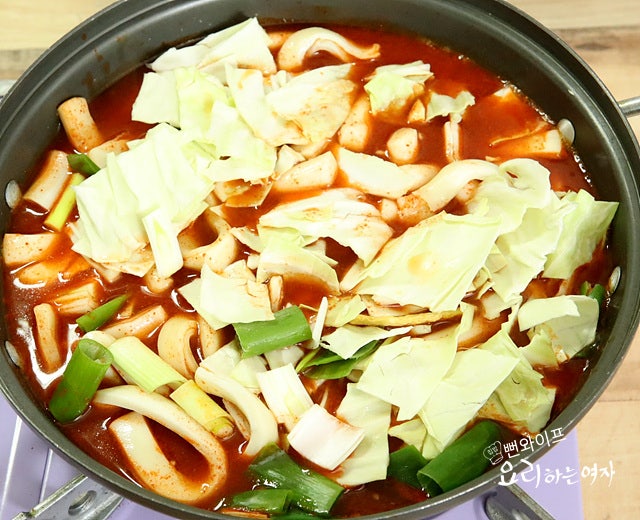
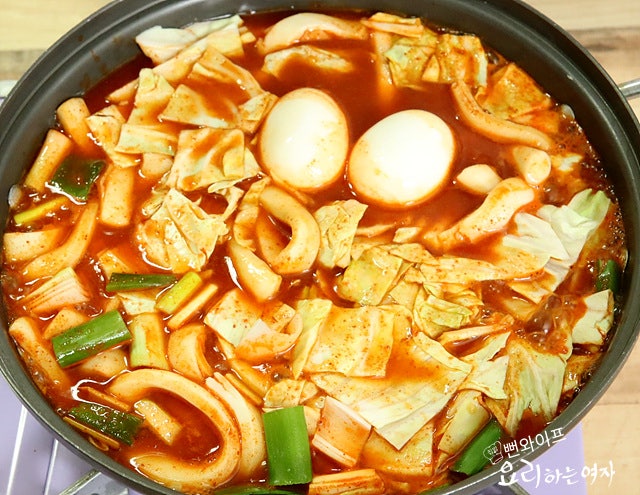
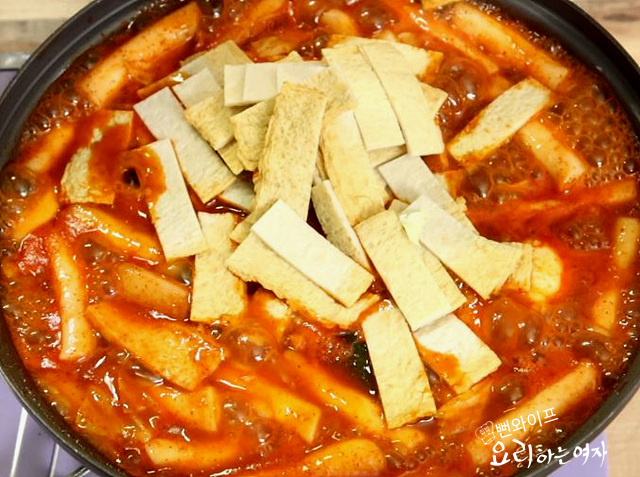
Add the cabbage, large green onion, and boiled eggs, then cook until done. If you add the fish cake at the same time as the rice cakes, it swells up too much and loses its nice texture.
Add it at the very end to cook briefly so you can enjoy its chewy bite.
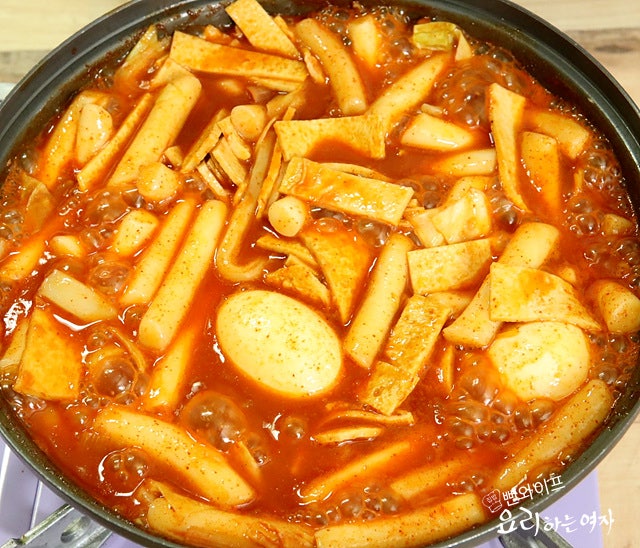
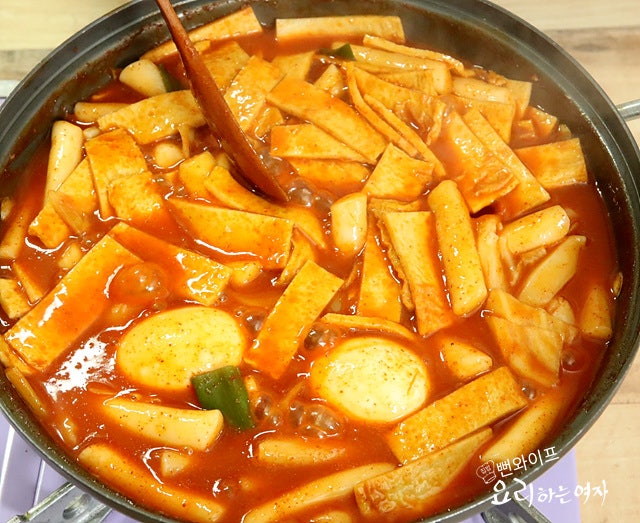
Simmer until it goes from feeling like a soupy tteokbokki to slightly thickened, where the sauce clings nicely to all the ingredients.
 Ppunwife's tips
- If you do not have fine gochugaru and use coarse flakes instead, mix the sauce in advance so the chili flakes have enough time to hydrate fully.
- Adding the fish cake along with the rice cakes will make it become overly soft and lose its texture; add it at the very end to keep it pleasantly chewy.
FAQ
What should I do if I do not have fine gochugaru?
If using coarse gochugaru, mix the seasoning sauce ingredients in advance so the chili flakes have enough time to hydrate.
Do I put the fish cake used for the broth into the tteokbokki?
The fish cake used to brew the broth loses its flavor and turns mushy, so strain it out and do not add it to the final dish.
When should I add the fish cake to keep it chewy?
Adding it at the beginning with the rice cakes makes it swell up and turn soft, so add it at the very end once the rice cakes and other vegetables are nearly cooked.
Can I use regular soy sauce instead of tuna extract sauce?
Yes, you can substitute regular soy sauce (jin-ganjang) for the tuna extract sauce in an equal amount of 2 tbsp.