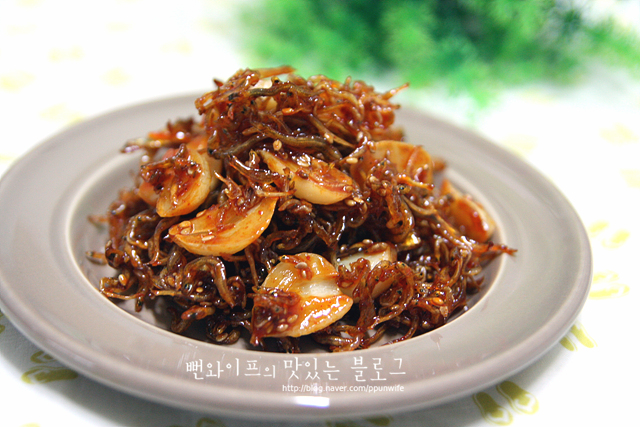
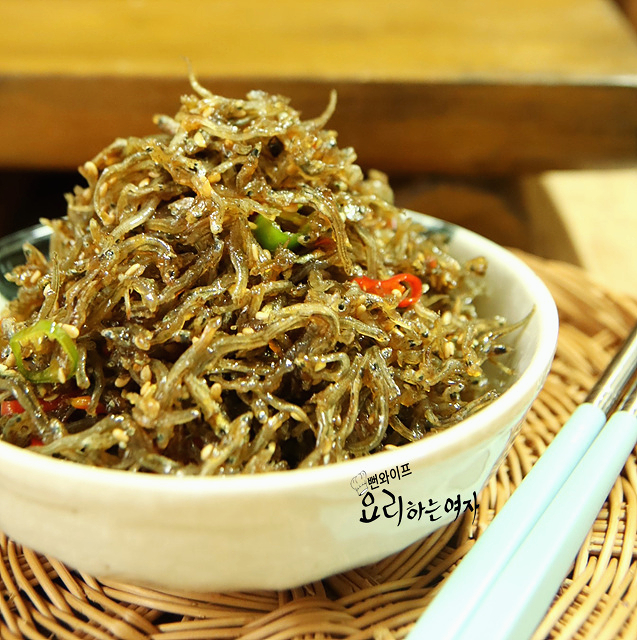
Crispy Gochujang Myeolchi Bokkeum (Spicy Stir-Fried Anchovies)
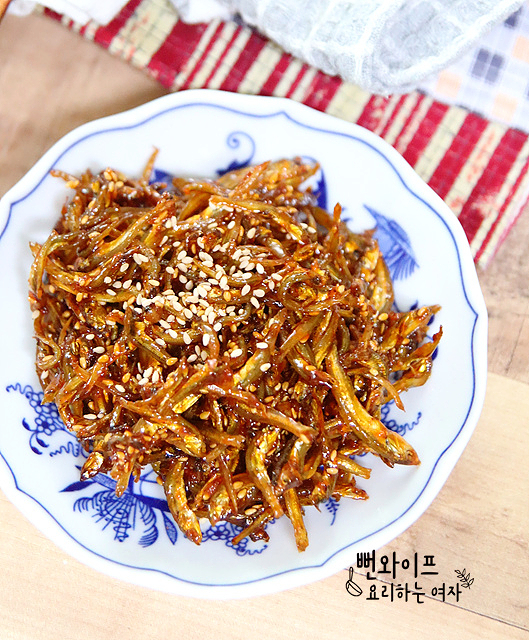
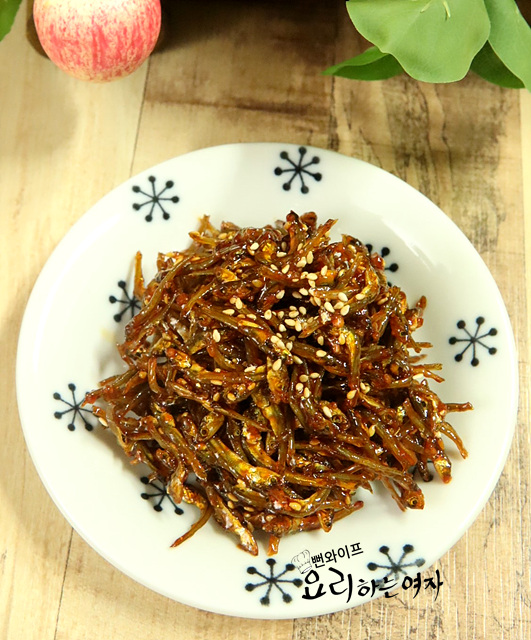
A sweet and spicy side dish of dried soup anchovies stir-fried in garlic oil to remove fishiness and keep them crispy rather than tough.
Translated from Korean by AI and not yet checked by a native speaker. Amounts and numbers are taken directly from the original recipe. Read the Korean original →
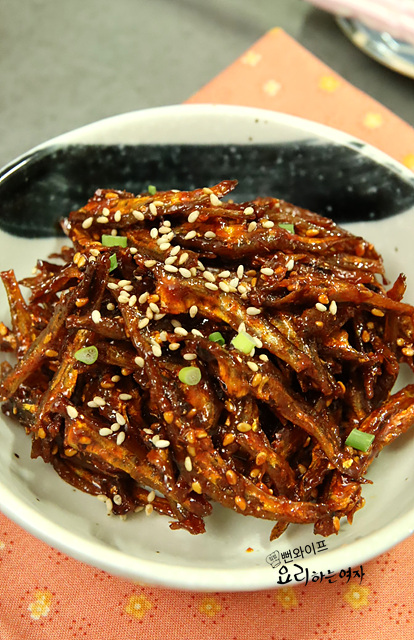
This side dish uses dried soup anchovies thoroughly stir-fried in oil with minced garlic to eliminate unwanted odors and bring out a delightfully crispy texture. Tossing the anchovies into the simmered sauce with the heat turned off prevents them from hardening, making it a wonderful spicy staple side dish or lunchbox banchan.
- Servings
- about 4–5 servingsOriginal: 2 plates
- Cook time
- 10 minprep not included
- Difficulty
- Easy
- Spiciness
- Mildly spicy
- Keeps
- 7 days
Ingredients
Ingredients
- Dried soup anchovies80 g (3 cups)
- Cooking oil5 tbsp
Seasoning
- Minced garlic1/2 tbsp
- Gochujang (Korean red chili paste)2 tbsp
- Regular soy sauce (jin-ganjang) (or brewed soy sauce (yangjo-ganjang))2 tbsp
- Corn syrup (mulyeot)2 tbsp
- Sugar1/2 tbsp
- Mirin (cooking rice wine)2 tbsp
- Toasted sesame oil1/2 tbsp
- Toasted sesame seeds1 tbsp
- Carefully remove the heads and innards. Dried soup anchovies need this cleaning because the guts cause bitterness and unpleasant odors.
- Cleaning them before storing them away helps prevent exposure to any odors from the anchovy guts, at least in my view.
- Today, we will sift the anchovies through a strainer to remove loose crumbs before frying.
Steps
Prepare the ingredients
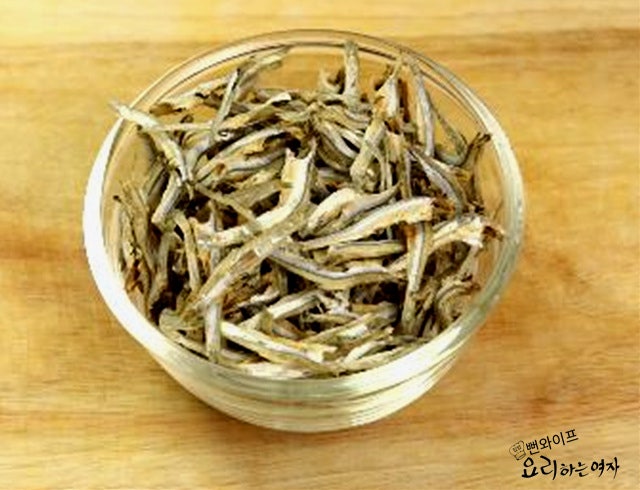
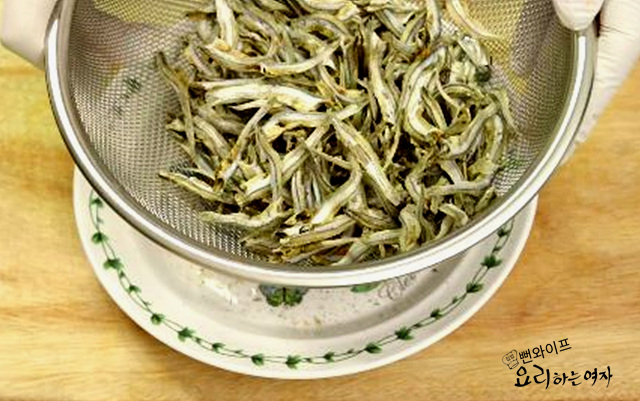
The ingredient list is quite humble.
All you really need are anchovies.
This is about two handfuls of cleaned dried soup anchovies. When measured in paper cups, it comes to about 3 cups, heaped high.
Carefully remove the heads and innards. Dried soup anchovies need this cleaning because the innards cause bitterness and off-flavors.
Cleaning them before storing them seems to help prevent exposure to any odors that might come from the anchovy innards, at least in my view.
Today, before stir-frying the anchovies, we will sift out the loose crumbs through a strainer.
Stir-fry anchovies in garlic oil
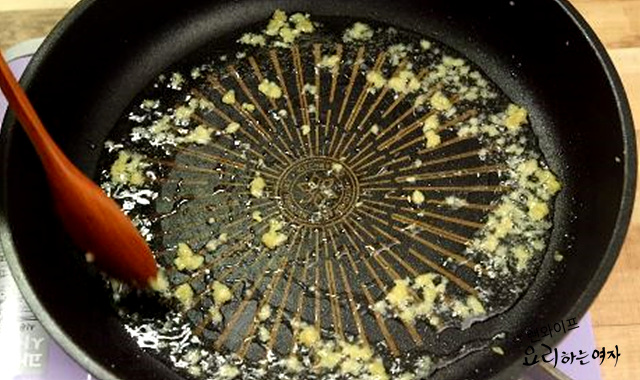
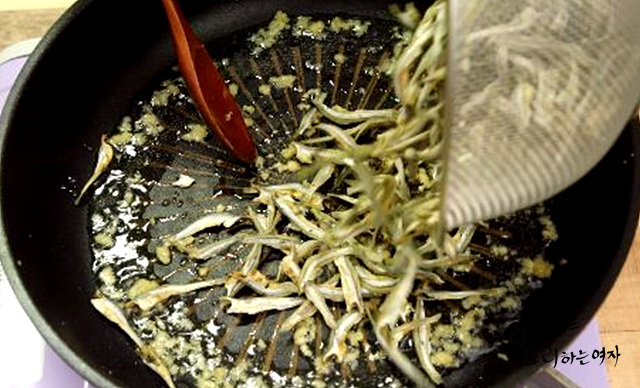
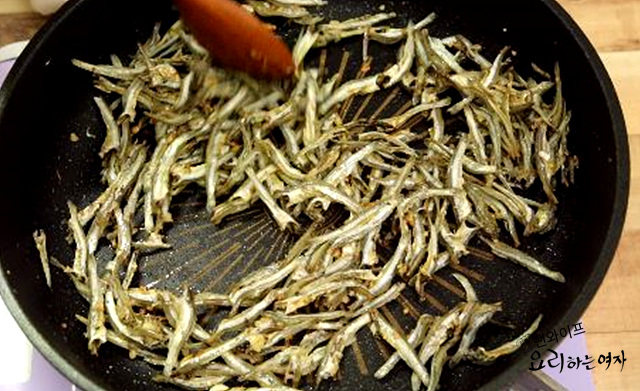
Dried soup anchovies, which are mainly used for broth, have usually spent time in the freezer, so they can turn damp or develop stale odors.
Add a generous 5 tbsp of cooking oil to the pan along with the minced garlic and anchovies, then stir-fry until the anchovies turn crispy.
Because they are large, it takes time for them to crisp up evenly, so lower the heat once the pan gets hot.
Stir-fry thoroughly over medium-low heat without burning. Once the outside of the anchovies becomes crisp, turn off the heat, transfer them to another plate, and let them cool.
Infusing the garlic flavor directly into the anchovies rather than adding it to the sauce takes care of odor removal, rich flavor, and crispiness all at once.
It is just a slight change in order, but the taste makes a world of difference. Stir-fried tiny anchovies are also much tastier when made this way.
Toss in seasoning
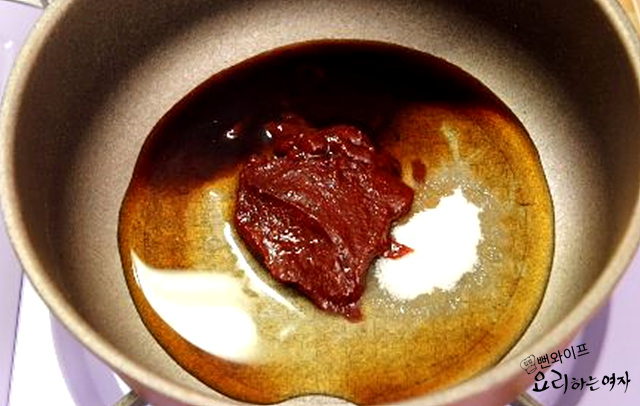
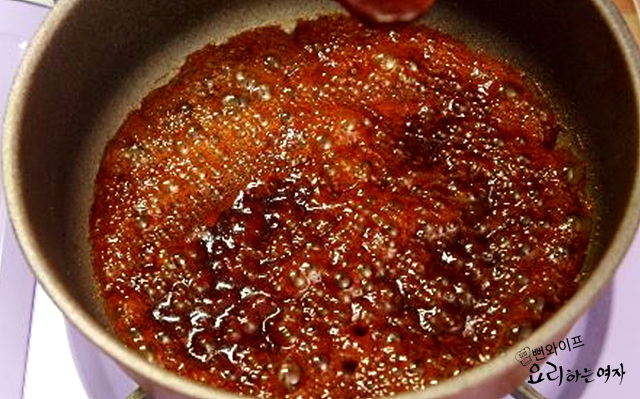
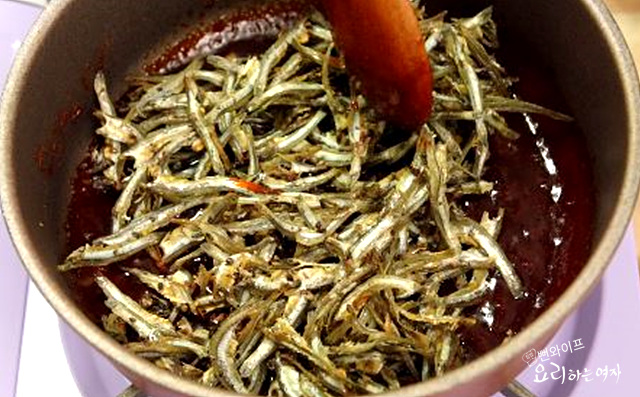
In a deep pan, add 2 tbsp gochujang (Korean red chili paste), 2 tbsp regular soy sauce (jin-ganjang), 2 tbsp corn syrup (mulyeot), 1/2 tbsp sugar, and 2 tbsp mirin (cooking rice wine), then bring to a quick bubble.
As soon as you turn off the heat, add the fried anchovies and mix evenly.
If your anchovies taste salty, reduce the gochujang or soy sauce by about half a tablespoon, and adjust the sweetness to your liking.
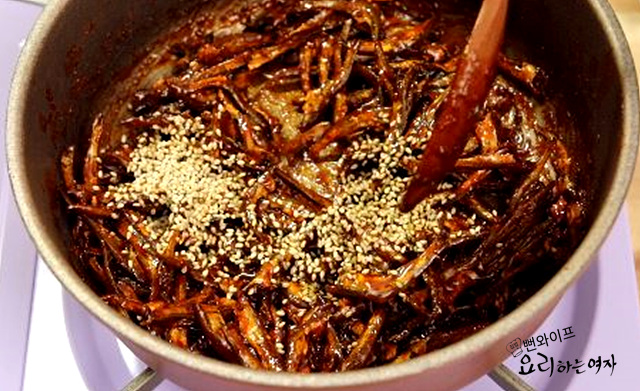
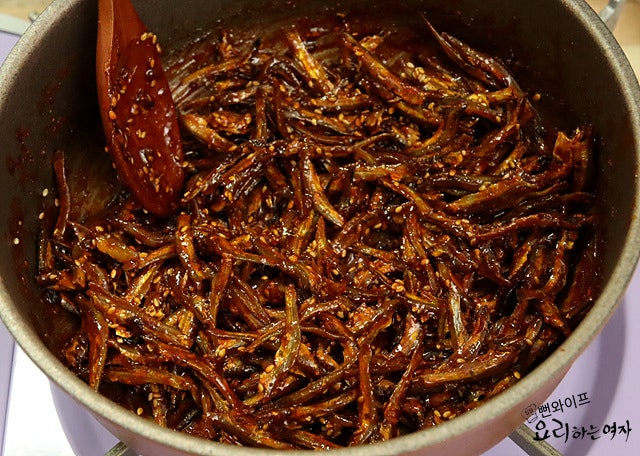
Finish by adding 1/2 tbsp toasted sesame oil and 1 tbsp toasted sesame seeds, toss evenly, and it is complete.
 Ppunwife's tips
- Because they are large, it takes time for them to crisp up evenly, so lower the heat once the pan gets hot.
- Infusing the garlic flavor directly into the anchovies rather than adding it to the sauce takes care of odor removal, rich flavor, and crispiness all at once.
- If your anchovies taste salty, reduce the gochujang or soy sauce by about half a tablespoon, and adjust the sweetness to your liking.
FAQ
Do I really need to remove the innards when cleaning dried soup anchovies?
Yes, the guts of dried soup anchovies can cause bitterness and unpleasant odors, so it is best to cook them after carefully removing the heads and innards.
Why stir-fry the anchovies with minced garlic first?
Infusing the garlic flavor directly into the anchovies drives away stale freezer odors and fishiness, crisps up the exterior, and enhances the overall flavor.
How can I adjust the seasoning if the anchovies are very salty?
If the anchovies themselves feel quite salty, you can adjust the seasoning by reducing the amount of gochujang or regular soy sauce by about 0.5 tbsp.
How many days can the finished stir-fried anchovies be stored and eaten?
Since this is a dry banchan with no excess moisture, it will stay crispy and delicious for about a week when refrigerated.