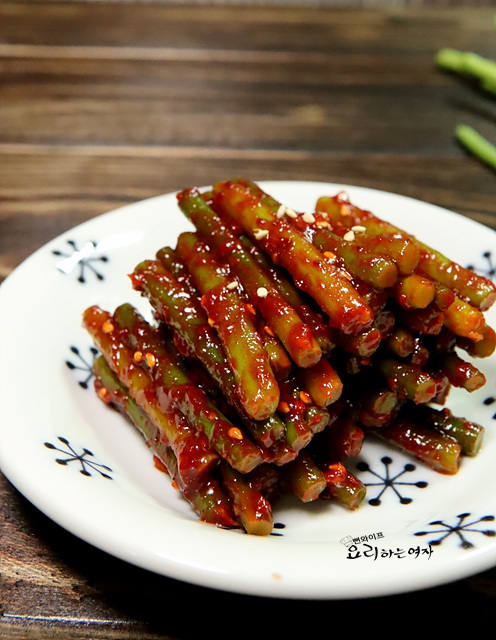
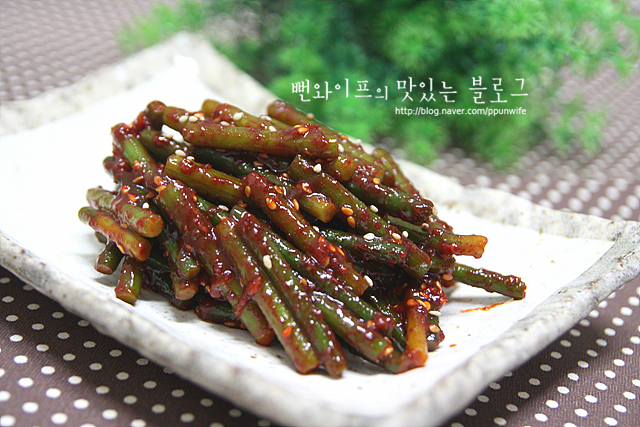
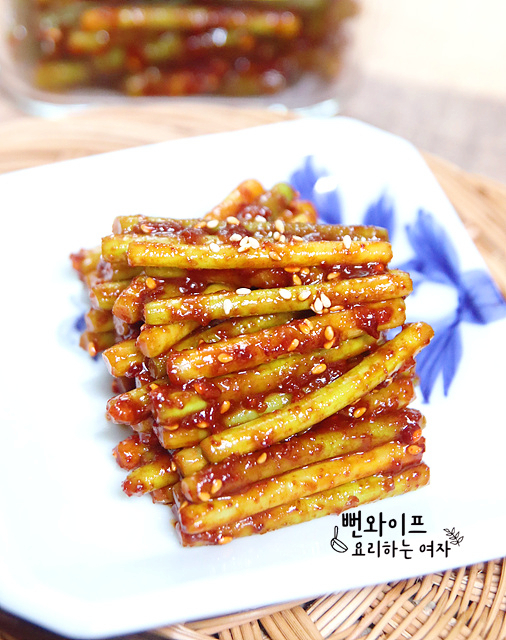
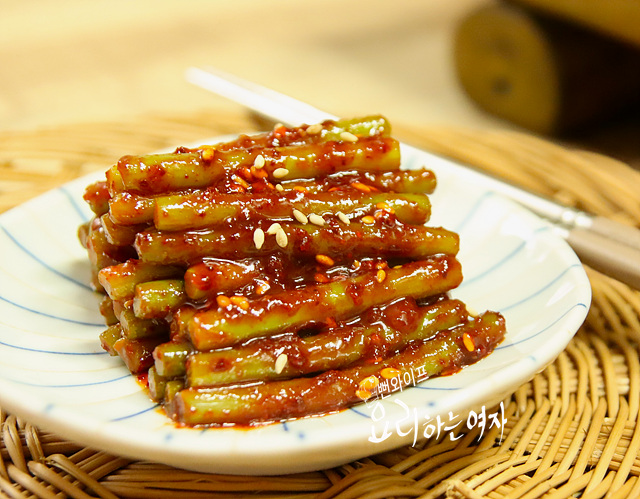
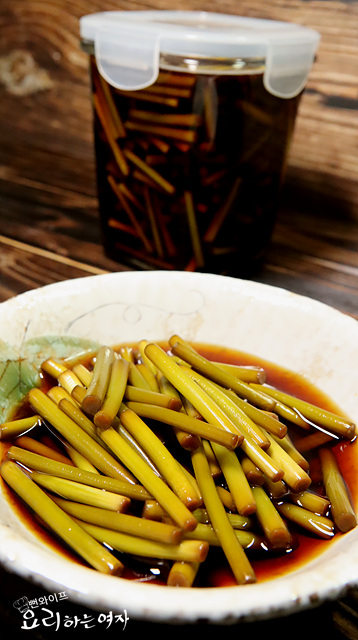
Sweet and Spicy Maneuljong Muchim (Seasoned Garlic Scapes)
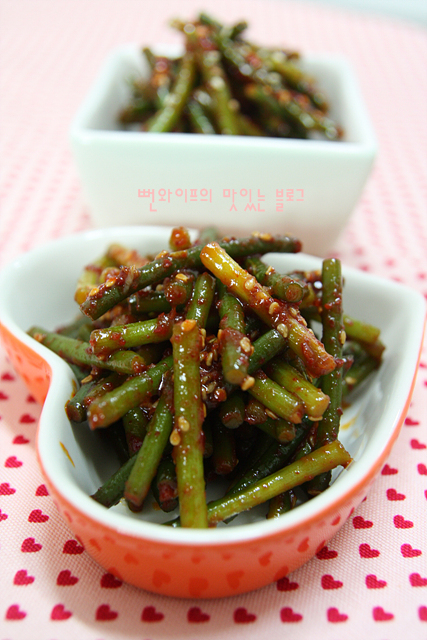
A special side dish made by tossing lightly blanched garlic scapes in a sweet and spicy gochujang seasoning.
Translated from Korean by AI and not yet checked by a native speaker. Amounts and numbers are taken directly from the original recipe. Read the Korean original →
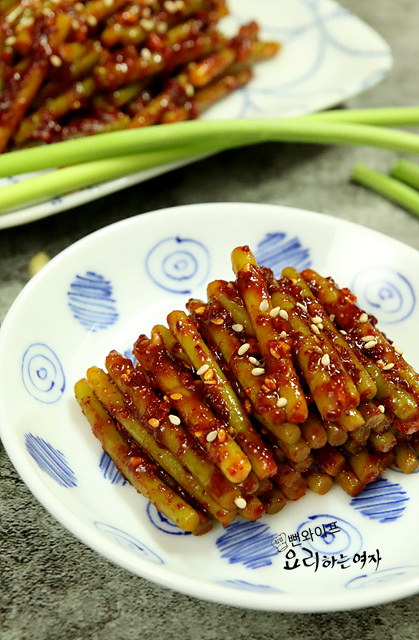
This side dish features lightly blanched garlic scapes tossed in a sweet and spicy gochujang seasoning. Blanching them briefly in boiling salted water helps maintain a tender yet crisp texture. Blanching garlic scapes ensures the sauce clings tightly without getting watery, keeping the dish neat and clean to enjoy.
- Servings
- about 2–3 servingsOriginal: 2 plates
- Difficulty
- Easy
- Spiciness
- Spicy
Ingredients
Ingredients
- Garlic scapes200 g
- Coarse sea salt1 tbsp
Seasoning
- Gochugaru (Korean chili flakes)1 tbsp
- Gochujang (Korean red chili paste)2 tbsp
- Regular soy sauce (jin-ganjang) (or brewed soy sauce (yangjo-ganjang))1 tbsp
- Corn syrup (mulyeot)1 tbsp
- Sugar1/2 tbsp
- Minced garlic1/2 tbsp
- Toasted sesame oil1 tbsp
- Toasted sesame seeds1 tbsp
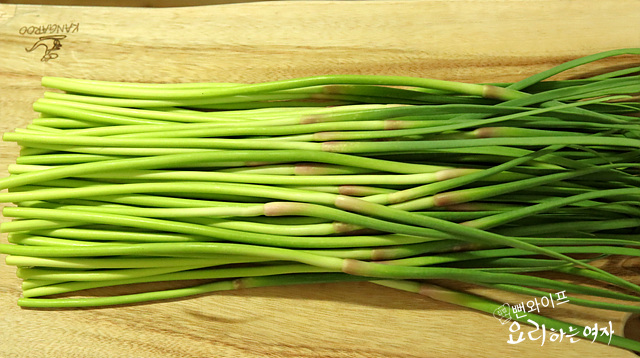
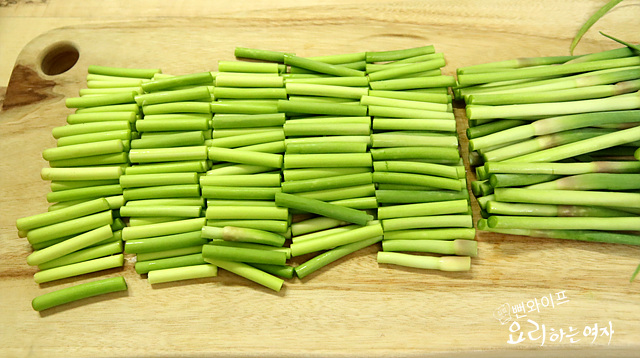
- Trim off the flowering tips of the garlic scapes and cut them into bite-sized lengths. The weight after removing the tips is 200 g.
Steps
Prepare the ingredients
Trim off the flowering tips of the garlic scapes and cut them into bite-sized lengths.
The weight after removing the tips is 200 g. The discarded tips weighed about 50 g.
Blanch the garlic scapes
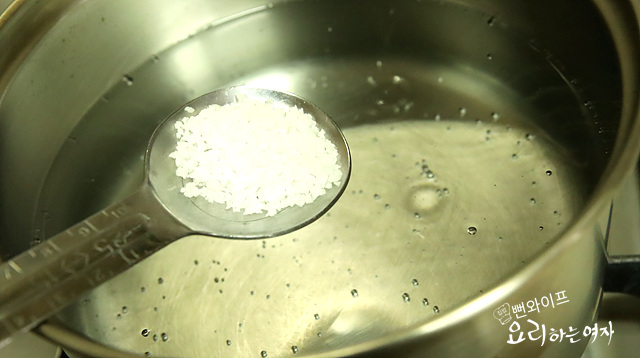
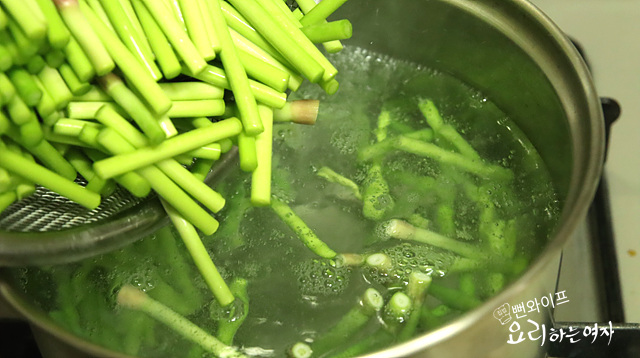
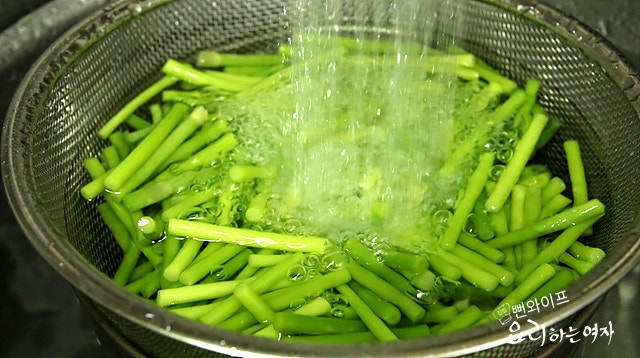
Pour enough water to submerge the garlic scapes into a pot, add 1/2 tbsp of coarse sea salt, and bring it to a rolling boil.
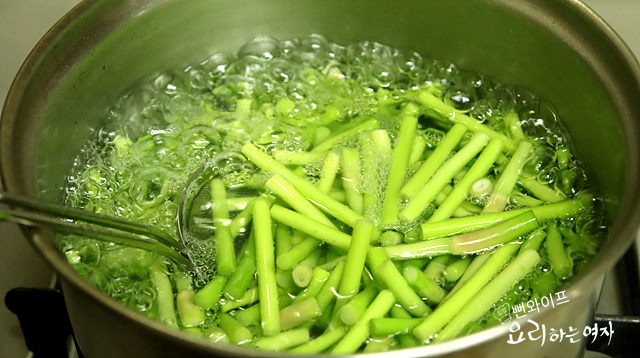
Add all of the garlic scapes.
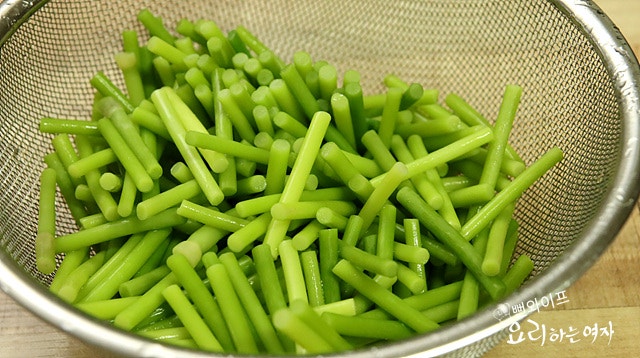
Because the garlic scape stems were thin and tender, I blanched them for only about 30 seconds and then plunged them into cold water to cool them down.
If the garlic scapes feel thick and firm, blanch them for 1 minute.
If you blanch them for too long, both the aroma and texture will suffer, so chew on a piece to test it and adjust the blanching time accordingly.
Drain them in a sieve to remove excess moisture.
Make the seasoning
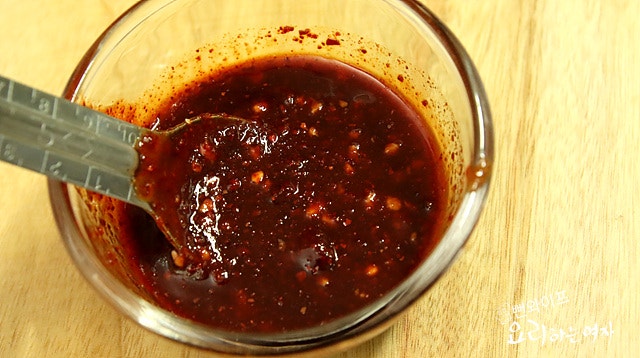
Mix all the seasoning ingredients together, except for the toasted sesame oil and toasted sesame seeds.
Making the sauce in advance helps the flavors meld together, deepens the color, and makes it even tastier.
Toss and finish
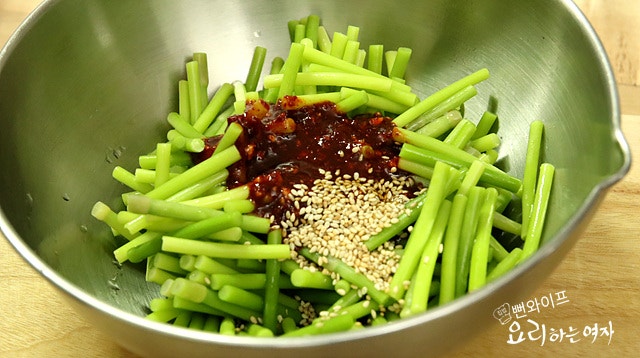
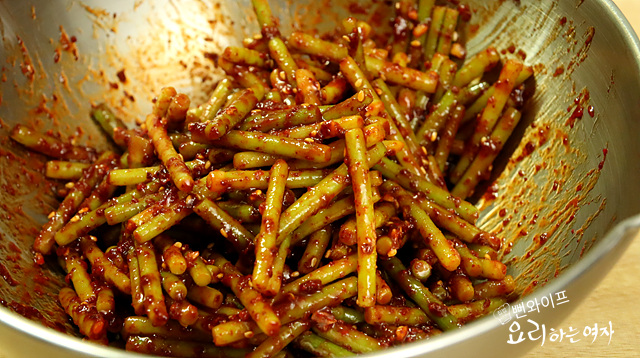
In a bowl, combine the blanched garlic scapes, seasoning sauce, toasted sesame oil, and toasted sesame seeds, then toss well to finish.
Taste it, and if it seems too bland, you can add more gochujang.
 Ppunwife's tips
- If you blanch them for too long, both the aroma and texture will suffer, so chew on a piece to test it and adjust the blanching time accordingly.
- Making the sauce in advance helps the flavors meld together, deepens the color, and makes it even tastier.
- Because they are lightly blanched before tossing, the sauce clings closely and no excess water forms even after a few days, so it tastes freshly made every time.
FAQ
How long should garlic scapes be blanched for the best texture?
If the garlic scapes are thin and tender, blanch them lightly for about 30 seconds; if they are thick and firm, blanching for about 1 minute before cooling in cold water works best.
Why blanch the garlic scapes before seasoning them?
Lightly blanching them allows the seasoning to cling well without sliding off, and it prevents excess liquid from forming even when stored for several days.
What should I add if the dish tastes too bland after tossing?
Taste it first, and if it feels too bland, simply add more gochujang to adjust the flavor.