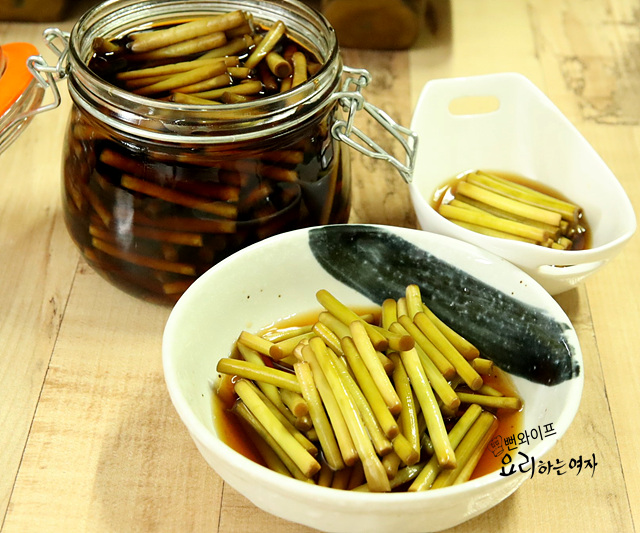
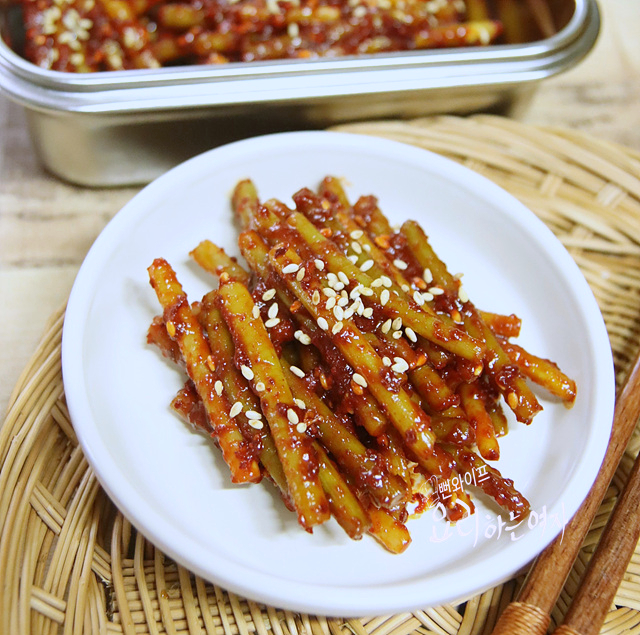
Maneuljong Jangajji (Pickled Garlic Scapes)
A sweet, tangy preserving side dish made by pouring hot boiled soy brine over in-season garlic scapes and letting them mature.
Translated from Korean by AI and not yet checked by a native speaker. Amounts and numbers are taken directly from the original recipe. Read the Korean original →
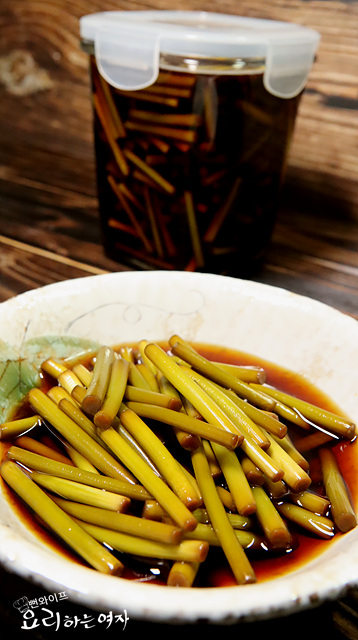
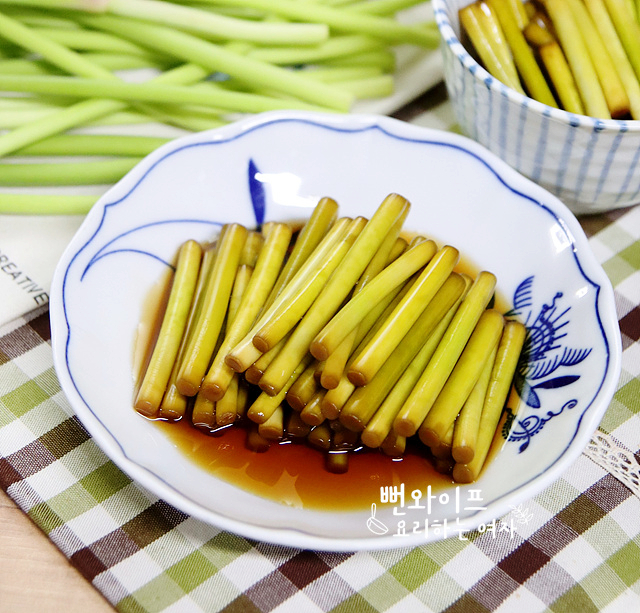
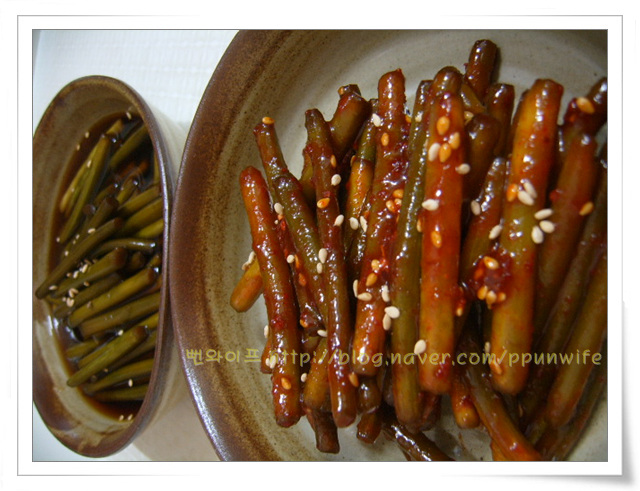
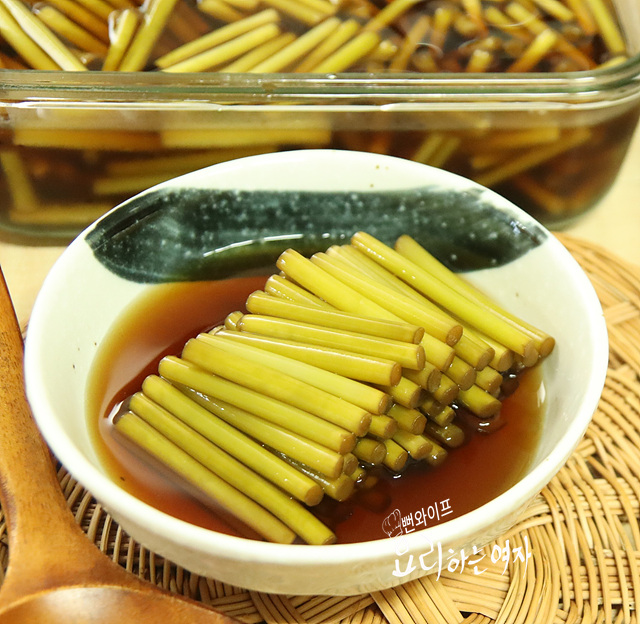
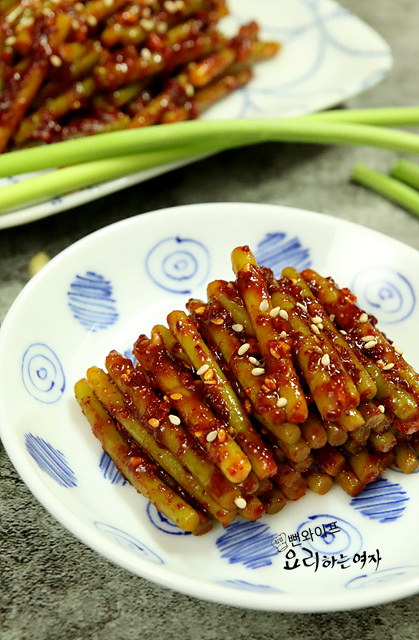
This pickle dish brings out a crisp texture and sweet-and-sour flavor by pouring hot boiled pickling liquid directly over tender spring garlic scapes. After aging at room temperature, reboiling only the soy brine and pouring it back cooled preserves the salinity so it keeps for a long time. With its gently pungent flavor, it pairs wonderfully as a side dish with grilled meats.
- Servings
- about 8–10 servingsOriginal: 1 2-liter jar
- Cook time
- 8 minprep not included
- Difficulty
- Easy
- Spiciness
- Mildly spicy
- Keeps
- 365 days
Ingredients
Ingredients
- Garlic scapes1 bunch, 900 g
Soy Brine
- Water3 cups
- Regular soy sauce (jin-ganjang) (or brewed soy sauce (yangjo-ganjang))3 cups
- Vinegar2 cups
- Sugar2 cups
- Mirin (cooking rice wine)1 cup
- Trim off the messy bottom tips slightly and cut the scapes into bite-sized lengths of about 4 cm; the bulbous flower bud portion and above is not edible, so cut it off and discard it.
- As garlic scape pickles lose moisture, they can become tough, so pickle them right when they first appear in season and are at their most tender to enjoy a soft texture all the way through.
Steps
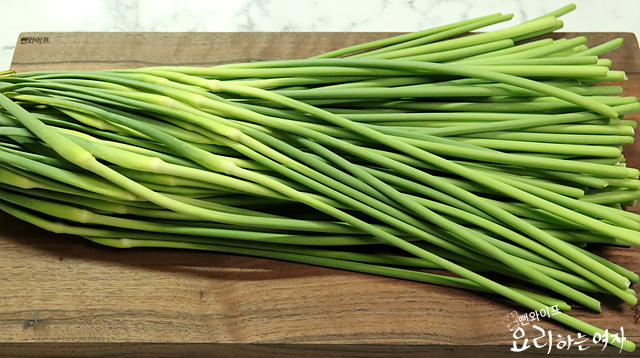
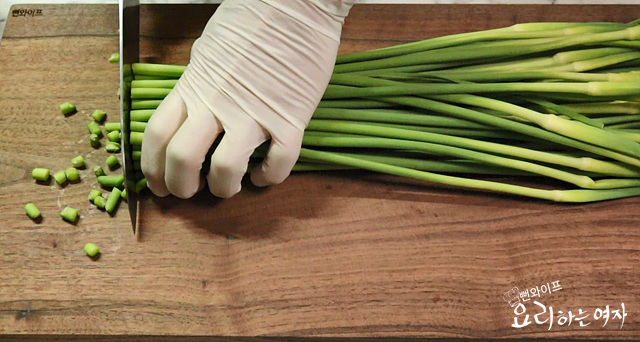
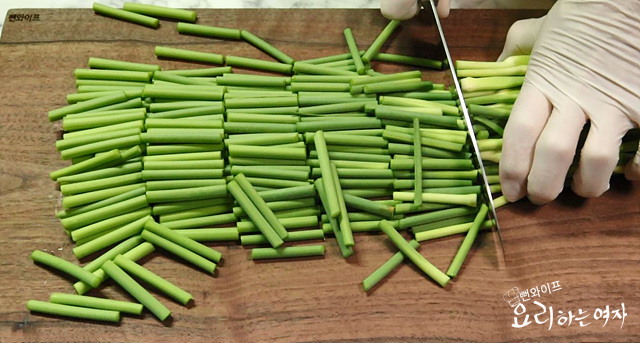
This is 1 large bundle of garlic scapes, 1 kg.
Trim off the messy bottom tips slightly and cut into bite-sized lengths of about 4 cm...
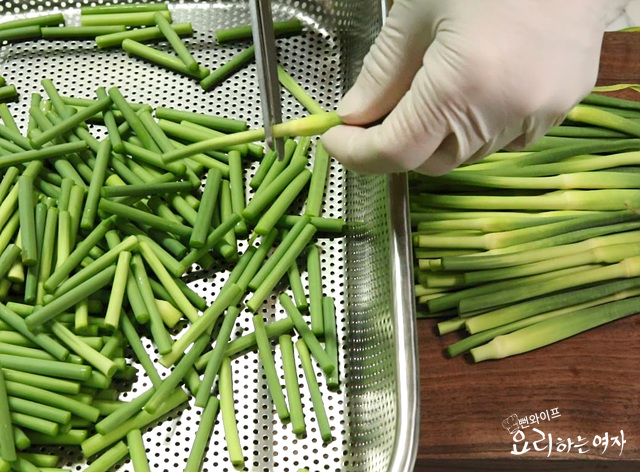
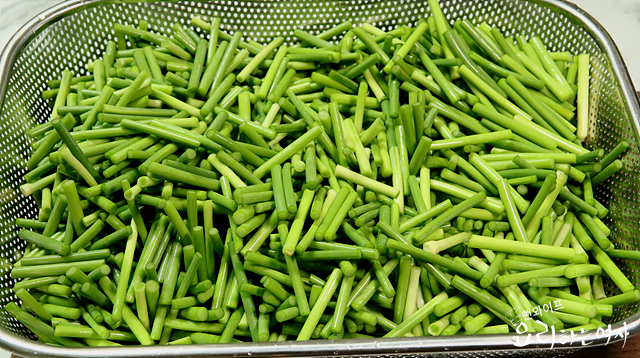
The bulbous flower bud portion and above is not edible, so cut it off and discard it.
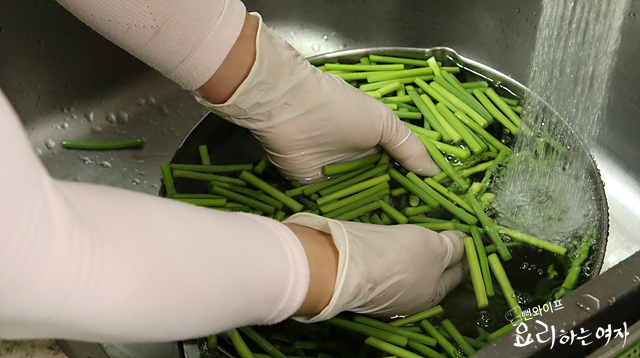
Rinse in running water and drain in a colander to remove the moisture.
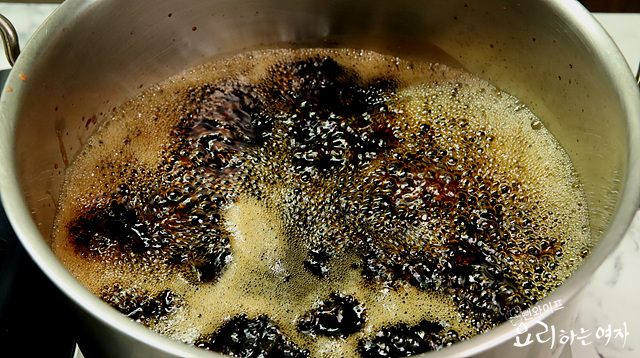
Add all the soy brine ingredients to a pot: 3 cups water, 3 cups regular soy sauce (jin-ganjang) (or brewed soy sauce), 2 cups vinegar, 2 cups sugar, and 1 cup mirin (cooking rice wine).
Bring to a rolling boil and simmer for 2 to 3 minutes while stirring so the sugar does not scorch the bottom.
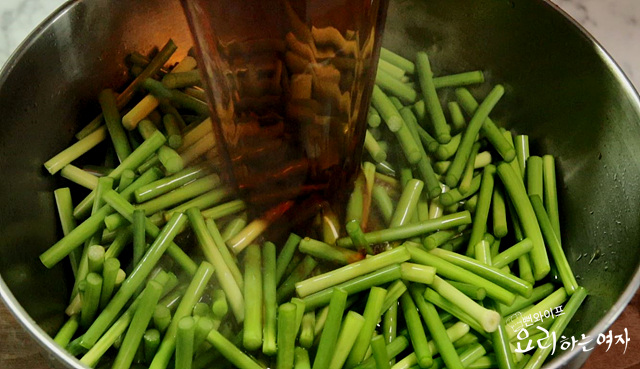
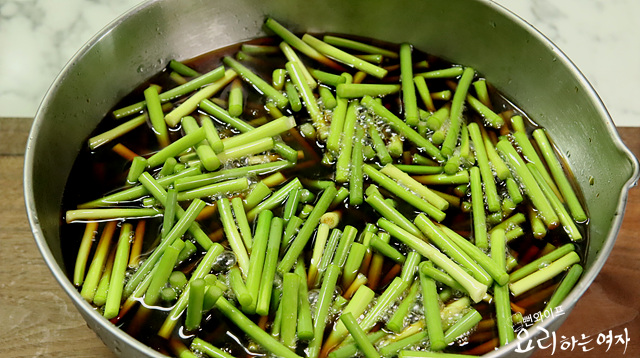
Without cooling, immediately pour it into the bowl containing the garlic scapes.
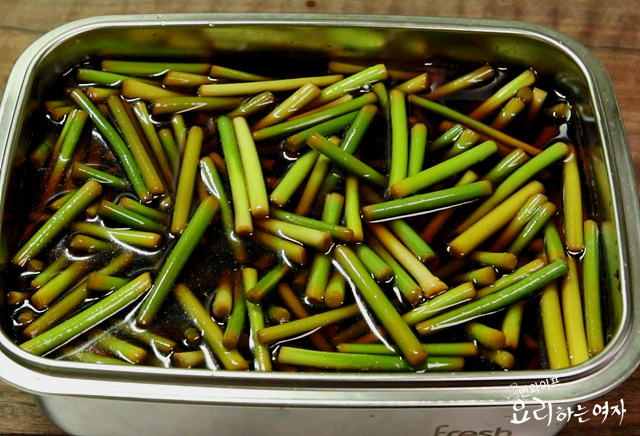
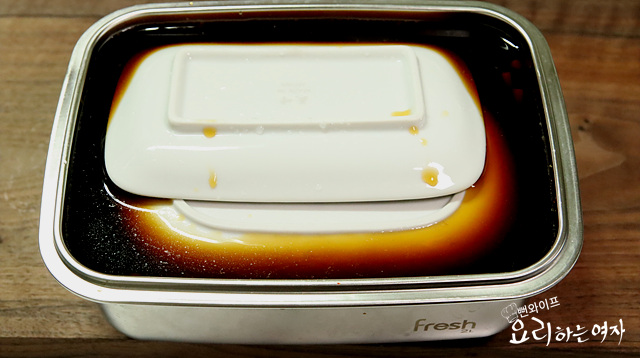
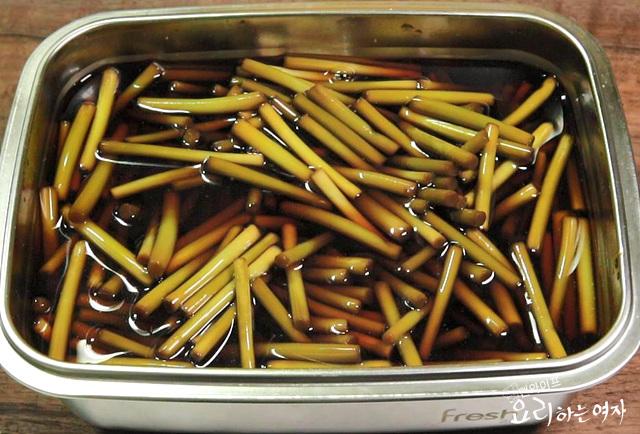
Press down with a plate so they are completely submerged.
Leave at room temperature for about 3 to 5 days, and the flavors will seep in as the color turns yellowish.
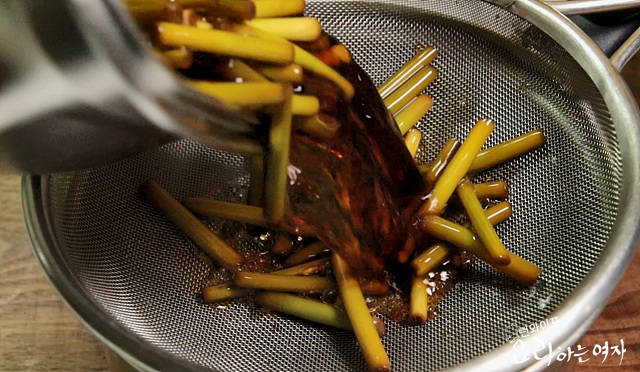
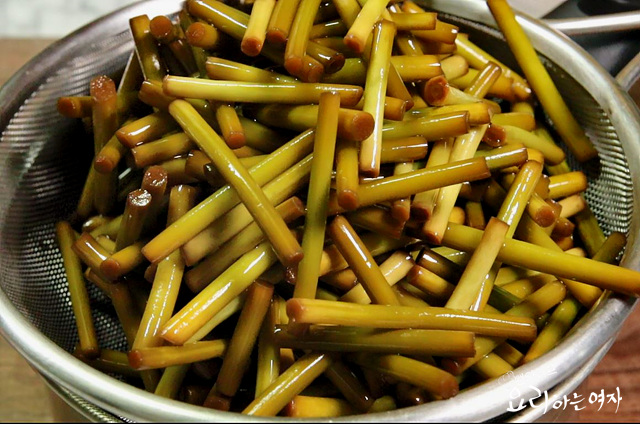
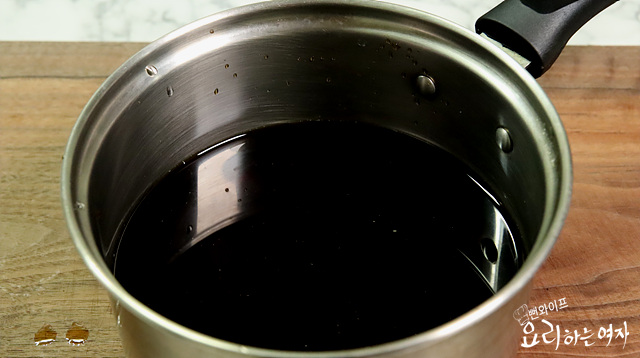
Strain through a colander to collect only the soy brine, and boil it vigorously for about 5 minutes.
This time, let it cool before pouring it back over the garlic scapes, then store in the refrigerator to eat.
Moisture drawn from the garlic scapes lowers the salinity of the soy brine, which can cause it to spoil; boiling it vigorously evaporates moisture and provides a sterilizing effect, allowing you to store and enjoy it long-term from this point on.
 Ppunwife's tips
- Moisture drawn from the garlic scapes lowers the salinity of the soy brine, which can cause it to spoil; boiling it vigorously evaporates moisture and provides a sterilizing effect, allowing you to store and enjoy it long-term from this point on.
- As garlic scape pickles lose moisture, they can become tough, so pickle them right when they first appear in season and are at their most tender to enjoy a soft texture all the way through.
FAQ
Do you also include the flower bud portion of the garlic scapes?
The bulbous flower bud and the section above it have an unpleasant texture, so trim them off before cooking.
Why do you reboil and pour the soy brine again after room temperature aging?
It raises the salinity of the soy brine, which is lowered by moisture released from the garlic scapes, and sterilizes it for long-term storage.
Should the soy brine be poured hot the second time as well?
Unlike the first time, the reboiled soy brine must be cooled completely before pouring, then stored in the refrigerator.
Is there a tip to keep the garlic scapes from becoming tough?
Because they can become tough as moisture is drawn out, it is best to choose the most tender garlic scapes harvested early in spring.