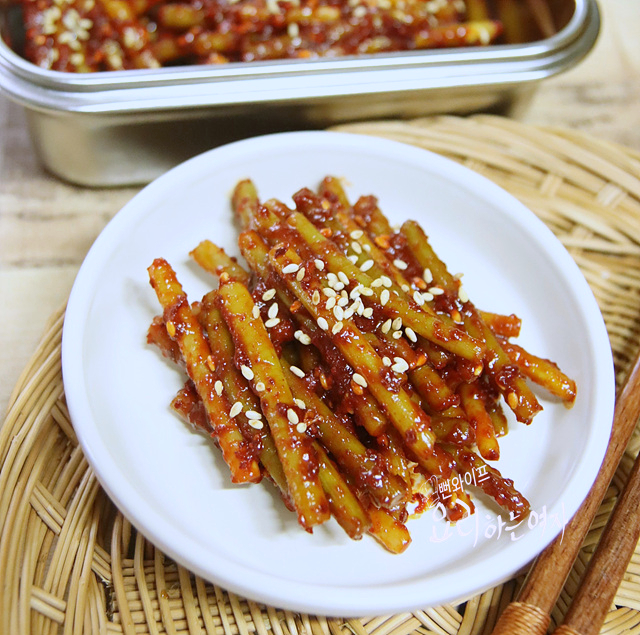
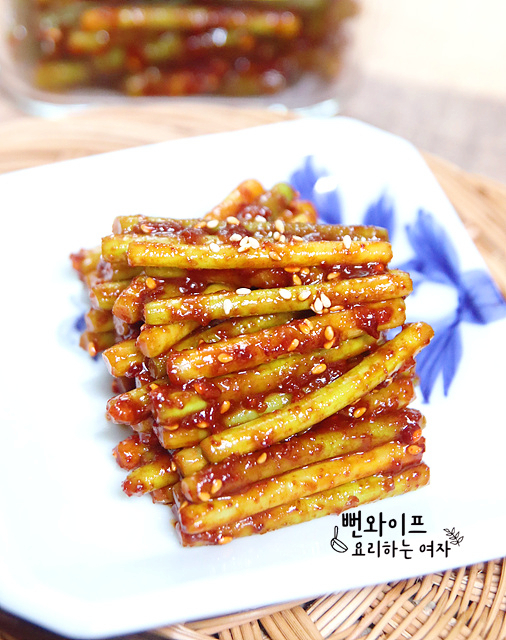
Maneuljjong Jangajji (Pickled Garlic Scapes)
A pickle made by pouring boiled soy sauce brine over tender in-season garlic scapes to enjoy crunchy throughout 1 year.
Translated from Korean by AI and not yet checked by a native speaker. Amounts and numbers are taken directly from the original recipe. Read the Korean original →
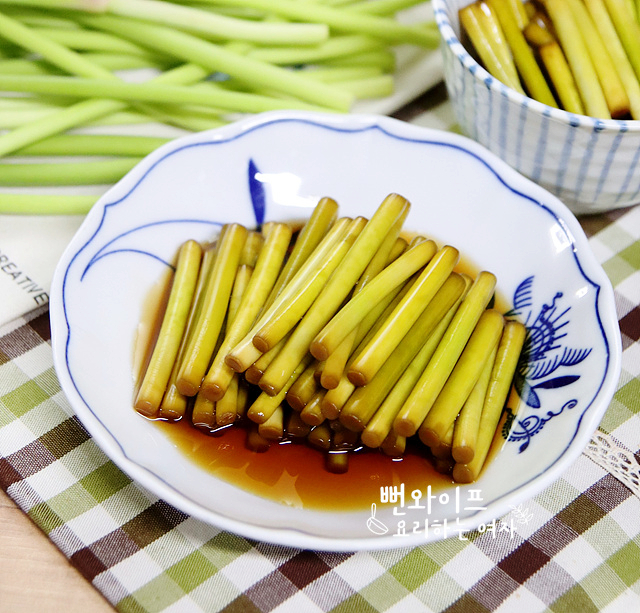
This is a dependable side dish you can make in one go without the hassle of repeatedly boiling and repouring the soy sauce pickling liquid. By balancing the brine with salt and soy sauce, the color stays pleasantly light, while the sweet, tangy, and consistently crisp texture whets your appetite.
- Servings
- about 8–10 servings
- Difficulty
- Easy
- Spiciness
- Not spicy
- Keeps
- 365 days
Ingredients
Ingredients
- Garlic scapes2 bunches, 800 g (after cleaning)
Soy sauce brine
- Water4 cups
- Regular soy sauce (jin-ganjang) (or brewed soy sauce (yangjo-ganjang))1 cup
- Vinegar1 cup
- Sugar1 cup
- Coarse sea salt1 1/2 tbsp
- Soju2/3 cup
- When making pickled garlic scapes, the best time to pick them is when they are at their most tender, light green stage before turning completely dark green.
- This recipe is based on 800 g of garlic scapes after trimming off the flower buds from 2 bunches; because each bunch varies in size, check the approximate weight before preparing the pickling brine.
Steps
Trim the garlic scapes
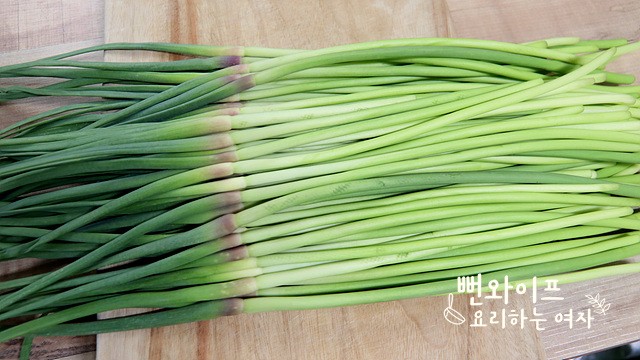
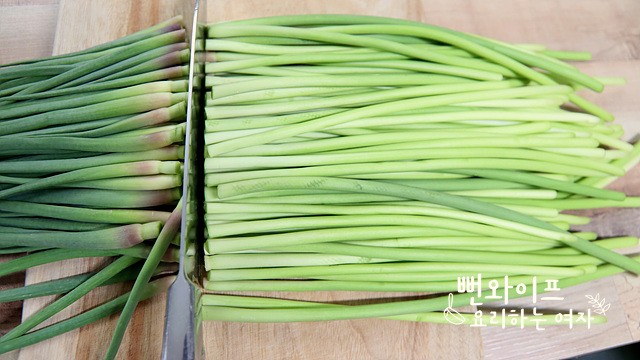
Line up the garlic scapes evenly by their flower buds and trim them off.
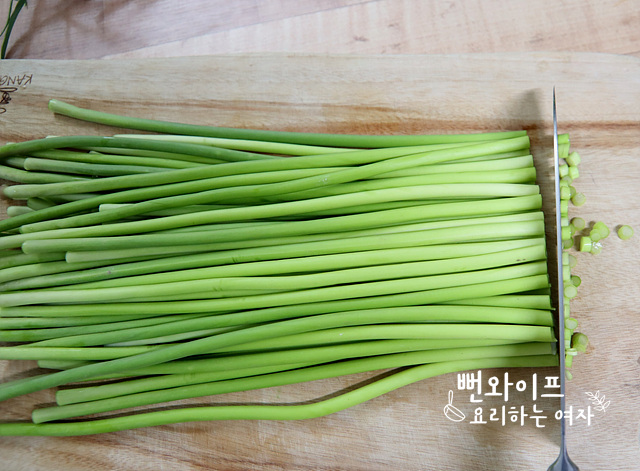
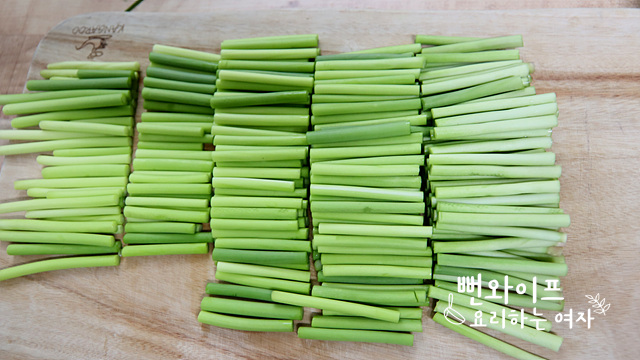
Trim off a little bit of the tip ends as well, since they can have dirt embedded or look messy, then cut them into bite-sized lengths of 3 to 4 cm.
Wash and drain
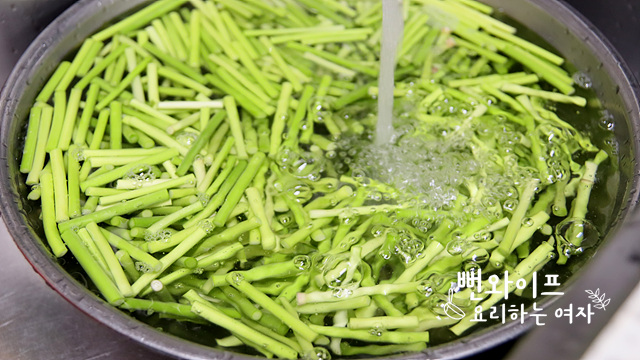
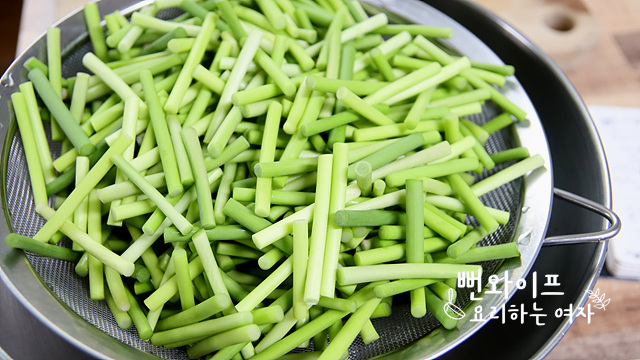
Wash them in running water and drain thoroughly in a sieve.
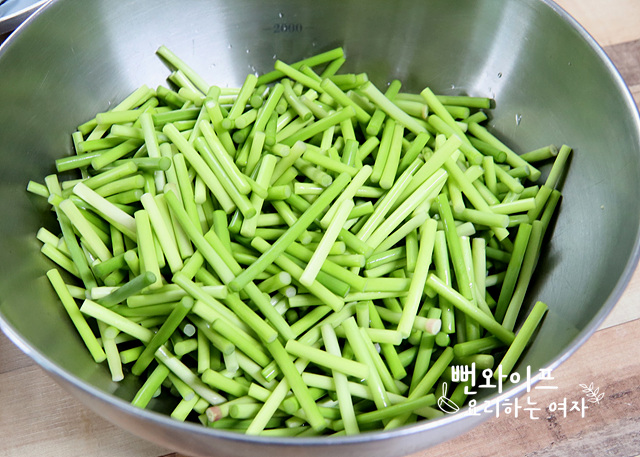
Since you will be pouring hot soy sauce brine over them, place them in advance into a stainless steel bowl or a glass container.
Make the soy sauce brine
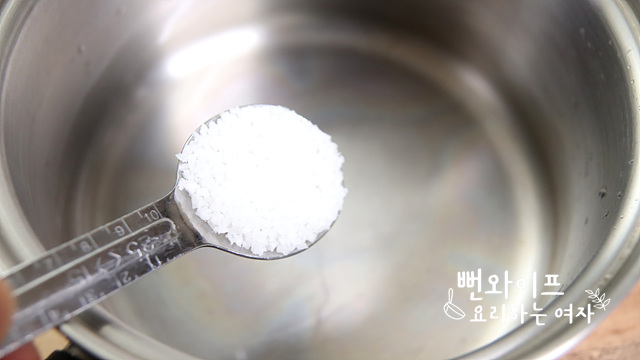
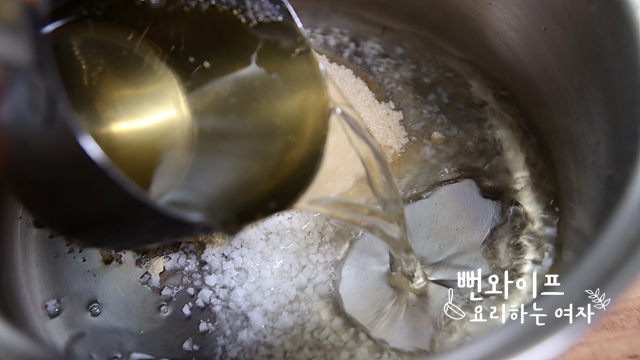
In a pot, add 1+1/2 tbsp coarse sea salt, 1 cup sugar, 1 cup vinegar...
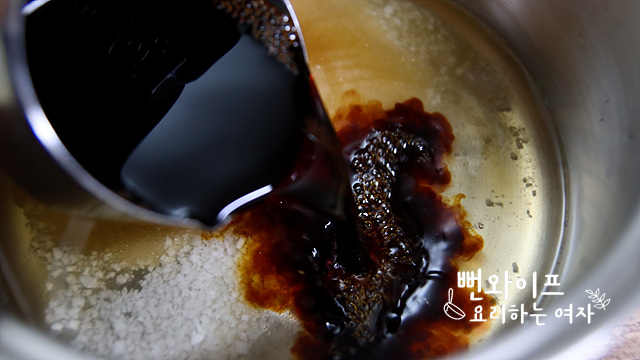
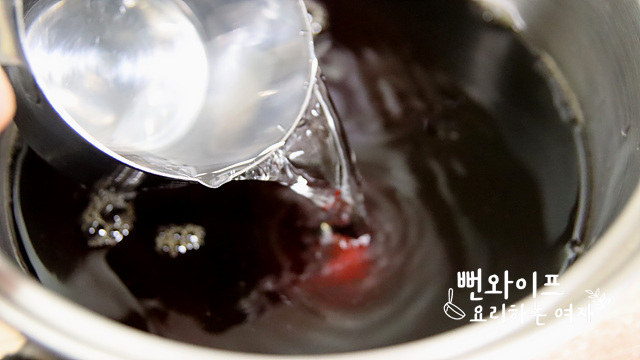
Pour in 1 cup regular soy sauce (jin-ganjang, or brewed soy sauce) and 4 cups water.
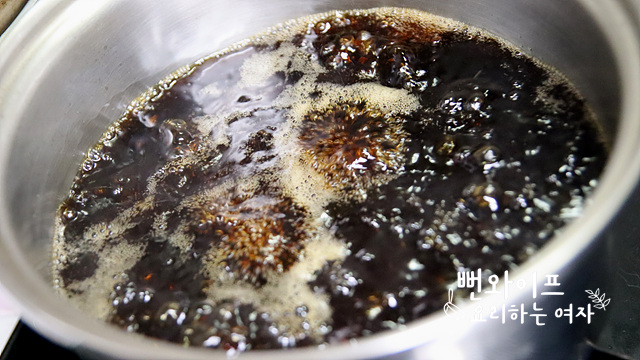
Bring to a rolling boil for 30 seconds so that the salt and sugar dissolve completely.
Pour the soy sauce brine
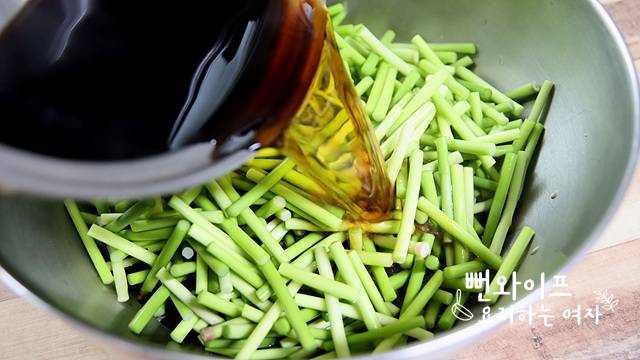
Pour the boiled soy sauce brine directly over the garlic scapes.
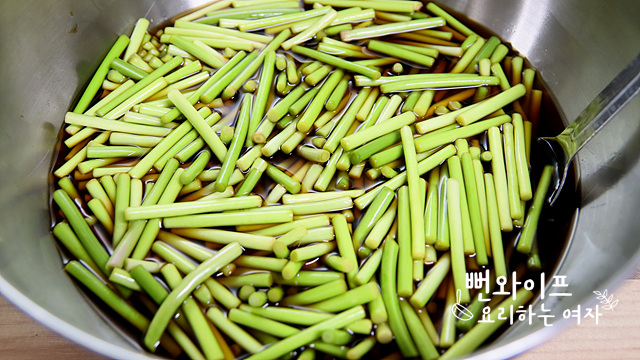
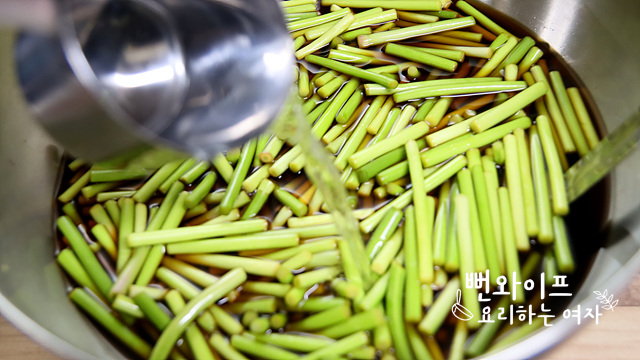
Toss once or twice until completely cooled, then pour in 2/3 cup soju and mix well.
Finish and mature
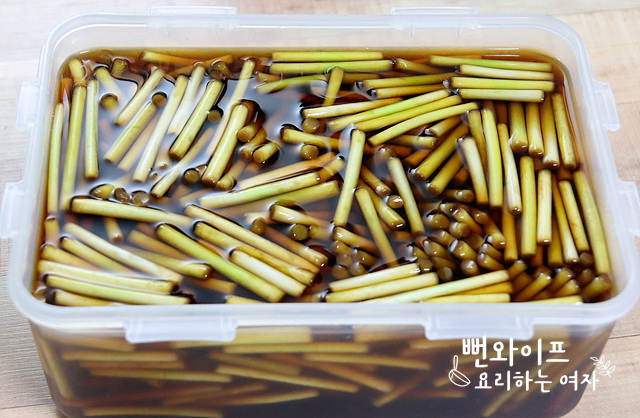
Transfer to a container and weigh them down with a plate so the garlic scapes stay submerged; after maturing at room temperature for 3 to 5 days, the color and flavor of the soy sauce will have soaked in.
It takes a long time in the refrigerator, but it matures well at room temperature, so once it reaches the right flavor, you can move it to the fridge.
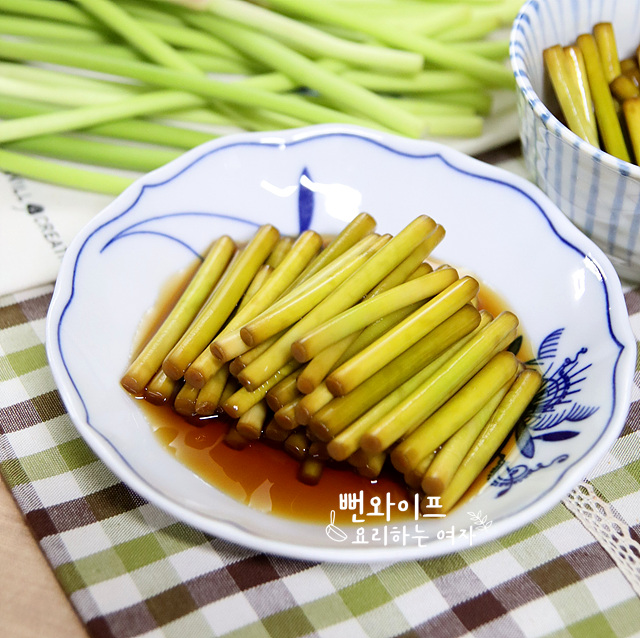
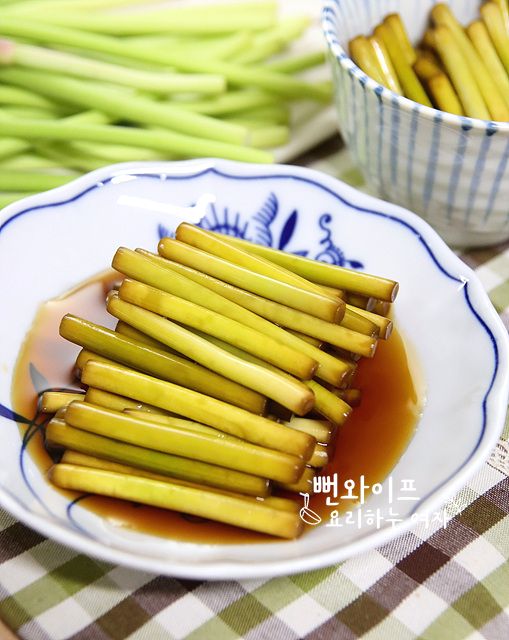
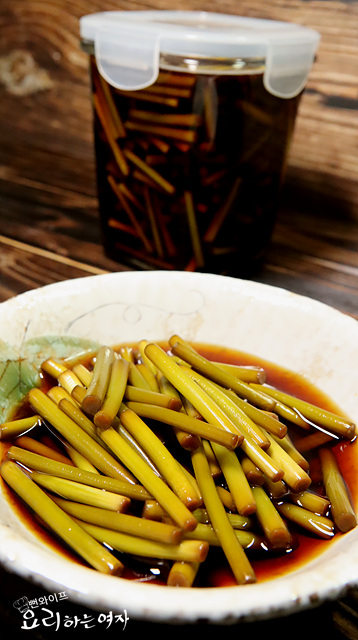
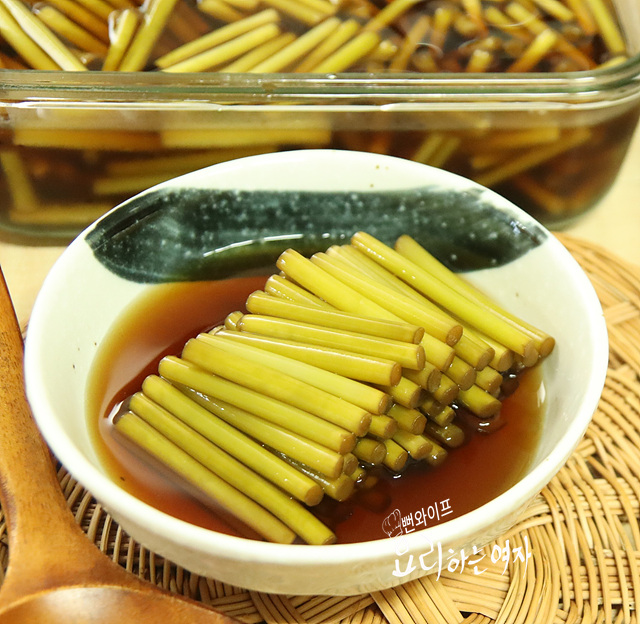
I opened mine after keeping it in the refrigerator for a week.
The color and seasoning have absorbed just right.
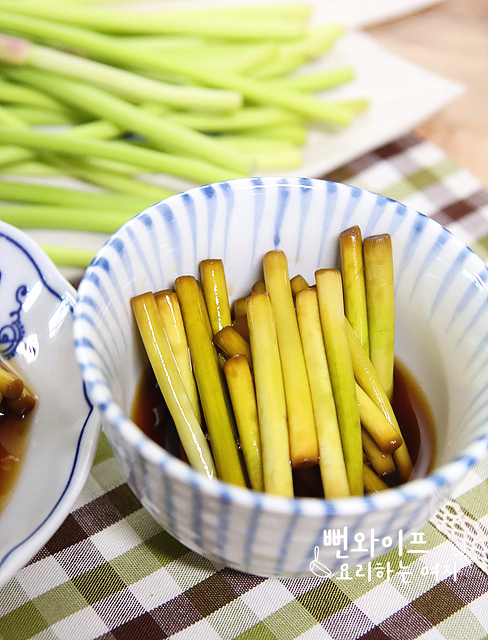
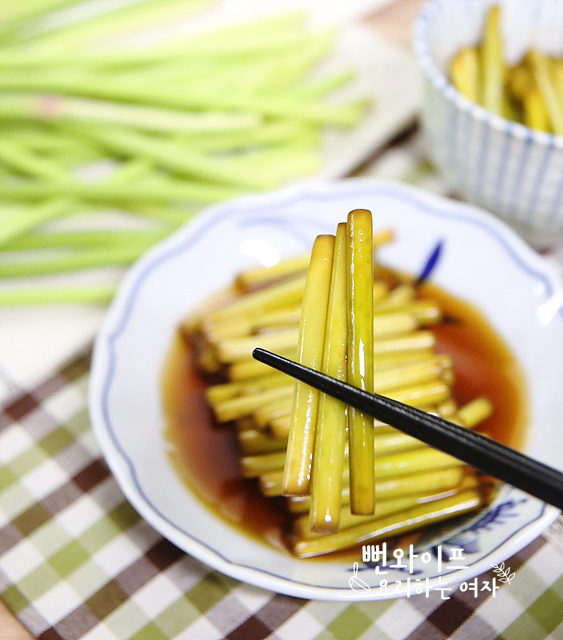
Because it is properly seasoned with both salt and soy sauce, the soy color is not overly dark, keeping it clean-tasting, while the sweet, tangy, and crunchy bite really brings back your appetite.
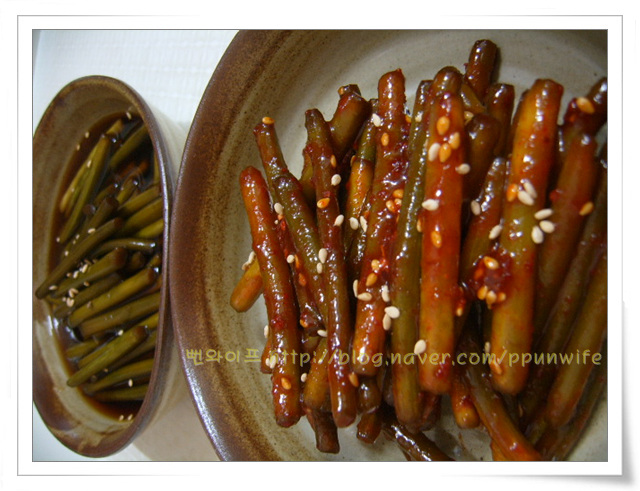
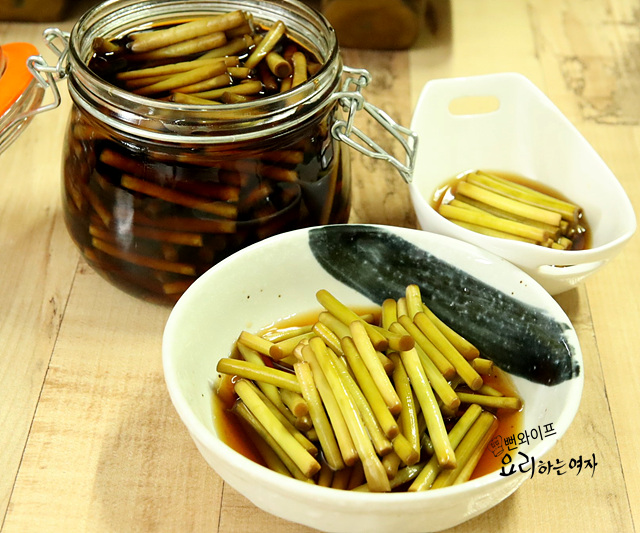
I make a large batch like this once and eat this pickled garlic scapes throughout the whole year.
Storing it in several small containers rather than one large one keeps it fresh and clean to the very end, even with a large amount.
 Ppunwife's tips
- If you pickle garlic scapes that are too thick or large, they can turn tough as moisture escapes or develop a fibrous core that feels unpleasantly stringy.
- Because hot soy sauce pickling liquid must be poured over them, it is best to place the garlic scapes into a stainless steel bowl or glass container beforehand.
- Dividing the pickles into several small containers rather than storing them in a single large one helps prevent spoilage and keeps them tasting fresh to the end, even with a large batch.
FAQ
What kind of garlic scapes are best for pickling?
Choose tender, pale light green garlic scapes before they turn completely deep green so they remain pleasantly crisp and do not become tough during long storage.
When should the soju be added to the pickling brine?
Pour the hot soy sauce brine over the garlic scapes, toss once or twice, and wait until it has cooled completely before stirring in the soju.
How should the pickles be aged after making them?
Weigh down the garlic scapes so they stay submerged in the brine, age them at room temperature for 3 to 5 days until seasoned, and then transfer them to the refrigerator.
Is there a trick to storing a large batch for a long time without spoiling?
Rather than keeping everything in one large container, dividing it into several small airtight containers reduces the risk of spoilage and keeps the pickles fresh to the end.