Crisp Maneuljjong Jangajji (Pickled Garlic Scapes)
A crunchy, satisfying side dish of garlic scapes pickled in a boiled soy sauce brine.
Translated from Korean by AI and not yet checked by a native speaker. Amounts and numbers are taken directly from the original recipe. Read the Korean original →
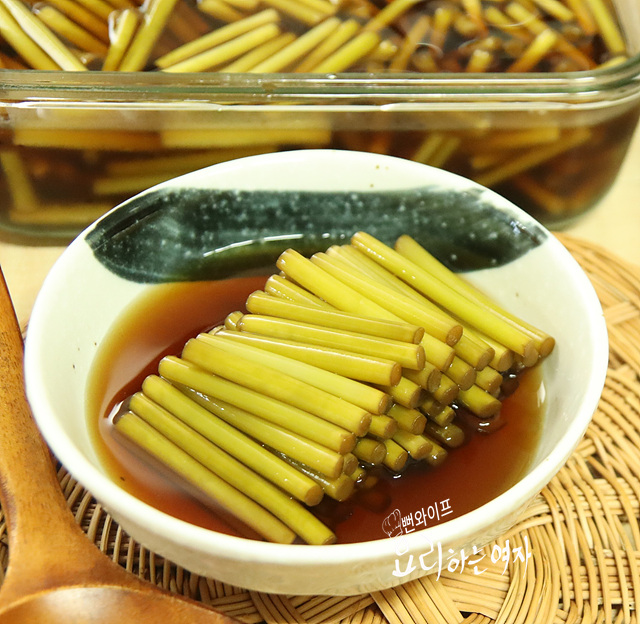
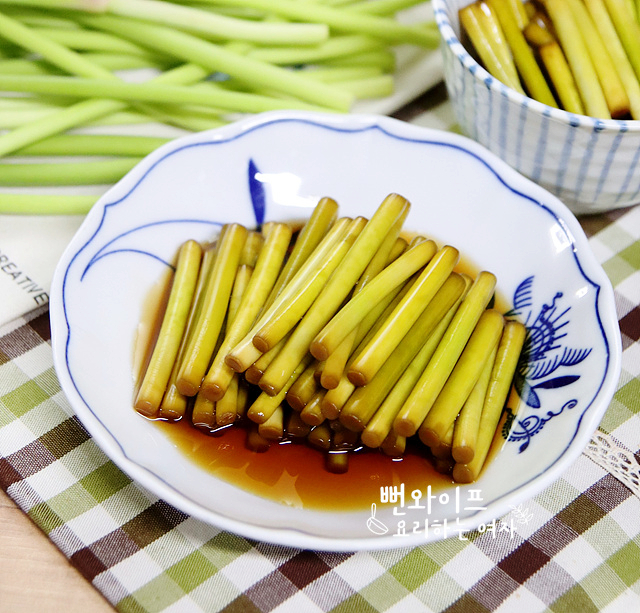
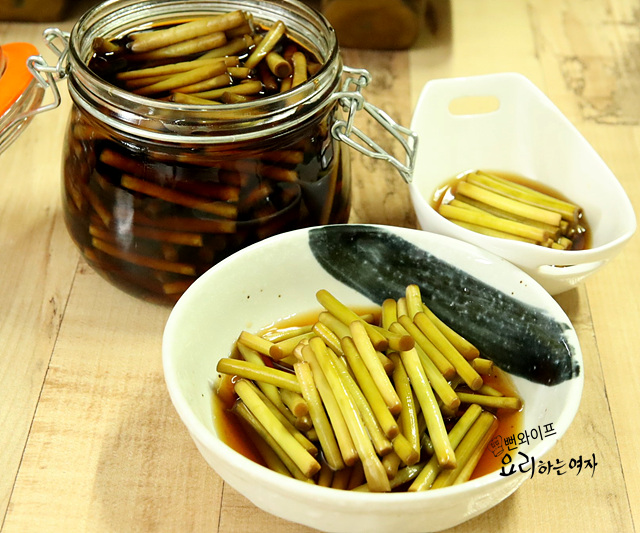
This garlic scape pickle is aged by pouring a boiled brine of soy sauce, vinegar, and sugar over fresh garlic scapes. Reboiling and cooling the pickling liquid drives off moisture released during curing, making it ideal for long-term storage. It pairs wonderfully with grilled meats or can be tossed in a sweet and spicy seasoning as a special treat.
- Servings
- about 10–12 servings
- Cook time
- 10 minprep not included
- Difficulty
- Easy
- Spiciness
- Not spicy
Ingredients
Ingredients
- Garlic scapes2 bunches, 900 g
Soy Sauce Pickling Brine
- Regular soy sauce (jin-ganjang)3 cups
- Water3 cups
- Vinegar2 cups
- Sugar1 cup
Pickle Seasoning
- Pickled garlic scapes100 g
- Gochujang (Korean red chili paste)0.5 tbsp
- Gochugaru (Korean chili flakes)0.5 tbsp
- Corn syrup (mulyeot)0.5 tbsp
- Toasted sesame oil1 tsp
- Toasted sesame seedsa little
Steps
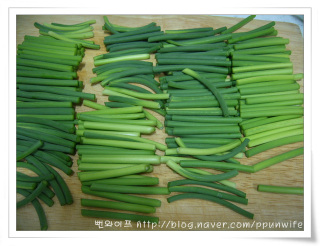
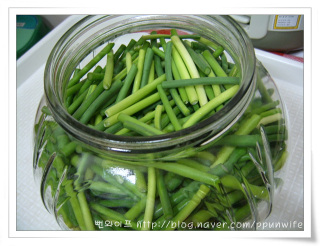
1. Wash the garlic scapes thoroughly and cut them into 3-4 cm lengths.
2. Place all the garlic scapes into a glass jar or airtight container.
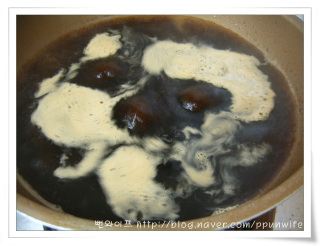
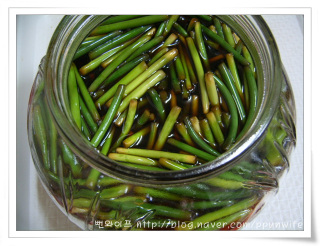
3. Combine 3 cups regular soy sauce (jin-ganjang), 3 cups water, 2 cups vinegar, and 1 cup sugar, then boil vigorously for about 10 minutes.
Let the boiled pickling liquid cool.
(Adjust the seasoning amounts to suit your taste when preparing the soy sauce brine.)
4. Pour the soy sauce liquid into the container and let it cure at room temperature for 5 days.
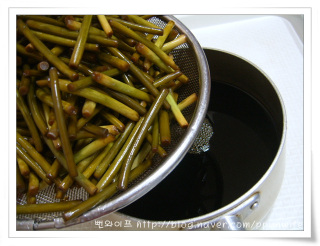
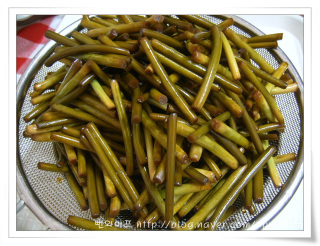
5. After 5 days, pour off only the soy sauce liquid, bring it to a boil, let it cool, and pour it back over the garlic scapes to cure for another 5 days.
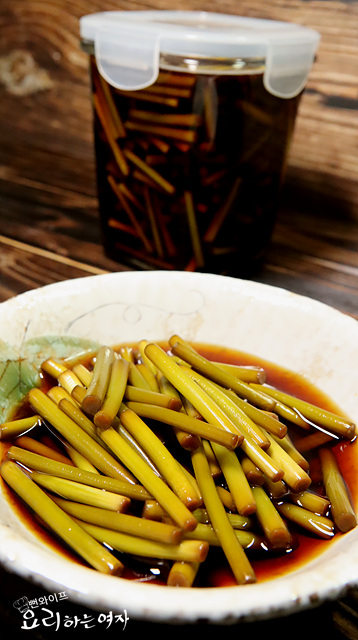
Repeating this 2-3 times will give you well-seasoned garlic scape pickles. From this point on, you can store them in the refrigerator and enjoy them.
If storing for more than a month, just boil the soy sauce brine, cool it, and pour it back in about once a month as described above.
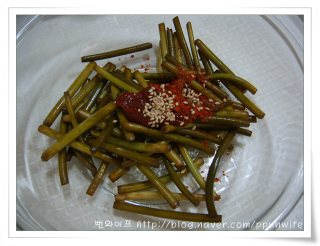
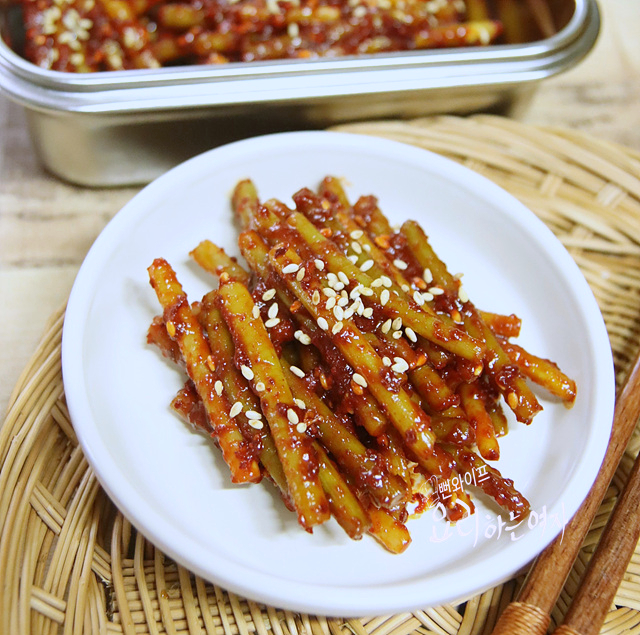
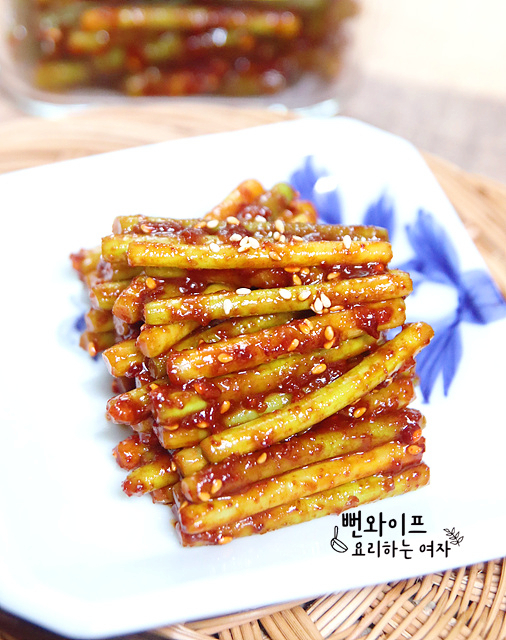
Try taking out some pickled garlic scapes and tossing them in seasoning.
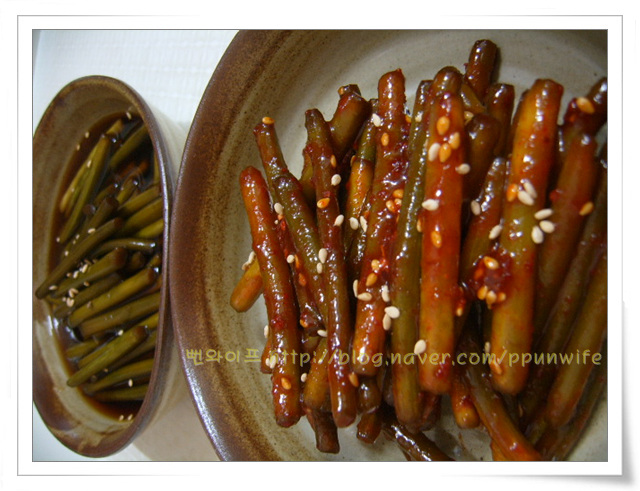
It is delicious tossed with 100 g pickled garlic scapes, 0.5 tbsp gochujang (Korean red chili paste), 0.5 tbsp gochugaru (Korean chili flakes), 0.5 tbsp corn syrup (mulyeot), 1 tsp toasted sesame oil, and a little toasted sesame seeds.
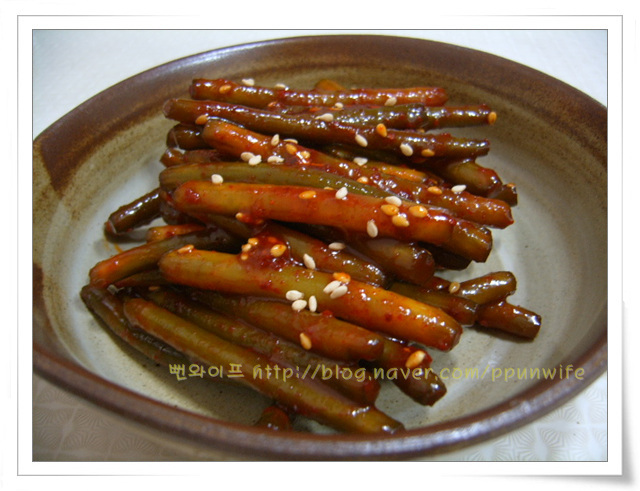
Here are the pickles tossed in seasoning.
 Ppunwife's tips
- For all soy sauce pickles, you repeatedly boil and pour back the very same brine you made at first. Because pickles are meant for long-term storage, a lot of moisture comes out of the vegetables while they cure in the soy sauce brine. This moisture can cause the pickles to spoil, so repeating the boiling process evaporates excess water, sterilizes the brine, and allows for long-term storage.
FAQ
Why do you repeatedly boil and pour the pickling liquid?
While the garlic scapes cure, moisture is drawn out of the vegetables, which can cause them to spoil if left as is. Reboiling the pickling liquid, letting it cool, and pouring it back evaporates that excess water and sterilizes the brine, making long-term storage possible.
Do I need to make a fresh batch of pickling liquid each time I reboil it?
You do not make a new batch; simply pour off the original soy sauce brine that was in the jar, bring it back to a boil, let it cool completely, and pour it back in.
Is there another way to serve these pickles?
You can take out the well-cured pickles and toss them with gochujang, gochugaru, corn syrup, toasted sesame oil, and toasted sesame seeds to enjoy them as a spicy seasoned side dish.
Should I pour the pickling liquid over the scapes right after boiling?
The boiled soy sauce pickling liquid must be completely cooled before pouring it over the garlic scapes.