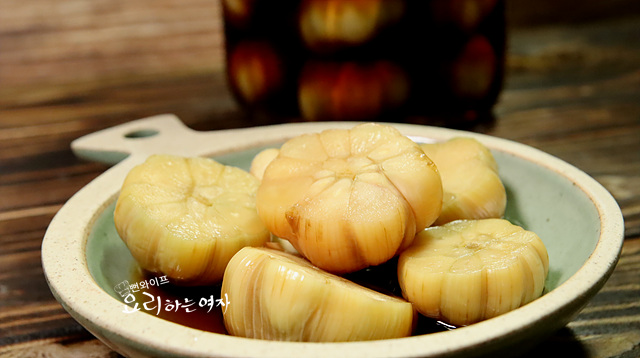
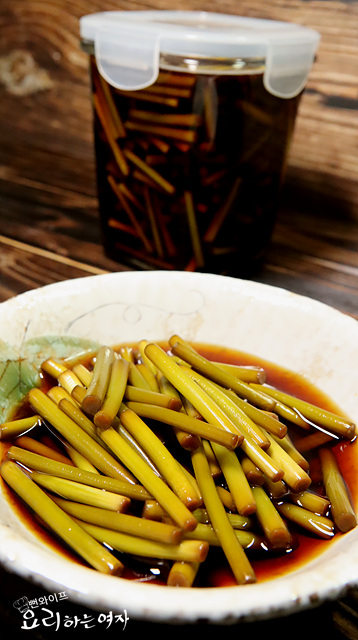
Clean Salt-Pickled Maneuljjong Jangajji (Pickled Garlic Scapes)
A 1-year basic side dish of maneuljjong jangajji (pickled garlic scapes) fermented in a salt brine for a clean taste.
Translated from Korean by AI and not yet checked by a native speaker. Amounts and numbers are taken directly from the original recipe. Read the Korean original →
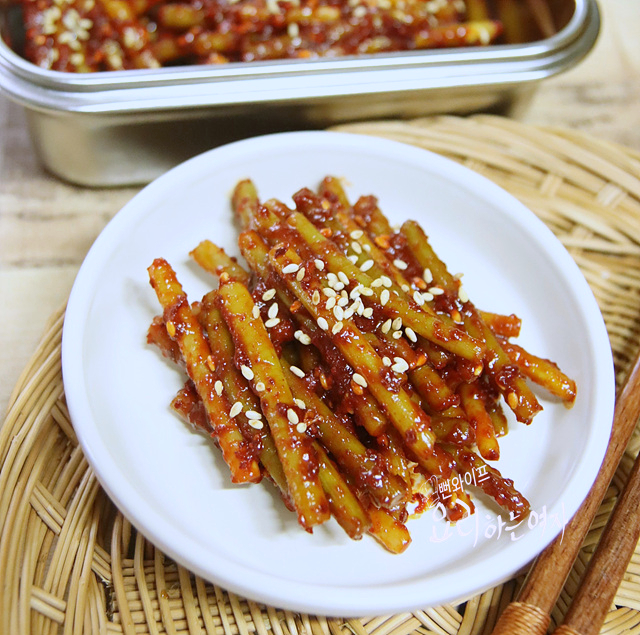
Garlic scapes pickled in a brine boiled with coarse sea salt instead of soy sauce, poured hot to preserve their crisp texture. After aging in the shade for ten days or more, enjoy them plain or tossed in a spicy seasoning as a reliable side dish all four seasons.
- Servings
- about 10–12 servings
- Difficulty
- Easy
- Spiciness
- Mildly spicy
- Keeps
- 365 days
Ingredients
Ingredients
- Garlic scapes1 kg (after cleaning)
Pickling brine
- Water6 cups
- Sugar2 cups
- Vinegar2 cups
- Coarse sea salt1/2 cup
- Soju1 cup
Seasoned pickled garlic scapes
- Fermented garlic scapes200 g
- Gochugaru (Korean chili flakes)1 tbsp
- Gochujang (Korean red chili paste)1 tbsp
- Corn syrup (mulyeot)1 tbsp
- Toasted sesame oil1 tbsp
- Toasted sesame seeds1 tbsp
- A bundle of garlic scapes is usually about 500g, and here they are trimmed of flower buds to make 1kg.
- You can pickle them whole and long to use in gimbap, or cut them into your desired length.
Steps
Prepare the garlic scapes
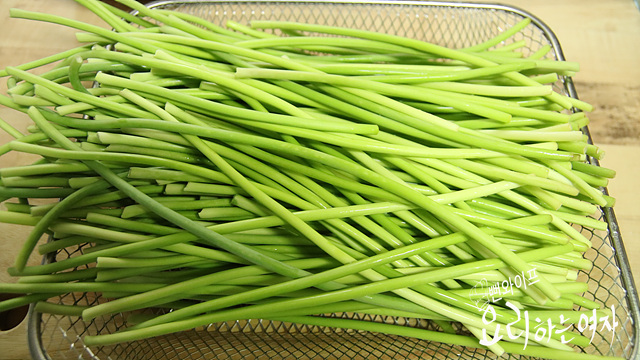
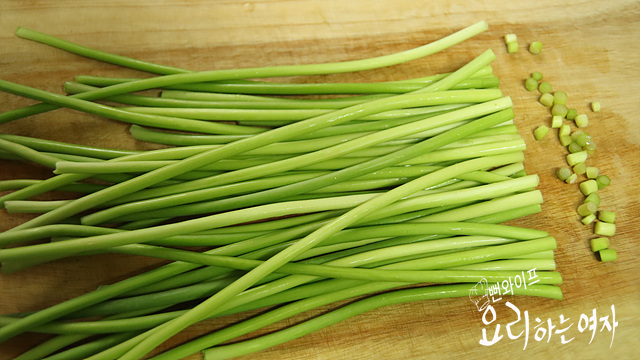
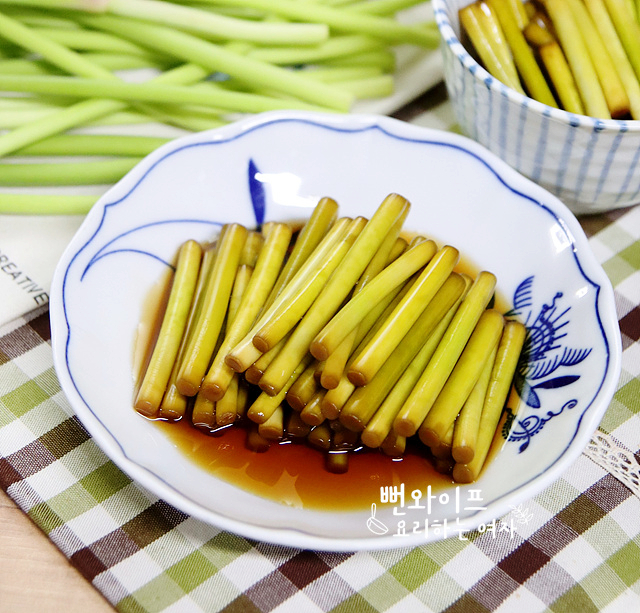
Cut off the flower buds, wash under running water, and drain the moisture thoroughly.
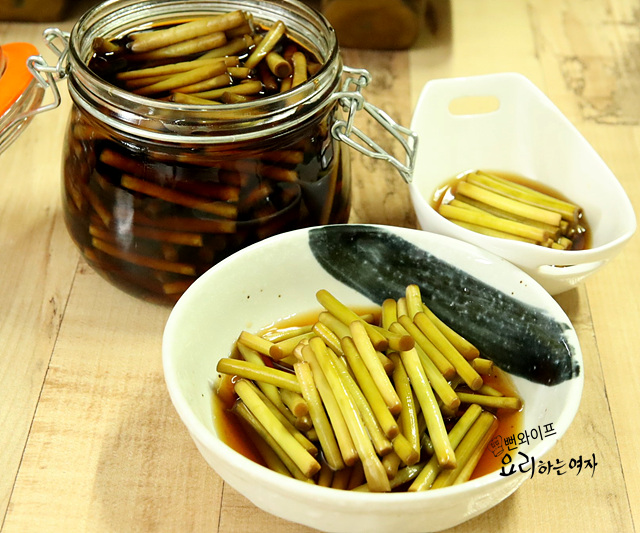
Trim away just the dry tips and ferment them whole and long in the pickling brine.
(I did this because I want to use them in gimbap too, but you can cut them to whatever length you like.)
Make the pickling brine
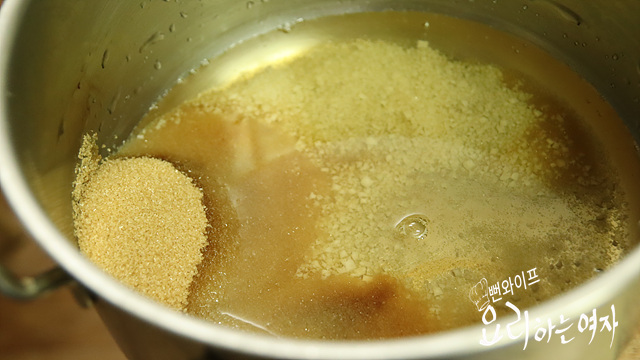
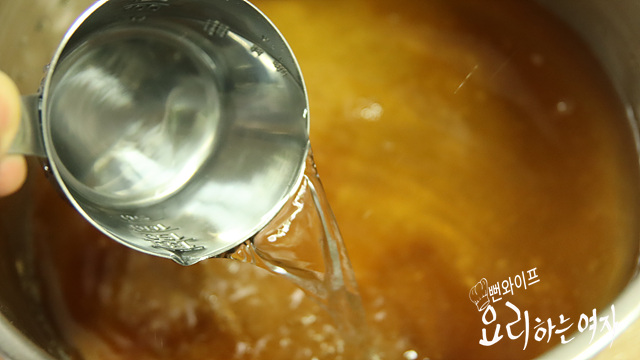
Pour 6 cups water, 2 cups sugar, 2 cups vinegar, and 1/2 cup coarse sea salt into a pot.
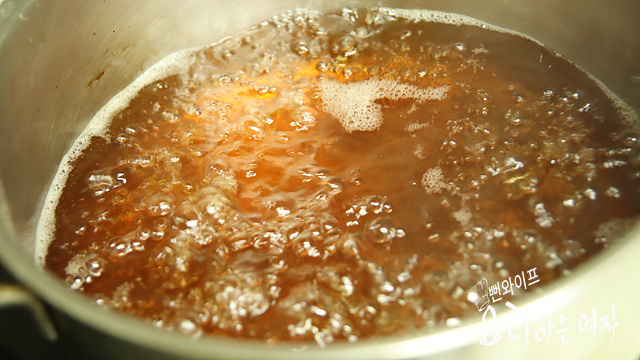
Turn on the heat and bring to a boil while stirring so the sugar at the bottom dissolves well.
I used brown sugar because I was out of white sugar, so the color is dark. I did not pour in soy sauce.
Once it comes to a boil, let it boil for about 30 seconds more, and then right away...
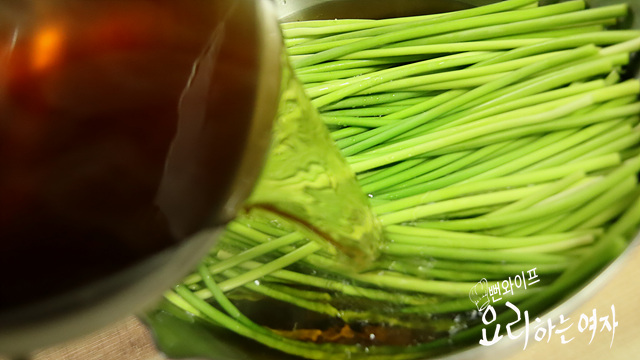
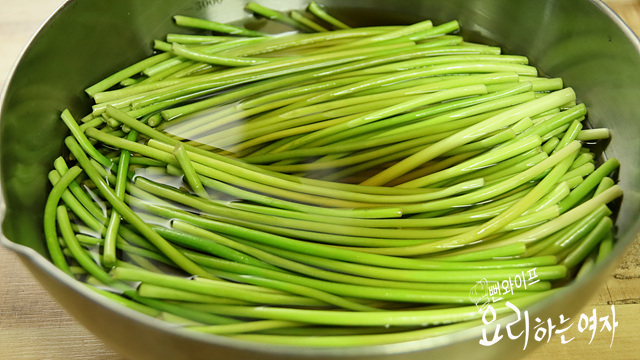
Pour it directly over the garlic scapes. Do not cool it down; pour it right after boiling.
As it cools, the color of the garlic scapes will begin to change.
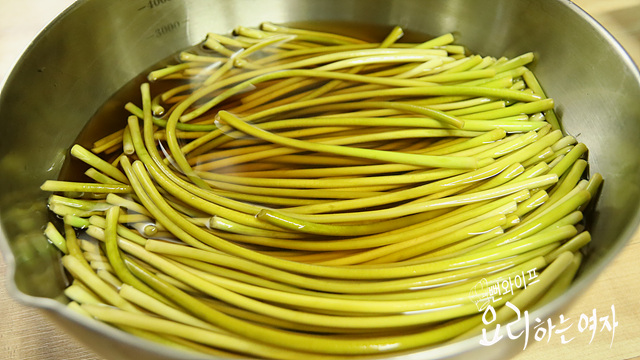
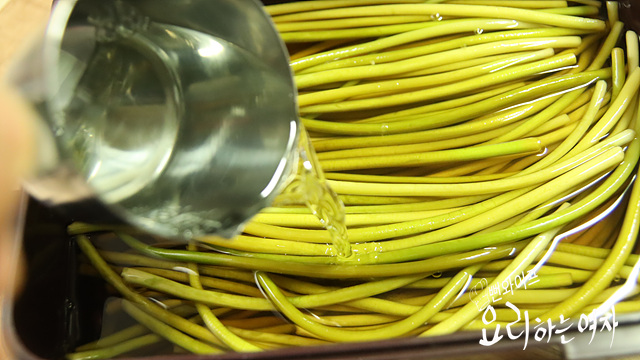
Turn them over top to bottom once while cooling, and once completely cooled, their color will turn quite yellowish.
Now pour both the garlic scapes and all the pickling brine into a container, and at the end, pour in 1 cup soju, which has sterilizing and disinfecting effects, and mix.
Soju works as a natural preservative, so you can enjoy them for a long time without spoiling.
Ferment
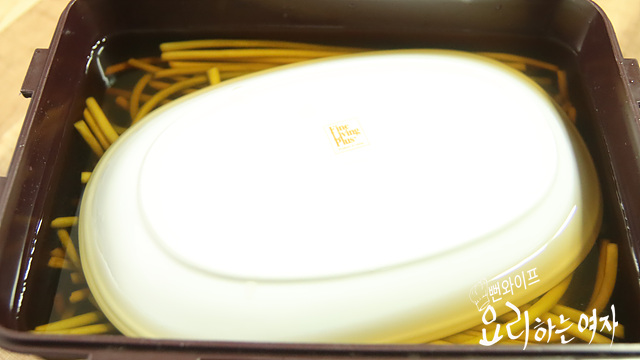
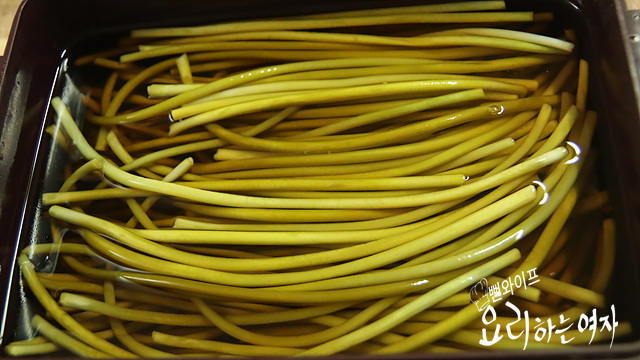
Press down with a large plate so they do not float, and ferment in the shade out of sunlight for at least 10 days.
It is similar to the fermentation time for pickled cucumbers (oiji); warmer weather speeds up the process, so taste the garlic scapes occasionally, and once they taste right, store them in the refrigerator to eat.
When aging pickled cucumbers or jangajji, ferment them at room temperature.
Season fermented garlic scapes
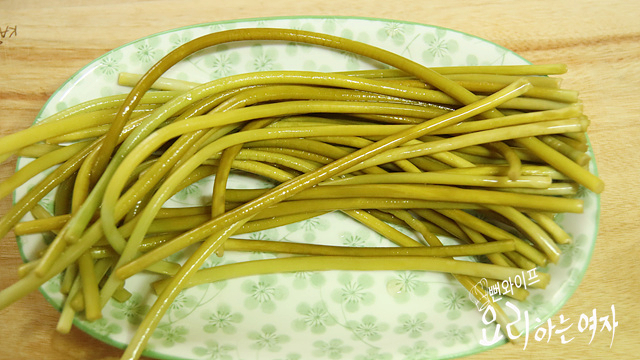
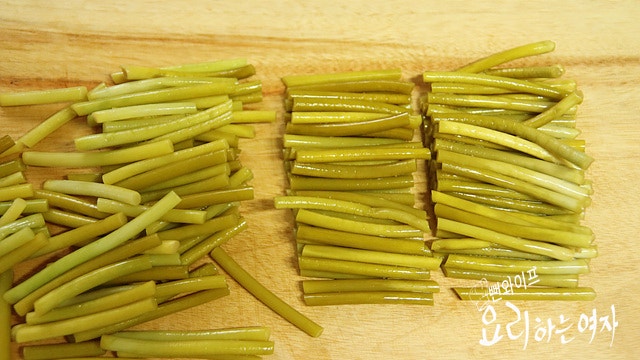
After fermenting for ten days, I kept these in the refrigerator and took them out yesterday. This is 200g.
They are not overly salty, so I sliced them right away without rinsing in water.
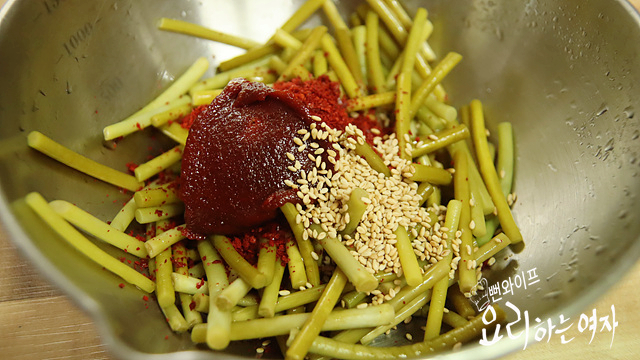
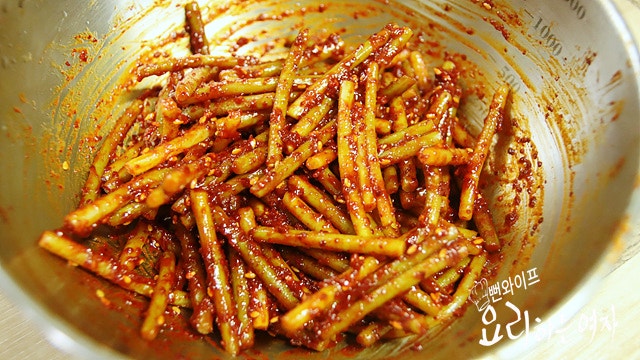
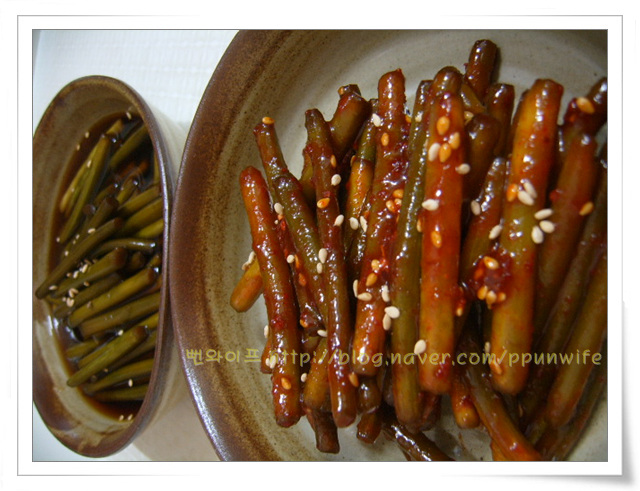
Add 1 tbsp gochugaru, 1 tbsp gochujang, 1 tbsp corn syrup, 1 tbsp toasted sesame oil, and 1 tbsp toasted sesame seeds, toss evenly, and finish.
Adjust the amount of gochujang depending on the saltiness of the garlic scapes, and add vinegar or sugar to taste before tossing.
Finish
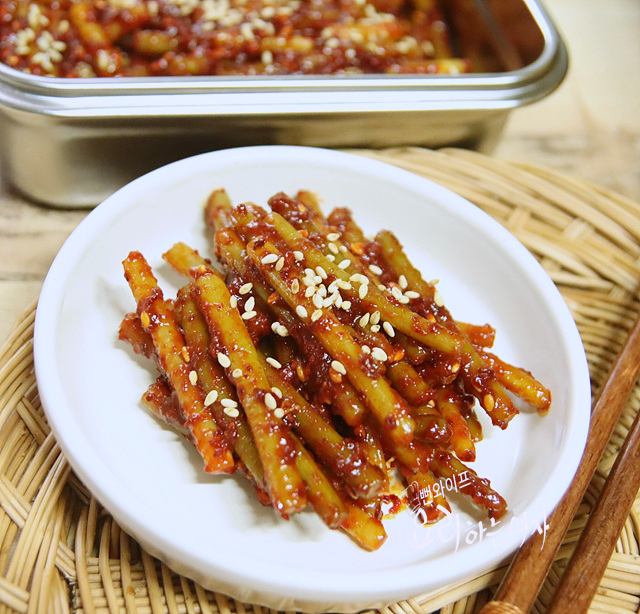
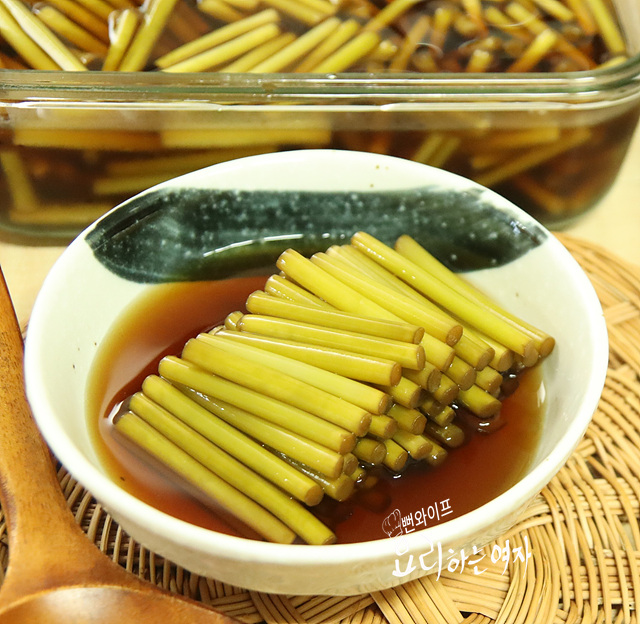
Here is the seasoned pickled garlic scapes made with the salt version.
Looks delicious, right?
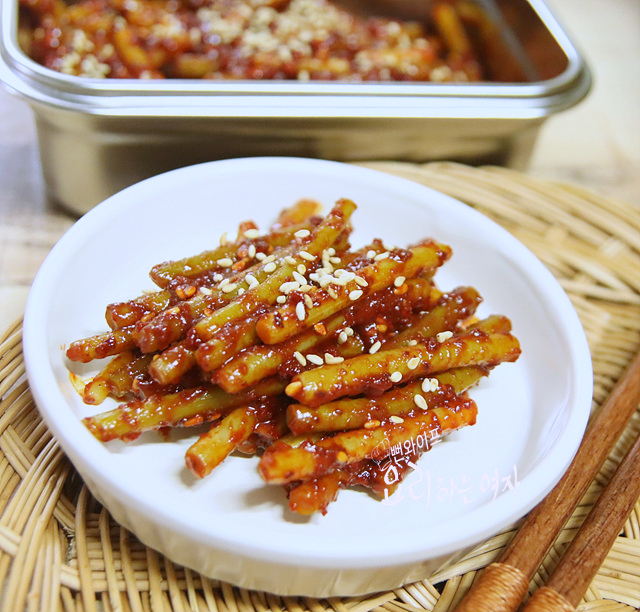
You can enjoy them clean without seasoning, or toss them in a spicy seasoning for great flavor.
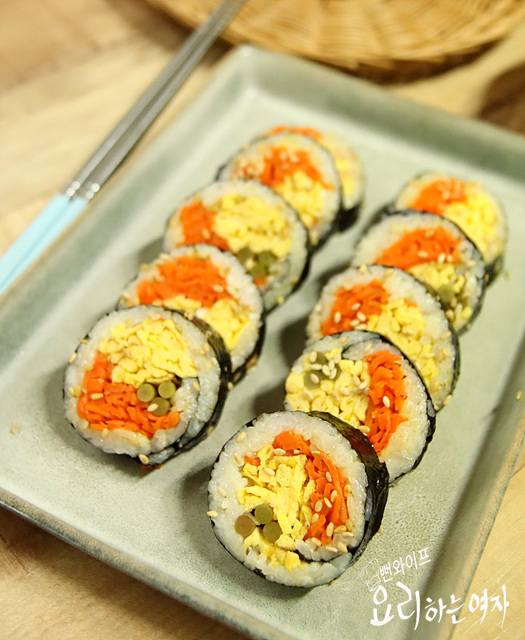
I cut them long to use in gimbap instead of yellow pickled radish, and it works wonderfully. You can also chop them finely to use in rice balls.
Put up a batch of this pickled garlic scapes to use as a versatile side dish, and you will be well stocked for 1 full year.
 Ppunwife's tips
- Pour the boiled pickling brine directly over the garlic scapes right away without cooling it down.
- Adding 1 cup soju at the end provides sterilizing and natural preservative effects, allowing you to enjoy them for a long time without spoiling.
- When fermenting pickled cucumbers or jangajji, keep them at room temperature; warmer weather speeds up fermentation, so check the taste occasionally and refrigerate once ready.
- When seasoning, adjust the amount of gochujang according to the saltiness of the garlic scapes, and add vinegar or sugar to your taste.
FAQ
Should I let the pickling brine cool before pouring it?
Pour the boiled brine directly over the garlic scapes while it is still hot without cooling, which keeps their color and texture crisp.
Why do you add soju to the pickling brine?
Soju provides sterilizing and disinfecting effects while acting as a natural preservative, helping preserve them long term without spoiling.
Where should I store them while fermenting?
Press the scapes down so they do not float, and ferment them at room temperature in the shade away from direct sunlight for at least 10 days.
Do I need to rinse the fermented garlic scapes in water before seasoning?
The salt brine is not excessively salty, so you can slice them directly and toss them in seasonings without rinsing in water.