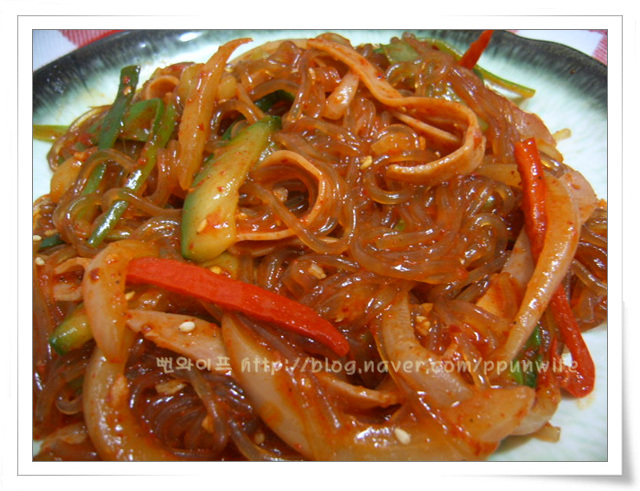
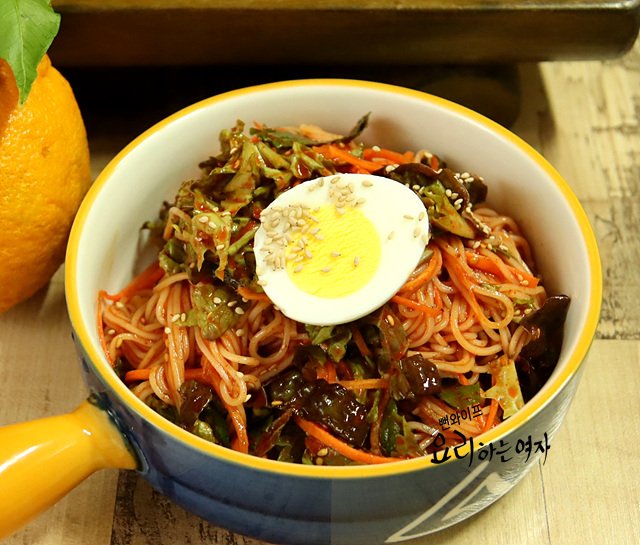
Moist Bibim Dangmyeon (Spicy Glass Noodles) with Gochujang Sauce
A noodle dish of boiled glass noodles topped with vegetables and a gochujang sauce, tossed moist with warm broth.
Translated from Korean by AI and not yet checked by a native speaker. Amounts and numbers are taken directly from the original recipe. Read the Korean original →
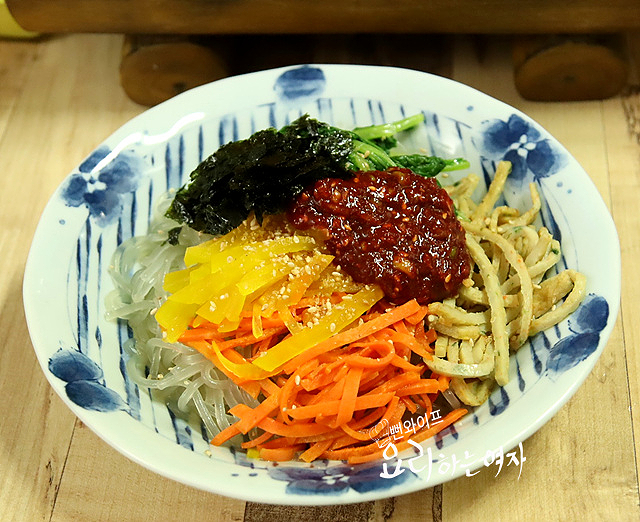
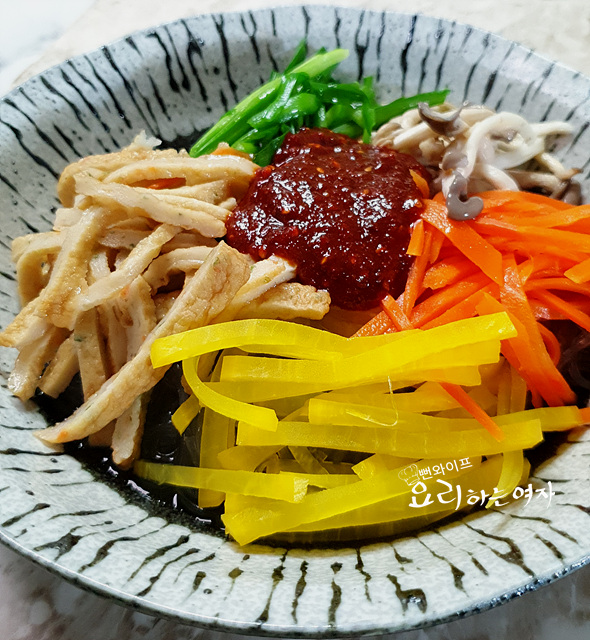
A Busan specialty of boiled sweet potato glass noodles topped with stir-fried fish cake, carrots, blanched greens, and yellow pickled radish, all mixed with a sweet and spicy gochujang sauce. The secret is pouring in a little warm anchovy broth to keep the noodles moist as you toss them. With simple ingredients, you can easily pull together a satisfying single-bowl meal.
- Servings
- 2 servings
- Difficulty
- Medium
- Spiciness
- Spicy
Ingredients
Ingredients
- Sweet potato glass noodles (dangmyeon)160 g
- Square fish cake (eomuk)1 sheet
- Winter cabbage greens (gyeoulcho) (or garlic chives (buchu) and spinach)
- Yellow pickled radish (danmuji)
- Carrot
- Seaweed flakes
- Anchovy broth (or fish cake broth)1 cup
Seasoning
- Gochugaru (Korean chili flakes)1 tbsp
- Gochujang (Korean red chili paste)1 tbsp
- Regular soy sauce (jin-ganjang) (or brewed soy sauce (yangjo-ganjang))1 tbsp
- Minced green onion2 tbsp
- Minced garlic1 tsp
- Corn syrup (mulyeot)1 tbsp
- Water1 tbsp
- Toasted sesame oil1 tbsp
- Toasted sesame seeds1/2 tbsp
- For the green vegetable in bibim dangmyeon, spinach is used in winter, garlic chives in summer, or winter cabbage greens also work wonderfully.
Steps
Prepare and cook the toppings
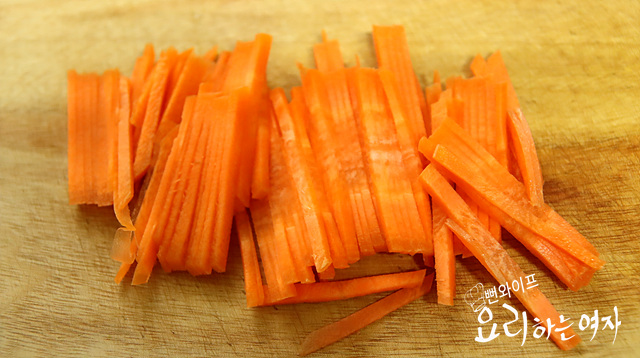
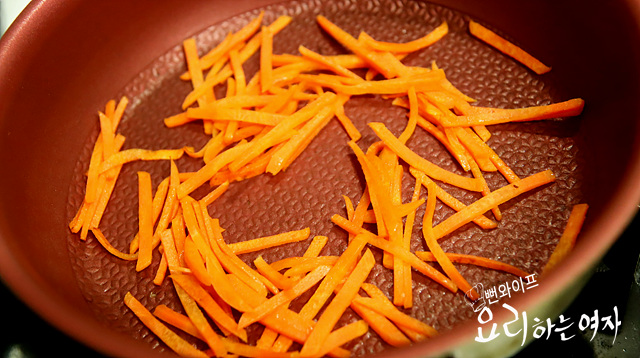
Finely julienne the carrot and stir-fry it with a little salt.
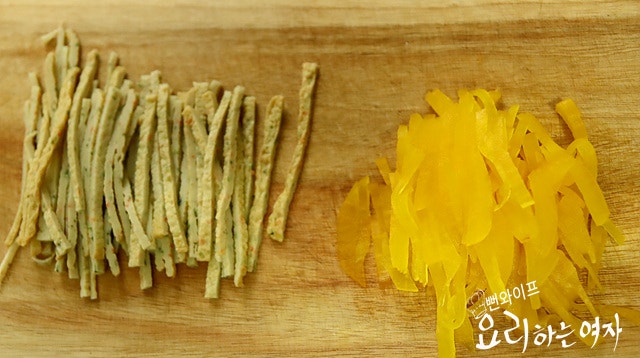
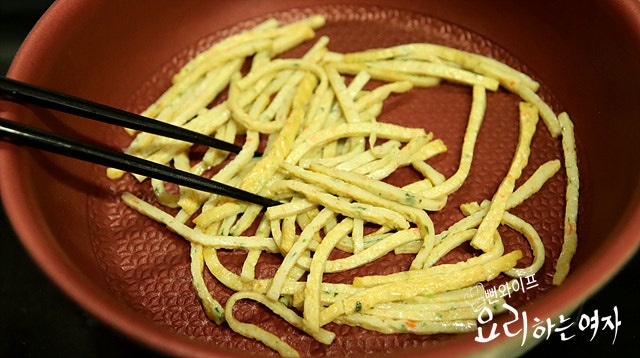
Finely julienne the fish cake and yellow pickled radish, then lightly stir-fry the julienned fish cake in a little oil.
Blanch the greens and noodles
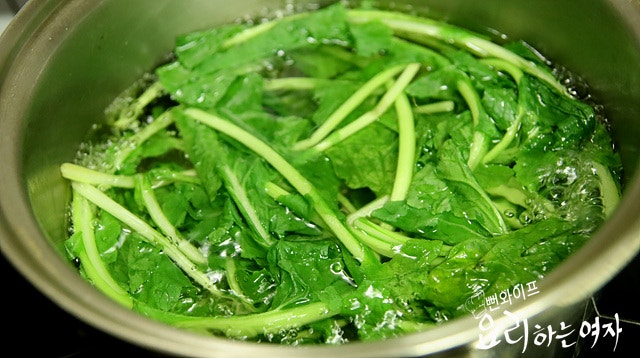
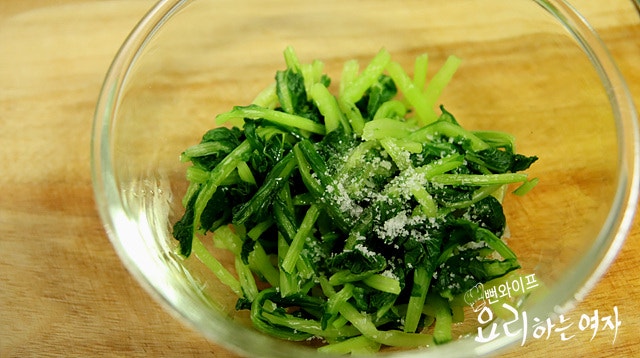
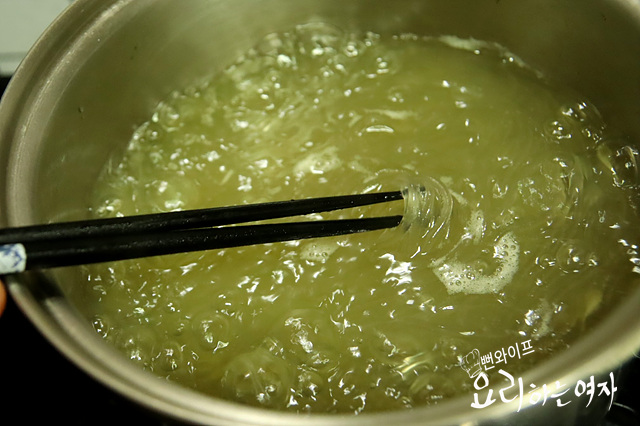
Lightly blanch the winter cabbage greens, spinach, or garlic chives in rolling boiling water, rinse in cold water, squeeze out the moisture thoroughly, and season with salt.
In the same water used to blanch the greens, add the sweet potato glass noodles, boil until cooked, and drain.
Prepare the sauce and broth
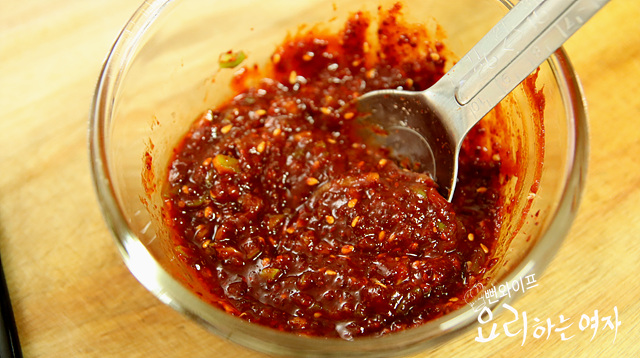
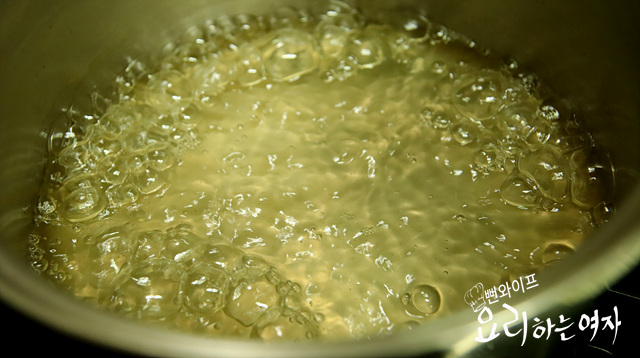
Combine all the seasoning ingredients, and heat about 1 cup of anchovy broth until warm.
Assemble and serve
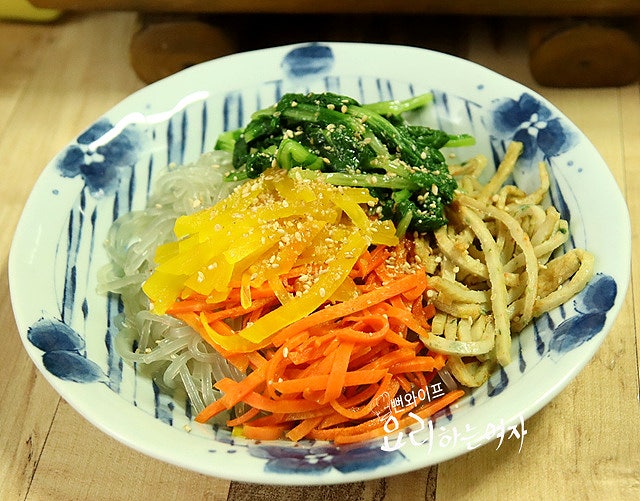
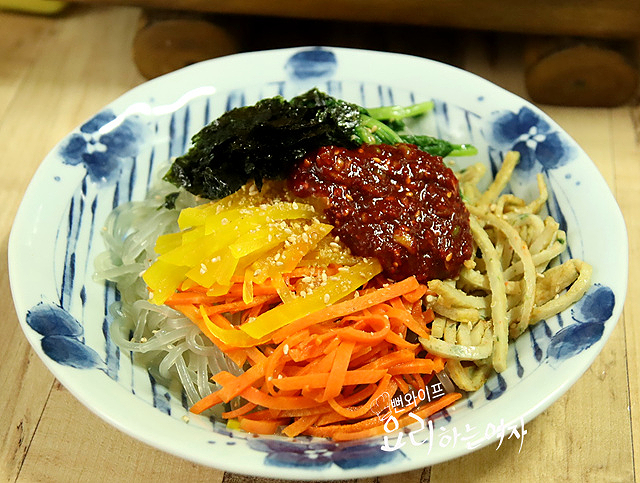
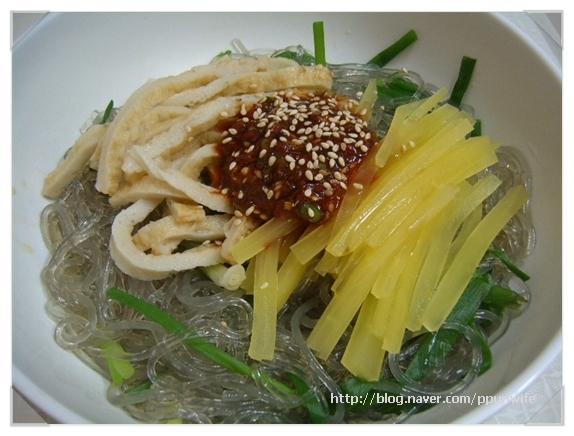
Right before eating, warm the sweet potato glass noodles, place them on a plate, and pour about 1/3 cup to 1/2 cup of hot anchovy broth over them to keep them moist...
Arrange the rest of the ingredients evenly over the top.
Add a generous 1 tbsp of sauce, sprinkle with seaweed flakes and sesame seed powder, and it is ready.
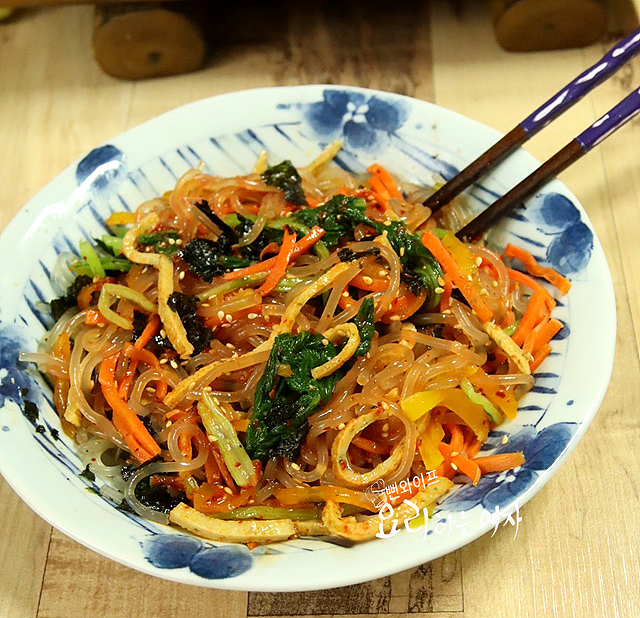
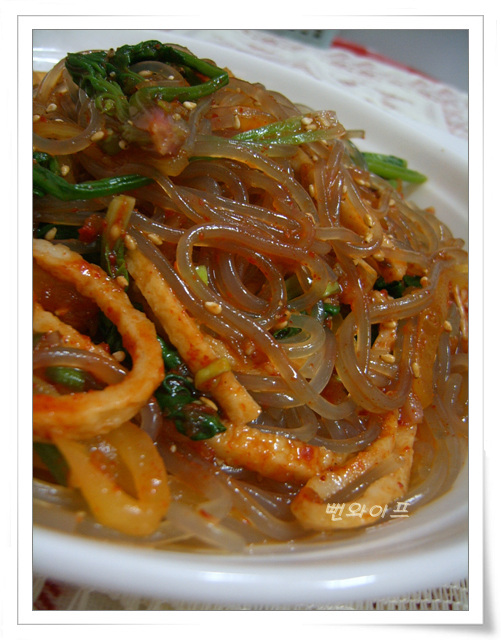
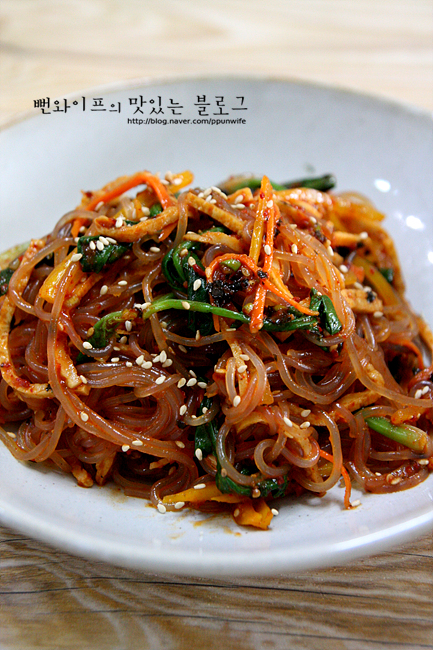
Toss well so the sauce coats everything evenly; it may look simple, but it tastes truly delicious.
It is something I always had whenever I went to Busan, so it is real comfort food full of memories for me.
Whenever you want a simple meal, be sure to try this spicy bibim dangmyeon as a special treat.
You will not regret it.
 Ppunwife's tips
- The spicy mixing sauce is the key to the flavor; unlike the sauce for janchi guksu, adding gochujang gives it a rich, pleasantly sweet profile.
FAQ
What can I substitute for the green vegetable?
Instead of winter cabbage greens, you can lightly blanch spinach or garlic chives depending on the season.
Why do you add anchovy broth when mixing the sauce?
Pouring a little hot anchovy broth over the warm noodles keeps them moist and prevents them from sticking together, making them easy to mix.
Can I use another broth instead of anchovy broth?
Aside from anchovy broth, a warm fish cake broth also pairs wonderfully.
What makes this gochujang sauce unique?
Unlike typical seasonings for banquet noodles (janchi guksu), this sauce includes gochujang, giving it a spicy yet gently sweet flavor.