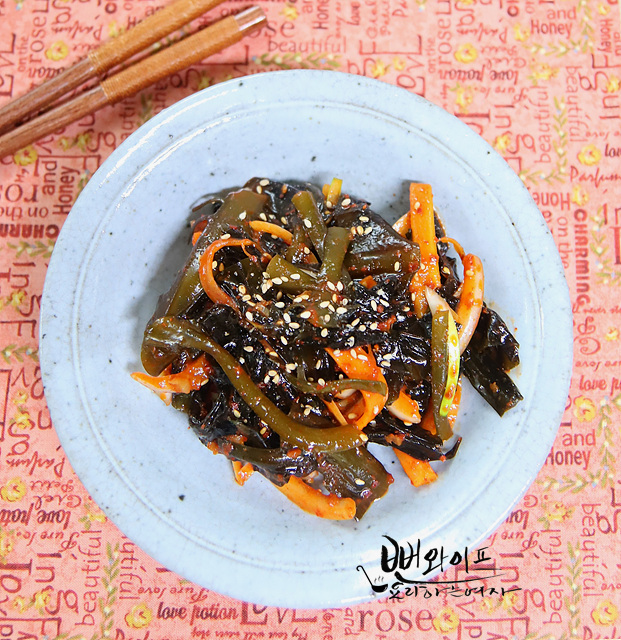
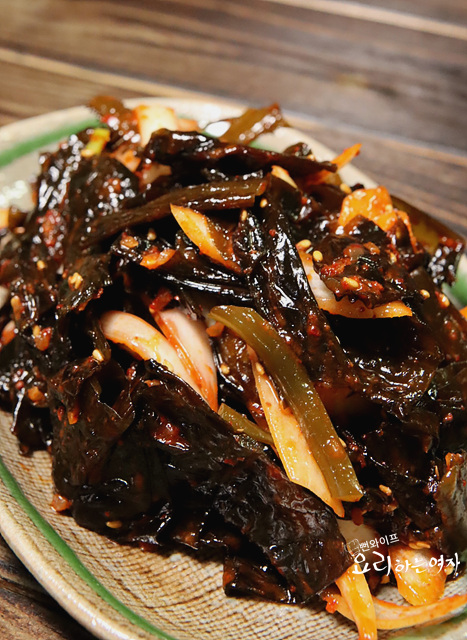
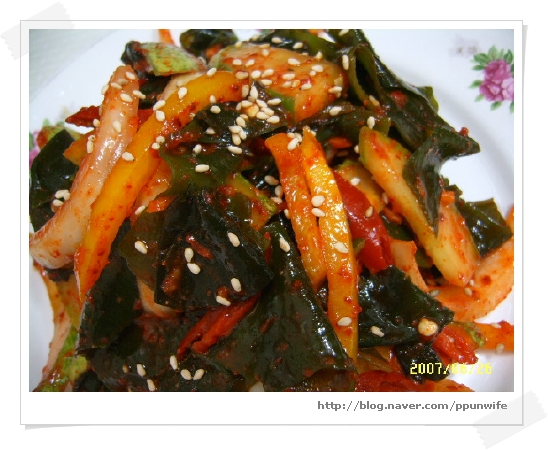
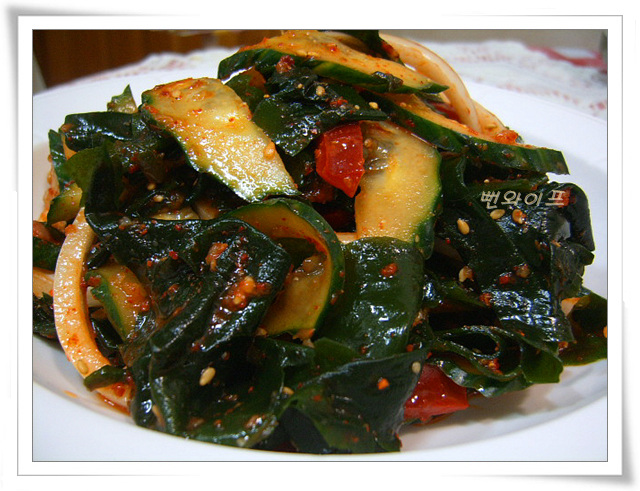
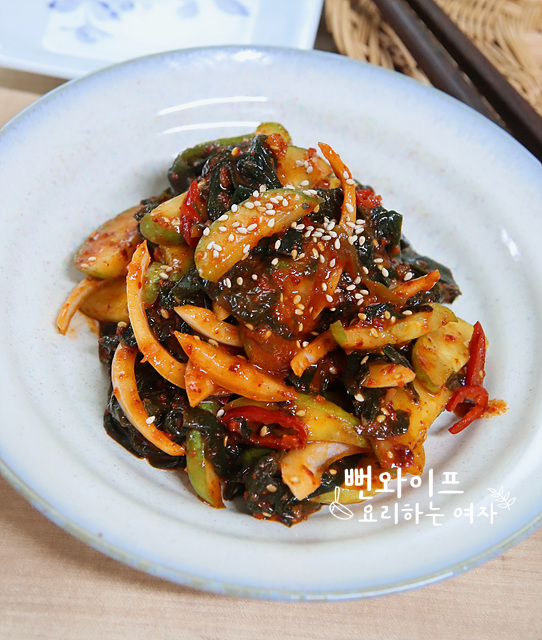
Crisp Mulmiyeok Cho Muchim (Seaweed in Sweet Vinegar Sauce)
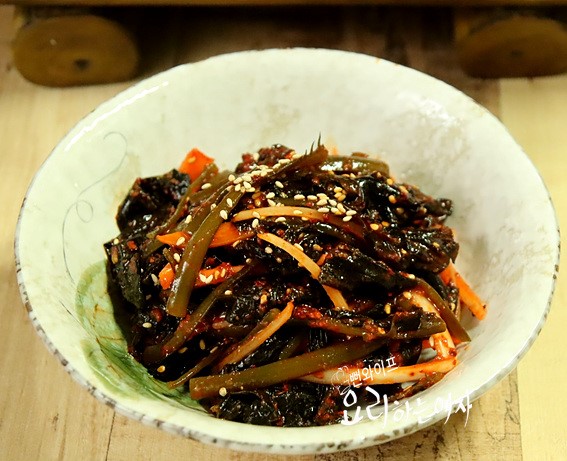
A winter side dish tossed in a sweet and spicy vinegar sauce using raw fresh seaweed without blanching to bring out the scent of the sea.
Translated from Korean by AI and not yet checked by a native speaker. Amounts and numbers are taken directly from the original recipe. Read the Korean original →
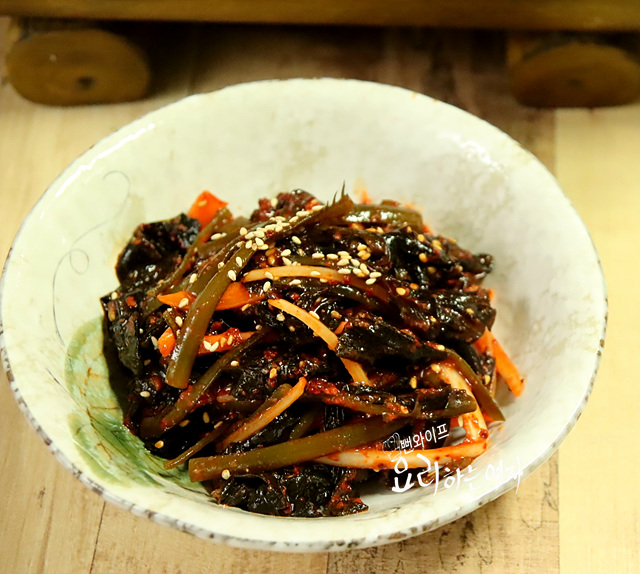
This seasoned side dish uses in-season winter fresh seaweed raw without blanching to highlight its natural ocean aroma and crisp, crunchy texture. Crisp vegetables tossed in a gochujang-based sweet vinegar dressing make it wonderful for awakening your appetite. Made simply with approachable ingredients, it is perfect to enjoy as a special winter side dish.
- Servings
- about 3–4 servings
- Difficulty
- Easy
- Spiciness
- Mildly spicy
Ingredients
Ingredients
- Fresh seaweed (mulmiyeok)300 g
- Carrot1/4
- Onion1/4
Seasoning
- Gochugaru (Korean chili flakes)2 tbsp
- Gochujang (Korean red chili paste)2 1/2 tbsp
- Minced garlic1 tbsp
- Corn syrup (mulyeot)1 tbsp
- Sugar1 tbsp
- Vinegar3 tbsp
- Toasted sesame oil1/2 tbsp
- Toasted sesame seeds1 tbsp
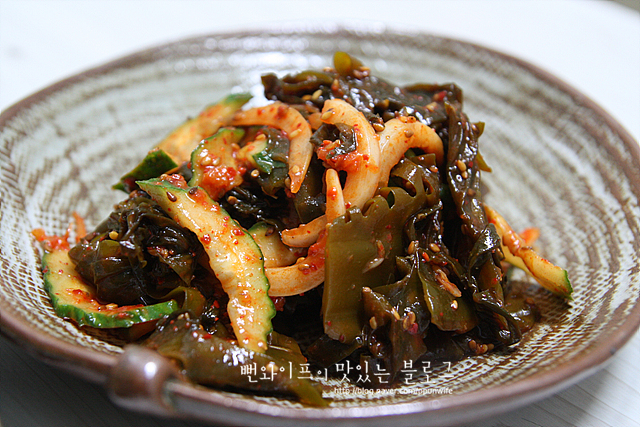
- Cucumbers or scallions (jjokpa) also pair well, so you can add a little bit of your favorite vegetables together.
- If the stems of the fresh seaweed are too tough, cut them away, and rinse it several times by running your hands down the fronds to remove any debris on the surface.
Steps
Prepare the ingredients
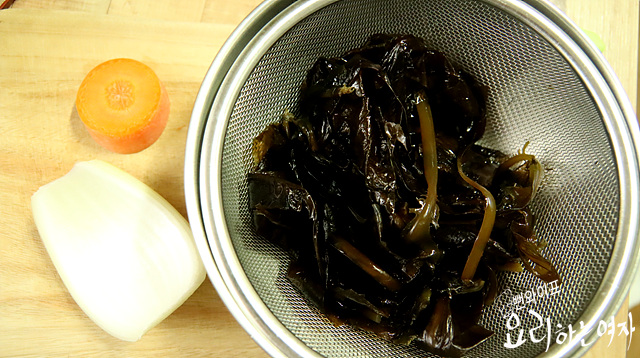
The ingredients for seasoned fresh seaweed are fresh seaweed, onion, and carrot.
Cucumbers or scallions (jjokpa) also pair well, so you can add a little bit of your favorite vegetables together.
Clean the fresh seaweed
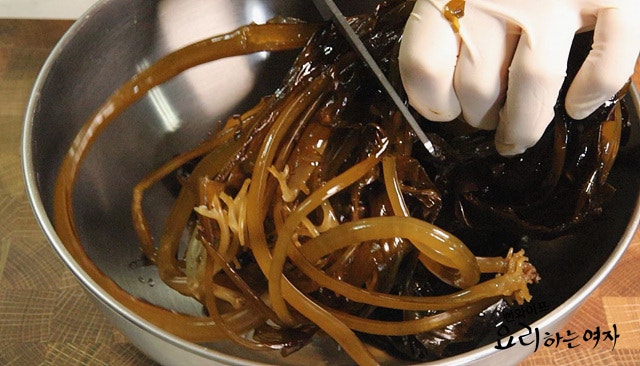
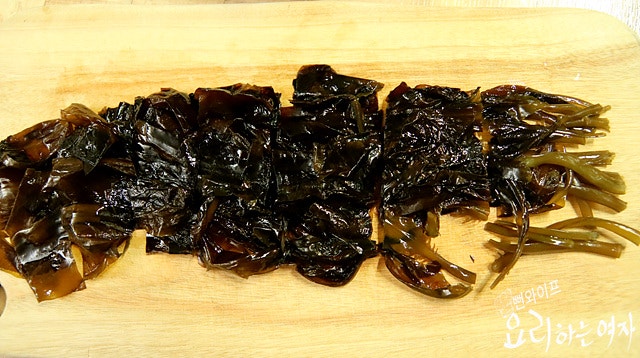
If the stems of the fresh seaweed are too tough, cut them away, and rinse it several times by running your hands down the fronds to remove any debris on the surface.
Drain the water completely and cut it into bite-sized lengths.
Slice vegetables and mix the sauce
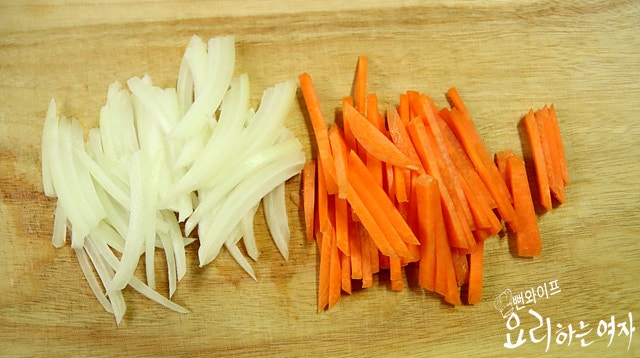
Finely julienne the onion and carrot into lengths similar to the fresh seaweed.
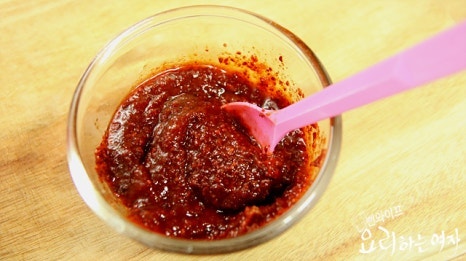
Add all the seasoning ingredients except the toasted sesame oil and toasted sesame seeds, and mix them together.
Toss together
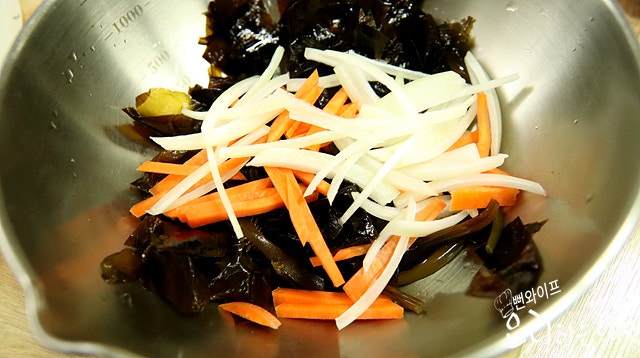
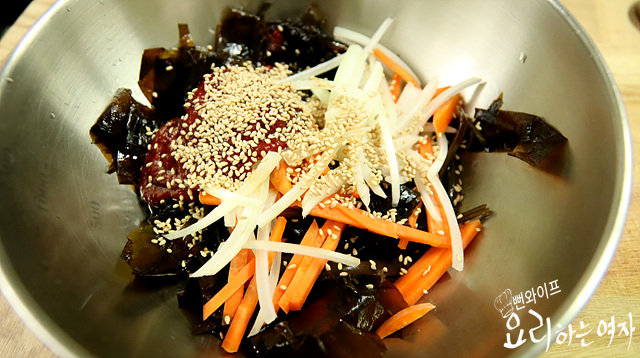
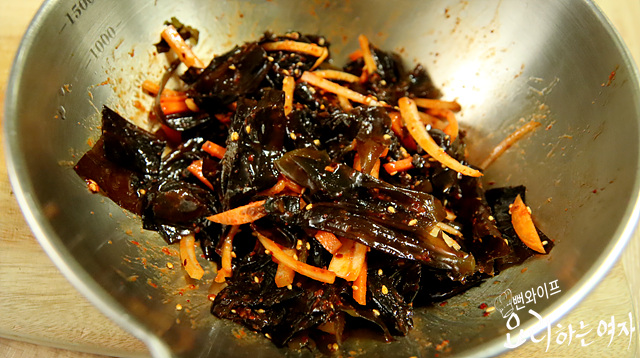
In a bowl, combine the fresh seaweed, carrot, onion, sauce, toasted sesame oil, and toasted sesame seeds, and toss gently by hand.
If it tastes bland, adjust the seasoning with salt, and add more sugar or vinegar to suit your taste.
Finish
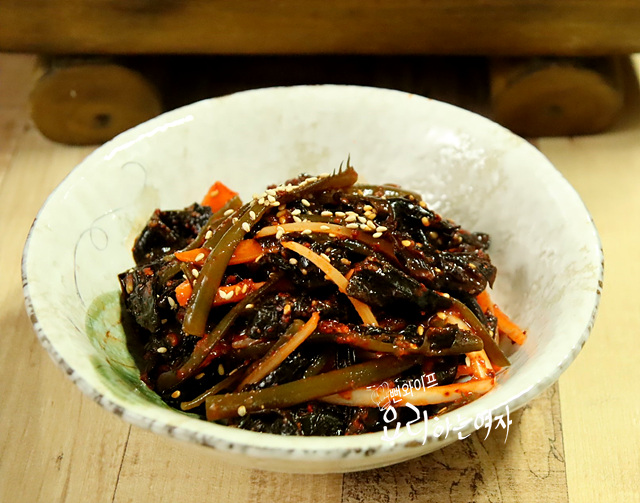
This is a grown-up side dish that kids might not quite understand.
Tossing fresh seaweed raw like this is the best way to appreciate its true natural taste and aroma.
 Ppunwife's tips
- If it tastes bland, adjust the seasoning with salt, and add more sugar or vinegar to suit your taste.
FAQ
Is it okay to use fresh seaweed raw without blanching?
To fully enjoy the natural fragrance and crisp, crunchy texture of fresh seaweed, tossing it raw without blanching is recommended.
Are there other ingredients that go well besides the basic vegetables?
Depending on your preference, adding a little cucumber or scallions (jjokpa) works wonderfully.
How should I adjust the seasoning if it feels lacking after tossing?
Taste it, and if it is bland, add more salt; you can also adjust the flavor by adding more vinegar or sugar to your liking.