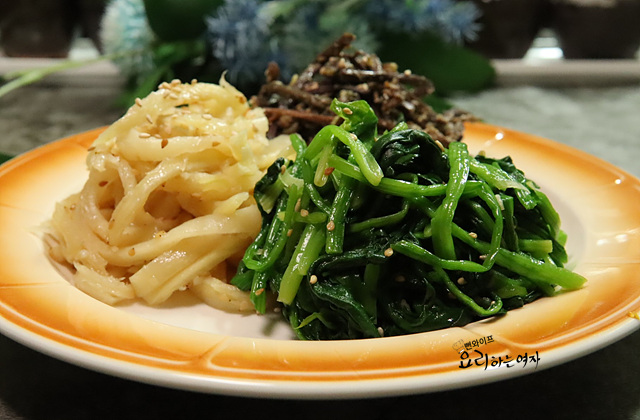
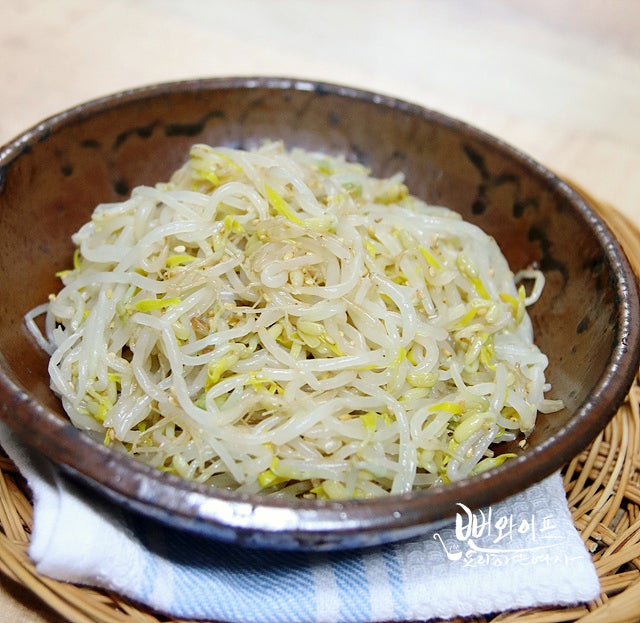
Sweet Sigeumchi Muchim (Seasoned Spinach)
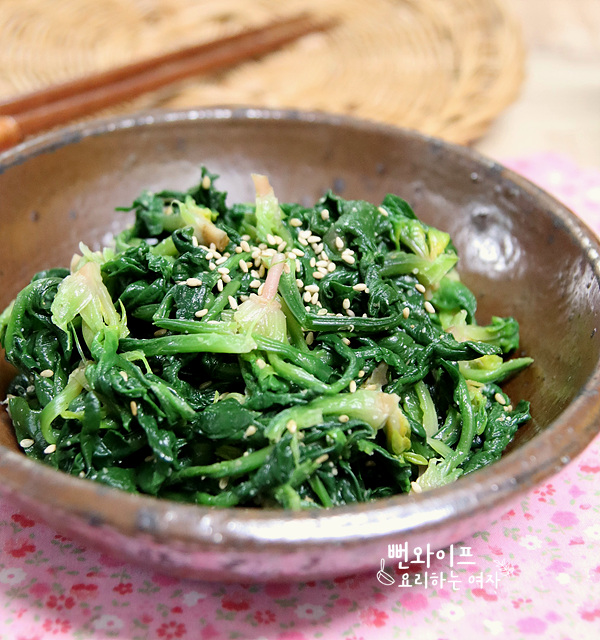
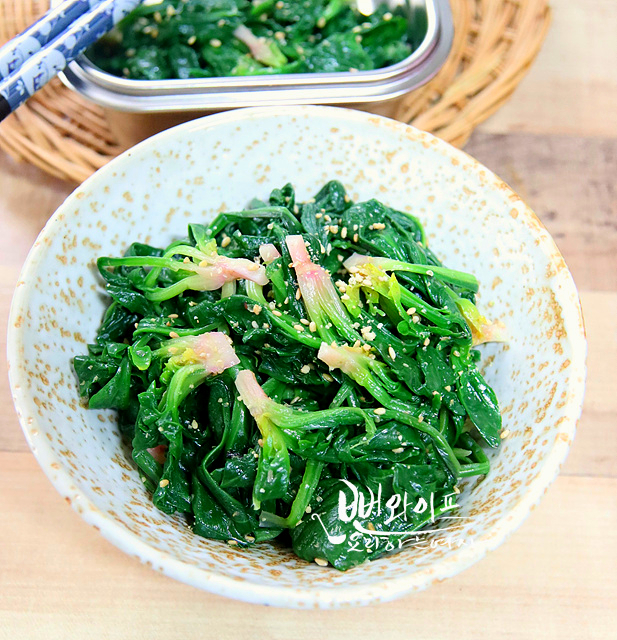
A clean-tasting seasoned spinach made without green onion or garlic, perfect even for holiday ancestral rite tables.
Translated from Korean by AI and not yet checked by a native speaker. Amounts and numbers are taken directly from the original recipe. Read the Korean original →
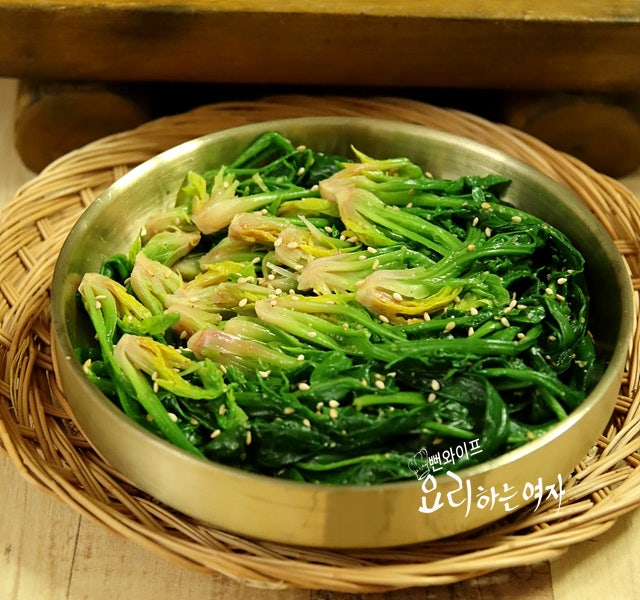
This side dish brings out the natural sweetness of in-season spinach by seasoning it simply without aromatics like green onion or garlic. The key is quickly blanching it in boiling salted water for under 30 seconds to preserve its crisp texture without becoming mushy. With tuna extract sauce and sesame seeds added for savory umami and nuttiness, it is wonderful for holiday ancestral rite tables or as an everyday side dish.
- Servings
- about 3–4 servings
- Difficulty
- Easy
- Spiciness
- Not spicy
Ingredients
Ingredients
- Spinach300 g
- Coarse sea salt1 tbsp
Seasoning
- Tuna extract sauce (chamchi-aek) (or 1/2 tbsp soup soy sauce (guk-ganjang) + a little salt)1 tbsp
- Ground toasted sesame seeds1/2 tbsp
- Toasted sesame seeds1/2 tbsp
- Toasted sesame oil (or perilla oil)1 tbsp
- Large bunches weigh around 600g, so you can season it using 2 times my recipe.
- Soak the spinach in water for at least 10 minutes so debris loosens easily, then wash it several times while swishing it with your hands.
Steps
Prepare the ingredients
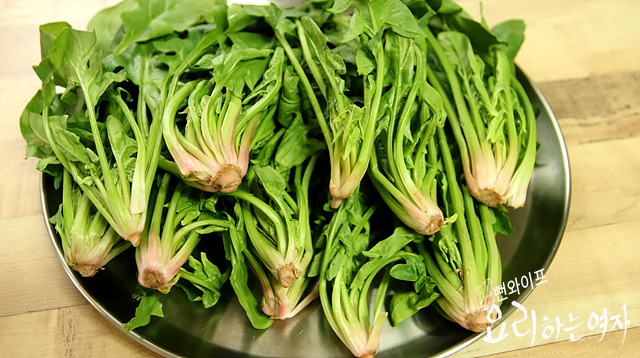
This is 1 bunch of 300g Namhae spinach grown in the sea breeze.
Large bunches weigh around 600g, so you can season it using 2 times my recipe.
Trim the spinach
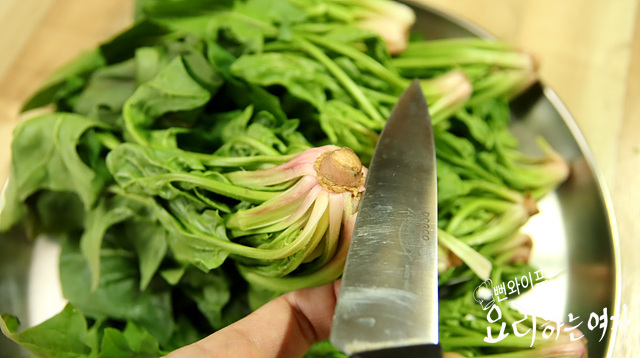
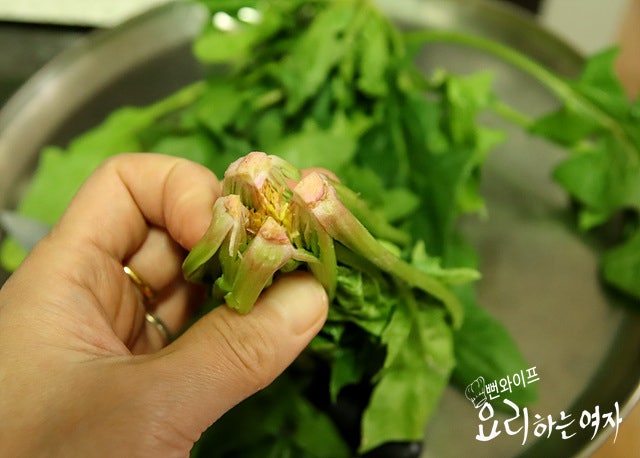
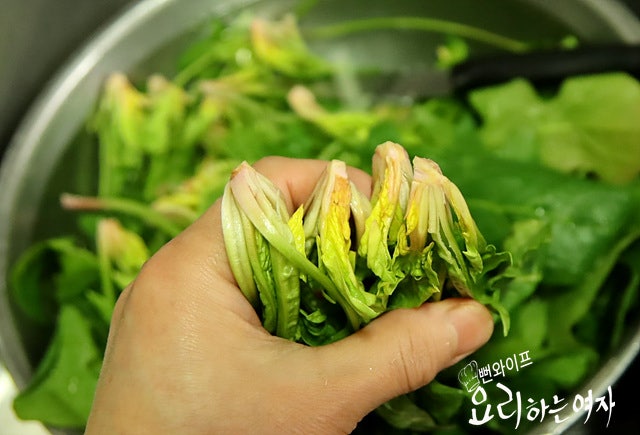
The pink-hued root area of spinach is the sweetest and most delicious part.
If it is not tough, just brush off the dirt; if it is thick and hard, trim it off, then score and split it to a manageable thickness.
Just like baby napa cabbage, spinach with a yellowish center is the tasty kind.
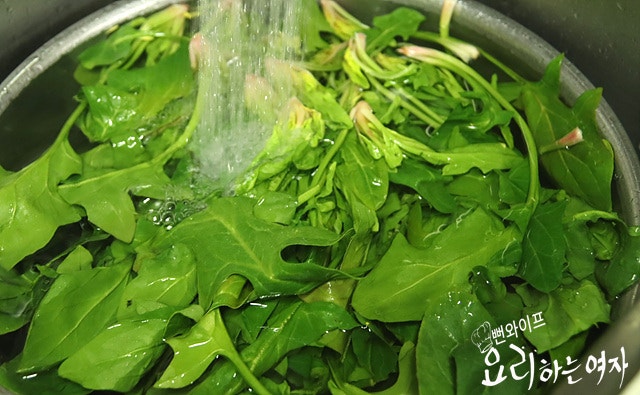
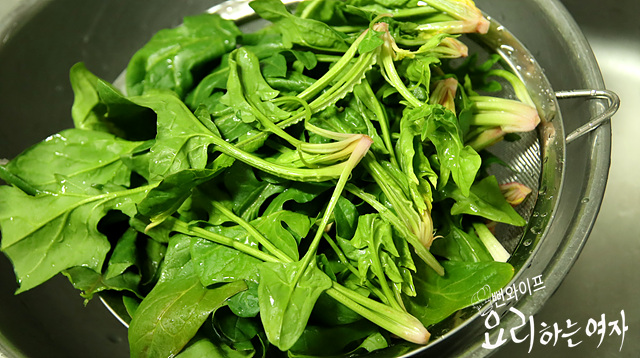
Soak the spinach in water for at least 10 minutes so debris loosens easily, then wash it several times while swishing it with your hands.
It may look clean, but once you split open the stems, there is often a lot of dirt inside.
Blanch the spinach
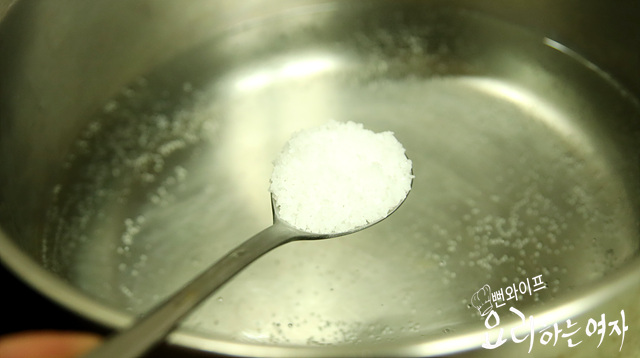
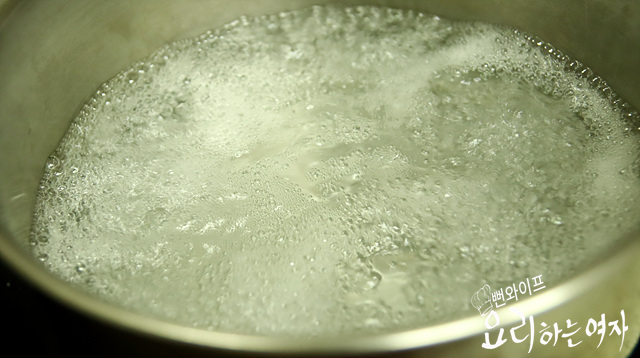
Pour in enough water to fully submerge the spinach, add 1 tbsp coarse sea salt, and bring to a rolling boil.
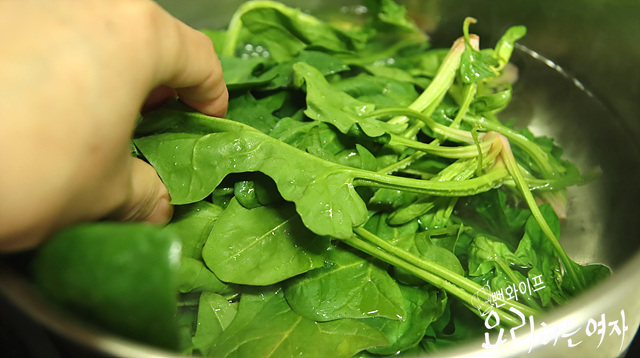
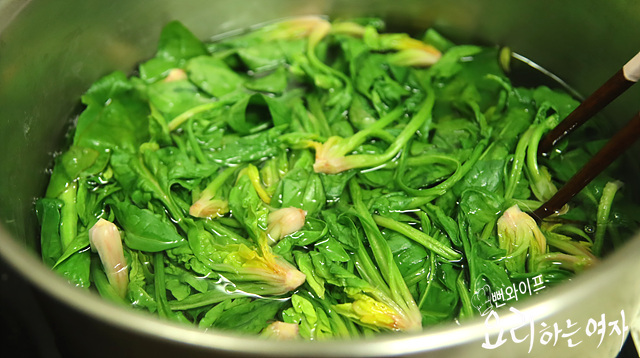
Add all the spinach and stir quickly.
As soon as the stiff spinach softens and wilts, take it out immediately.
You must blanch the spinach for under 30 seconds after adding it so it does not turn mushy and keeps a nice texture.
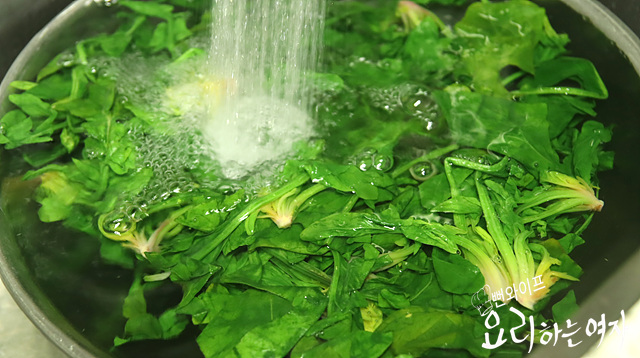
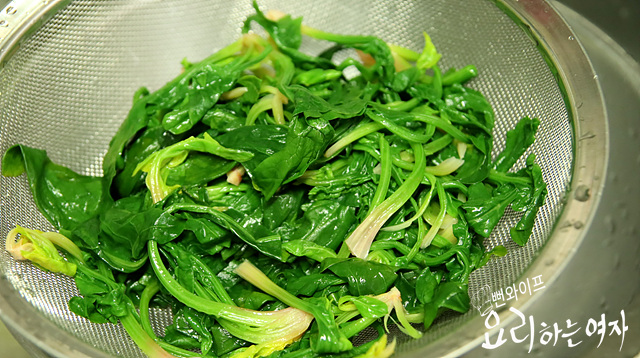
Rinse it in cold water 2 to 3 times to cool it down, then drain it in a colander.
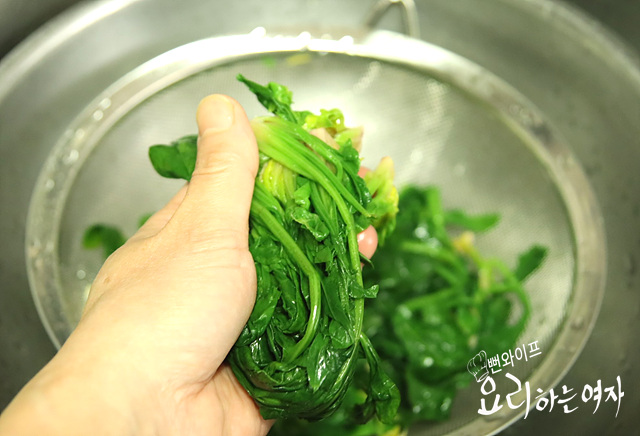
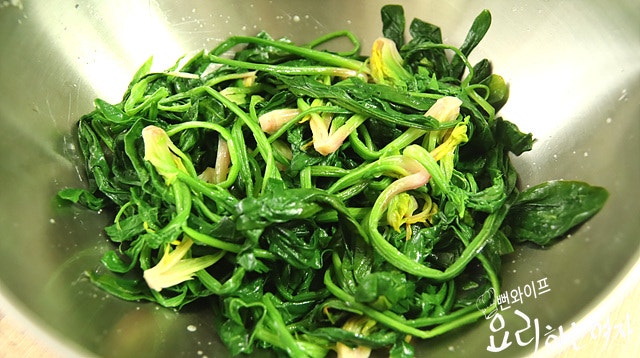
Press gently with both hands to remove excess moisture without squeezing out the spinach juice.
You do not need to remove every bit of moisture, so avoid wringing it out to keep it from getting mashed.
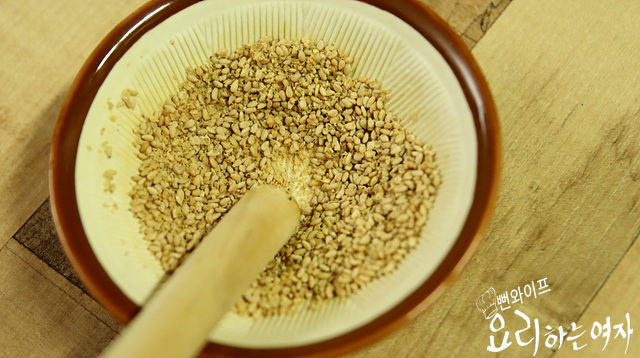
If you set aside half of the toasted sesame seeds and grind them lightly before adding them to seasoned vegetable dishes, you can bring out a much richer aroma and nutty flavor.
Grinding them too finely will make the seasoned greens look messy rather than neat.
Season the spinach
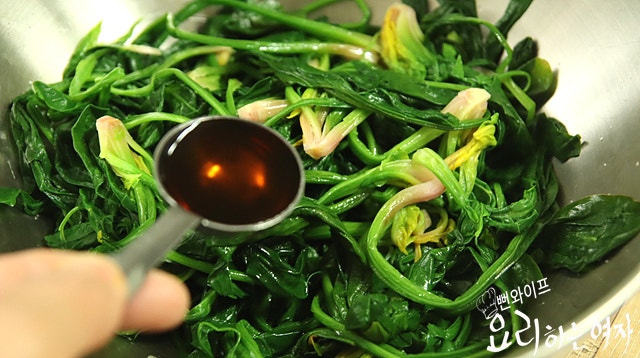
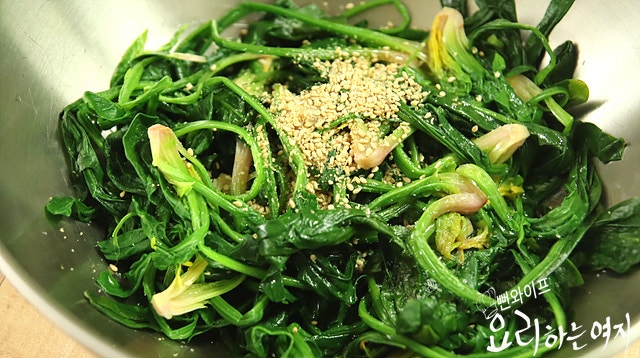
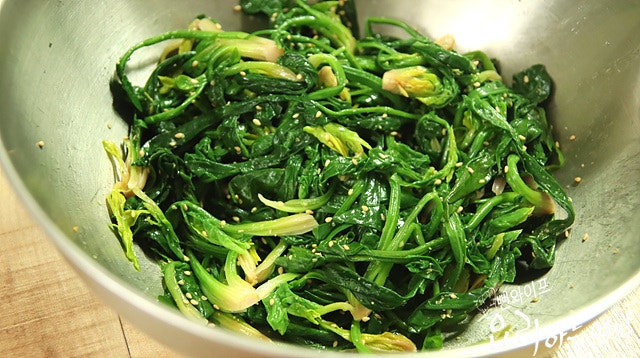
Gently shake apart the clumped spinach, spread it out, add 1 tbsp tuna extract sauce (chamchi-aek), the ground toasted sesame seeds, and 1 tbsp toasted sesame oil (or perilla oil), and toss evenly.
If it tastes bland, you can adjust the taste with salt.
I brought out the savory depth with tuna extract sauce, but instead of tuna extract sauce, you can season it with 1/2 tbsp soup soy sauce and a little salt.
Finish
Today, unlike usual, I seasoned this for the holiday ancestral rites without adding aromatics like minced green onion or garlic.
Because the spinach itself is so good, it tastes amazing with just basic seasoning.
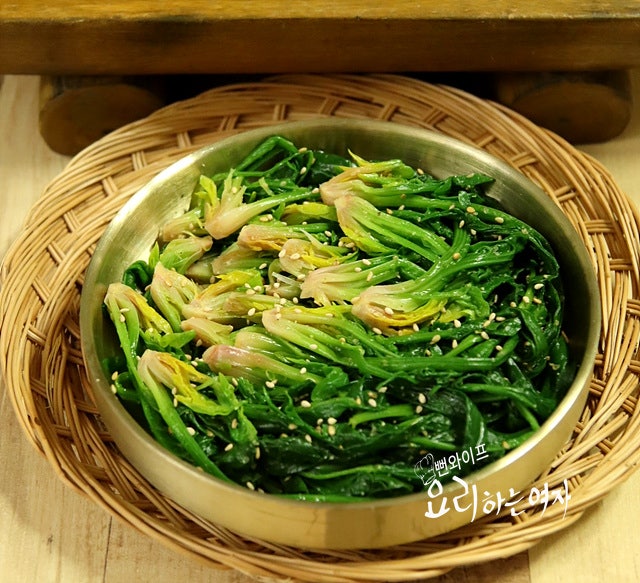
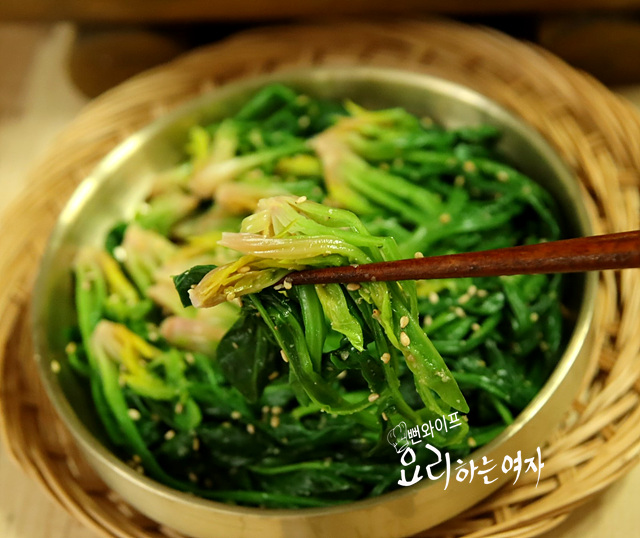
Even seasoned this simply for the ancestral rite table, it scores over 90 points.
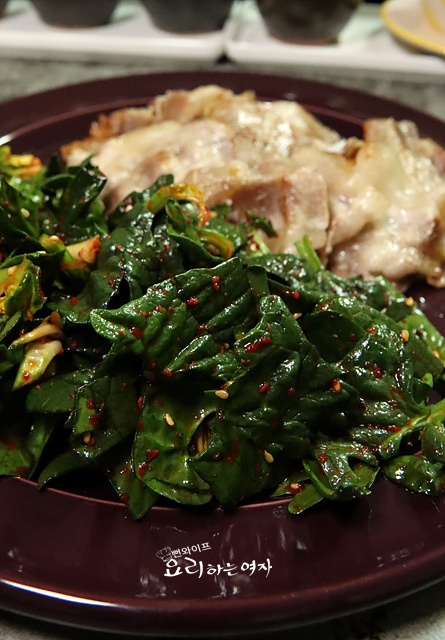
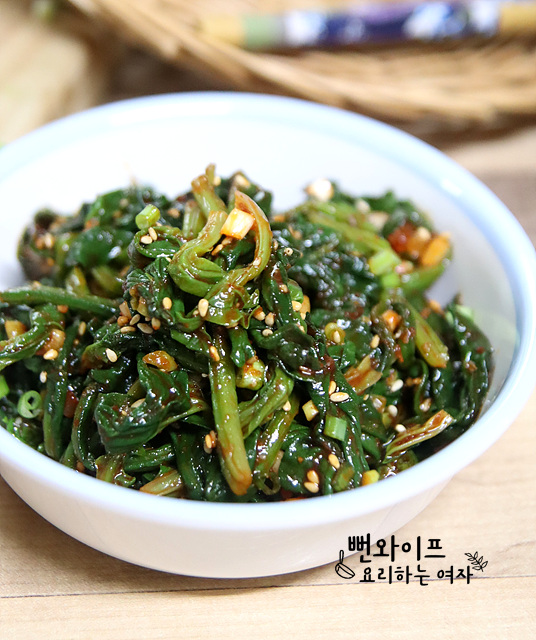
I also made japchae with this spinach, and because of its sweetness, I even reduced the amount of sugar.
In any case, in-season spinach lets you enjoy both nutrition and flavor, so I hope you enjoy it often, not just on holidays but for everyday meals as well.
 Ppunwife's tips
- The pink-hued root area of spinach is the sweetest and most delicious part. If it is not tough, just brush off the dirt; if it is thick and hard, trim it off, then score and split it to a manageable thickness.
- You must blanch the spinach for under 30 seconds after adding it so it does not turn mushy and keeps a nice texture.
- Press gently with both hands to remove excess moisture without squeezing out the spinach juice. You do not need to remove every bit of moisture, so avoid wringing it out to keep it from getting mashed.
- If you set aside half of the toasted sesame seeds and grind them lightly before adding them to seasoned vegetable dishes, you can bring out a much richer aroma and nutty flavor. Grinding them too finely will make the seasoned greens look messy rather than neat.
- This is seasoned for holiday ancestral rites without adding aromatics like minced green onion or garlic.
FAQ
How long should I blanch the spinach in boiling water?
Blanch it lightly for under 30 seconds in boiling water so it does not turn mushy and retains its crisp texture.
What seasoning can I substitute if I don't have tuna extract sauce?
Instead of tuna extract sauce, you can season it with 1/2 tbsp soup soy sauce and a little salt.
How much moisture should I squeeze out of the blanched spinach?
Gently press it with both hands so the natural spinach juice is not lost, and avoid wringing it out.
Why aren't seasonings like garlic or large green onion added?
It is prepared cleanly without pungent aromatics so it can be offered on holiday ancestral rite tables.