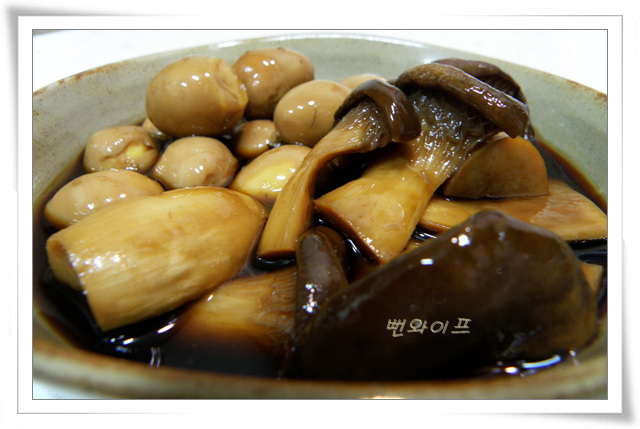
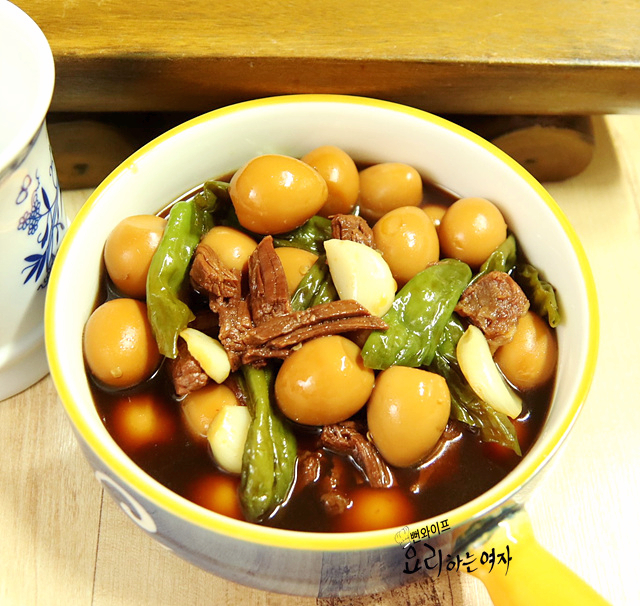
Tender Chicken Breast Jangjorim (Soy Braised Chicken Breast)
A tender side dish made by simmering boiled chicken breast with quail eggs in a savory soy braising liquid.
Translated from Korean by AI and not yet checked by a native speaker. Amounts and numbers are taken directly from the original recipe. Read the Korean original →
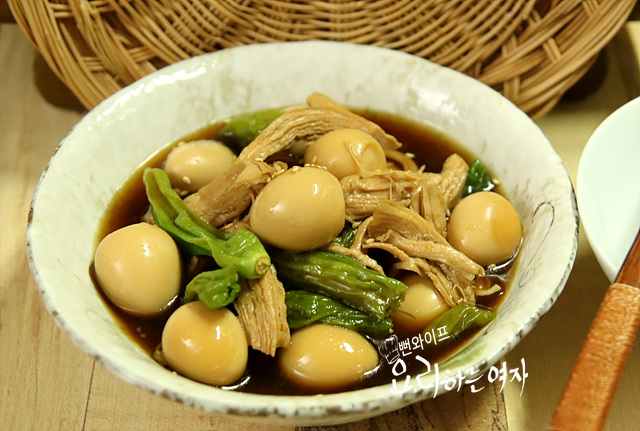
Chicken breast, which can easily turn dry, is braised in its own boiled broth seasoned with soy sauce and shredded along the grain to stay moist. Accompanied by quail eggs and shishito peppers, it makes a rich dish that is easy to prepare without needing to drain any blood. Mild and unpretentious, it is ideal as a side dish for children or to keep stocked for the week.
- Servings
- about 5–6 servings
- Difficulty
- Easy
- Spiciness
- Not spicy
- Keeps
- 7 days
Ingredients
Ingredients
- Chicken breast2 pieces, 350 g
- Boiled quail eggs46 (1 pack)
- Shishito peppers (kkwari-gochu)20
- Ginger2 cloves
- White part of large green onion (daepa)2 stalks
- Whole black peppercorns1 tbsp
- Soju1/3 cup
Soy braising liquid
- Water from boiling chicken breast3 cups
- Regular soy sauce (jin-ganjang) (or brewed soy sauce (yangjo-ganjang))2/3 cup
- Mirin (cooking rice wine)1/3 cup
- Sugar2 tbsp
- Corn syrup (mulyeot)4 tbsp
- Minced garlic1 tbsp
- For frozen meat or fish, thawing it slowly in the refrigerator rather than at room temperature to avoid sudden temperature changes will help you enjoy it with a texture not much different from fresh meat.
- Soaking the chicken in milk before boiling also helps remove any gamey odor.
- Instead of minced garlic, you can prepare 10 or more whole garlic cloves and braise them together for great flavor.
- If you like it spicy, you can add 2 to 3 Cheongyang chili peppers or Vietnamese chilies when braising.
Steps
Prepare the ingredients
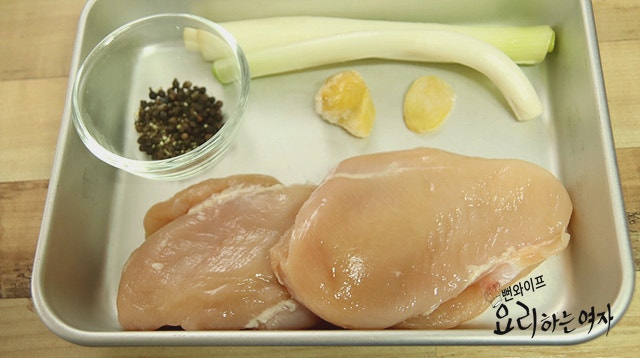
Here are 2 pieces of chicken breast trimmed from a large whole chicken.
For frozen meat or fish, it is important to thaw it without sudden temperature changes.
Thawing slowly in the refrigerator rather than at room temperature allows you to enjoy it with little difference from fresh meat.
Soaking the chicken in milk before boiling also helps remove gamey odors.
Prepare 2 white parts of large green onion (daepa), 2 slices of ginger, 1 tbsp whole black peppercorns, and 1/3 cup soju to help remove odors when cooked with the chicken breast.
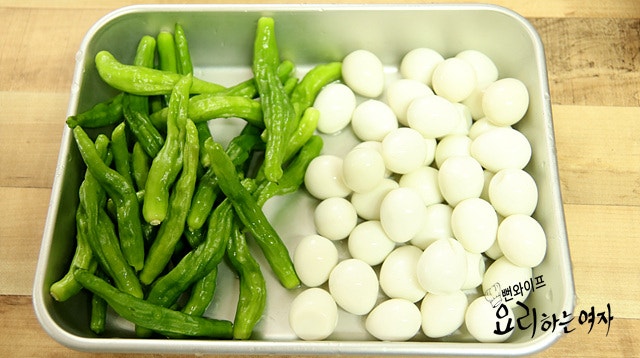
The secondary ingredients that make jangjorim twice as delicious are quail eggs and shishito peppers (kkwari-gochu).
Boil the chicken breast
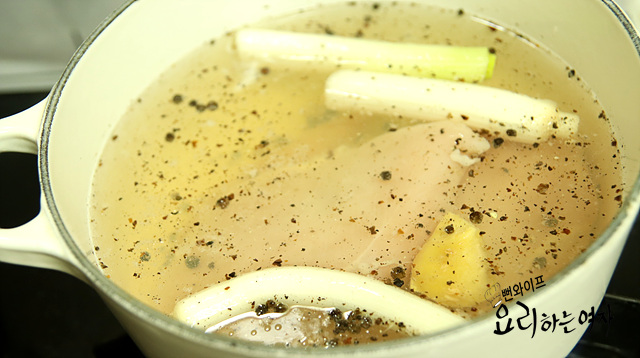
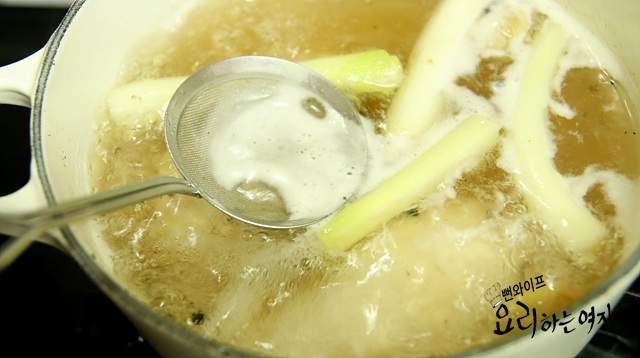
In a pot, place the chicken breast, ginger, large green onion, whole black peppercorns, and soju, then pour in 5 to 6 cups of water, enough to submerge all the ingredients fully.
Once it comes to a rolling boil, reduce the heat to low and boil for at least 10 minutes so the meat cooks through thoroughly.
Skim off all the foam that rises when it first boils to ensure a clean broth.
Once the meat is fully cooked through to the center, discard the large green onion, ginger, and black peppercorns used for boiling, and strain the broth to save it. (We will use it as the braising liquid for the jangjorim.)
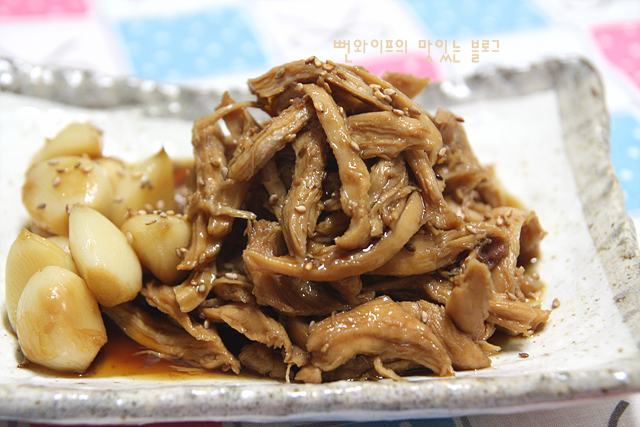
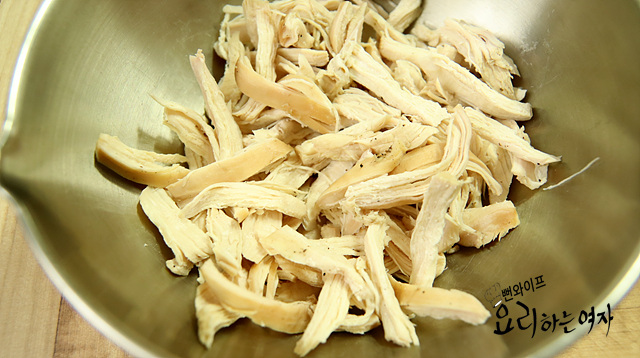
Let the meat cool slightly, then tear it along the grain into bite-sized strips.
Braise in the soy liquid
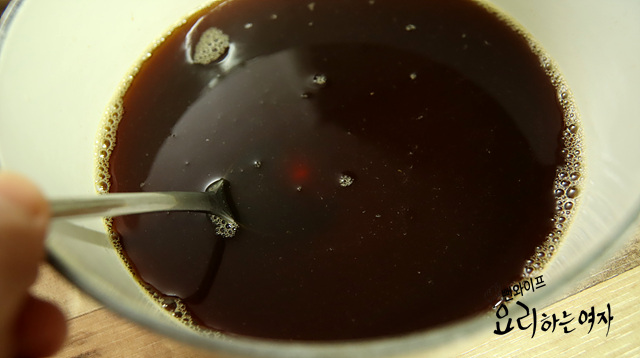
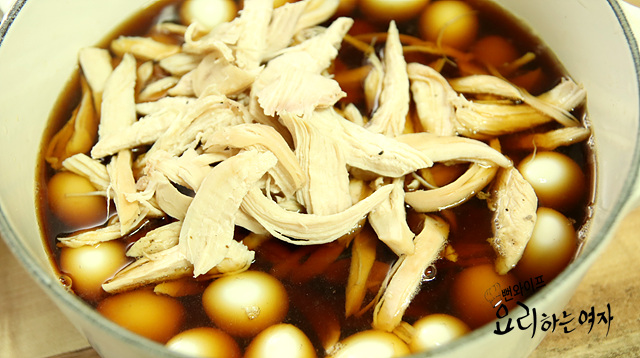
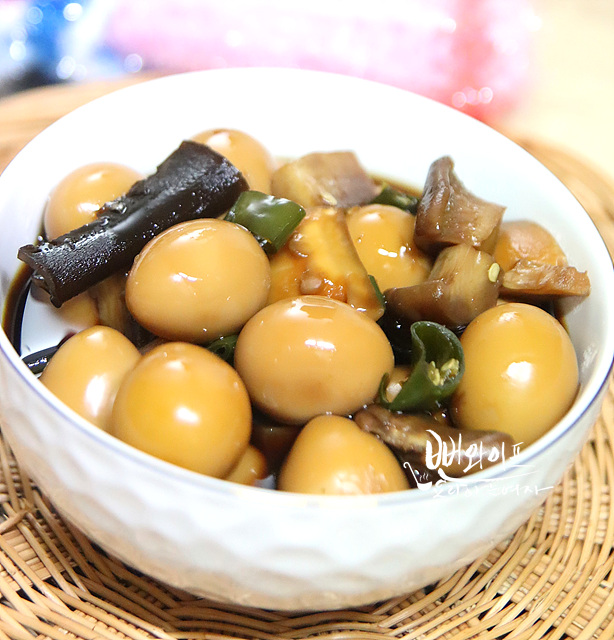
In a pot, add 3 cups of the water from boiling chicken breast, 2/3 cup regular soy sauce (jin-ganjang), 1/3 cup mirin (cooking rice wine), 2 tbsp sugar, 4 tbsp corn syrup (mulyeot), along with the chicken breast and boiled quail eggs.
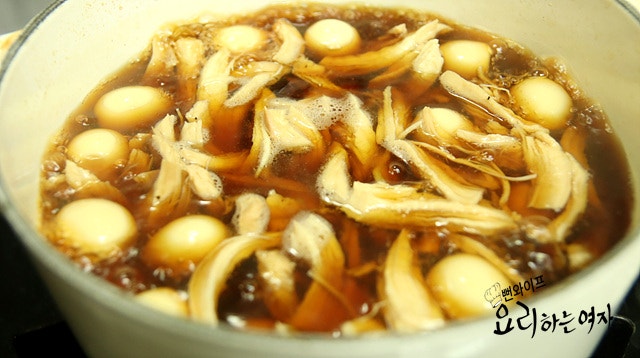
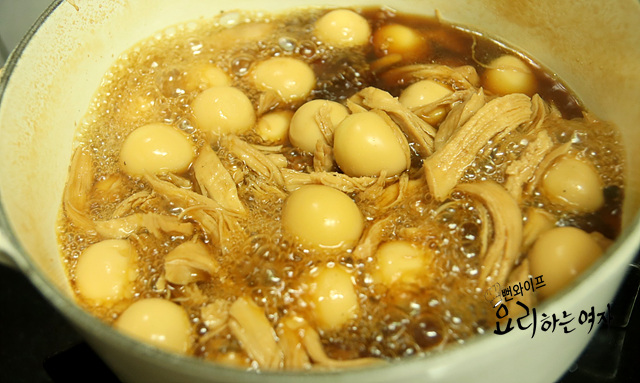
Once the soy braising liquid starts to boil, lower the heat to low and simmer gently until the liquid reduces by about half.
When the quail eggs and meat have absorbed the seasoning and taken on a nice color...
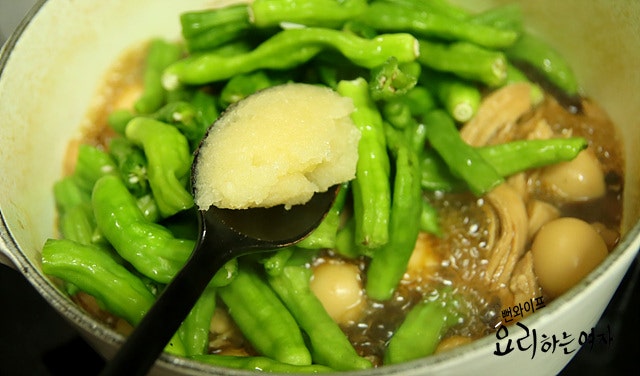
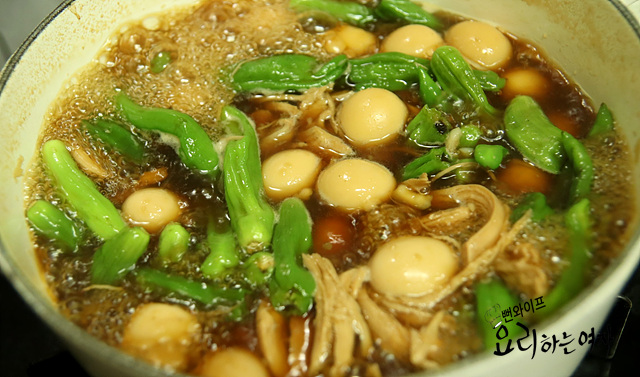
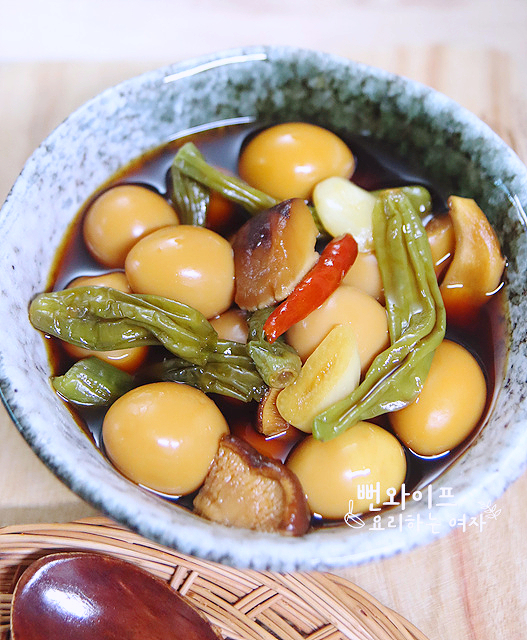
Add the shishito peppers (kkwari-gochu) and 1 tbsp minced garlic, then finish by boiling for about 3 minutes until the peppers soften and wilt gently.
I used minced garlic because I did not have whole garlic, but preparing 10 or more whole garlic cloves and braising them together is also delicious.
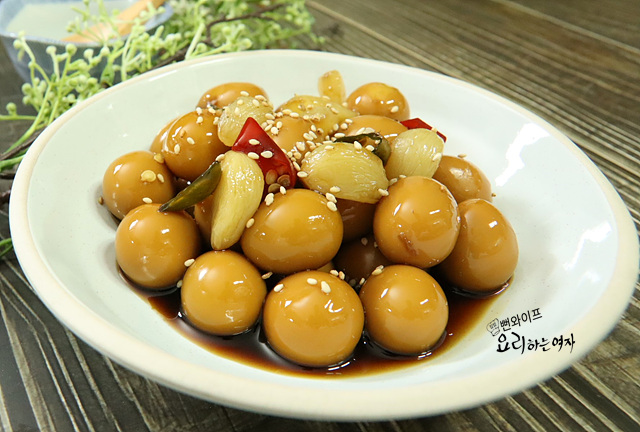
Complete
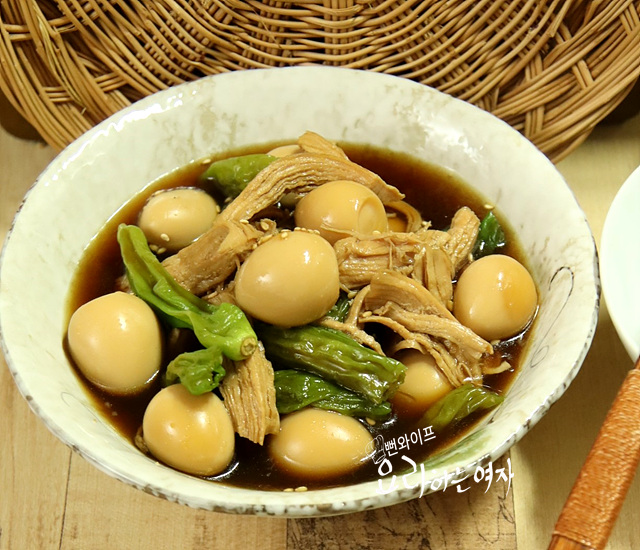
If you like it spicy, braising with 2 to 3 Cheongyang chili peppers or Vietnamese chilies is also good.
Because there is no process of soaking to drain blood, it is simpler to make than beef jangjorim.
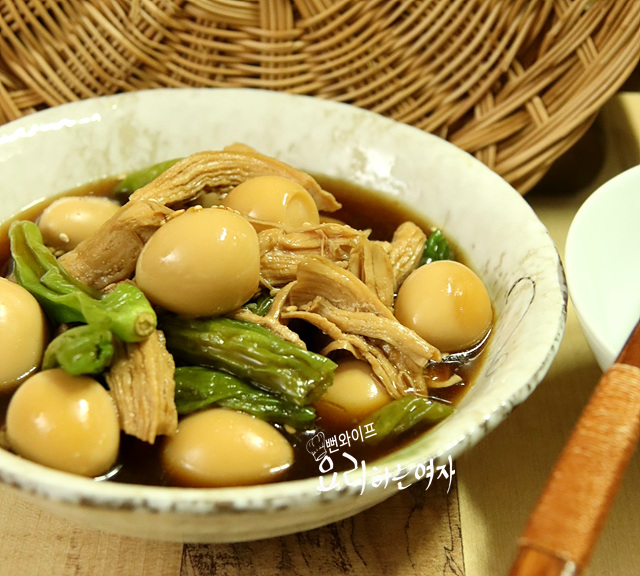
It is not dry at all, but remarkably moist and tender.
Shishito peppers and quail eggs are braised together in jangjorim like a trio of friends, elevating both the nutrition and flavor to a high standard.
When chicken breast, often neglected for being dry, is turned into jangjorim, it is treated like a treasured treat.
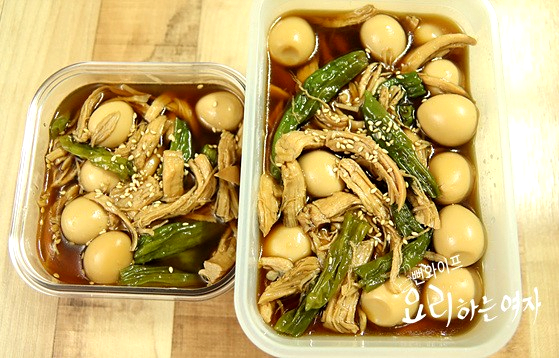
Making a proper batch of jangjorim to keep stocked is wonderfully reassuring as a week's side dish.
As the holidays end, students greet the new semester, and adults begin a new month, start off with an energetic and joyful heart.
 Ppunwife's tips
- Skimming off all the foam that forms when it first boils ensures a clean broth.
- Discard the large green onion, ginger, and black peppercorns used when boiling the chicken, and strain the broth to use as the braising liquid.
FAQ
Is there a way to reduce the distinctive gamey odor of chicken breast?
Soaking it in milk before boiling, or boiling it with the white parts of large green onion, ginger, whole black peppercorns, and soju, helps eliminate gamey odors.
Can I use whole garlic instead of minced garlic?
Preparing 10 or more whole garlic cloves and braising them together in the soy liquid works very well.
How can I make it slightly spicier?
You can add 2 to 3 Cheongyang chili peppers or Vietnamese chilies to braise together according to your taste for a spicy kick.
How is it best to thaw frozen chicken breast?
To avoid sudden temperature changes, thaw it slowly in the refrigerator rather than at room temperature to retain a texture close to fresh meat.