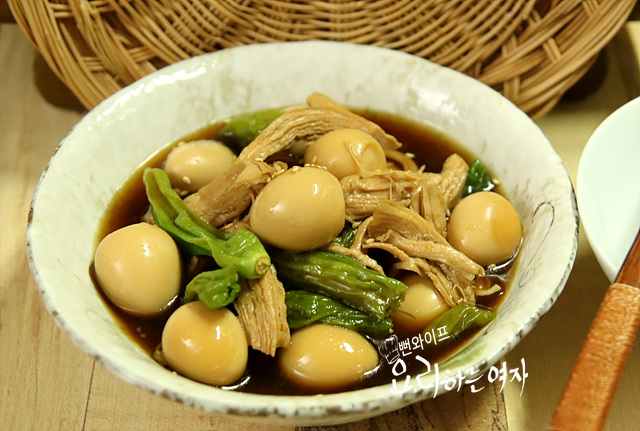
Flavorful Modum Jangjorim (Assorted Braised Soy Sauce Side Dish)
A savory modum jangjorim side dish made by simmering beef, quail eggs, and shishito peppers together in a seasoned soy sauce broth.
Translated from Korean by AI and not yet checked by a native speaker. Amounts and numbers are taken directly from the original recipe. Read the Korean original →
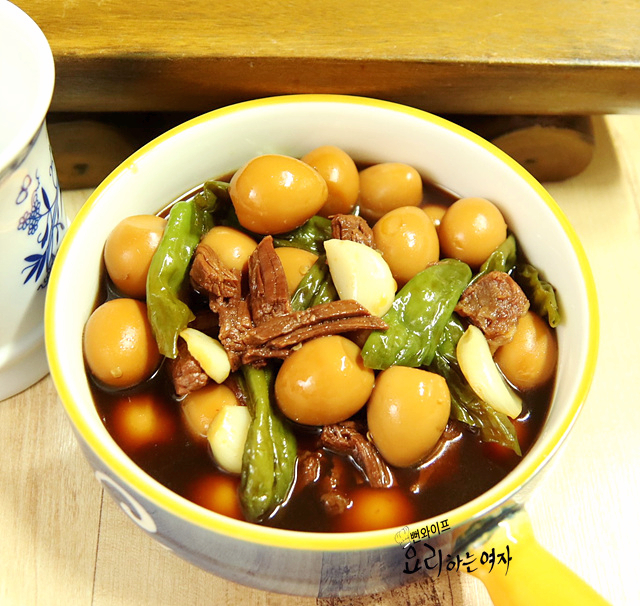
This side dish is made by simmering beef and quail eggs thoroughly in meat cooking broth seasoned with soy sauce. Adding shishito peppers and garlic at the end brings out subtle aroma and crisp texture. The finished broth is also delicious mixed with warm rice and butter.
- Servings
- about 6–8 servings
- Cook time
- 33 minprep not included
- Difficulty
- Medium
- Spiciness
- Not spicy
- Keeps
- 7 days
Ingredients
Ingredients
- Beef350 g (for braising)
- Shishito peppers (kkwari-gochu)15
- Quail eggs46
- Peeled garlic15 cloves
- Ginger2 cloves
- Large green onion (daepa)white part
- Whole black peppercorns1 tbsp
- Water5–6 cups
Soy sauce braising liquid
- Water from boiling meat3 cups
- Regular soy sauce (jin-ganjang) (or brewed soy sauce (yangjo-ganjang))2/3 cup
- Mirin (cooking rice wine)1/3 cup
- Sugar2 tbsp
- Corn syrup (mulyeot)4 tbsp
- Soak the beef in cold water to draw out the blood for about 30 minutes, changing the water occasionally.
- For braising beef, you can use top round, eye of round, brisket, or shank.
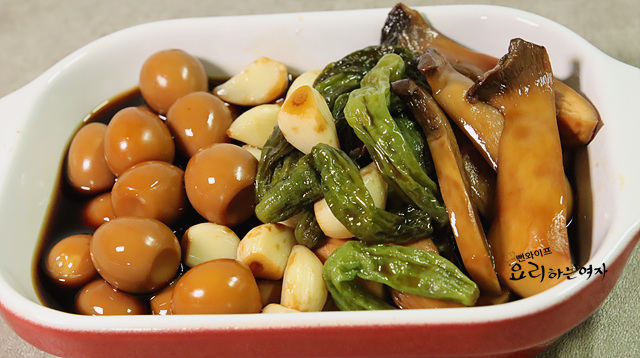
- You can also add mushrooms (king oyster, shiitake) or hard-boiled eggs.
Steps
Prepare the ingredients
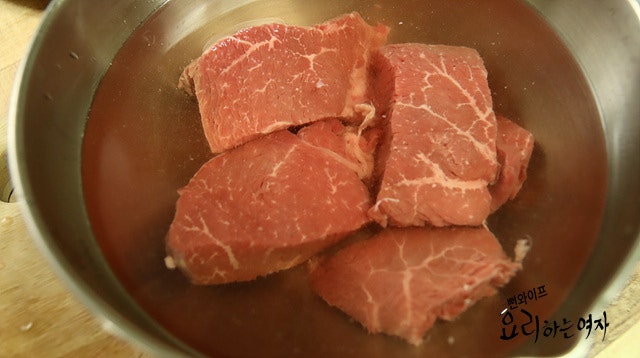
First, soak the beef in cold water to draw out the blood for about 30 minutes, changing the water along the way.
Cutting it into smaller chunks rather than leaving it in one large piece drains the blood better and shortens the boiling time.
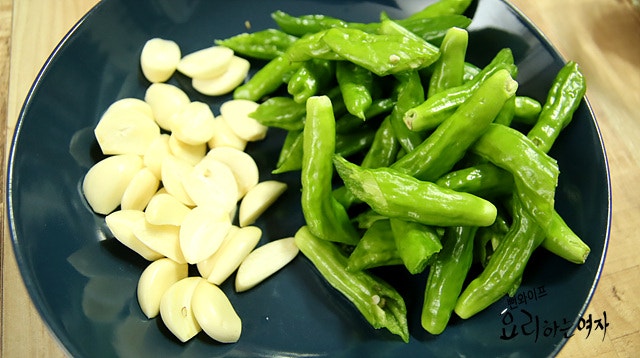
The garlic cloves were large, so I sliced them once or twice not too thinly, and the shishito peppers were also large, so I cut them in half.
Boil the meat
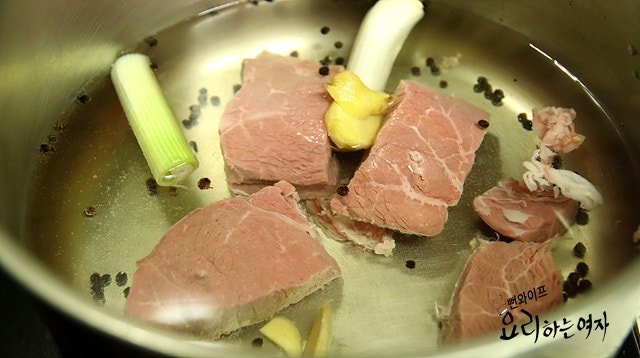
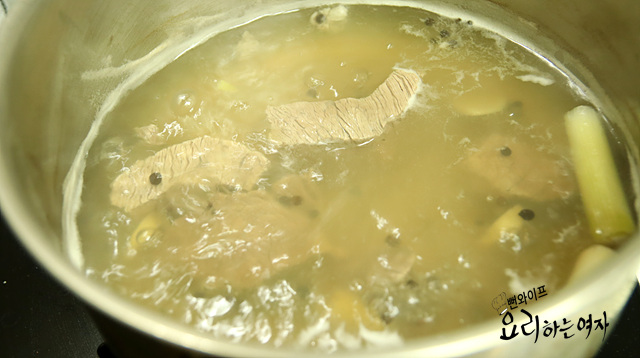
Add the beef, large green onion, ginger, and whole black peppercorns to 5 to 6 cups of water. Once it comes to a rolling boil, skim off the scum as it cooks.
Boil for about 20 minutes until no more blood seeps from the meat.
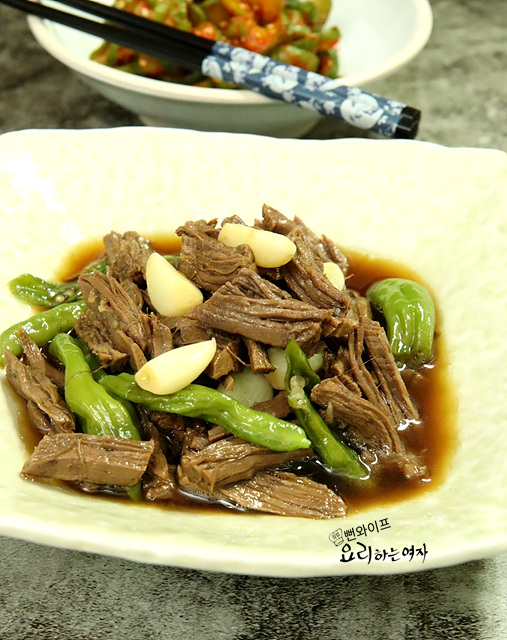
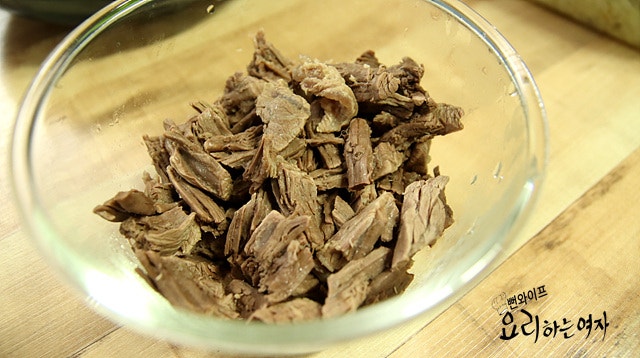
Discard the aromatics boiled with the meat and strain the broth to save it, then shred the cooked beef along the grain into bite-sized pieces.
Braise in soy sauce liquid
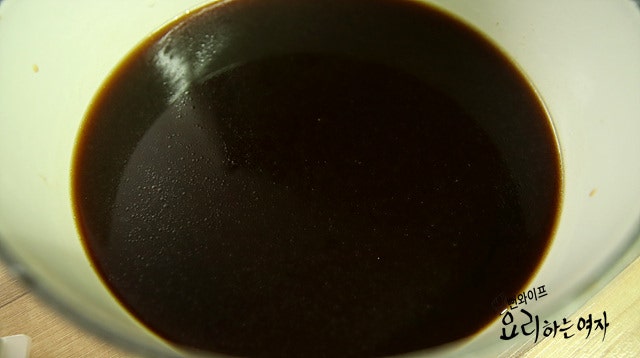
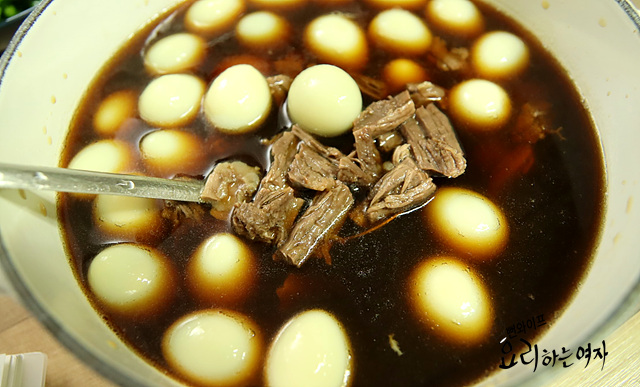
To 3 cups of the water from boiling meat, add all 2/3 cup of regular soy sauce (jin-ganjang), 1/3 cup of mirin (cooking rice wine), 2 tbsp of sugar, and 4 tbsp of corn syrup (mulyeot).
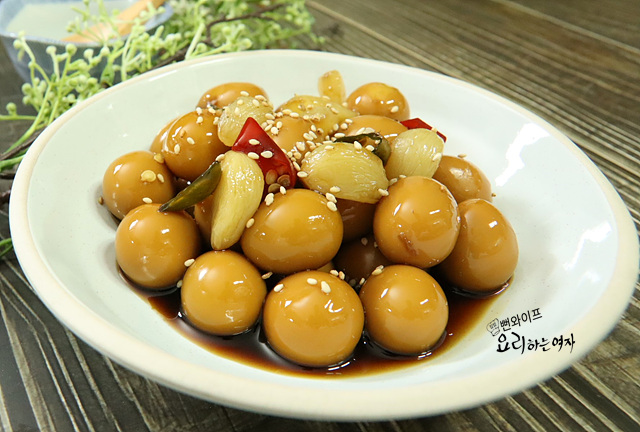
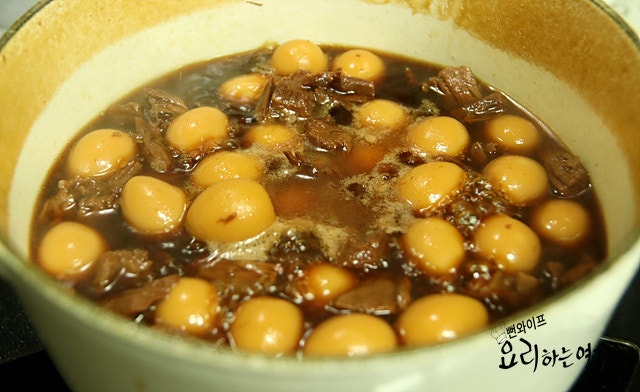
Add the quail eggs and shredded beef, then simmer over medium-low heat for about 10 minutes until they absorb the soy color and the liquid reduces by half.
If the liquid seems too low while braising, add more of the remaining broth or plain water...
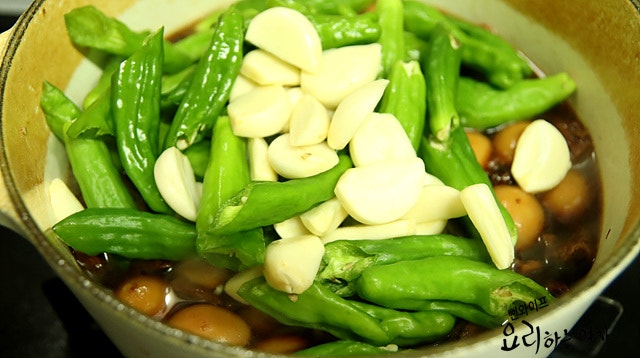
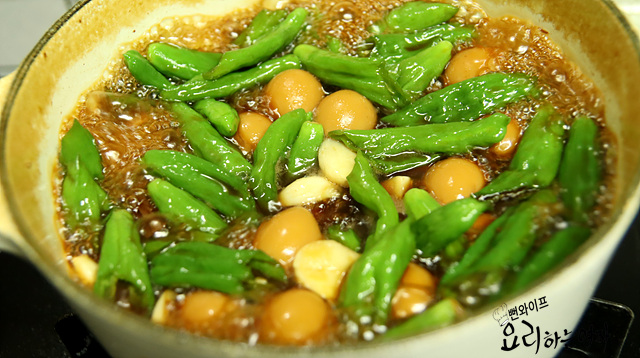
Add the shishito peppers and garlic, then finish by boiling for 3 minutes or more until they soften slightly.
Cook just enough for their aromas to infuse well without letting the garlic and shishito peppers get too mushy.
Finish
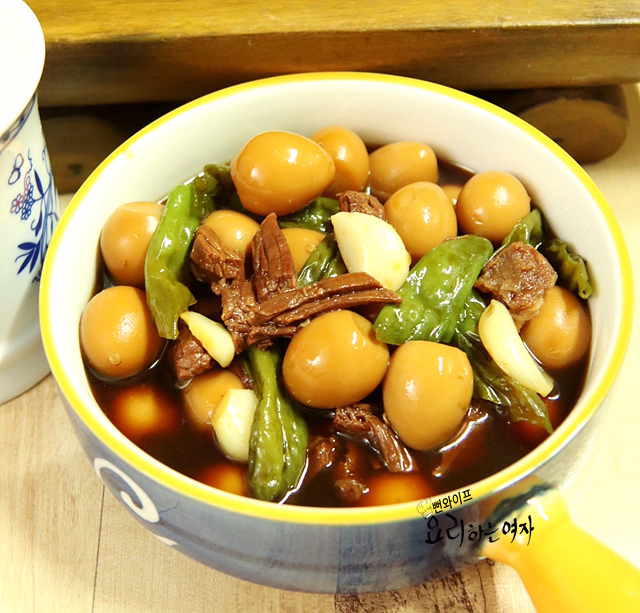
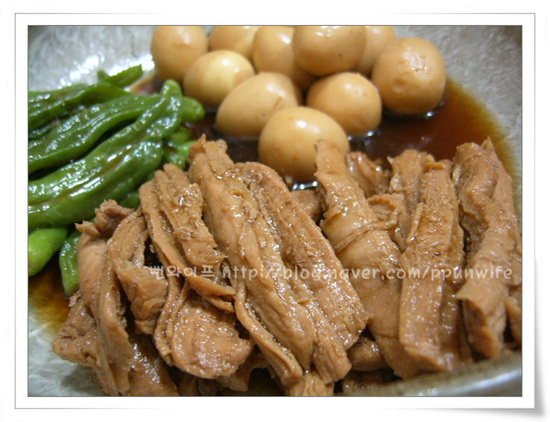
Simmering plenty of quail eggs and shishito peppers along with the meat makes it very generous.
Making a jangjorim side dish like this sets you up well for the whole week.
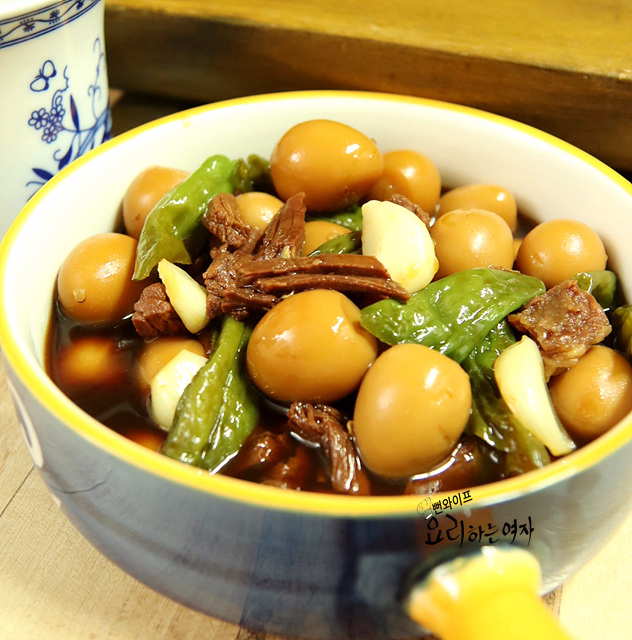
Simmering a variety of ingredients makes the broth taste wonderful, and picking out each ingredient is fun.
After enjoying the main pieces, spoon the broth over warm rice, add butter or margarine, and mix it up—it tastes delicious.
 Ppunwife's tips
- Cutting the meat into smaller chunks rather than keeping it in one large piece drains the blood better and shortens the boiling time.
- Cook just enough for their aromas to infuse well without letting the garlic and shishito peppers get too mushy.
- After enjoying the main pieces, spoon the broth over warm rice, add butter or margarine, and mix it up—it tastes delicious.
FAQ
Which cuts of beef are best for jangjorim?
Top round, eye of round, brisket, or shank are all great cuts to choose from.
Is there a trick to draining the blood from beef faster and easier?
Cutting the meat into manageable chunks rather than soaking it whole helps drain the blood more efficiently and cuts down on boiling time.
When should I add the shishito peppers and garlic?
Add them at the very end after the meat and quail eggs have fully absorbed the soy sauce color, then simmer briefly for about 3 minutes so they retain their aroma without turning mushy.
Can I use other ingredients instead of quail eggs?
Yes, hard-boiled chicken eggs, king oyster mushrooms, or shiitake mushrooms work wonderfully according to your preference.