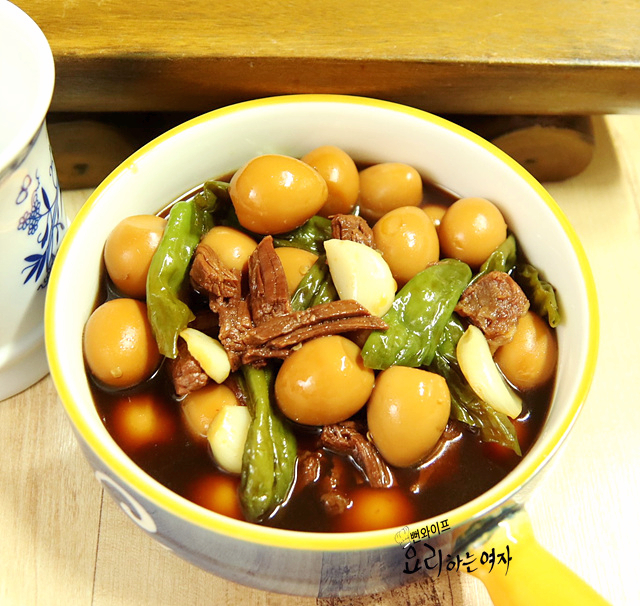
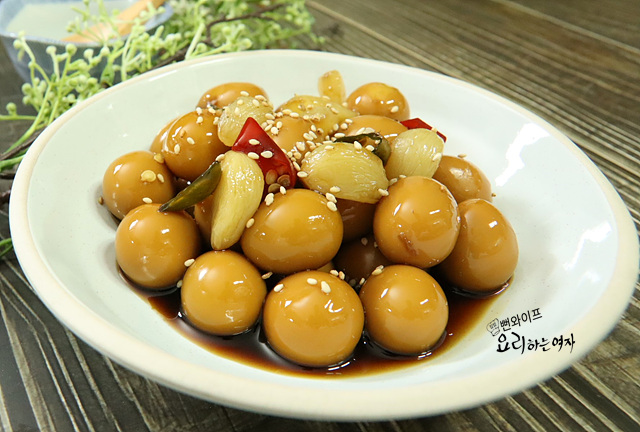
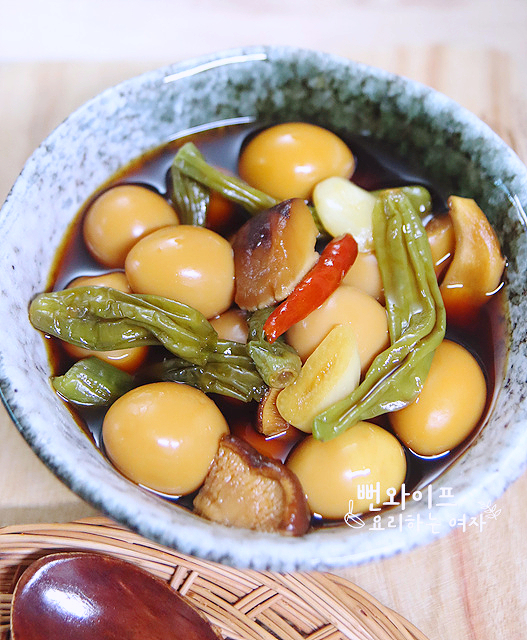
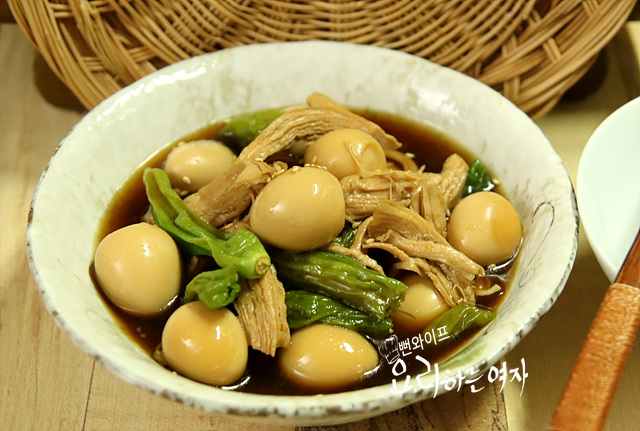
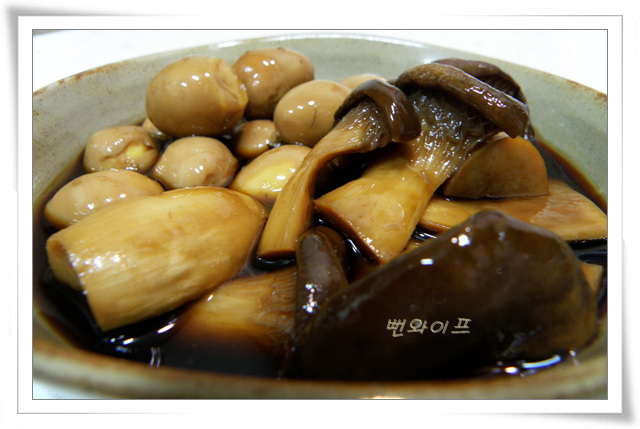
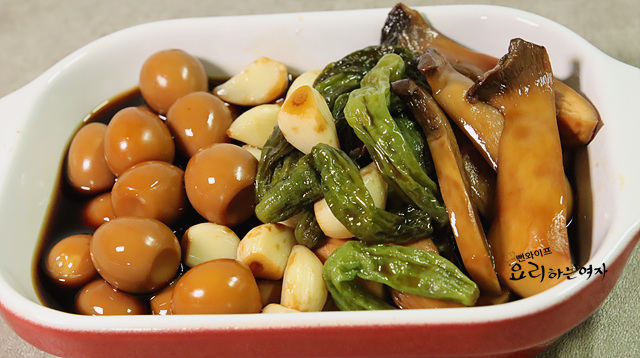
Tender and Hearty Dwaejigogi Jangjorim (Soy-Braised Pork)
A side dish of lean pork tenderloin braised in soy sauce along with quail eggs and shishito peppers.
Translated from Korean by AI and not yet checked by a native speaker. Amounts and numbers are taken directly from the original recipe. Read the Korean original →
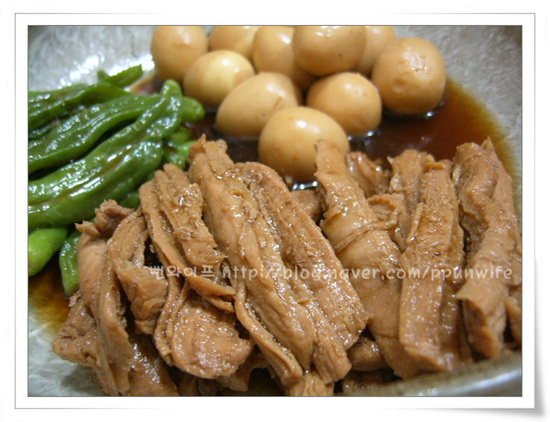
Using lean and tender pork tenderloin gives you a clean-tasting dish every bit as good as beef. The pork is boiled with ginger and whole black peppercorns, shredded along the grain, and then braised with quail eggs in a sweet and savory sauce. Adding shishito peppers at the end brings a fragrant finish, making it a perfect side dish.
- Servings
- about 4–5 servings
- Difficulty
- Medium
- Spiciness
- Not spicy
Ingredients
Ingredients
- Pork400 g (tenderloin)
- Quail eggs20
- Shishito peppers (kkwari-gochu)15
- Garlic10
- Ginger1 knob
- Whole black peppercorns1 tbsp
Braising sauce
- Bottled water4 cups
- Regular soy sauce (jin-ganjang)6 tbsp
- Cheongju (Korean rice wine)2 tbsp
- Corn syrup (mulyeot)2 tbsp
- Dark brown sugar2 tbsp
- Pork tenderloin is lean and tender, making it great for jangjorim.
Steps
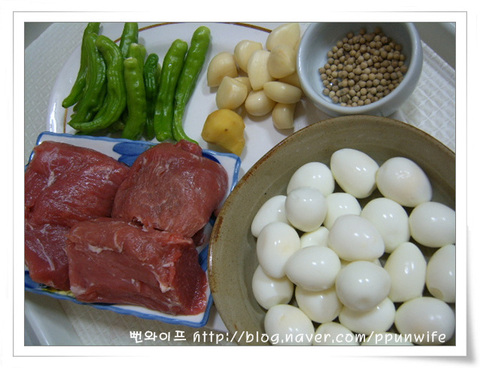
Pork tenderloin is lean and tender, making it great for jangjorim.
Boil the quail eggs and peel them.
Prick the shishito peppers in one or two spots with a toothpick.
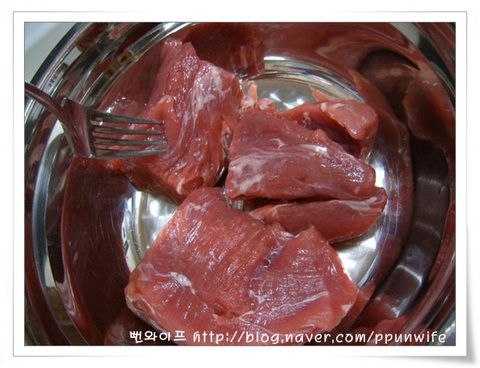
Trim off any surface fat from the pork, cut it into suitable chunks, and prick them several times with a fork or the tip of a knife.
Soak in water to draw out the blood.
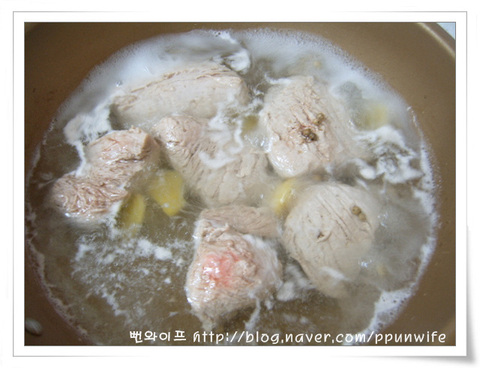
Pour in enough water to submerge the meat (4-5 cups), add thinly sliced ginger and whole black peppercorns, and boil.
Cutting the meat into flatter pieces helps it stay submerged and cook evenly.
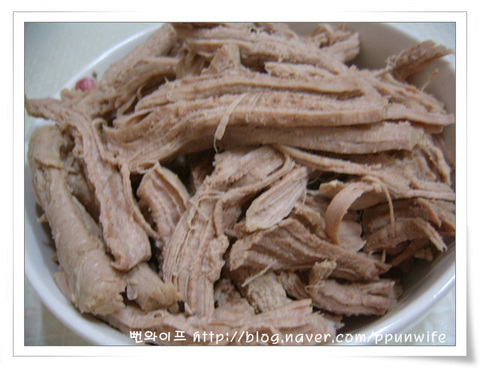
Once the pork is fully cooked, rinse it in cold water to cool, then shred it along the grain. You can discard the cooking liquid.
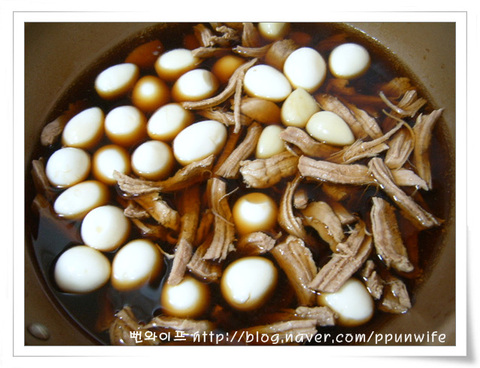
Add the braising liquid to a pot along with the pork, quail eggs, and garlic, then bring to a boil.
If you want a spicy kick, braise with dried spicy chili peppers or Cheongyang chili pepper (hot green chili).
Once it starts boiling, reduce to low heat and braise gently. Stir occasionally while braising so the ingredients rotate from top to bottom.
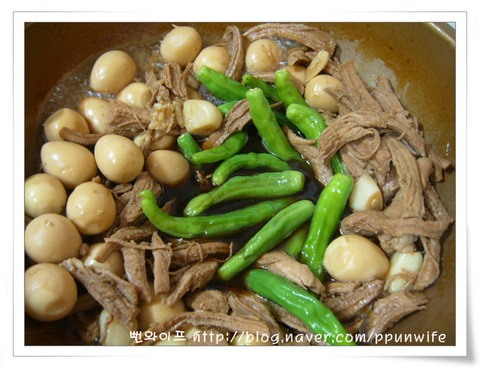
When the meat and quail eggs have deepened in color and about half the braising liquid remains,
taste the pork and add more soy sauce if it seems light on seasoning.
Fish out the softened garlic, add the shishito peppers, and braise until the peppers are cooked through.
 Ppunwife's tips
- Cutting the meat into flatter pieces helps it stay submerged and cook evenly.
- If you want a spicy kick, braise with dried spicy chili peppers or Cheongyang chili pepper (hot green chili).
- When the meat and quail eggs have deepened in color and about half the braising liquid remains, taste the pork and add more soy sauce if it seems light on seasoning.
FAQ
What cut of pork is best for jangjorim?
It is best to use tenderloin, which is lean and has tender meat.
How can I add a bit of spicy heat?
When simmering the braising liquid, add dried spicy chili peppers or Cheongyang chili pepper to taste.
When should I add the shishito peppers?
When the liquid has reduced by about half and the garlic is soft, remove the garlic, add the shishito peppers, and braise briefly until cooked through.